

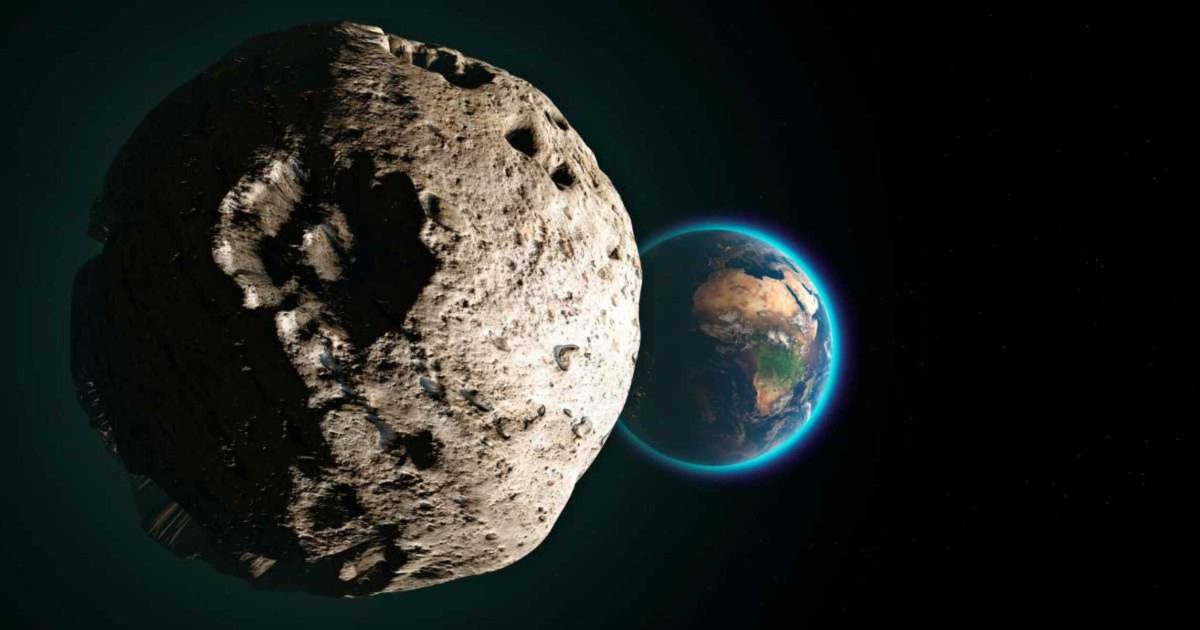
A small asteroid, 2026 RW1, burned up over the Indian Ocean near the northwestern coast of Australia. It was detected only a few hours before entering the atmosphere. Such objects are far from always discovered in advance, and this case demonstrates that clearly.
Seven and a Half Hours
The object received the designation 2026 RW1 in an official notice from the Minor Planet Center. It was detected by the Mount Lemmon Survey in Arizona at 11:45 a.m. Kyiv time on September 6. Orbital calculations almost immediately showed that the body would enter Earth’s atmosphere later that same day.
Richard Moissl, Head of ESA’s Planetary Defence Office, reported that atmospheric entry was expected at approximately 7:00 p.m. Kyiv time. Its diameter was estimated at about 0.8 meters, and the predicted trajectory passed over the ocean, so there was no threat.
By local Western Australian time, it was already the night of September 7. The coastline in that area is almost uninhabited, so there are no observational confirmations of the fireball yet.
Thirteen Cases Since 2008
Large asteroids hundreds of meters across are tracked by astronomers in catalogs for years, and their orbits are known well in advance. According to NASA estimates, no known object of this size poses a collision threat for at least the next century.

The situation is the opposite with meter-sized fragments. They are too small and faint to make it into catalogs, so most of them are never detected at all. Discovering them in space before they enter the atmosphere remains rare.
The first such case occurred in October 2008, when asteroid 2008 TC3 was detected about twenty hours before it fell in the Nubian Desert. Since then, the list has grown slowly, and 2026 RW1 became the thirteenth object on it, according to Starlust.
The warning time has never exceeded one day. The shortest warning, less than two hours, was recorded for asteroid 2024 UQ over the eastern Pacific Ocean. The previous event occurred quite recently, on May 15, 2026, when a small body entered the atmosphere over New Guinea about three hours after its discovery.
The Aten Group
A special feature of this impact was noted by Adrien Coffinet, a participant in the Minor Planet Mailing List. According to his comments cited by EarthSky, 2026 RW1 is probably the first Aten-group asteroid to have been detected in space before impact. All twelve previous objects belonged to the Apollo group.
The difference between them lies in the size of their orbits. Apollo-group bodies orbit the Sun, on average, farther out than Earth and cross our planet’s path from the outside. Aten-group asteroids spend most of their time inside Earth’s orbit, closer to the Sun.
The Blind Spot Near the Sun
An orbit inside Earth’s means that the object approaches mainly from the daytime side of the sky. Ground-based surveys operate at night and look away from the Sun, so an Aten-group object remains hidden in solar glare until the final hours before impact.
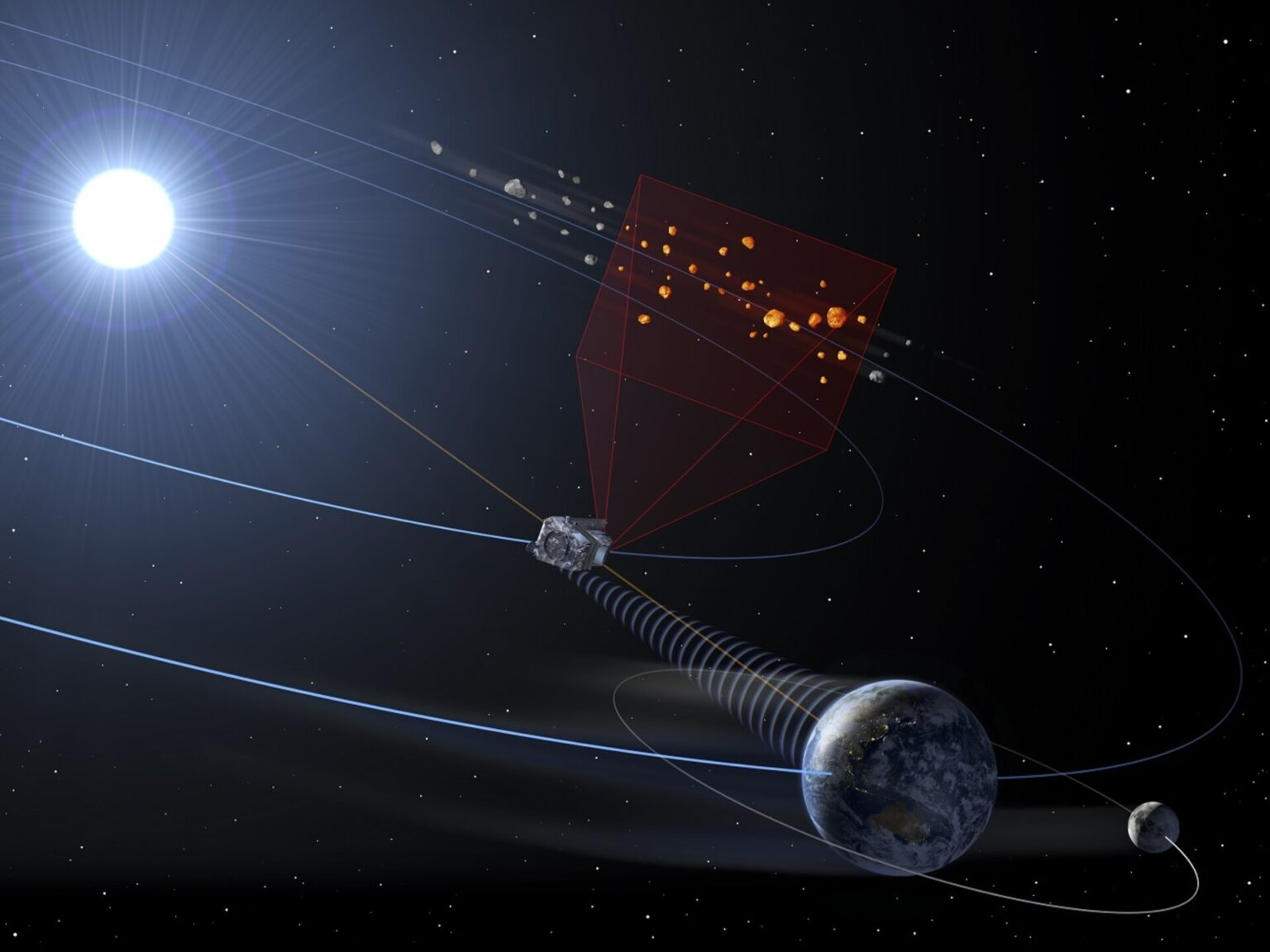
The problem is not limited to meter-sized fragments. Objects approaching from this direction remain outside the field of view of surveys regardless of their size. The gap is expected to be addressed by the NEOMIR space observatory, which ESA plans to place between Earth and the Sun in order to search for asteroids from the side where they cannot be seen from the surface.
How Many Such Bodies Fall
According to NASA estimates, fragments about one meter across enter the atmosphere several dozen times per year. Thirteen advance detections over eighteen years show what fraction of them are actually spotted by telescopes in time.
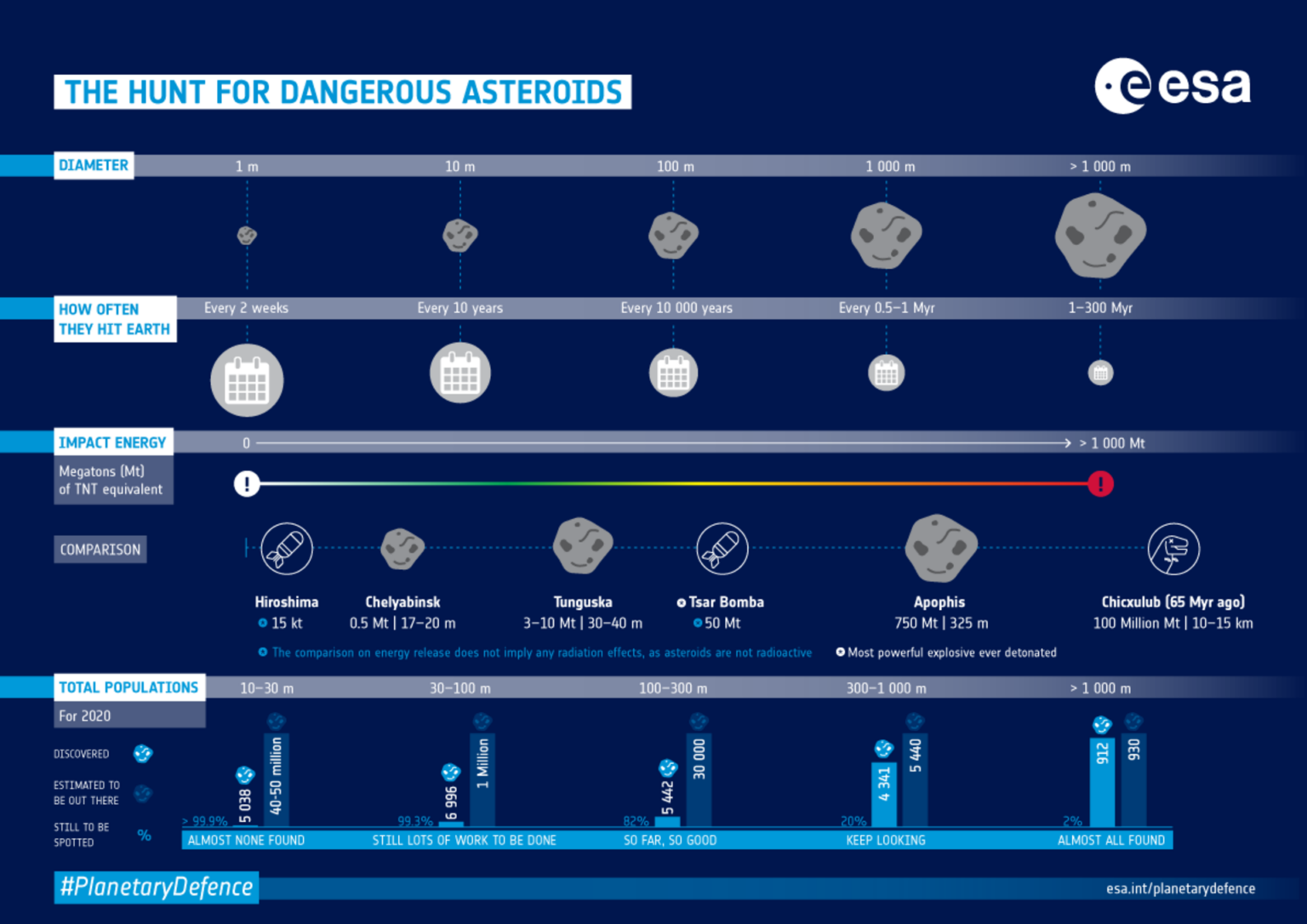
A meter-sized body becomes observable only when it approaches very close to Earth. Before that, it is too faint, while telescopes can cover only part of the accessible sky during a single night. Objects approaching from the direction of the Sun do not enter this field of view at all.