

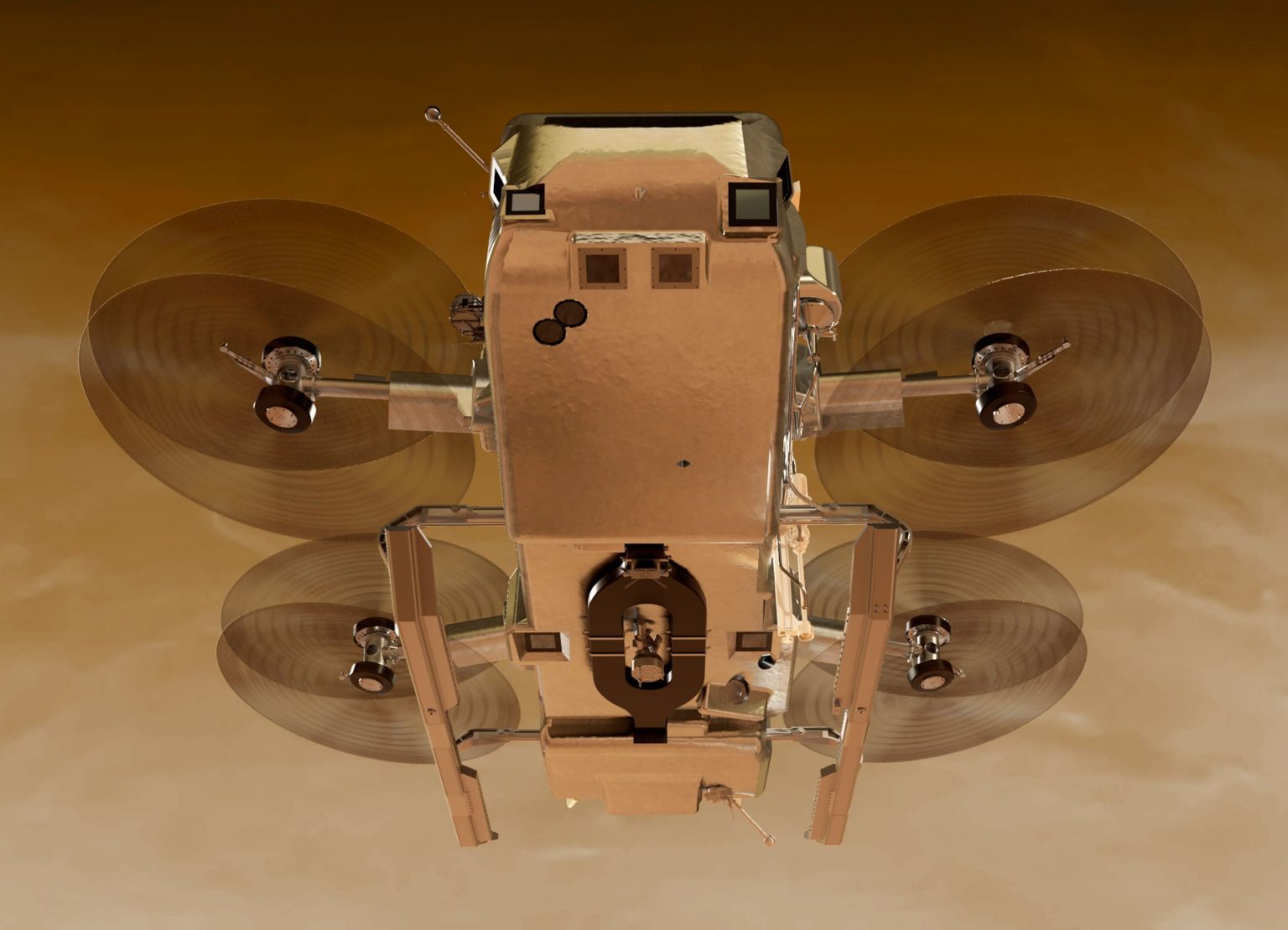
The Dragonfly drone is still in the laboratory, but its first landing on Titan has already taken place in a virtual environment. Engineers assembling the spacecraft for NASA have conducted the most comprehensive simulation to date of its first flight over Saturn’s largest moon. The onboard software ran on a replica of the actual electronics, while sensor data were generated in real time. This is how the team is testing whether the drone can operate entirely autonomously.
A Simulated Flight
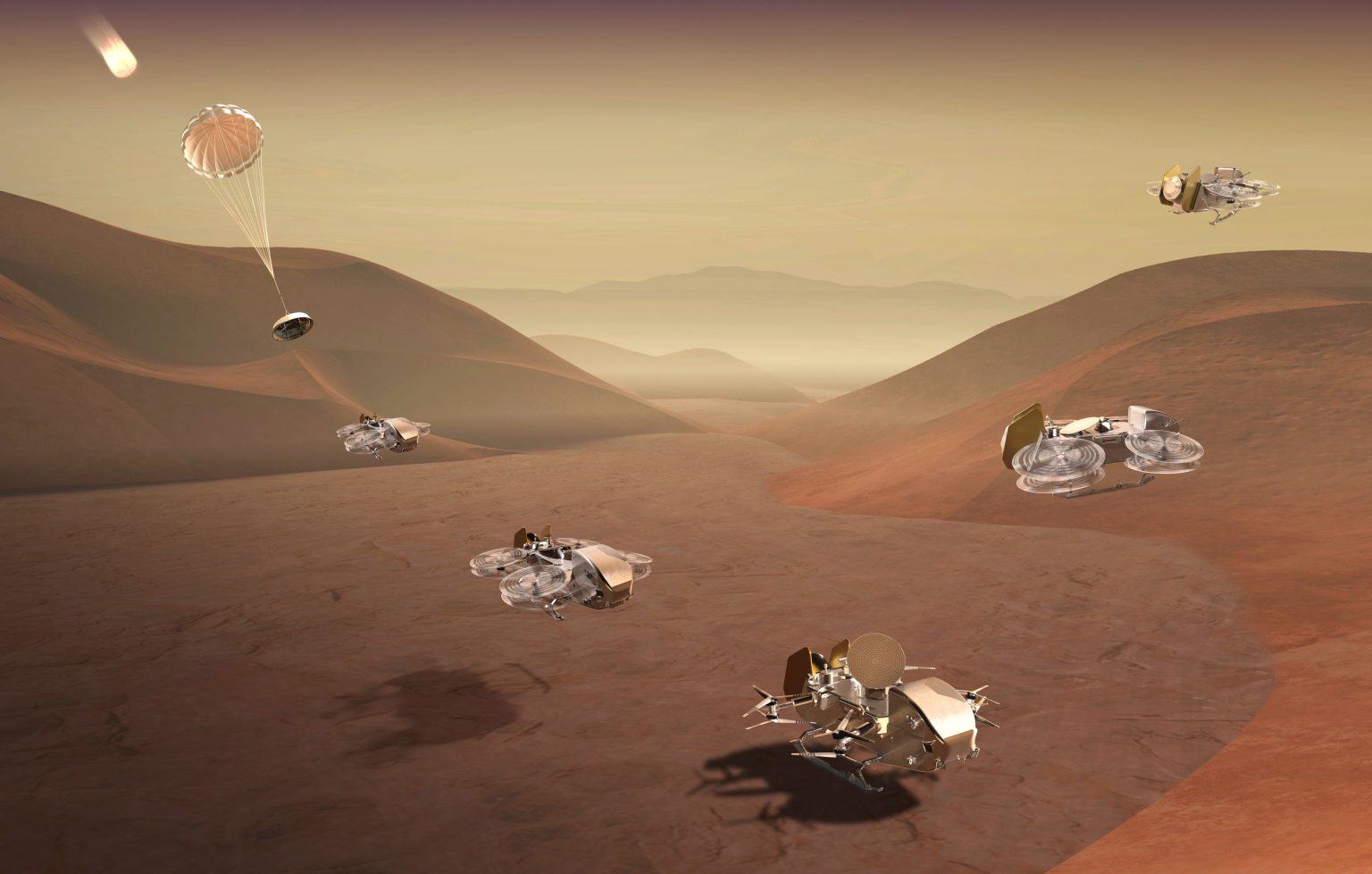
The scenario modeled the flight the drone is expected to perform after arriving at Titan in 2034. The spacecraft separated from the entry capsule’s backshell and flew over sand dunes, while onboard algorithms used sensor data to select a safe landing site. The drone then turned, descended, and landed.
All of this took place on computer testbeds at the Johns Hopkins Applied Physics Laboratory, where Dragonfly is currently being assembled and tested, according to NASA. The software received simulated signals from navigation cameras, lidar, and inertial measurement units, which track the spacecraft’s movement and rotation.
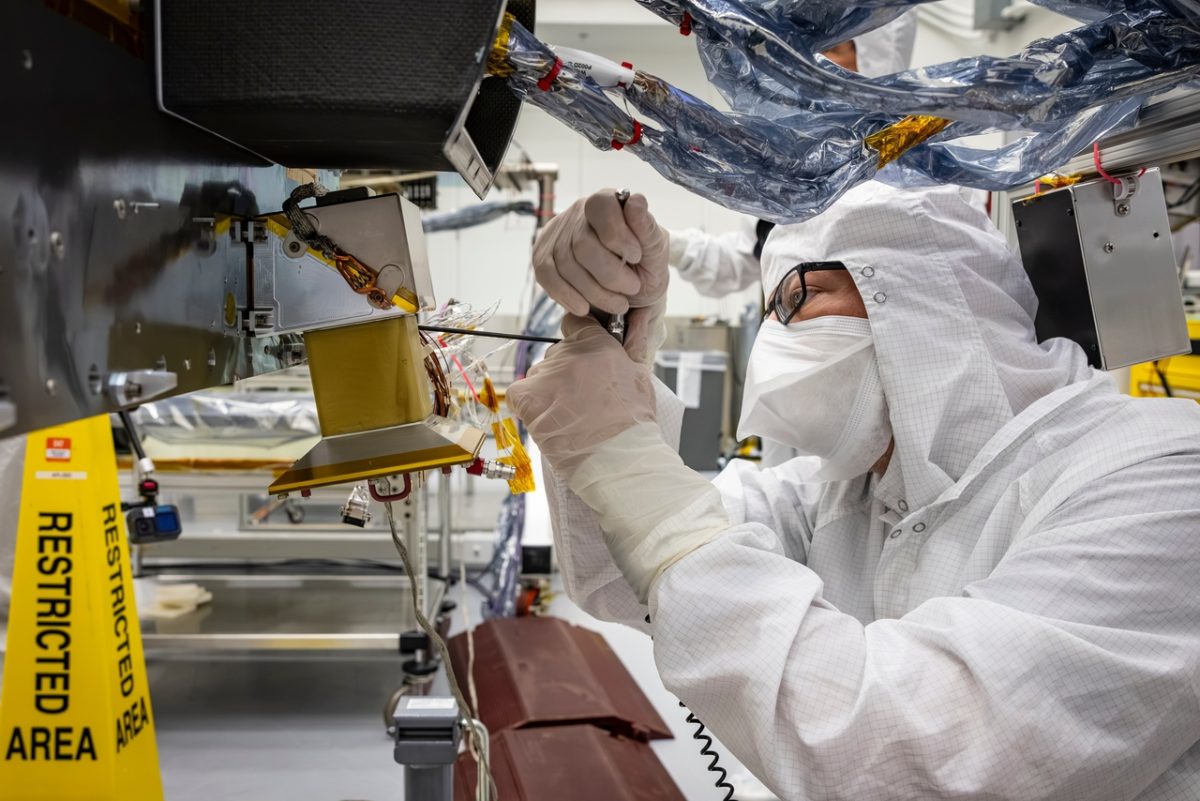
A specialized emulator running on graphics processors generated the camera images. It created each scene in approximately the same time as the drone cameras’ exposure duration—between 20 and 70 milliseconds. This allowed engineers to test how onboard processes exchange data with realistic delays.
Why Humans Cannot Take Control
A radio signal takes between 67 and 92 minutes to travel from Earth to Saturn, depending on the planets’ relative positions. By the time operators receive a camera image and send a response, two to three hours will have passed. The drone will therefore perform every flight on its own.

The Ingenuity helicopter on Mars also flew autonomously, although signals take only 3–22 minutes to reach the planet. However, its route and landing site were selected in advance by the team on Earth. Dragonfly must find its own landing site over terrain that no one has previously seen up close.
The Most Challenging Flight
Zach Putnam, lead engineer for the drone’s mobility subsystem, describes the first flight as the most difficult of all those planned. It involves every onboard sensor.
The team therefore proceeded gradually. First, they simulated a single rotor spinning, then a short flight, followed by a partial reconnaissance flight, adding sensors at each stage. The final component was lidar—a laser rangefinder that the drone will use to measure altitude and terrain slopes and identify hazardous areas.
The Positioning Mechanism
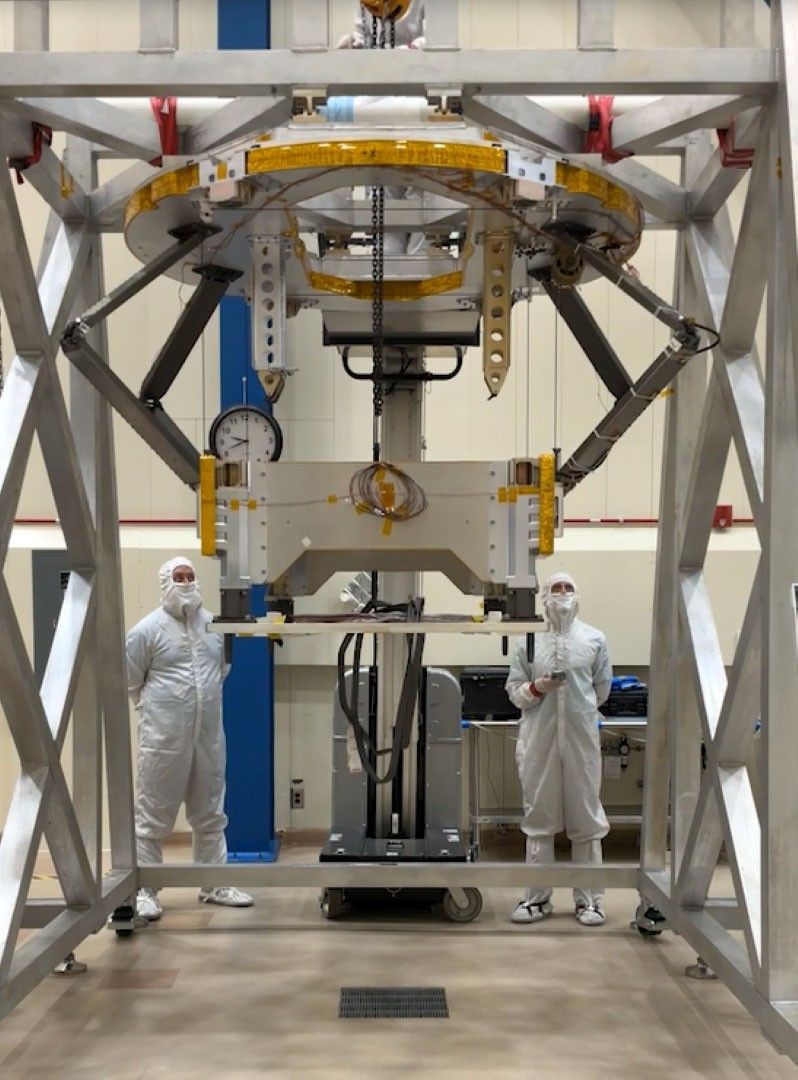
The drone can begin flying only once it is positioned below the capsule’s backshell. A positioning mechanism will lower it from its stowed position while the capsule descends under a parachute, allowing the rotors to spin up before separation.
This assembly is being tested at Lockheed Martin in Denver. Engineers loaded the mechanism with a mock-up of the appropriate mass and checked how smoothly it lowered and how securely it locked into place. Since the backshell may swing beneath the parachute, the test setup was tilted at different angles.
Next Steps
The mission is scheduled to launch no earlier than 2028. Following a six-year journey, the drone will spend three years traveling between sites on Titan, studying the moon’s chemistry, geology, and atmosphere. It will be powered by a nuclear battery.
Before launch, engineers will repeat the first-flight simulation using Dragonfly’s actual onboard system rather than a testbed. They will also deliberately introduce faults to ensure that the spacecraft can respond to malfunctions independently.
