

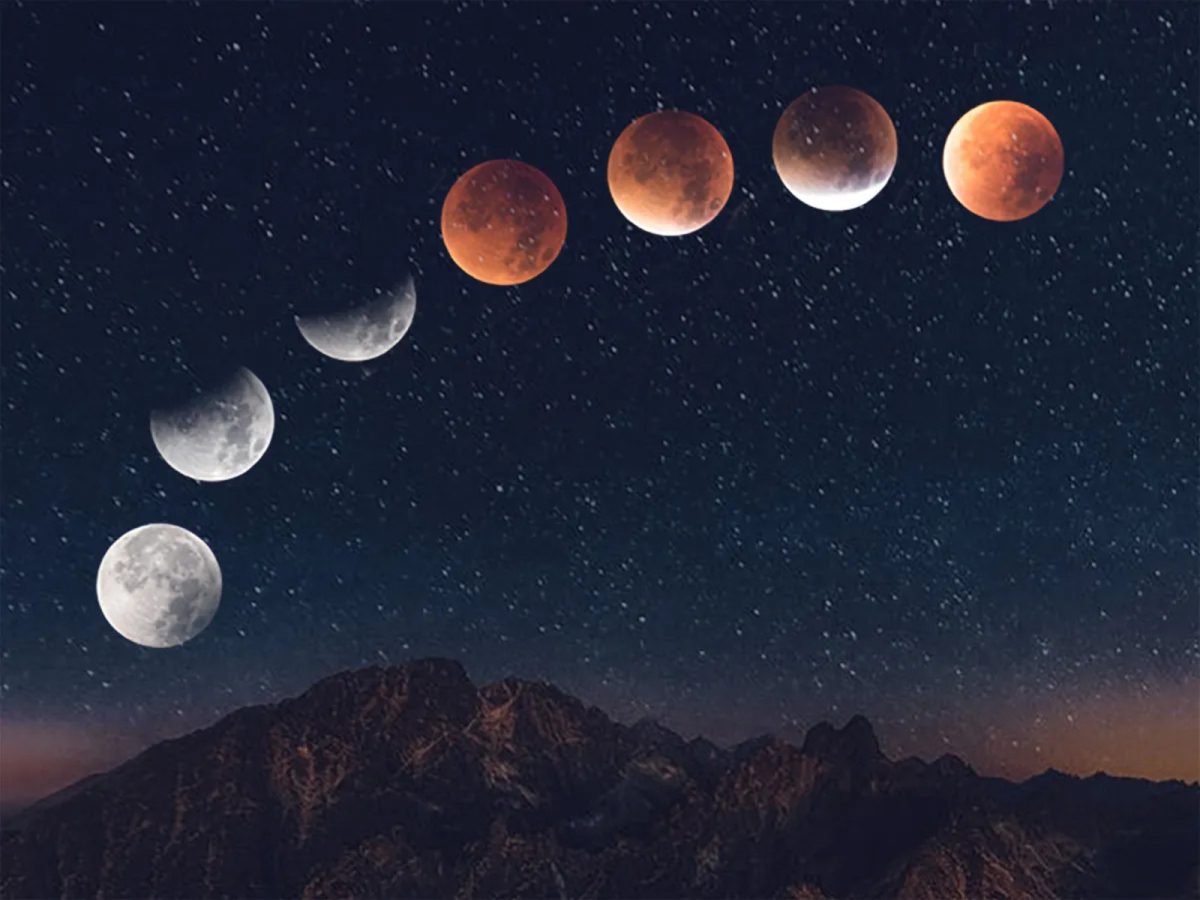
On the morning of August 28, the Moon will enter almost completely into Earth’s shadow. The eclipse will remain partial because a narrow strip of the lunar disk will remain illuminated. Observers in Ukraine will see only the beginning of the event, after which the Moon will set below the western horizon. The duration of the partial eclipse is 3 hours 18 minutes 07 seconds. The Moon will be in the constellation Aquarius and will pass through the northern zone of the Earth’s shadow.
Schedule of the Phases
Ukraine is at the very edge of the visibility zone. The Moon will begin to dip into the Earth’s shadow before sunset. For Ukraine, the beginning of the partial phase falls at approximately 06:12 Kyiv time, but the Moon will already be very low above the western horizon.
The maximum eclipse that can be seen from the city is around 06:05. The Moon at this moment will be only about 4.4° above the western horizon. Around 06:08 the Moon will set below the horizon. The true global maximum at 07:13 Kyiv time will occur already below the horizon, and at 8:52 the Moon will completely leave the umbra, that is, from the darkest zone of the Earth’s shadow.
The event will be visible to residents of North and South America, except for Alaska and northwestern Canada, as well as the western parts of Europe and Africa. According to calculations by Space.com, about 3.3 billion people will be within the visibility zone, and there will be no deeper lunar eclipse until the night of December 31, 2028, to January 1, 2029.
Depth of the Shadow
The shadow of our planet has two zones that determine the appearance of the eclipse. The outer penumbra dims the lunar disk only slightly, while in the umbra, the central part of the shadow, direct sunlight is completely absent.
At the moment of the greatest phase, 96.3% of the area of the lunar disk will be inside the umbra, according to materials from the NASA Scientific Visualization Studio. Only a thin bright arc will remain illuminated, which is why the event is considered a partial eclipse.
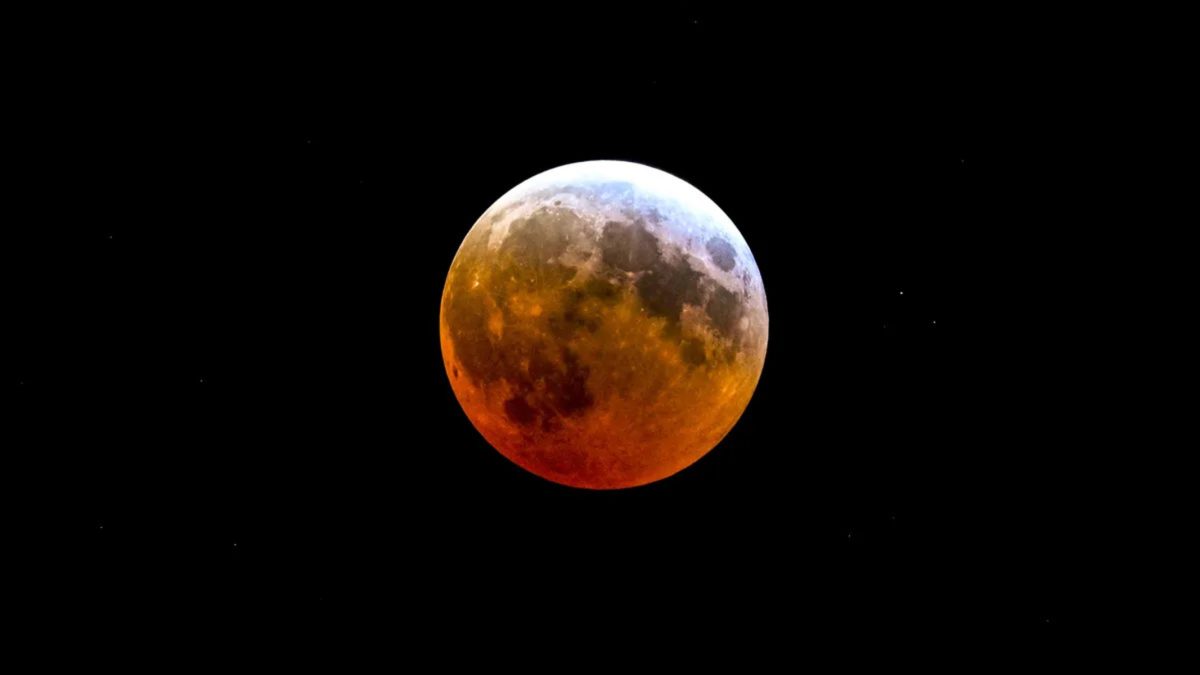
The portion immersed in shadow will take on a copper-red hue instead of becoming completely dark. Some sunlight passes through the atmosphere near the edge of the Earth. The atmosphere refracts this light and directs it into the umbra region. Short-wavelength blue and violet light is scattered more, so light with longer wavelengths—reds and oranges—mainly reaches the Moon.
Conditions in Ukraine
Ukrainian astronomy enthusiasts will catch only the beginning of the event. At that time, the Moon will be descending toward the western horizon and will set at around 6:08 a.m. This leaves approximately half an hour for observations, moreover against the background of the dawn sky.
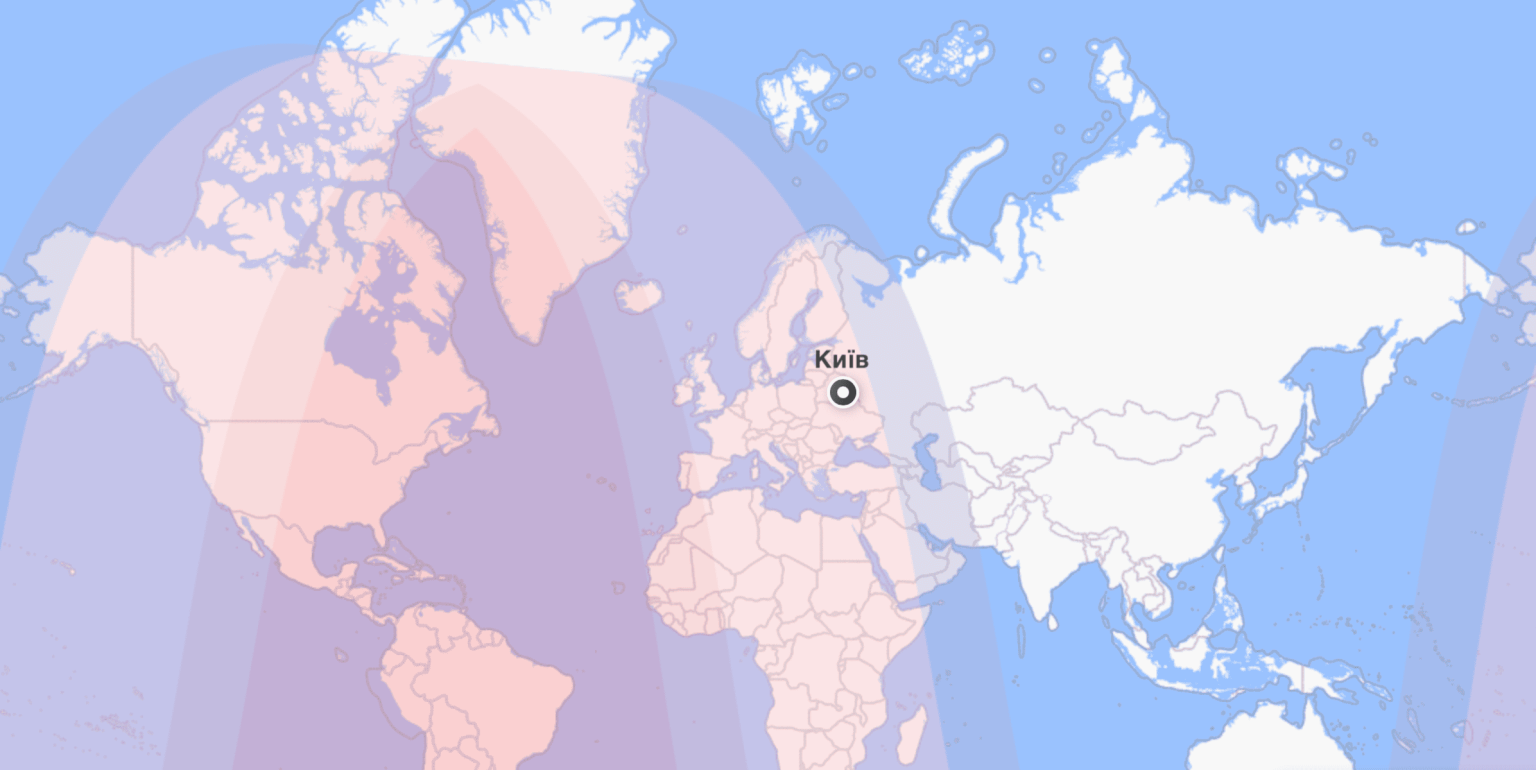
The deepest phase will occur when our satellite is already below the horizon. In Ukraine, before moonset, the shadow will manage to cover about forty percent of the disk area. An unobstructed view toward the west, without tall buildings or trees, will be required.
Place in the Cycle
The event belongs to Saros series 138, in which similar phenomena repeat at intervals of 18 years, 11 days, and 8 hours and each subsequent one occurs under similar geometry, but in a different part of the Earth. The previous eclipse of this series was observed on August 16, 2008, and the next will occur on September 7, 2044.
The cyclical motion of the Moon makes it possible to calculate the circumstances of such events centuries in advance. The phase schedule is based on planetary ephemerides from NASA’s Jet Propulsion Laboratory, that is, tables showing the precise positions of celestial bodies at each moment in time, as well as a catalog of lunar eclipses covering five thousand years.
