

A chilling fact: if nuclear weapons were being deployed in near-Earth orbit right now, humanity might not even know about it. The Outer Space Treaty, concluded back in 1967 and signed by 118 countries, strictly prohibits the militarization of space. Yet until now, military officials and scientists had no tool to verify whether a foreign satellite might be hiding a deadly payload.
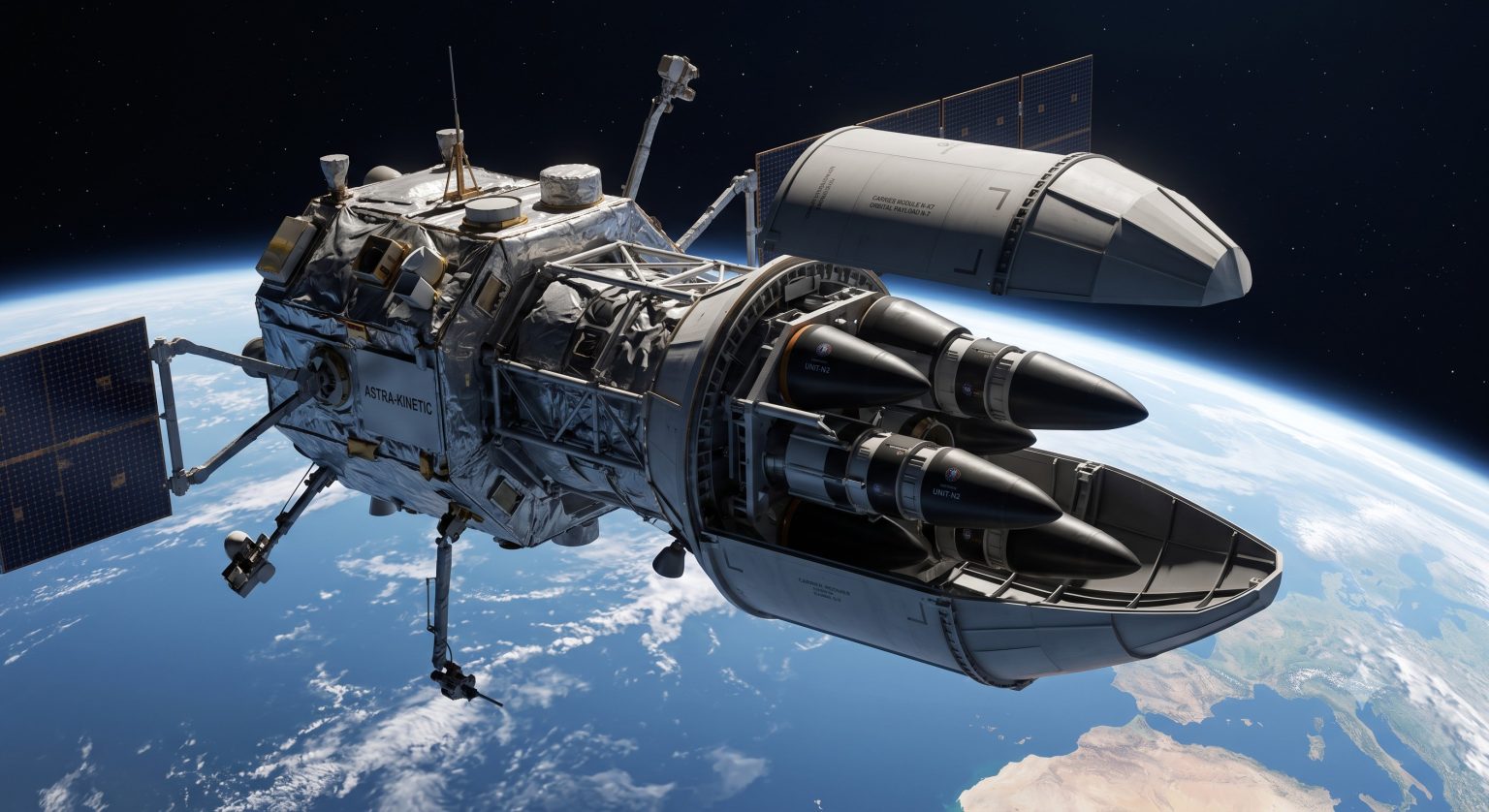
Against the backdrop of global geopolitical tensions and a real boom in space launches, the risk of war moving into orbit is becoming a reality. Monitoring compliance with the treaty requires entirely new intelligence systems. The development of such an “arms control” method is being led by Areg Danagoulian, an associate professor at the Massachusetts Institute of Technology (MIT). His study, published in Nature, proposes a revolutionary concept for an inspector satellite capable of “sniffing out” thermonuclear warheads from a distance.
Destroying Satellites with a Single Blast
In 1962, the United States conducted the Starfish Prime nuclear test in space at an altitude of 400 km. The result was staggering: one-third of all satellites then in low Earth orbit immediately failed. The explosion released an enormous number of charged particles into the inner Van Allen belt, Earth’s natural radiation ring. The electronics of spacecraft were simply burned out by this impact.
Today, our lives are largely dependent on thousands of orbital platforms. Although a nuclear explosion in vacuum would not directly kill people on the planet, it could instantly disable satellite communications, GPS navigation, weather forecasting, and missile-attack warning systems. This would paralyze both civilian and defense infrastructure in leading states. Until now, the only protection against this scenario was a piece of paper with diplomats’ signatures, after all, searching for radioactive materials in space is hampered by the fact that cosmic rays continuously generate neutrons and other particles that mask the weak signal from nuclear materials.
A Radiation Trap
Danagoulian, however, figured out how to turn the harsh space environment into an ally. The inner Van Allen belt, saturated with protons, can unintentionally expose a violator. As they pass through this region, protons bombard heavy atomic nuclei, such as uranium, causing spallation, a process in which neutrons are knocked out of the nuclei.

According to the researcher’s calculations, such a satellite can emit tens of millions of neutrons per second. It is this flow that is proposed to be used as a characteristic signal. The most difficult task is to separate it from the intense background radiation and the flow of charged particles that constantly fill the near-Earth space.
Hunter Satellites in Orbit
The MIT concept proposes launching a special inspector satellite that would move in an orbit slightly below the suspicious object, at a distance of about 4 km for about a week. The detector developed by Danagoulian can filter out protons, leaving only the neutron trace.
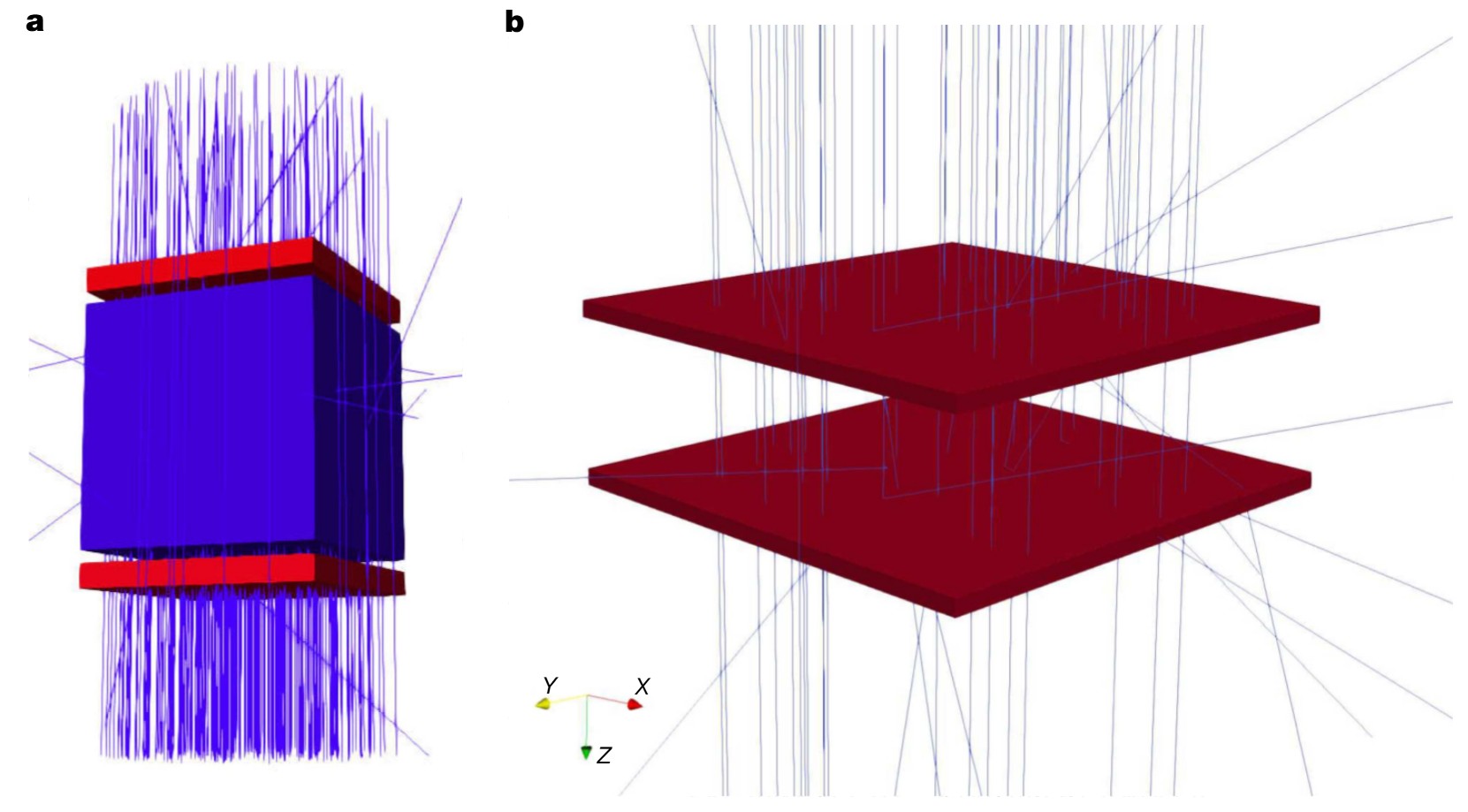
Moreover, the invention solves another problem: so-called albedo neutrons, which are reflected from Earth’s atmosphere and confuse instruments. Thanks to a directional detection system, the satellite clearly understands that if the neutron flow is coming from above, from the suspicious spacecraft, rather than from below, then the target has been detected.
Computer modeling confirmed the viability of the idea. Although the developer admits that his system is currently quite complex and requires the creation of simpler engineering prototypes, this is the first significant step toward building a real shield against the nuclear militarization of space.
Earlier, we explained why Russia would need nuclear weapons in space.
According to Gizmodo
