

An international group of astronomers has made an astonishing discovery: a third planet orbits the nearby star Beta Pictoris, located 63 light-years from Earth. The new cosmic body has been named Beta Pictoris d. This planet turned out to be 100 times dimmer than its neighbor Beta Pictoris b, making it one of the faintest exoplanets ever directly imaged by humanity.
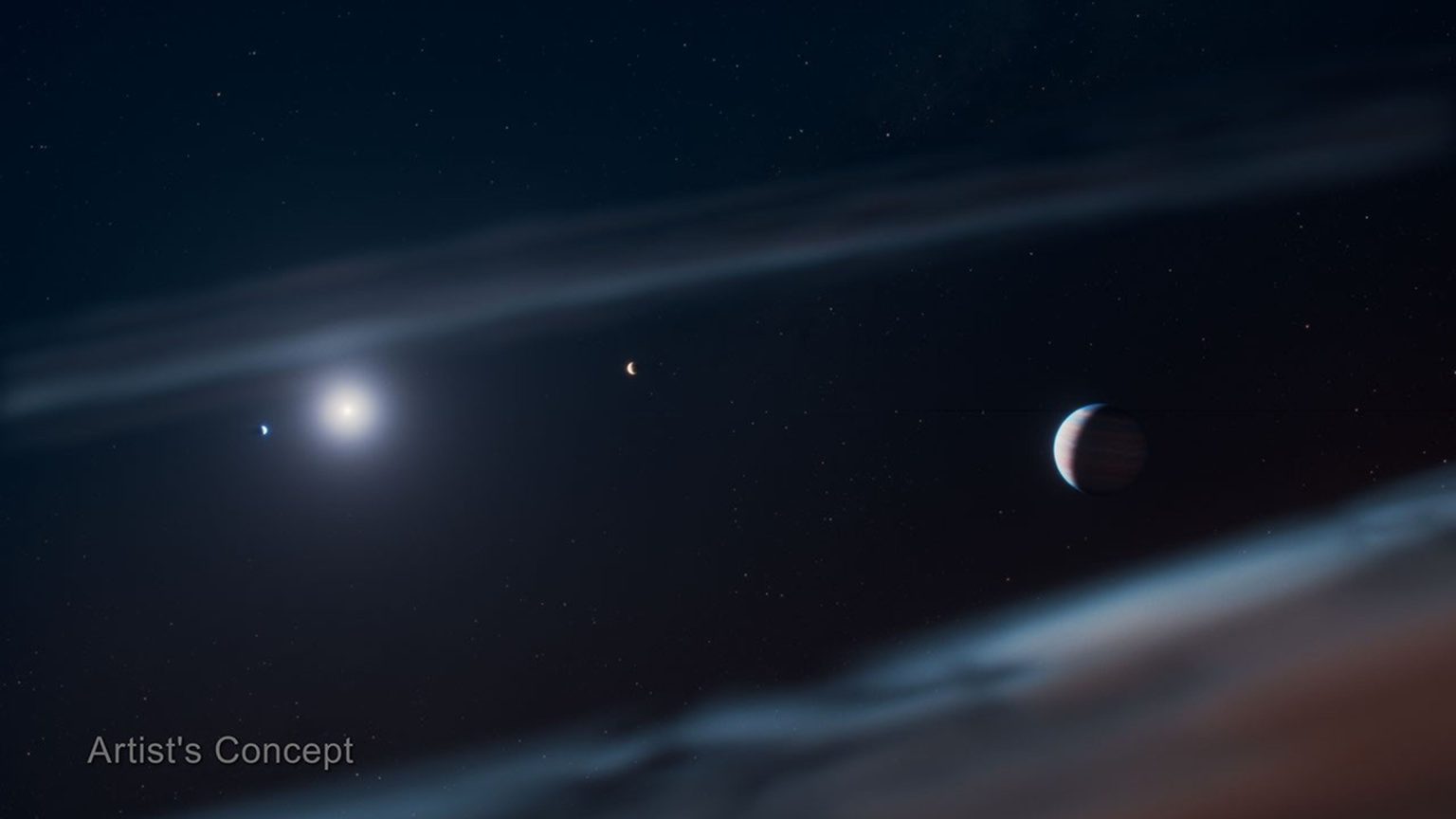
The discovery came as a real surprise to researchers. As Ben Sutlieff, an astronomer at the University of Edinburgh and co-author of the study published in The Astrophysical Journal Letters, explained, the team’s original goal was to observe in detail the first planet discovered in the system, Beta Pictoris b. However, while analyzing fresh images, scientists noticed an unknown faint signal off to the side.
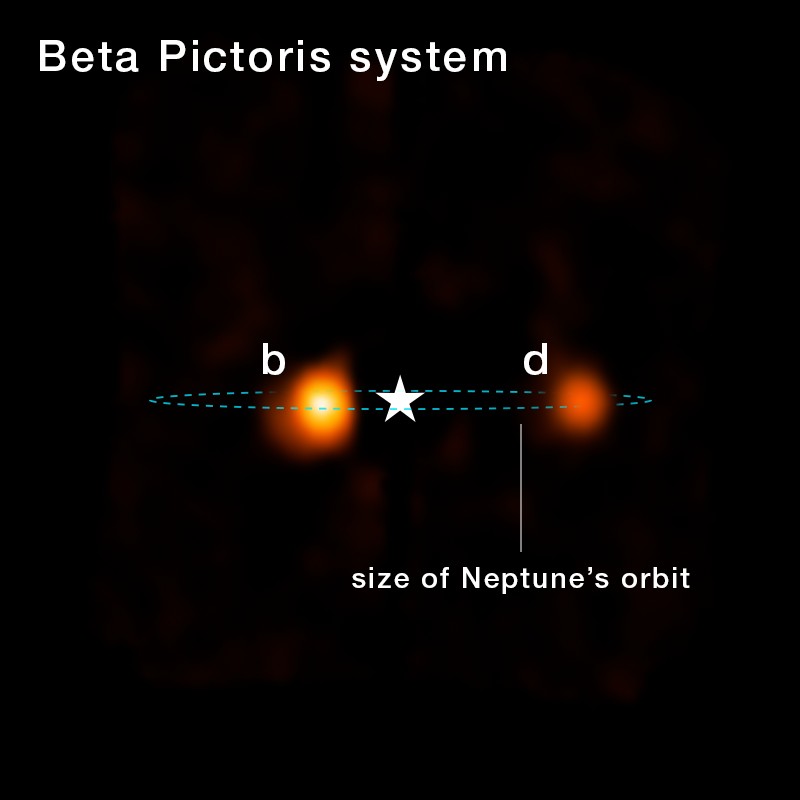
To solve this mystery, astronomers turned to the archives of the European Southern Observatory, or ESO. After checking observations from eleven years ago, they found that Beta Pictoris d had already appeared in old images but had remained unnoticed, hiding in the bright glow of its massive neighbor.
“It seems the third planet has been playing hide-and-seek with us for more than 10 years,” Jane Birkby of the University of Oxford said.
Light, cold, and extremely faint
Beta Pictoris d is a gas giant similar to Jupiter or Saturn. However, it differs significantly from the other planets in its system. While the masses of Beta Pictoris b and Beta Pictoris c exceed Jupiter’s mass by about 10 times, the new planet is only 2-4 times heavier than our gas giant.
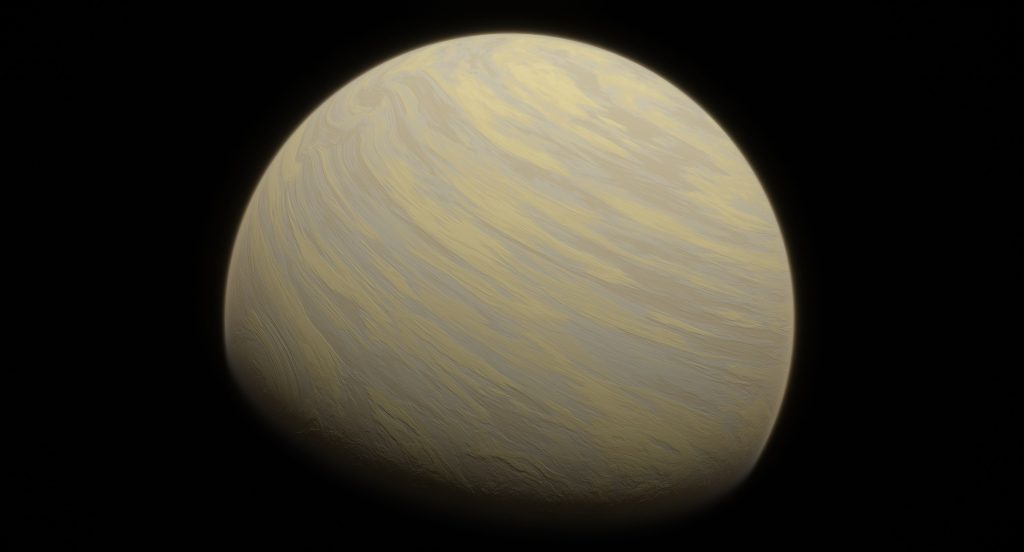
Because Beta Pictoris d has a much wider orbit, it is fairly cold and faint. Obtaining a direct image of such an object is an outstanding technological achievement, since the light of the parent star usually completely outshines similar planets.
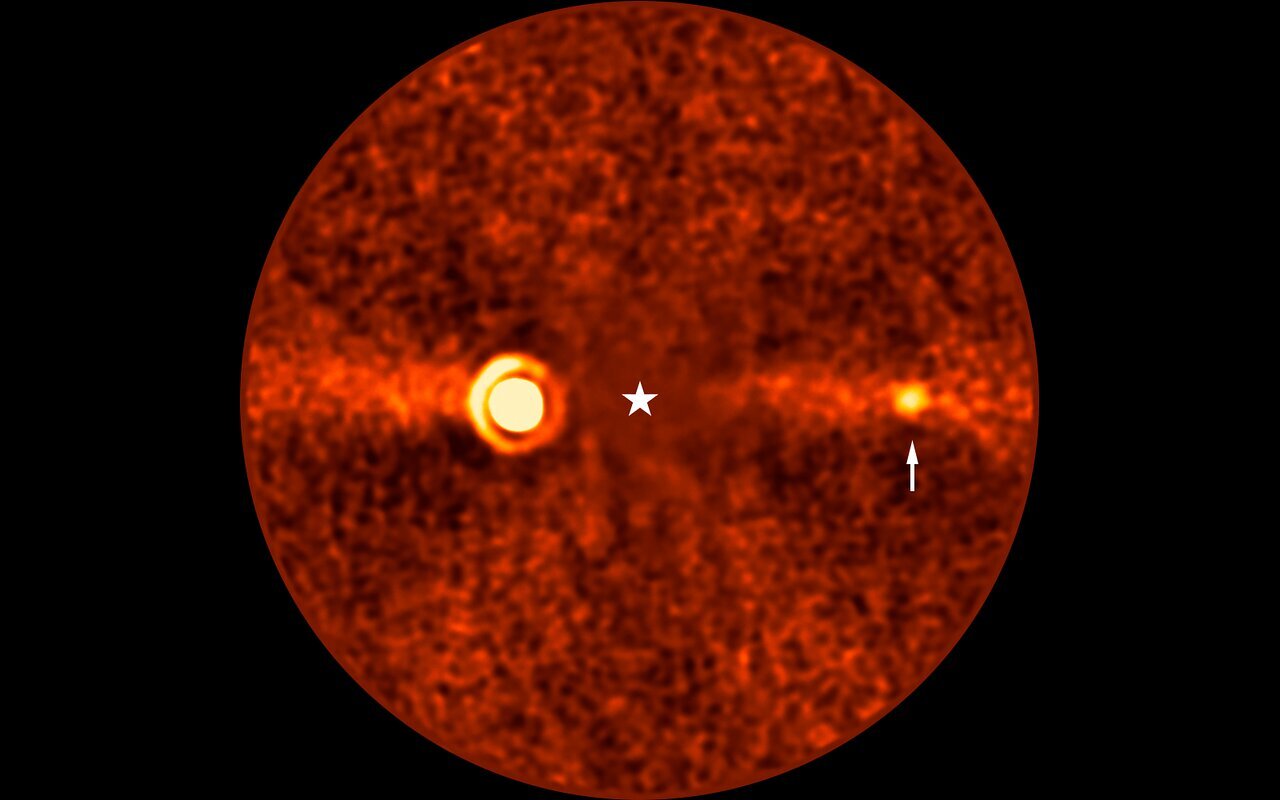
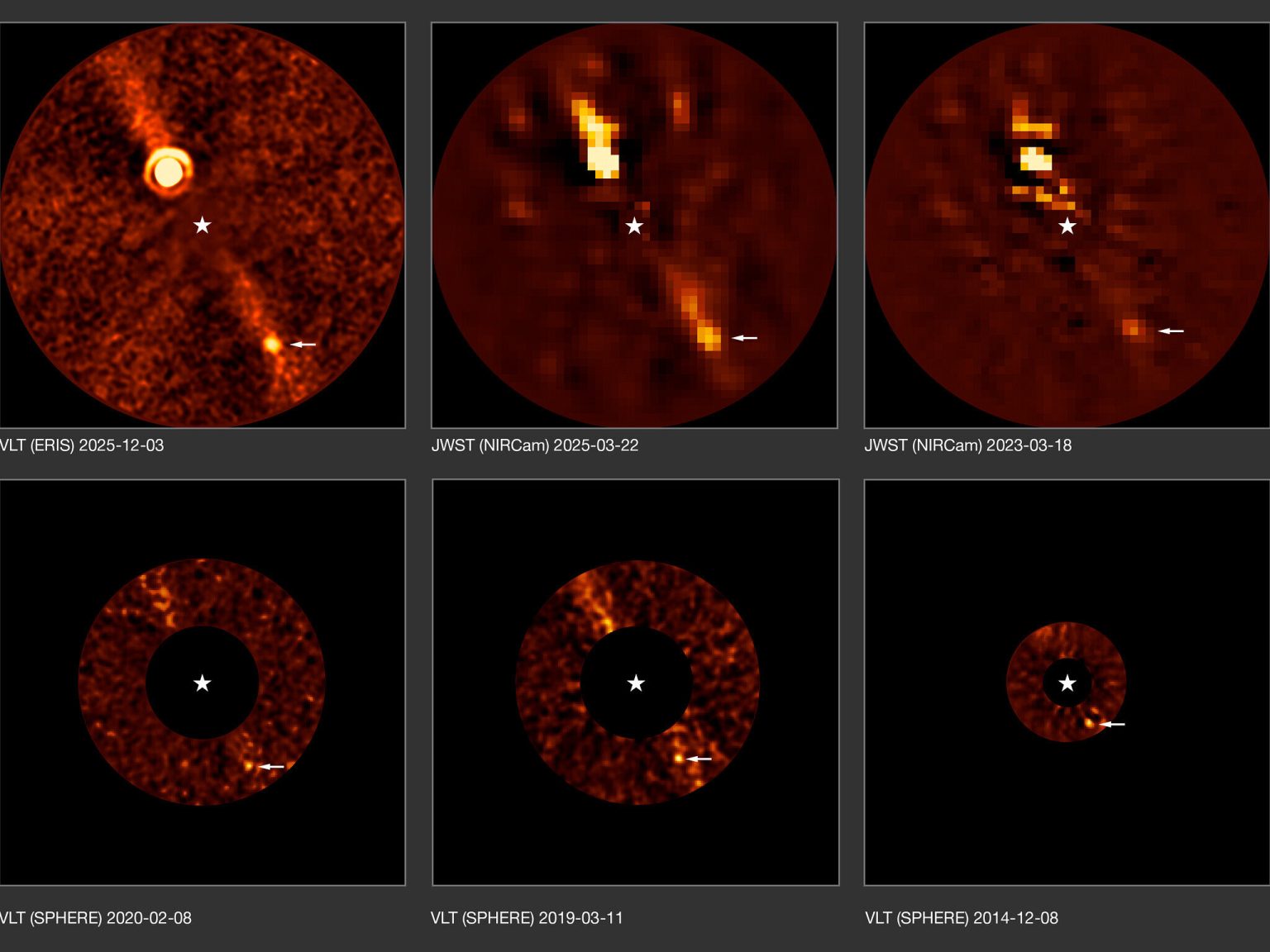
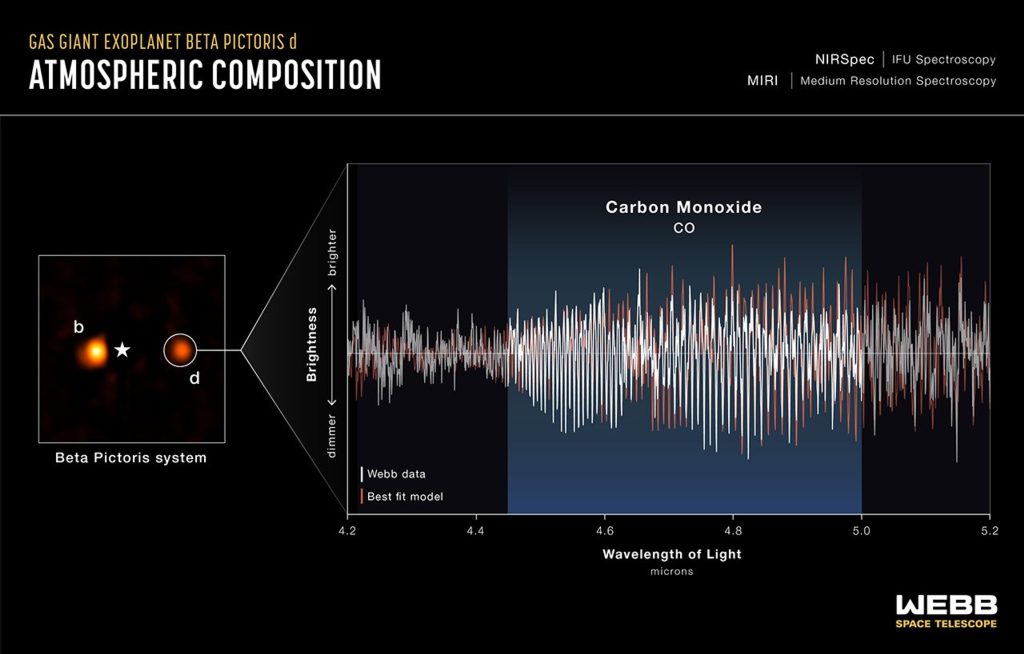
The discovery was independently confirmed by two teams of astronomers. The first, led by Simon Caspari, discovered the planet using the ERIS instrument on the ground-based Very Large Telescope (VLT). The second team, led by Aidan Gibbs of the University of California, Berkeley, confirmed its existence using the NIRSpec instrument on the James Webb Space Telescope. The planet was later also identified in archival observations made by the SPHERE instrument on the VLT.
The key to solving cosmic mysteries
Thanks to this discovery, Beta Pictoris has become only the second known system after HR 8799 in which astronomers have managed to directly photograph more than two planets. Such multi-planet systems are a true Holy Grail for science, because they allow researchers to study the development of different planets that formed in the same environment.
Moreover, the characteristics and orbital position of Beta Pictoris d have helped astronomers solve a long-standing mystery about the system. The gravitational influence of the newly discovered planet is likely responsible for the characteristic warping of the disk of dust and debris that surrounds the star. It is likely that it is changing the distribution of the dust and debris, creating the structure that astronomers have observed for many years.
Scientists are convinced that the success of this study will inspire new searches for hidden worlds in the terabytes of archival data already available. Ahead, astronomers will work with the future giant ELT, or Extremely Large Telescope, which will be able to see even smaller “friends” in known star systems.
Earlier, we showed a timelapse of an exoplanet that was recorded over more than 17 years.
According to NASA
