

SpaceX’s Dragon Freedom capsule splashed down in the Pacific Ocean off the coast of Los Angeles on October 8, returning the Crew-12 mission’s crew to Earth. NASA astronauts Jessica Meir and Jack Hathaway, European Space Agency astronaut Sophie Adenot, and cosmonaut Andrey Fedyaev returned home. They had worked aboard the International Space Station as part of Expedition 74.
Nearly Eight Months in Orbit
Crew-12 launched on February 13, 2026, from Space Launch Complex 40 (SLC-40) at Cape Canaveral Space Force Station, and the spacecraft docked with the ISS the following day. Jessica Meir commanded the mission, Jack Hathaway served as pilot, and Sophie Adenot and Andrey Fedyaev flew as mission specialists. Aboard the station, the crew conducted more than 200 experiments. Some focused on technologies for future missions to the Moon and Mars, while others had practical applications for medicine and technology on Earth. The astronauts also performed spacewalks.
Meir commanded the station until October 4, when she handed command over to Roscosmos cosmonaut Pyotr Dubrov during a traditional ceremony. The crew was able to depart after their Crew-13 replacements arrived at the ISS.
The Journey Home
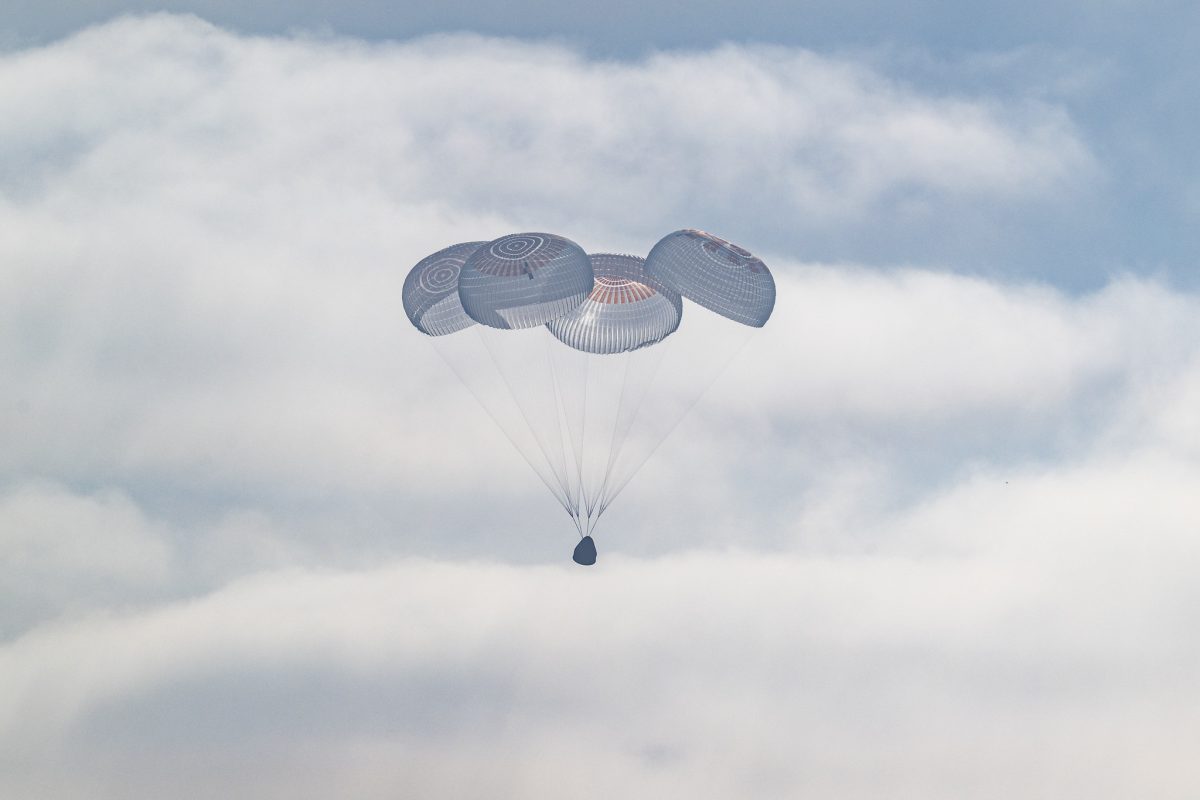
Freedom undocked from the station on October 7. The journey to Earth lasted more than 27 hours, with the spacecraft operating autonomously throughout. On October 8, Dragon fired its thrusters for the final time, slowed down, and left orbit. During reentry into the dense layers of the atmosphere, its heat shield reached approximately 1,927°C.
NASA continued assessing the precise splashdown location until the last moment: recovery teams needed calm seas, so everything depended on the weather off the California coast. The capsule was scheduled to touch down in the water at 11:34 a.m. Eastern Time, or 6:34 p.m. Kyiv time.
The “Worm” on the Hull
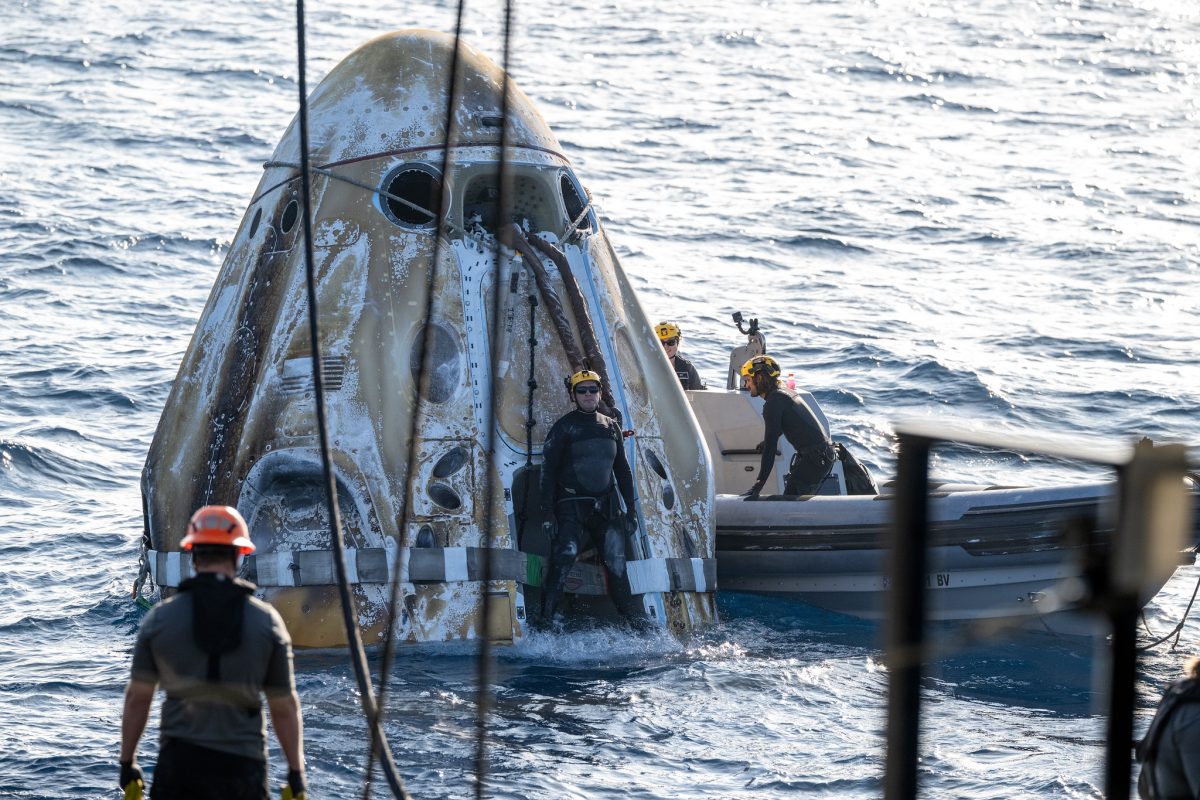
NASA photographer Keegan Barber photographed Freedom shortly after splashdown, once the capsule had been lifted onto the deck of SpaceX’s recovery vessel Shannon. The SpaceX team is working around the spacecraft, and NASA’s logo, with its smooth, rounded lettering, is clearly visible on the hull. This shape earned it the nickname “the worm.”
The agency introduced the worm in 1975, and it became a feature of the shuttle era. In 1992, NASA retired it in favor of the classic emblem featuring a blue circle, stars, and an orbit, known as “the meatball.” The rounded logo returned in 2020, when a crewed Dragon flew to the ISS for the first time on the Demo-2 mission. Since then, it has appeared on rockets and spacecraft—and now in photographs of capsules returning from orbit.
