

Astronomical observations are often associated with remote high-altitude observatories and trips to places with zero light pollution. However, a recent work by renowned astrophotographer Andrew McCarthy proves that a spectacular scientific image can be taken even from the parking lot of a budget Quality Inn hotel in Florida, provided that the moment and the capabilities of the equipment are used correctly.
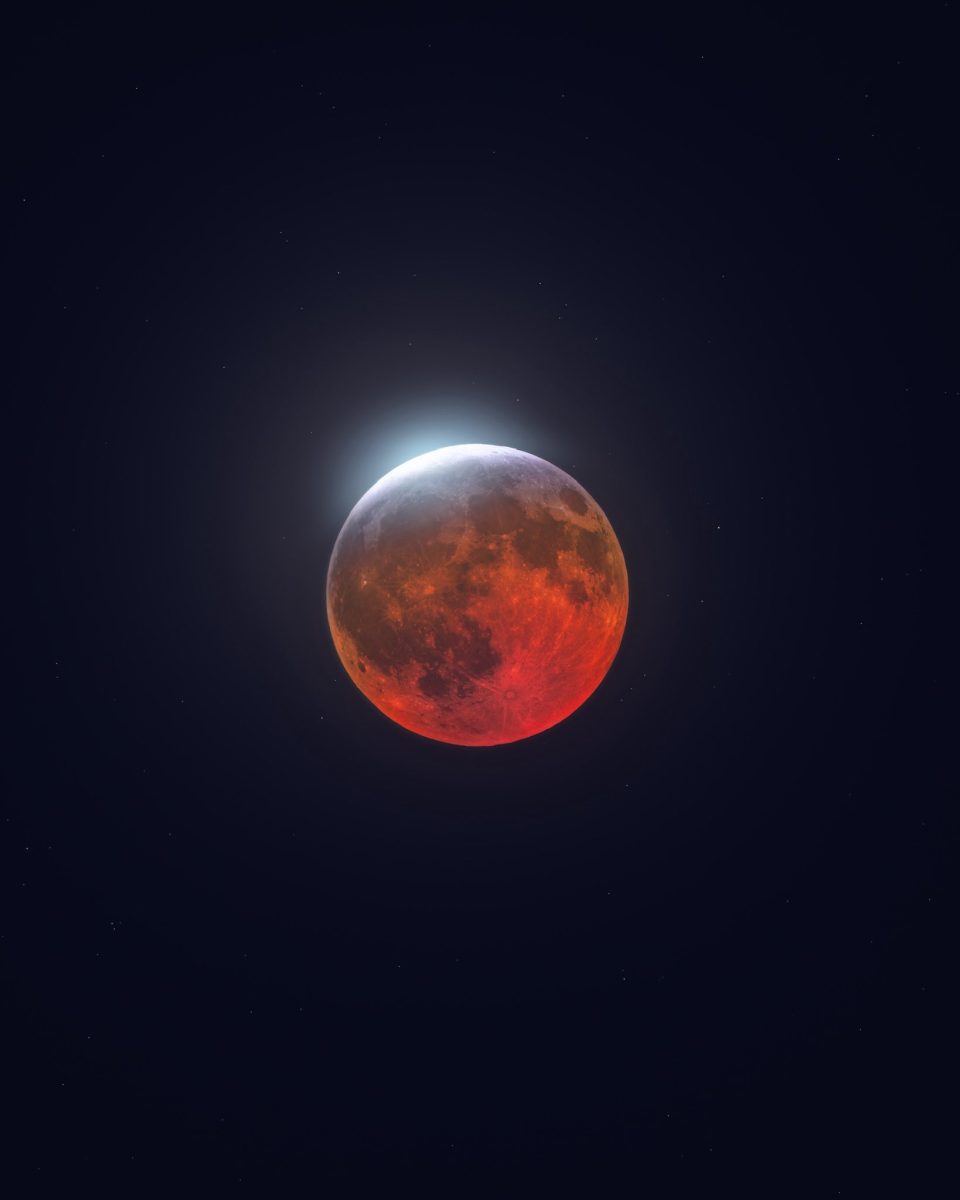
The photographer focused on a partial lunar eclipse, during which Earth’s shadow covered 96% of the surface of our natural satellite. Only a narrow 4% strip remained illuminated by direct sunlight.
The Blood Moon effect occurs because of the optical properties of our atmosphere. When Earth is positioned between the Sun and the Moon, sunlight passes through our planet’s atmosphere. The short-wavelength blue portion of the spectrum is intensely scattered by the gaseous envelope, while the longer red wavelengths are refracted and bent toward the Moon. Returning to observers, this reflected light gives the lunar surface a rich dark-red hue. Although the human eye can easily detect this change in color, the digital sensors of modern cameras can emphasize and reveal it even more vividly.
Light Pollution
The main challenge for McCarthy while shooting from the parking lot was the bright glare from streetlights. To neutralize this interference and reproduce the spectacle as the human eye sees it, the photographer used a complex multi-exposure technique.
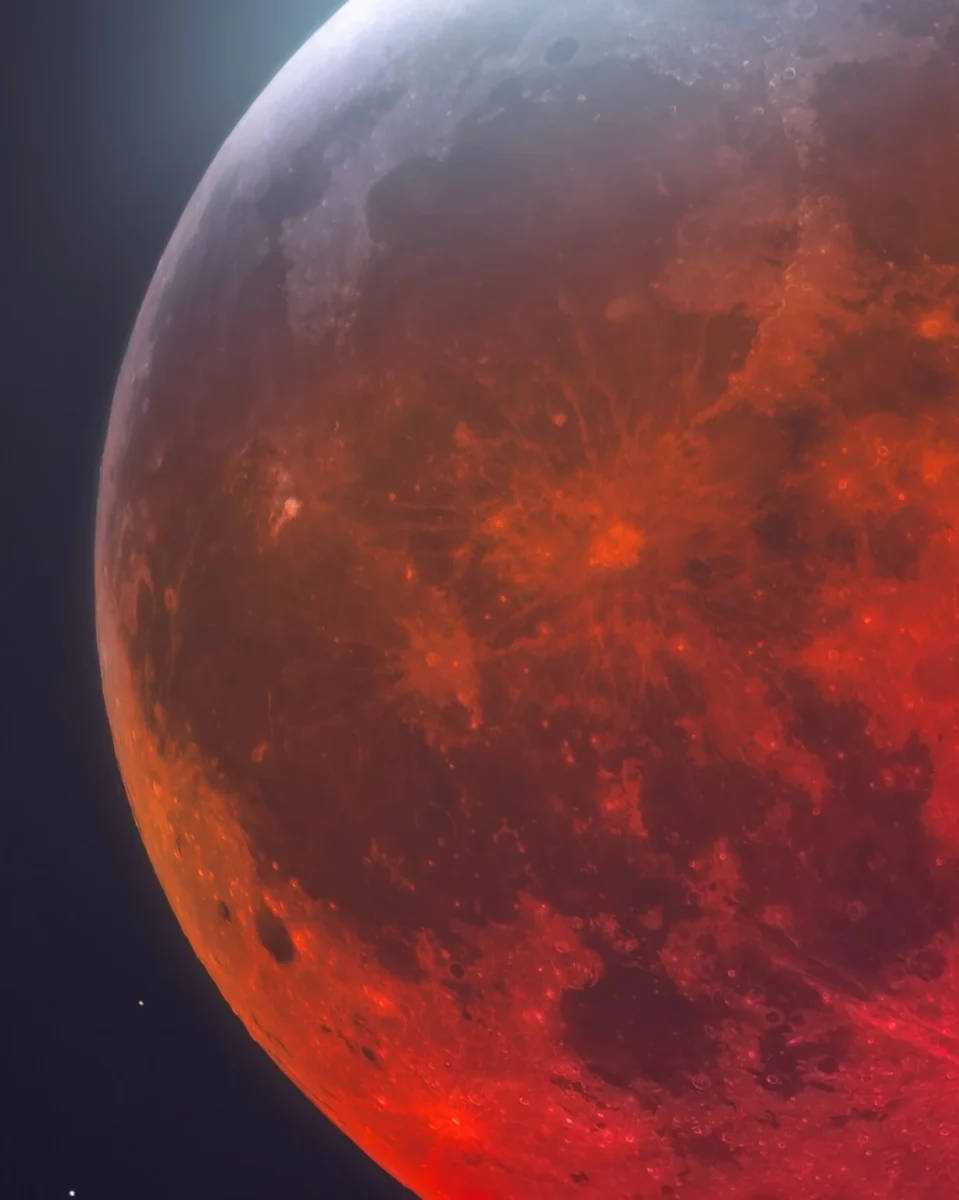
The final image is a combination of 30 separate photographs taken at intervals of several seconds. Such a short interval was critically important so that Earth’s shadow on the lunar surface would not shift significantly. In addition, each frame was taken with a different exposure time — from an extremely fast 1/1000 of a second to a long 4-second exposure. This made it possible to reveal both the brightest part at the top of the Moon that remained outside the shadow and the finest surface details immersed in the crimson darkness.
Victory Over the Clouds
The project was threatened by unfavorable weather forecasts. As a precaution, McCarthy had set up remote cameras in several states in advance — Arizona, Texas, and Florida — because all of them were expected to have dense cloud cover. In the end, it was over Florida that the sky briefly cleared, allowing him to capture the rare phenomenon.
“The best place for stargazing is the top of a mountain. But the second most beautiful is wherever you are right now,” McCarthy noted, emphasizing that ideal conditions are not necessary for taking the first steps in astrophotography, since even modern smartphones today are capable of capturing basic images of a lunar eclipse.
Previously, we showed what a lunar eclipse looks like from space.
According to PetaPixel
