

A radio signal from an exoplanet has been separated from the emission of its host star for the first time. The source turned out to be auroras on a young gas giant in the Beta Pictoris system. The point from which the radio waves originate was determined by tying the observations to distant bright galaxies. The strength of the planet’s own magnetic field was estimated from the signal frequency. Direct measurements of this kind have never before been obtained for worlds beyond the Solar System.
Half an Arcsecond
The Beta Pictoris system is located about 64 light-years from Earth. At least three gas giants orbit there, the largest of which, planet b, has a mass of nearly 12 Jupiters. In the sky, it moves no more than 0.55 arcseconds away from its star. That is roughly the same angular size as a two-centimeter coin viewed from a distance of seven and a half kilometers.
Previously, radio bursts in similar systems could not be unambiguously linked to a planet. A magnetically active star could also produce radio waves of this type. An earlier search at lower, megahertz frequencies also produced no result.
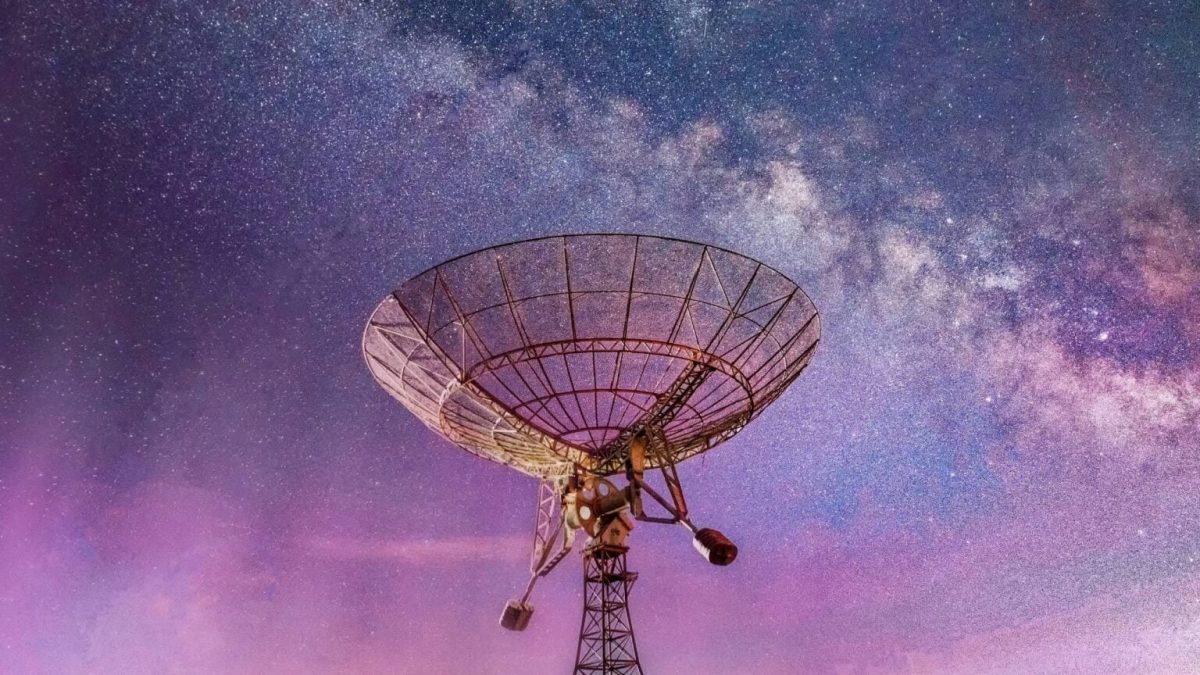
A team from the Harvard-Smithsonian Center for Astrophysics and the University of Oregon observed Beta Pictoris four times in 2025 and 2026 using the MeerKAT antenna array in South Africa. The image was tied to the celestial coordinate grid using nine quasars, extremely bright nuclei of distant galaxies. The radio source coincided with planet b. The probability that measurement errors could have randomly shifted a signal from the star by that distance is only about six in a million. The findings, presented in a preprint on arXiv, have not yet undergone peer review.
A Field a Thousand Times Stronger Than Earth’s
The signal consisted of short, repeating bursts with a degree of circular polarization ranging from 40 to 70%. As ScienceAlert reports, this is a classic signature of auroras. The radiation is produced by electrons moving along magnetic field lines, and the frequency of the waves depends directly on the field strength. The mechanism is known as electron cyclotron maser instability and also operates near the poles of Earth and Jupiter.
The highest frequency reached 3.5 gigahertz, the upper limit of the observing range. This implies a planetary magnetic field strength of at least 1.25 kilogauss. The gauss is a unit used to measure magnetic field strength, while the prefix “kilo” means one thousand. An ordinary refrigerator magnet produces about 50 gauss near its surface, while Earth’s average field is only about half a gauss. The gas giant exceeds the first value by at least 25 times and the second by 2,500 times. The result agrees with a dynamo model — the internal mechanism that sustains magnetism. For a young, massive world, the model predicted about 1.2 kilogauss.
A Nine-Hour Day
The authors link the energy source for the auroras to rapid rotation. A day on Beta Pictoris b lasts about nine hours, according to James Webb data, while on Jupiter it is almost ten hours. The plasma-filled magnetosphere far from the surface lags behind the planet. This offset generates currents along the magnetic field lines that accelerate electrons.
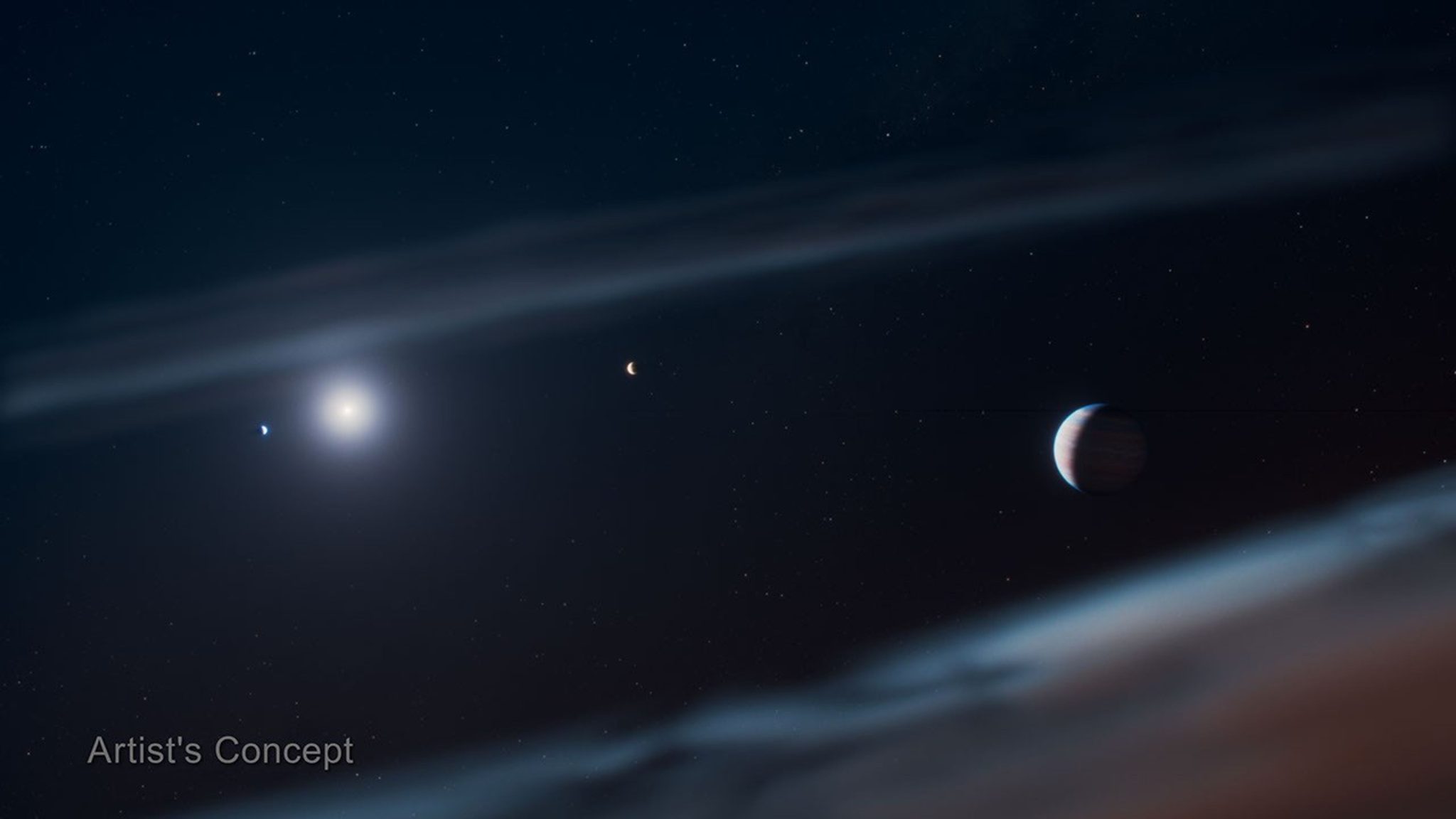
The plasma may come from the atmosphere of the gas giant itself or from gas in the debris disk around the star. Stellar wind and interaction with a moon, as in the Jupiter–Io system, would provide too little power, so the authors rejected those explanations.
The system is also being studied by Ukrainian astronomers. Daria Dobrycheva and Maksym Vasylenko of the Main Astronomical Observatory of the National Academy of Sciences of Ukraine used machine learning to confirm the presence of exocomets in the system.
An Unexpected X-Ray Hypothesis
Weak X-ray emission from the system had been detected earlier and attributed to the central star. The authors of the new study cautiously suggest that planet b may also contribute to it. In that case, the ratio between the two types of emission would make it resemble ultracool dwarfs, a category that includes the coolest stars and substellar objects.
The surface temperature of Beta Pictoris is about 8,090 kelvins. This is almost exactly the threshold above which isolated A-type stars stop emitting in this range. It is impossible to separate the star and the planets in images from the Chandra observatory.
The Next Targets
Another seven gas giants in five systems within about 147 light-years of Earth are located far enough from their stars for this method to be used. Detecting their signals would require instruments five or even seven times more sensitive than those available today. The authors expect such capabilities from next-generation radio observatories.
Observations of Beta Pictoris b itself should also continue. The bursts should vary with the planet’s rotation, which could make it possible to determine the tilt of its magnetic axis and the geometry of its magnetic field.
