

The Mission Extension Vehicle (MEV) spacecraft kept an Optus communications satellite in its required orbital position for more than a year. This week, it undocked from the satellite. A new robotic system is being prepared to take its place. In this way, Northrop Grumman is changing the approach to extending the operational life of satellites in orbit.
A New Approach to Servicing
The Mission Extension Vehicle, which Northrop Grumman calls the MEV, worked with a satellite belonging to Australian operator Optus for more than a year. It was docked to the rear of the satellite and kept it in its designated orbital position. The MEV has now detached to make way for a new spacecraft.
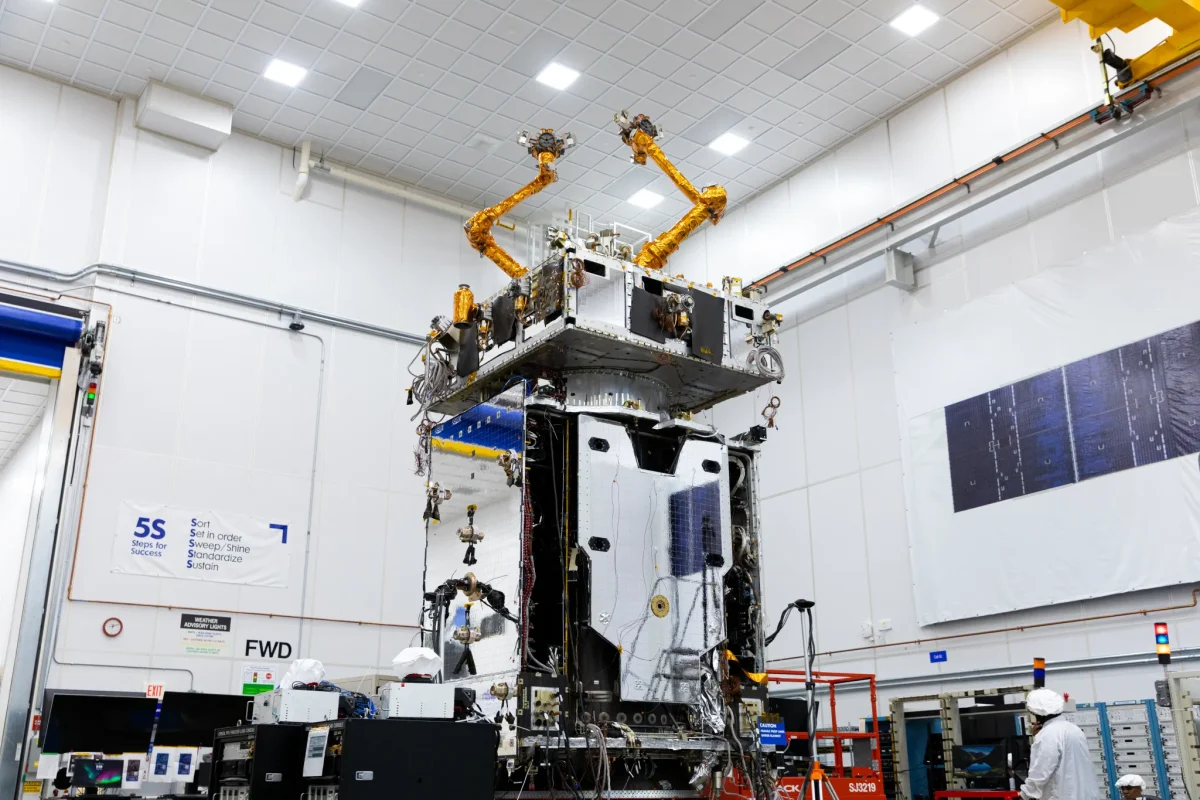
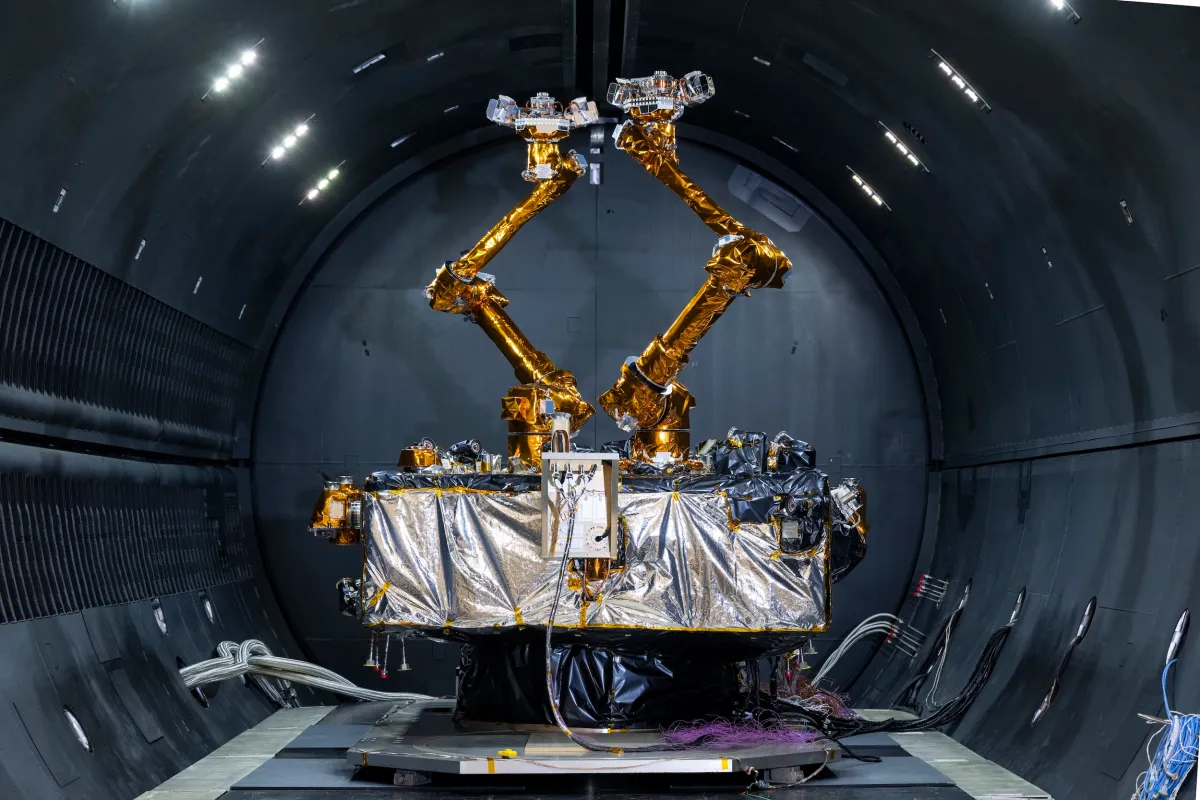
In July, the company launched four spacecraft into orbit aboard a SpaceX Falcon 9 rocket. Among them was the Mission Robotic Vehicle (MRV), a robotic servicing spacecraft equipped with two manipulators developed with the participation of DARPA. The other three spacecraft, Mission Extension Pods (MEP), are compact propulsion modules designed to extend satellite lifetimes.
A Technology That Changes the Rules
Communications satellites usually cease operating not because their electronics fail. They consume fuel to maintain their orbital positions, and once that fuel is exhausted, their missions come to an end. The Optus satellite was launched in 2009 with an expected service life of 15 years. In 2027, one of the new Mission Extension Pod propulsion modules will be attached to it. After that, the satellite could continue operating for up to another six years, if everything goes according to plan.
According to Cassie Wong, Northrop’s director of logistics and servicing, the goal is to create sustainable space infrastructure. Operators will no longer have to lose expensive spacecraft simply because they have run out of fuel.
Business Model and Competition
There are currently two MEVs in orbit, launched in 2019 and 2020. Together, they have provided ten years of life extension for three customers. MEV-1 will wait for a new customer in a temporary orbit where the spacecraft remains between missions. MEV-2 will continue working with an Intelsat satellite until 2030.
The new MRV changes the business model itself. Operators will purchase and own the MEPs, which will remain attached to their satellites. This will allow the MRV to service more spacecraft one after another because it will not have to remain with a single customer for an extended period. One robotic spacecraft will be able to service several customers sequentially, whereas an MEV effectively works with one customer per mission cycle.
Unlike most satellites, the MRV is designed to be refueled directly in orbit. This is a demonstration of a technology that could become standard for in-space servicing. For now, the additional weight and cost of such adaptations continue to discourage operators.
Military Dimension and Prospects
The technology also has defense applications. DARPA participated in the development of the MRV’s robotic arms, TechCrunch reports. The U.S. Space Force has previously described a Chinese servicing spacecraft equipped with manipulators as a potential weapon because of its theoretical ability to capture and disable hostile satellites. Northrop emphasizes that its spacecraft are intended exclusively for servicing.
Wong notes that the MRV will also be able to operate in low Earth orbit, where valuable assets likewise require life-extension services. Startup Katalyst Space is preparing a similar mission for NASA’s Swift space telescope, which has encountered problems in orbit. Competition in the field of orbital servicing is already taking shape.
