

The Milky Way is a majestic spiral system that is home to hundreds of billions of stars, including our Sun. However, it did not always look the way we see it today. A new study by an international team of astrophysicists has shown that our galaxy acquired a significant portion of its mass by absorbing smaller stellar systems. Scientists have managed to identify the earliest known case of such “galactic cannibalism.”
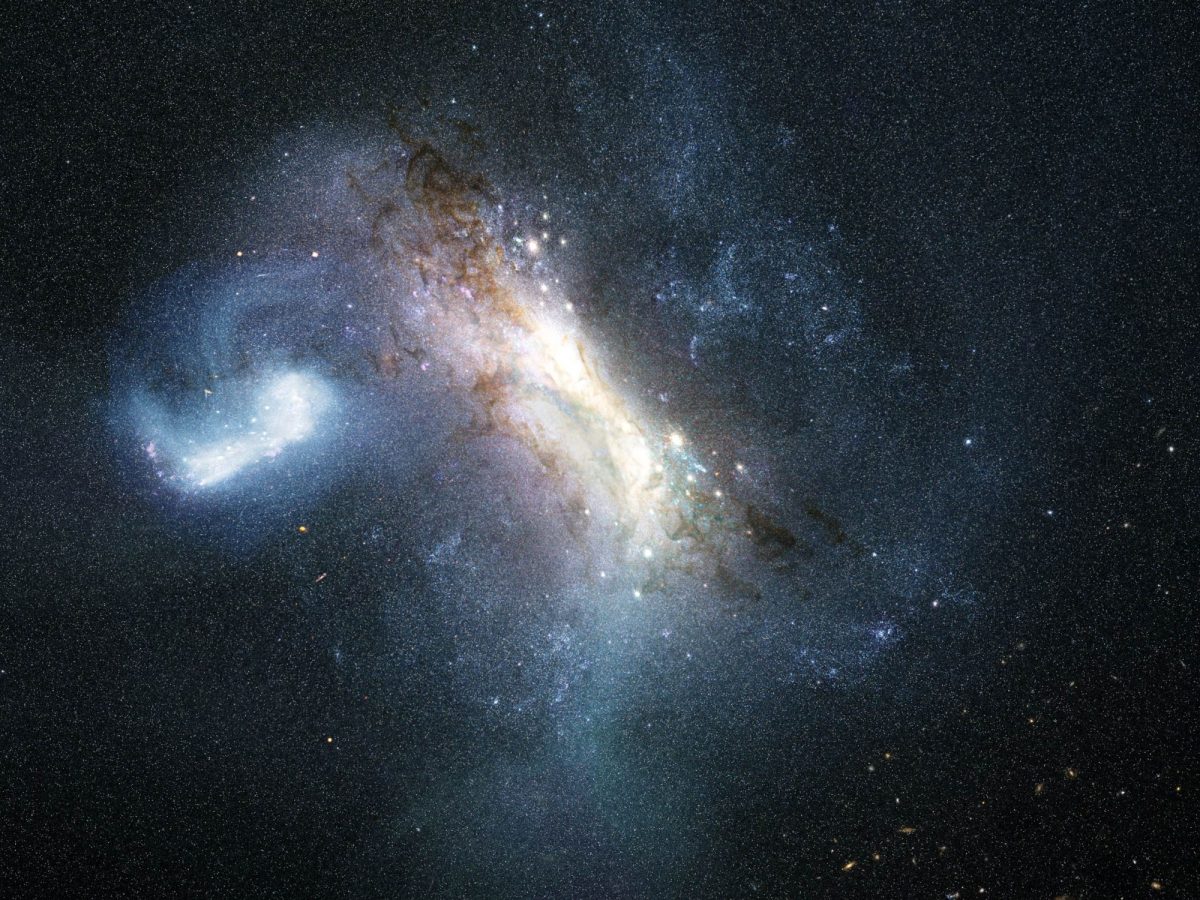
By observing dense star clusters near the central regions of the Milky Way, astronomers found evidence of a major merger that occurred approximately 11.8 billion years ago. At that time, the Universe was less than 15% of its current age, and only about 2 billion years had passed since the Big Bang.
The first victim galaxy was named LKH, short for Low-energy-Kraken-Heracles. It was a dwarf system, but at the time of the collision it was quite substantial: the mass of its stars was approximately 500 million solar masses, which was about one quarter of the size of the Milky Way at that time.
A Quiet Death for Stars and an “Explosion” for Gas
The study was led by astrophysicist Davide Massari of the National Institute for Astrophysics (INAF) in Bologna, Italy. Using the Hubble and Gaia space telescopes, scientists studied the ages, trajectories, and chemical composition of star clusters within the innermost 20,000 light-years of the Milky Way.
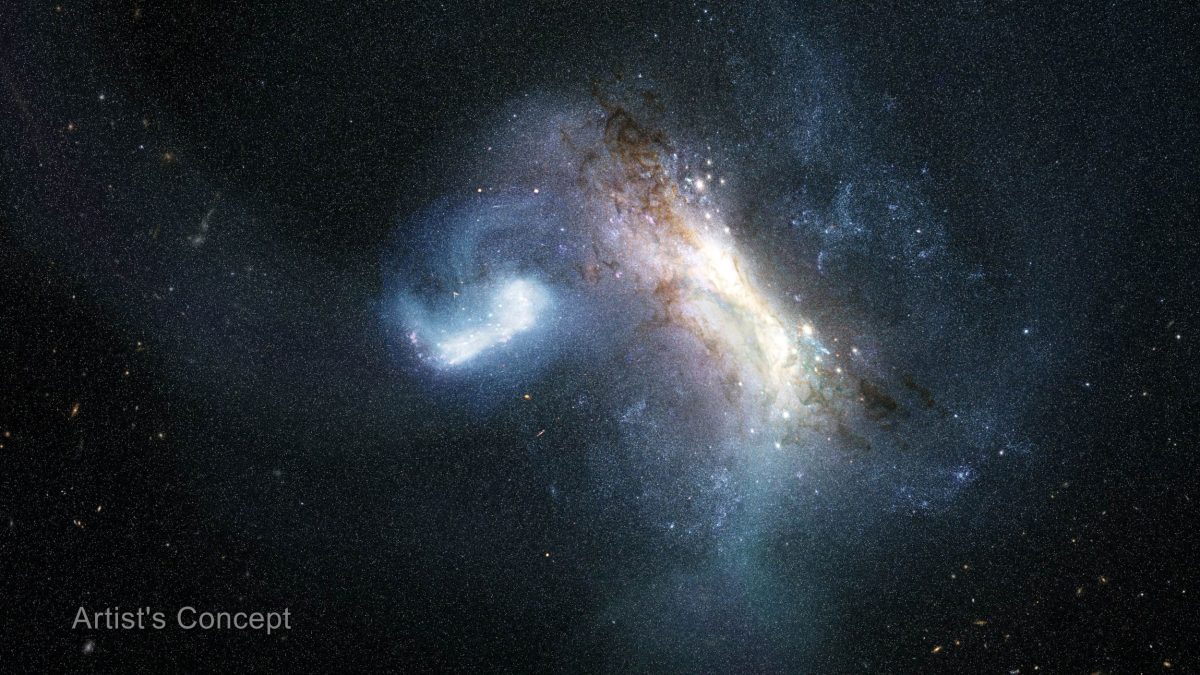
As the researchers note, the merger was harmless for the stars themselves — because of the enormous distances between them, no direct collisions between stars occurred. However, for interstellar gas, the process was far more violent: collisions between gas clouds from the two galaxies triggered a powerful burst of star formation. Along with gas and stars, the Milky Way also acquired large amounts of mysterious dark matter, which helped it rapidly strengthen its gravitational pull.
A Serial Devourer of Galaxies
The merger with LKH was only the first stage in a long history of galactic conquest by our galaxy. Scientists currently know of two other major absorption events:
- Approximately 1.8 billion years after the LKH event, the Milky Way absorbed the dwarf galaxy Gaia-Enceladus.
- For the past 6 billion years, the process of absorbing the Sagittarius Dwarf Galaxy has been continuing.
Scientists are convinced that many stars formed in the LKH dwarf galaxy are still hidden in the inner regions of the Milky Way. However, searching for them is complicated by dense clouds of interstellar dust that obscure the center of the Galaxy.
Each of these ancient events changed the gravitational and chemical landscape of the Milky Way, preparing the conditions for the later formation of the Solar System, planet Earth, and ultimately life itself.
Earlier, we explained whether the Milky Way and the Andromeda Galaxy will collide.
According to NASA
