

A quarter of a century ago, UNESCO designated November 10 as World Science Day for Peace and Development to bring science closer to society and make it accessible to all. To commemorate this anniversary on November 12, the organization will host a conference on open science — that is, open access to scientific data and the participation of people outside the scientific community in research. Many people still regard science as the preserve of professors working in laboratories. Today, however, schoolchildren and volunteers without scientific degrees are helping to discover new planets and asteroids, often working from home using ordinary computers. Researchers themselves provide them with access to their data, enabling anyone to participate in this work.
Volunteers contributed to a scientific discovery
In the summer of 2019, Wolf Cukier, a 17-year-old high school student from New York State, began an internship at NASA’s Goddard Space Flight Center. He was granted access to data from the TESS space telescope, which astronomers use to search for planets by detecting brief decreases in a star’s brightness as a planet passes in front of it. On a graph of a star’s brightness, such a transit appears as a brief dip; however, this pattern is not unique to planets. It can also result from two stars orbiting closely and alternately eclipsing one another. Wolf Cukier, however, did not work with raw data. Volunteers participating in the Planet Hunters TESS citizen science project had already reviewed the telescope’s records and flagged systems in which the decreases in brightness resembled mutual eclipses between two stars.
These eclipses occur at regular intervals and last for consistent durations. On the third day, Wolf Cukier observed changes in brightness in the TOI-1338 system that did not conform to this pattern and varied in duration. “At first, I thought it was a stellar eclipse, but the timing didn’t match,” Wolf Cukier later recalled. For several weeks, he and his colleagues investigated this hypothesis and ultimately determined that a planet was orbiting both stars. The stars orbit a common center of mass — the point of equilibrium between them — so whenever the planet passes in front of one of the stars, that star is at a different point in its orbit and moving at a different speed. Consequently, the dips in brightness vary in duration. Wolf Cukier and six volunteers from Planet Hunters TESS co-authored the scientific paper on this planet.
A NASA animation depicts the TOI-1338 system in the constellation Pictor, where a planet larger than Neptune but smaller than Saturn orbits two stars. Source: YouTube, NASA Goddard.
In this account, individuals without formal scientific credentials became full-fledged participants in the discovery process. UNESCO likewise sought to engage the public in science when, in 2001, it designated November 10 as World Science Day for Peace and Development. This year marks the twenty-fifth anniversary of the observance. Why, then, do scientists entrust volunteers with the initial screening of their data?
Why astronomers need people to pay attention
The answer lies within the dataset. Using TESS, researchers have recorded changes in the brightness of so many stars that no scientific team could examine them all manually. Algorithms filter out most of the data. However, some objects are recognizable to the human eye at first glance, and describing them to an algorithm is highly challenging. For this reason, Planet Hunters TESS and dozens of other projects operate on Zooniverse, the world’s largest citizen science platform.
A similar phenomenon occurred in the Hubble Space Telescope’s archive. As the telescope photographed distant galaxies, asteroids inadvertently crossed the field of view, leaving trails in the images. Because the telescope orbits Earth, these trails appear curved, making it difficult to develop an algorithm capable of identifying them reliably. In 2019, the European Space Agency (ESA) launched the Hubble Asteroid Hunter project. More than 11,000 volunteers identified trails in images captured over nearly two decades. Using these annotations, researchers trained an algorithm to scan the remainder of the archive.
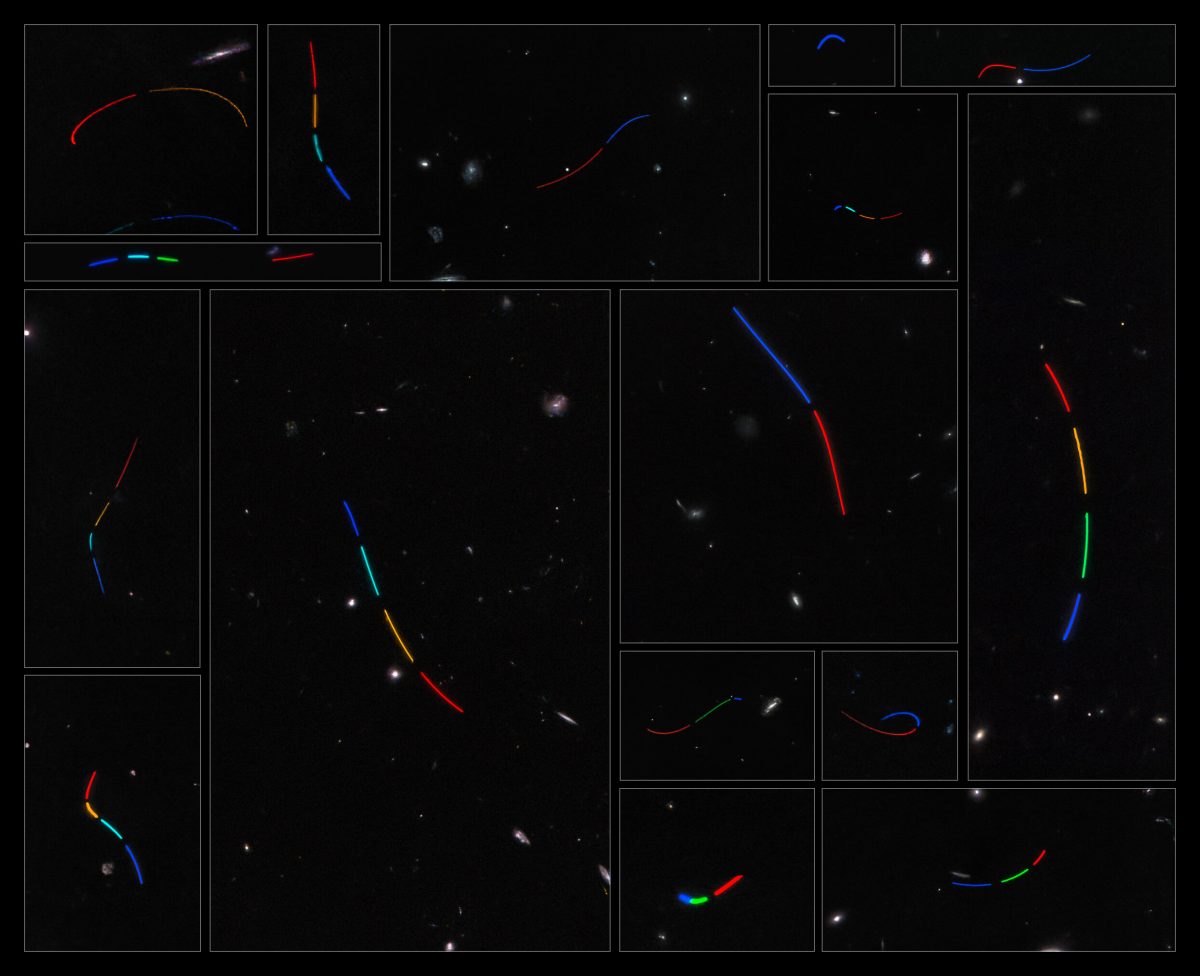
Collectively, the team and the algorithm identified 1,701 tracks. Approximately one-third of these tracks were associated with known asteroids, while 1,031 did not correspond to any object in the catalogs. These tracks are likely to represent previously unknown asteroids that are too faint to be detected by most ground-based observations. In projects of this kind, several volunteers independently review each image. Accordingly, the results reflect the collective assessment of the majority rather than the opinion of a single individual. Experts draw the final conclusions.
In the Hubble Asteroid Hunter project, for example, the study’s three authors reviewed all detected traces and filtered out false positives, particularly streaks caused by charged particles from space striking the telescope’s camera. The volunteers’ results were published in the scientific journal Astronomy & Astrophysics only after this verification. However, in some tasks, computational power, rather than human attention, is the determining factor.
Searching for pulsars using personal laptops
This level of computational power is required, for example, to search for pulsars. A pulsar is a neutron star — the ultra-dense remnant of a massive star following an explosion. Neutron stars rotate rapidly, and narrow beams of radio waves emanate from their magnetic poles. Each time a beam passes Earth, a radio telescope detects a brief pulse, which repeats with clockwork precision. The most difficult pulsars to detect are those in close binary systems with another star. As the stars orbit one another, the companion moves toward and then away from us, causing the pulses to arrive alternately earlier and later. To detect these pulsars, scientists must sift through countless possible orbits.
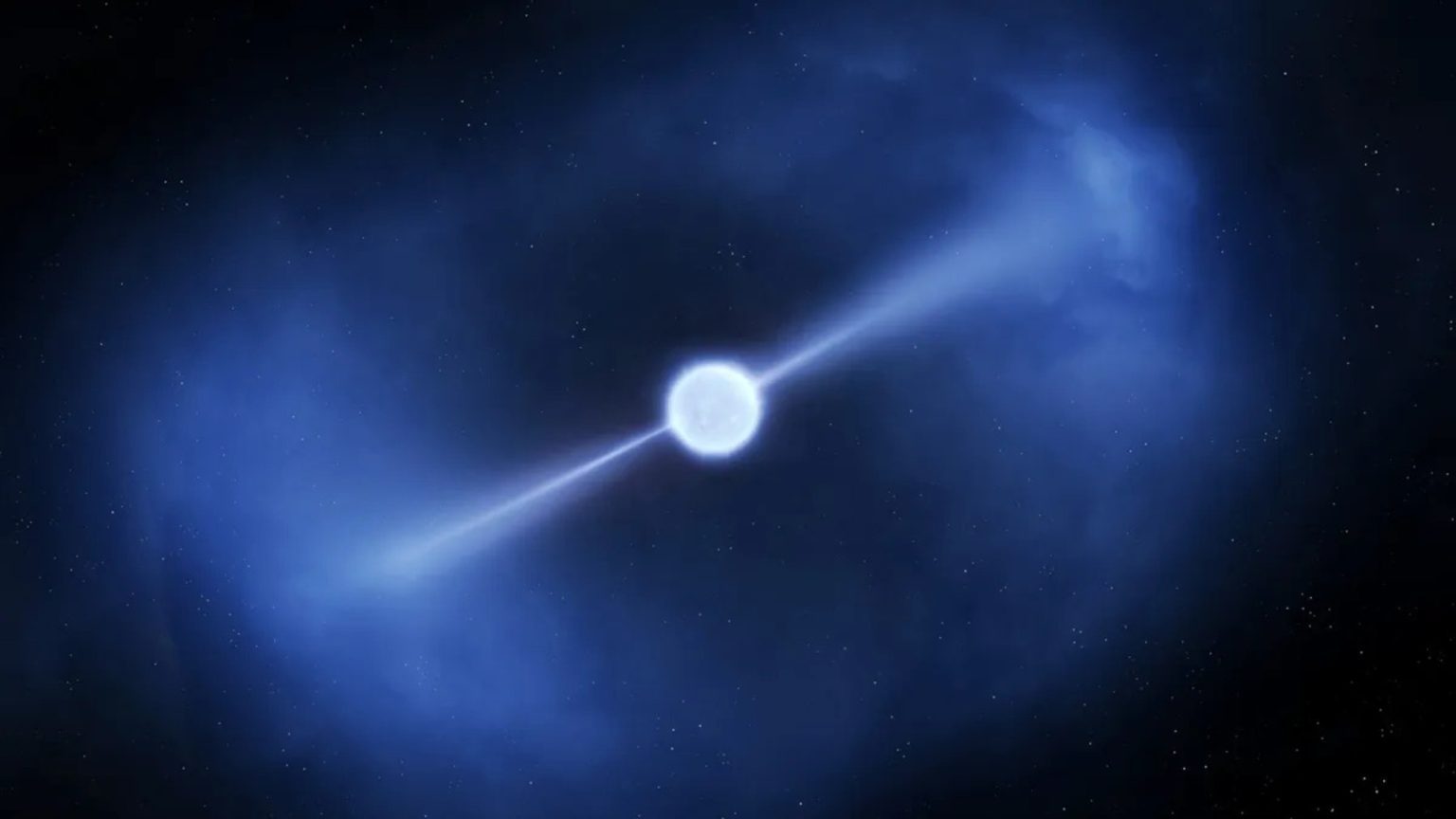
Since 2009, the Einstein@Home volunteer project has searched for such pulsars in data collected by the Arecibo radio telescope. Participants install a specialized program, and data segments are transmitted to their computers via the Internet for processing when the computers are not in use. According to 2023 data, more than 15,000 volunteers contributed their computing power in this manner. In the summer of 2010, the first pulsar was discovered using this approach, marking the first astronomical discovery made possible by computations on volunteers’ computers. Since then, the project has credited itself with the discovery of more than 90 new neutron stars. The owner of the computer on which the data leading to each discovery was processed receives a discovery certificate bearing their name.
However, these calculations identify only potential pulsars. After observations from the Arecibo radio telescope were processed, approximately 60 billion candidates were identified. Most, however, proved to be noise or terrestrial radio interference rather than pulsar signals. In 2023, the project team therefore launched Pulsar Seekers on Zooniverse, where volunteers now review pulsar candidates selected by algorithms. By early 2025, more than 3,500 volunteers had reviewed nearly half a million candidates. In the fall, scientists conducted additional observations to verify the most promising candidates. In both projects, volunteers assess data that scientists have already prepared. Other projects, however, enable participants to create images from raw data.
Photos of Jupiter by a designer
Raw data from space telescopes are also freely available. Observations from the Hubble and James Webb Space Telescopes are stored in the MAST archive, NASA’s official repository for space telescope data, and some are uploaded immediately after collection. However, the telescopes do not transmit color photographs to Earth; instead, they send individual black-and-white images captured through various light filters. These observations often involve infrared light, which is invisible to the human eye. To create a color image, the individual images are combined, and a specific color is assigned to each filter. This process can be completed at home using free software.
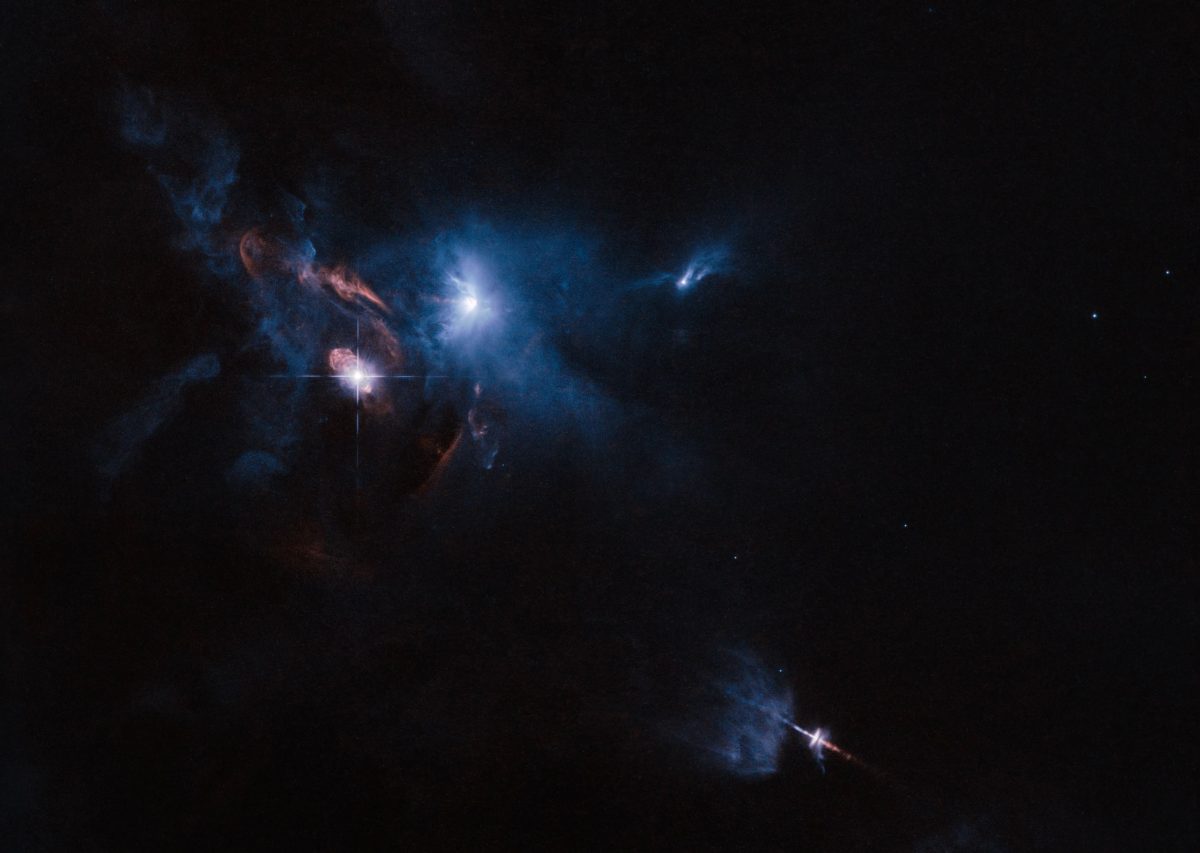
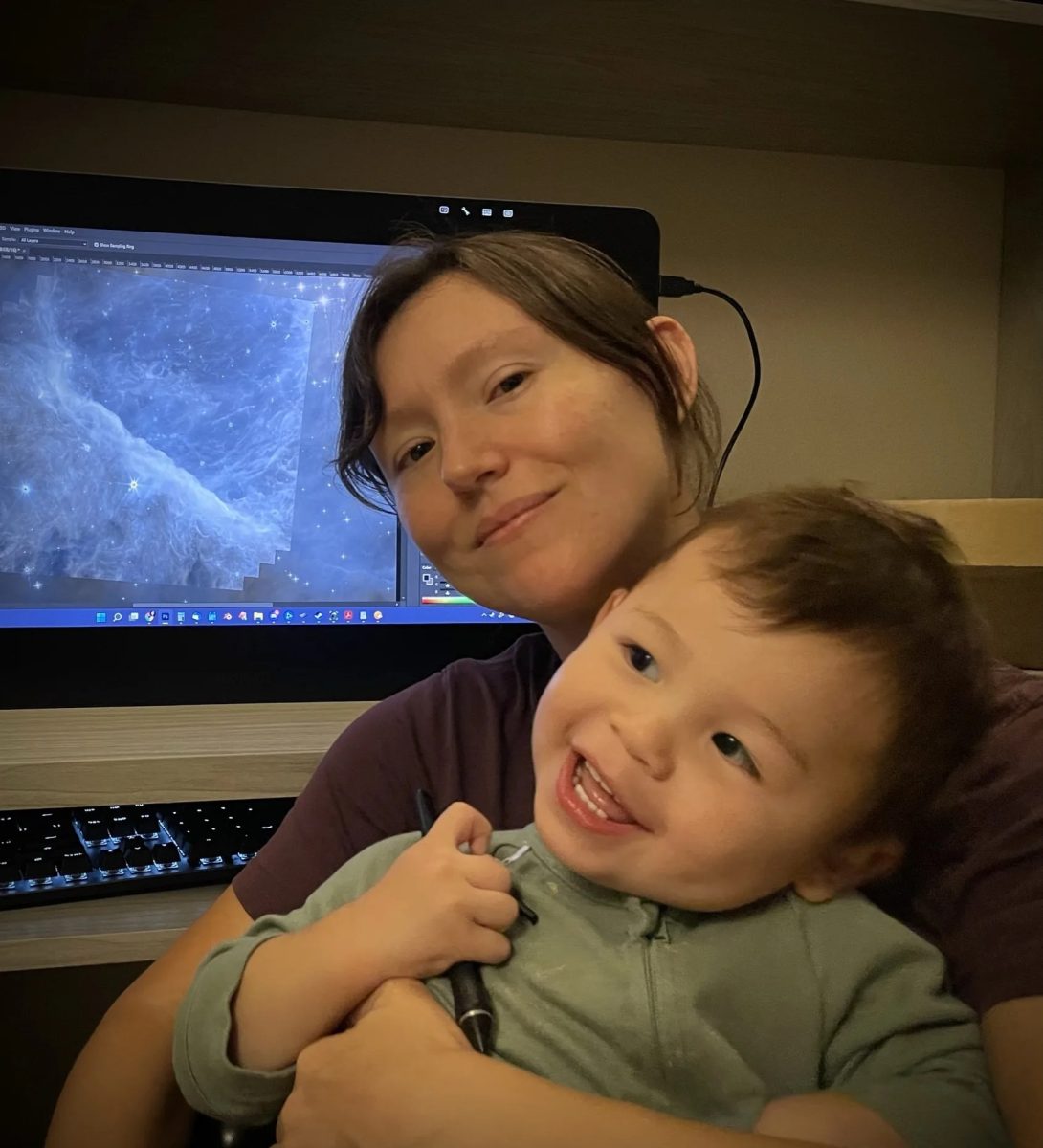
In 2012, the European Space Agency announced the “Hubble’s Hidden Treasures” contest. Participants were invited to identify and process observations in the Hubble archive that had not yet been used to create published images. Nearly 3,000 entries were submitted. Third place was awarded to Judy Schmidt, a graphic designer with no formal training in astronomy, for her image of the young star XZ Tauri. She later explained that she had long wanted to try processing astronomical images but had assumed she would need to purchase a telescope and travel to locations with dark skies, away from city lights.
Source: NASA
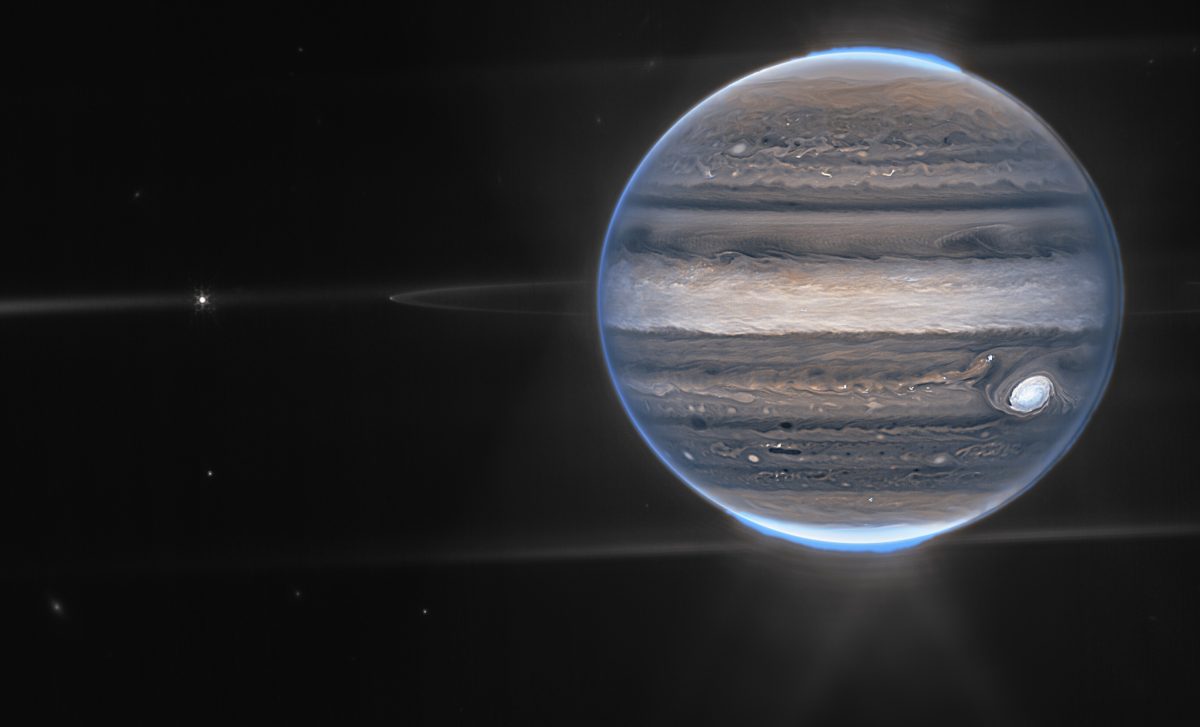
Since then, Judy Schmidt has worked with NASA data for more than a decade and currently processes images as a staff scientist at the Harvard-Smithsonian Center for Astrophysics. In 2022, scientists studying Jupiter with the James Webb Space Telescope collaborated with her to transform the data into images. These images depict Jupiter’s polar auroras, haze, and storms, helping scientists investigate the planet’s weather. In official NASA images, Judy Schmidt is credited alongside the lead scientist. Although it is possible to work with such data independently, some formats require the efforts of entire teams.
NASA open data hackathon
For teams such as these, NASA organizes the NASA Space Apps Challenge annually. This hackathon brings together programmers, designers, engineers, and inventors who have 48 hours to develop a working solution to a challenge proposed by NASA or its partners. The organizers emphasize their aim of encouraging participants to work with open data published by NASA and other space agencies. NASA has collected such a vast amount of data that its specialists cannot develop every possible solution based on it; consequently, hackathon participants propose some of these solutions. In 2025, more than 114,000 people from 167 countries and territories took part in the hackathon, submitting over 11,500 projects.

Ukrainians participate in the event annually, and in 2025, the local stage in Dnipro — organized by the nonprofit “Noosphere Association” — became Europe’s largest hackathon venue. At the global level, Ukrainian teams have won three times. The first was FireWay, which received the award for best use of technology at the 2020 hackathon. In 2023, the Storm Prophet team received the award for best use of data for its project forecasting geomagnetic storms — disturbances in Earth’s magnetic field that interfere with communications and satellite operations. To produce these forecasts, the team analyzed data from the DSCOVR satellite, located between the Sun and Earth. The satellite measures the solar wind, a stream of particles emanating from the Sun. In 2024, Kyiv-based NVS-knot won the “Galactic Impact” category with a program that enables farmers to analyze NASA data and manage water resources more effectively.
You may begin today
To participate in Zooniverse projects, simply register on the website. No specialized training or minimum time commitment is required, and many projects provide a brief tutorial before you begin. Two Zooniverse projects offer a Ukrainian-language interface. In Disk Detective, participants search for dust disks around nearby stars, where planets form. In Gaia Vari, they classify stars with variable brightness using data from the European Space Agency’s Gaia mission. To participate in Einstein@Home, you must install the software; registration takes only a few minutes.
A brief video explaining how Zooniverse volunteers assist scientists in analyzing large datasets. Source: YouTube, The Zooniverse
Today, participating in scientific research may require no more than access to a home computer. Science is increasingly accessible to everyone: the volume of available data now exceeds what experts can analyze independently, enabling any observant individual to contribute to research. It is possible that this data contains a signal that has yet to be recognized, and that the person who makes the discovery is reading this article now.
