

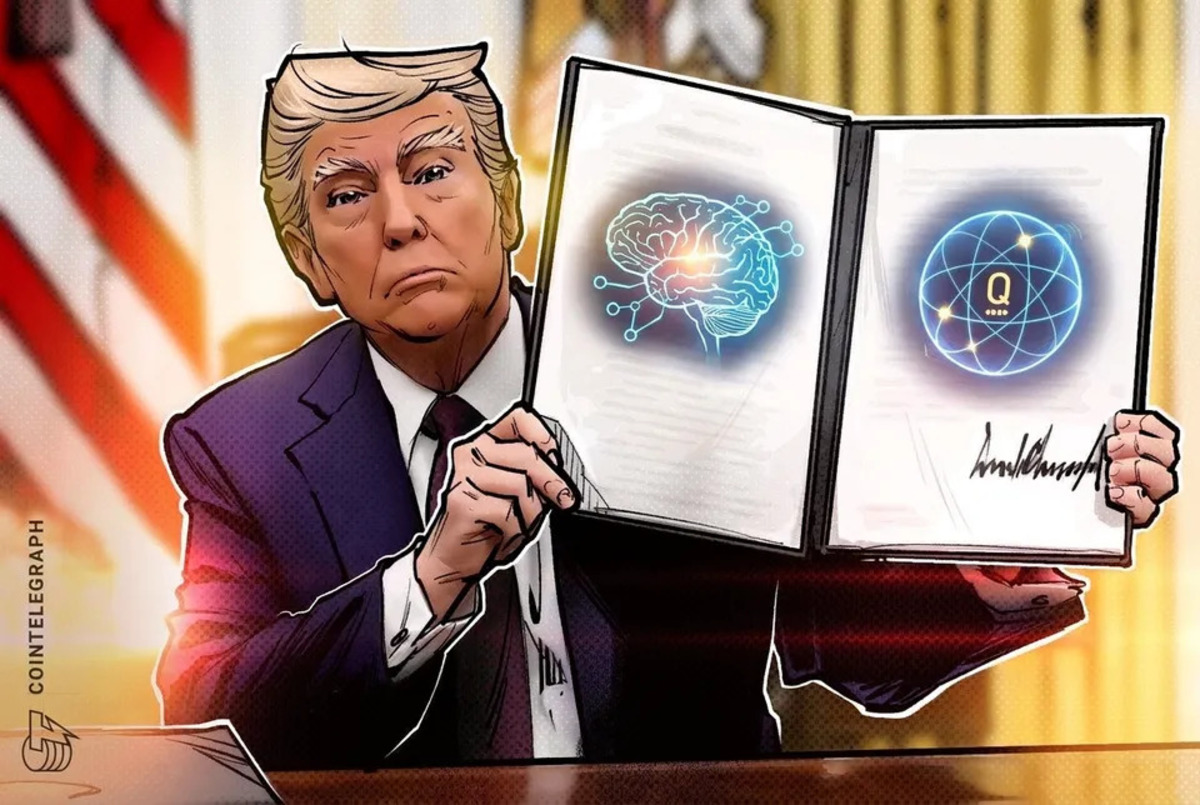
The U.S. government has announced a package of scientific initiatives that the White House described as the most ambitious this century. Funding will come from the government, technology companies, universities, and philanthropists. The administration hopes to revitalize American science, with the largest share of funding going toward artificial intelligence for science and scientific computing.
Who Is Contributing, and How Much?
The total package exceeds $6 billion, according to a White House fact sheet. For comparison, developing the James Webb Space Telescope cost NASA nearly $10 billion, making the package worth more than 60% of that amount.
The largest share, $2.4 billion, has been pledged by 11 technology companies for the government’s Genesis Mission program. Under the program, more than 15 federal agencies use artificial intelligence in science, although the White House refers to these technologies as superintelligence.
NVIDIA will contribute $1 billion, while AMD has pledged $500 million. OpenAI will provide $200 million, and Anthropic and Google will each contribute $150 million. These contributions primarily consist of tools and computing credits rather than direct cash payments. Researchers will therefore use the companies’ own computing resources.
The state of Georgia, together with universities and businesses, will invest $1 billion in scientific computing. Federal agencies will allocate more than $100 million to autonomous laboratories.
Quantum Computers
On October 8, the U.S. Department of Energy announced eight priority challenges for the Quantum Genesis Q Competition, with up to $215 million planned for the competition. The challenges span chemistry, materials science, subatomic physics, and applied mathematics.
Funding will go to teams expected to demonstrate the world’s first fault-tolerant quantum computers suitable for scientific tasks. These computers correct their own errors during computation. Without this capability, errors accumulate, making lengthy calculations impossible.
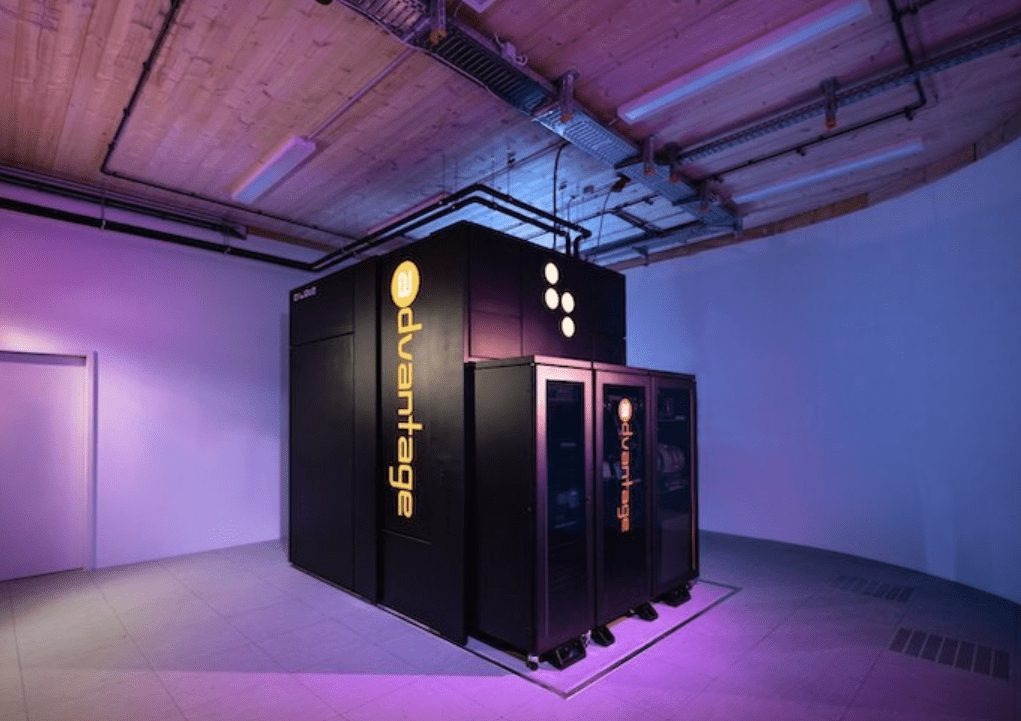
According to Cointelegraph, payments will be made in stages for increasingly powerful systems. The publication notes that a powerful quantum computer could theoretically calculate a cryptocurrency wallet’s private key from its publicly available public key. Such machines do not yet exist.
Reactors and Virtual Cells
The space agency NASA and the U.S. Department of Energy have signed a memorandum on jointly developing nuclear power for space. Plans include the Space Reactor-1 spacecraft, which is expected to launch toward Mars in 2028. The Lunar Reactor-1 fission reactor is intended to become the first on the Moon’s surface, although the document did not specify funding amounts for these projects.
Another $1.8 billion will go toward a virtual cell program launched by the U.S. National Institutes of Health and its partners. The program’s models are intended to predict how cells respond to diseases and potential treatments.
Laboratories and Fellowships
Businesses and philanthropists have pledged more than $310 million to the X-Labs consortium. The money will fund equipment and facilities for independent research teams supported by the government.
The Genesis Mission Fellowship program has a planned budget of $100 million. Doctoral students will be able to complete their dissertations in four years by combining artificial intelligence with another scientific field.
