

The cosmic microwave background (CMB) is the oldest light in the Universe, originating approximately 380,000 years after the Big Bang. It existed long before the first stars or galaxies appeared. By studying this relic radiation, researchers at Columbia University have detected traces of internal gas motions within enormous galaxy clusters.
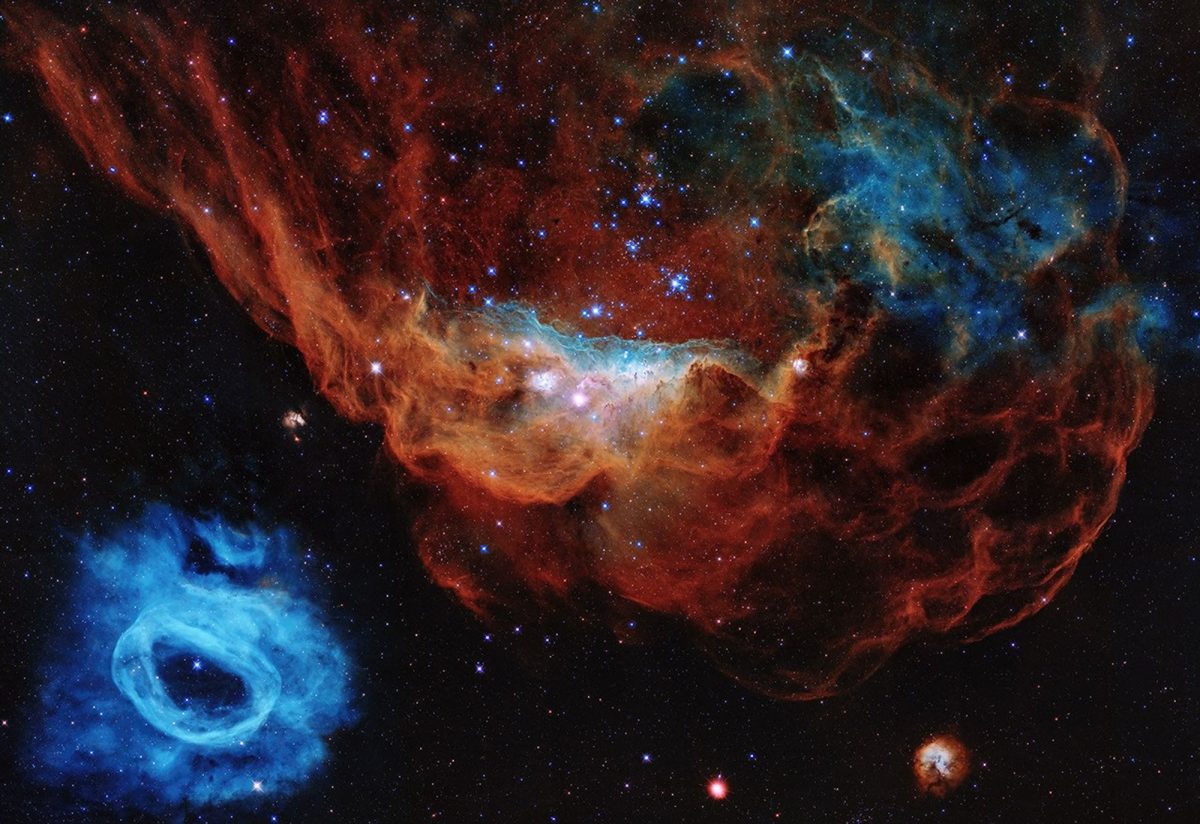
The findings, published in Physical Review Letters, confirm the existence of the rotational kinematic Sunyaev–Zeldovich effect (rkSZ).
The Color of Ancient Light
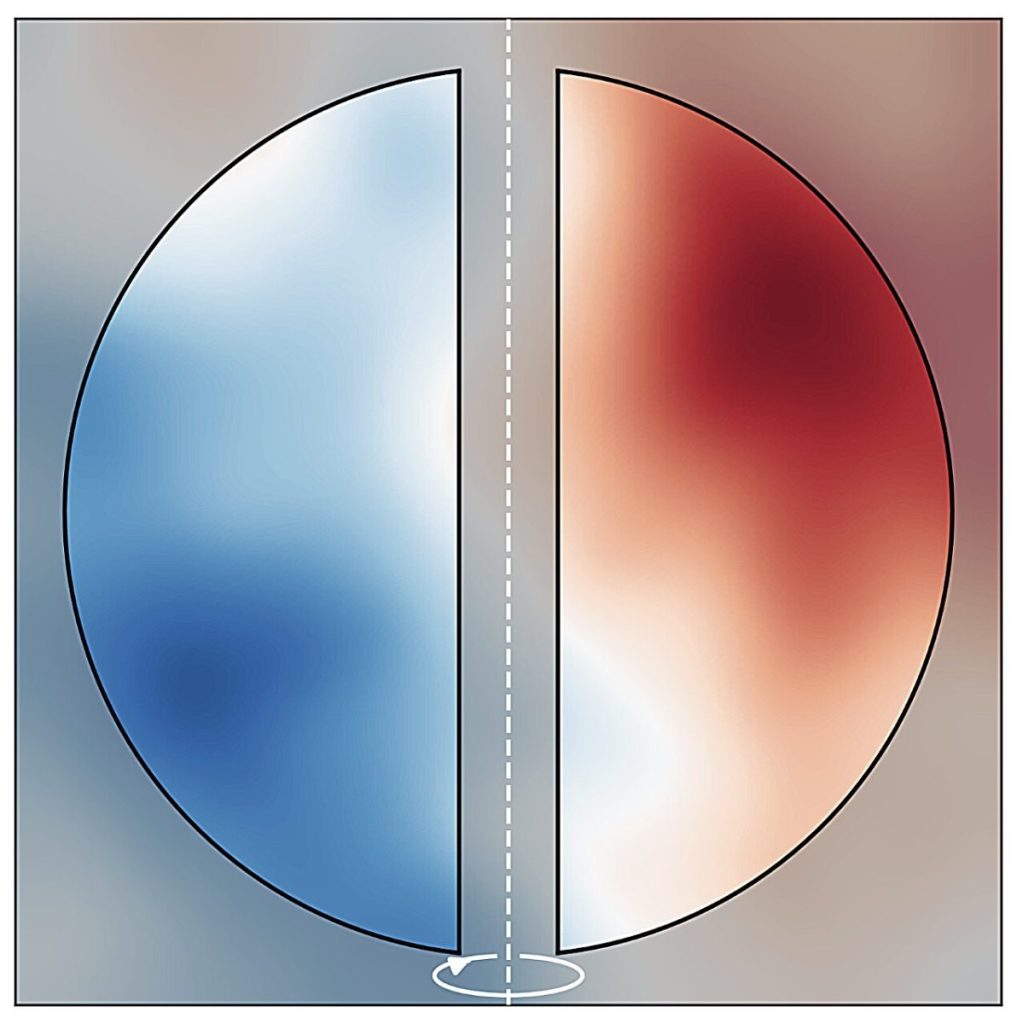
When photons from the relic radiation travel through giant galaxy clusters, they scatter off clouds of hot, ionized gas. If this gas moves or rotates with the cluster, the Doppler effect comes into play:
- Gas moving toward us makes the passing photons slightly “hotter.”
- Gas moving away from the observer makes the light “cooler.”
As a result, a cluster whose rotation axis lies perpendicular to our line of sight acquires a characteristic dipole pattern: one side appears warmer, while the opposite side appears cooler.
How Can Such a Faint Signal Be Detected?
For each individual cluster, this temperature shift is extremely weak. To detect it, researchers led by Samuel Goldstein and J. Colin Hill developed new data-processing methods, building on earlier ideas from colleagues at the University of Pennsylvania.
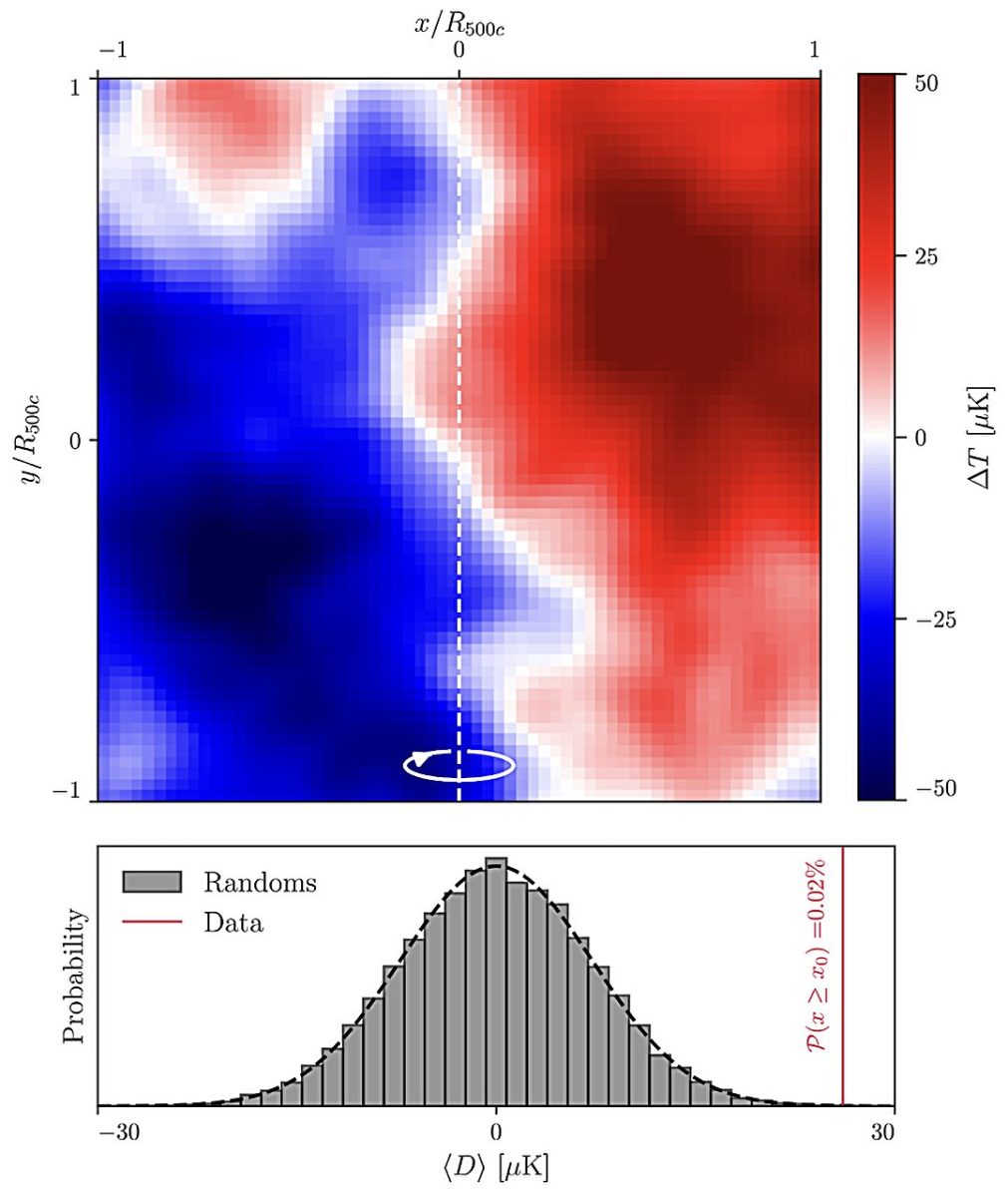
The astronomers selected 25 clusters from the Sloan Digital Sky Survey (SDSS) catalog, each containing at least 50 galaxies and showing signs of rotation or merging. They then took CMB maps from the European Space Agency’s Planck space telescope, extracted the corresponding patches, aligned them along the clusters’ rotation axes, and averaged the measurements. They also used light polarization data to reduce interference.
A New Window into the Physics of the Universe
The combined map revealed a clear dipole temperature pattern with a statistical significance of 3.6σ, consistent with rotational motions and collisions of plasma within the clusters.
While most previous studies examined only the overall distribution of gas mass in galaxies, the new technique allows researchers to assess internal dynamical processes in merging systems. Scientists now plan to apply this approach to new datasets from the Dark Energy Spectroscopic Instrument (DESI) and the Simons Observatory (SO) to distinguish ordered rotation from chaotic turbulence.
Previously, we explored what existed before the Big Bang.
Based on material from phys.org
