This November presents a rare opportunity to observe all seven planets in a single night. There is no need to remain awake throughout the night to see them; two brief, carefully planned observation sessions are sufficient — one in the evening and another shortly before dawn.
The most favorable nights will be November 15–16 and 16–17, although the nights immediately preceding and following these dates will also be suitable. Two factors will coincide during this period. On November 15, Mars and Jupiter will align; on November 16, at approximately 4:00 a.m. (2:00 a.m. UTC), they will reach their minimum angular separation of 1°11′. This will allow both planets to be viewed within the same field of view through binoculars or a small telescope. Both planets are currently located in the constellation Leo. In addition, Mercury will be approaching its maximum western elongation, creating favorable conditions for observing it before sunrise.
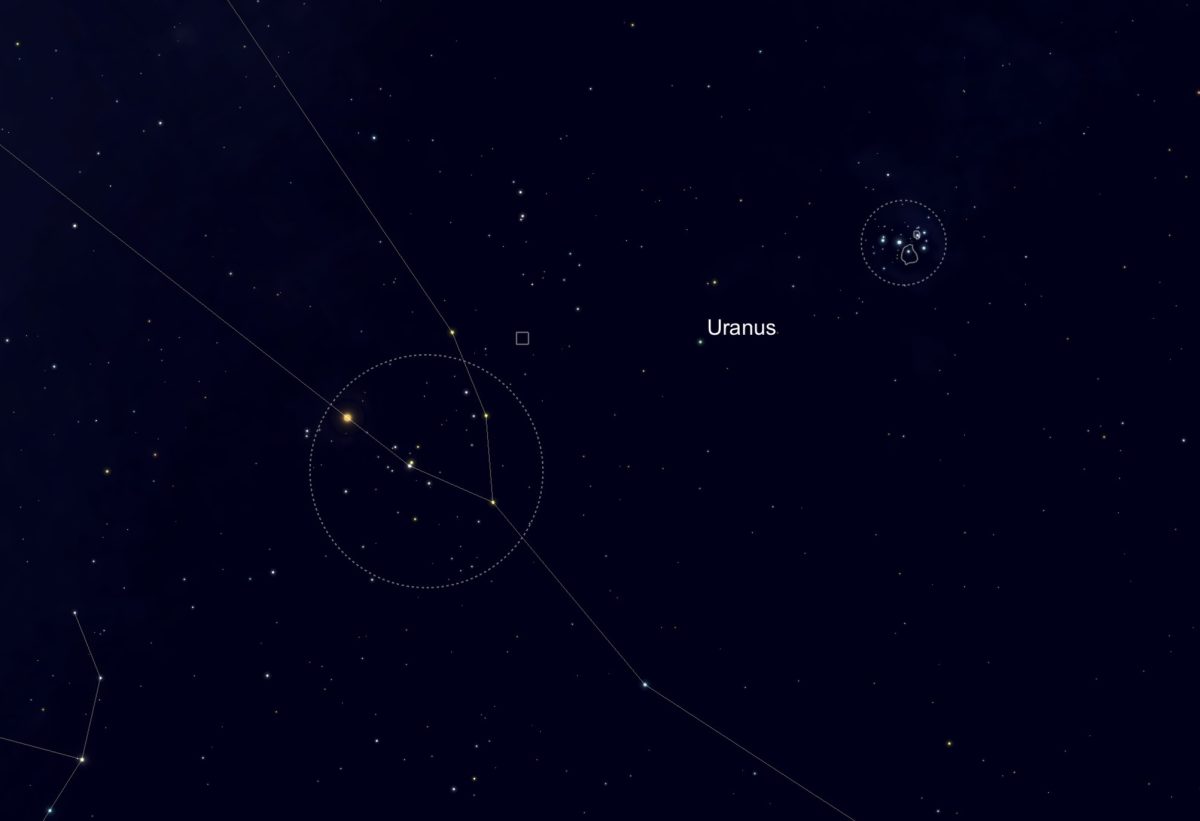
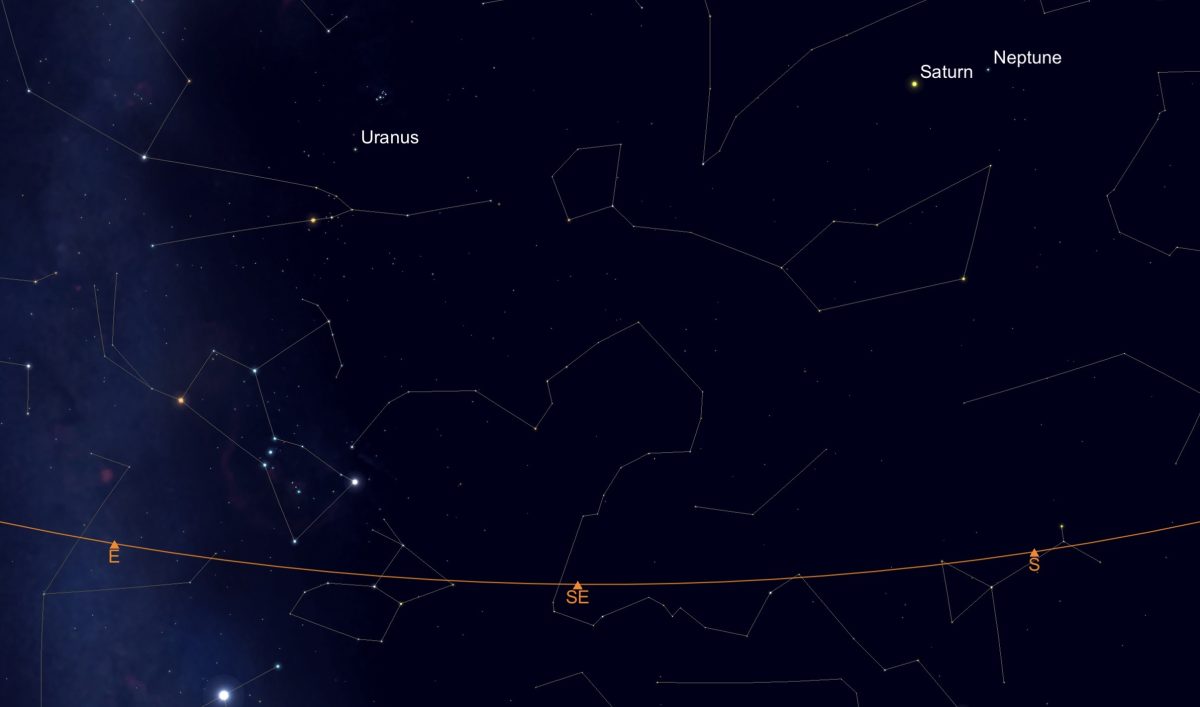
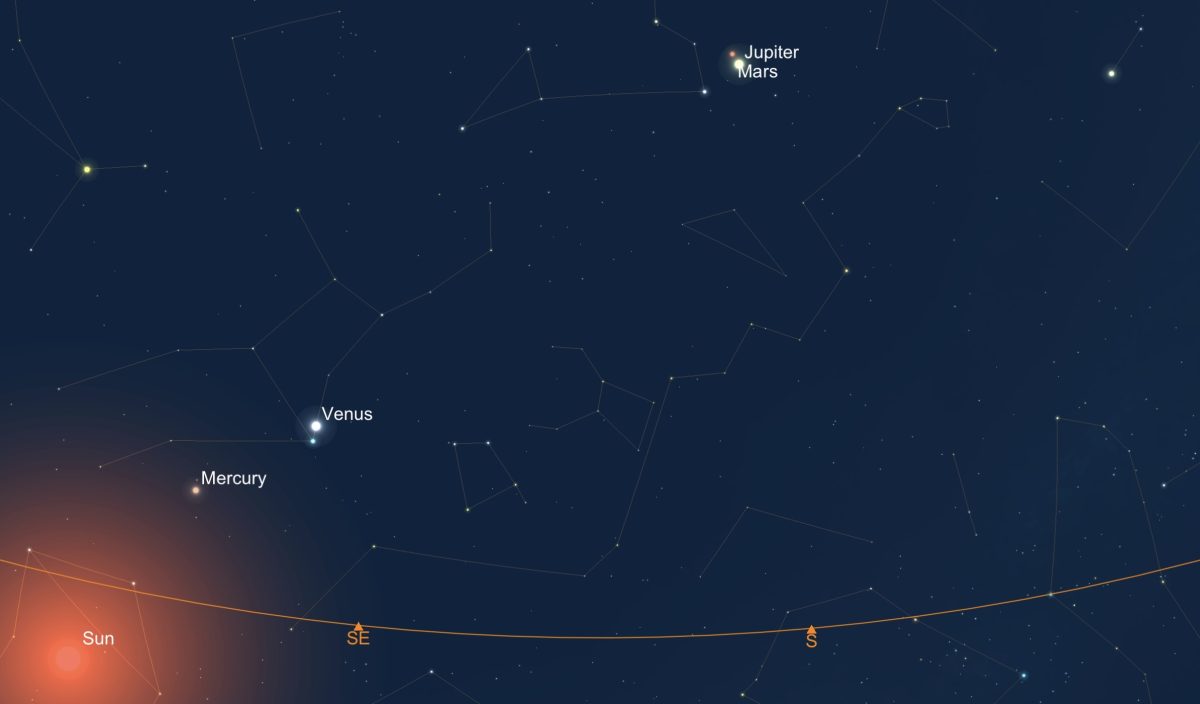
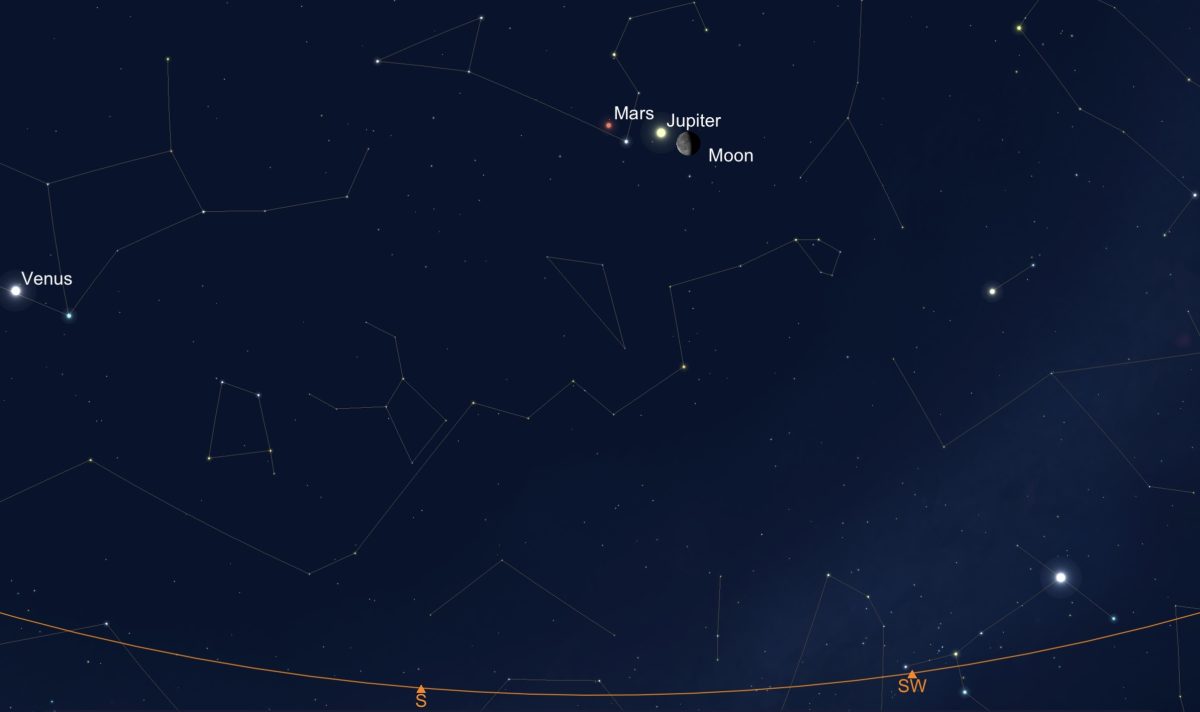
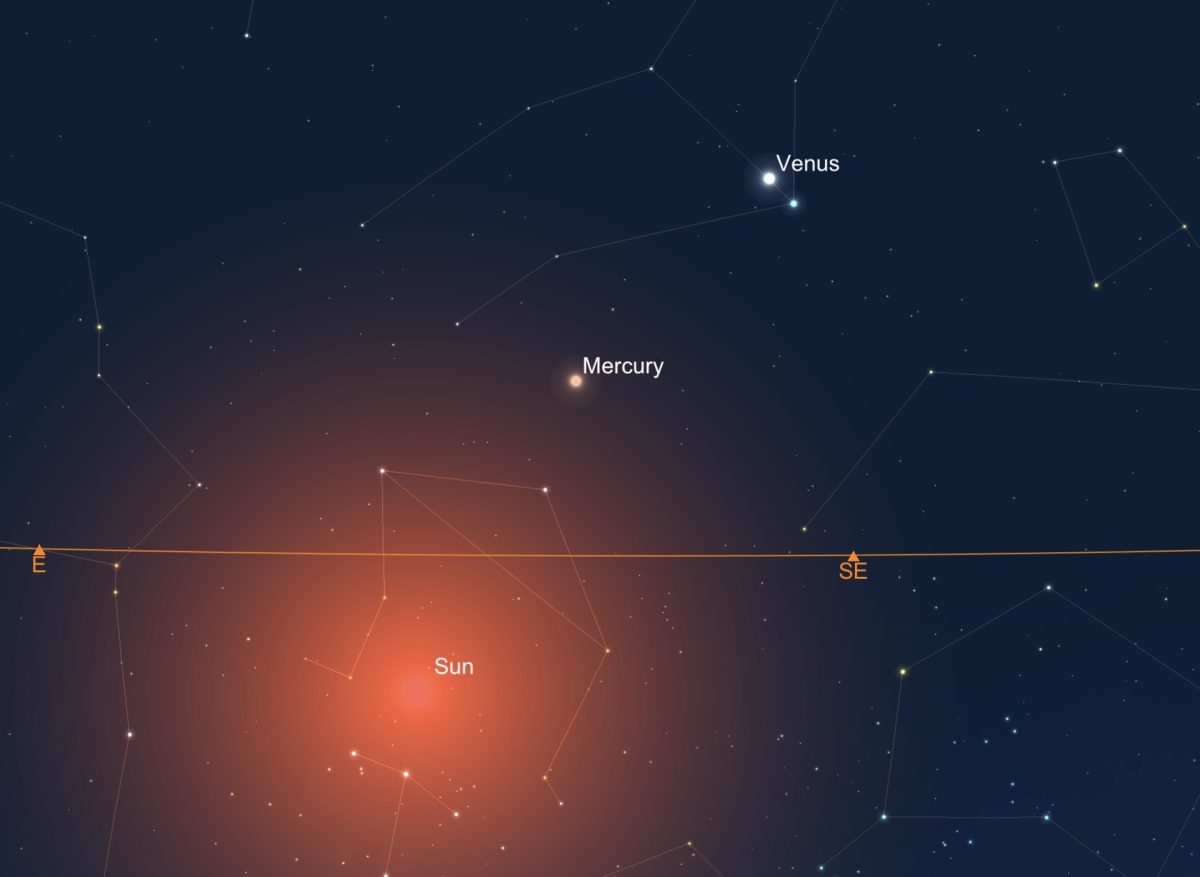
If weather conditions are favorable and the sky is clear, all seven planets will be visible in a single night. You may plan your first observation session for 9:00 p.m. At that time, Saturn will be visible in the southern sky, in the constellation Cetus near the border with Pisces, with Neptune nearby. At a similar altitude of approximately 39°–43°, Uranus will be visible above the eastern horizon. It is located in Taurus, almost exactly midway between the Pleiades and Hyades open clusters. The second observation session is scheduled for before dawn, at approximately 6:10 a.m. The optimal time may vary by up to 30–40 minutes, depending on your geographic location. At that time, Jupiter and Mars will be high in the southern sky, while bright Venus will be visible in the east-southeast. Mercury will appear slightly below and to the left of Venus. Please note that binoculars or a telescope will be required to observe Uranus and Neptune; the other planets can be seen easily with the naked eye.
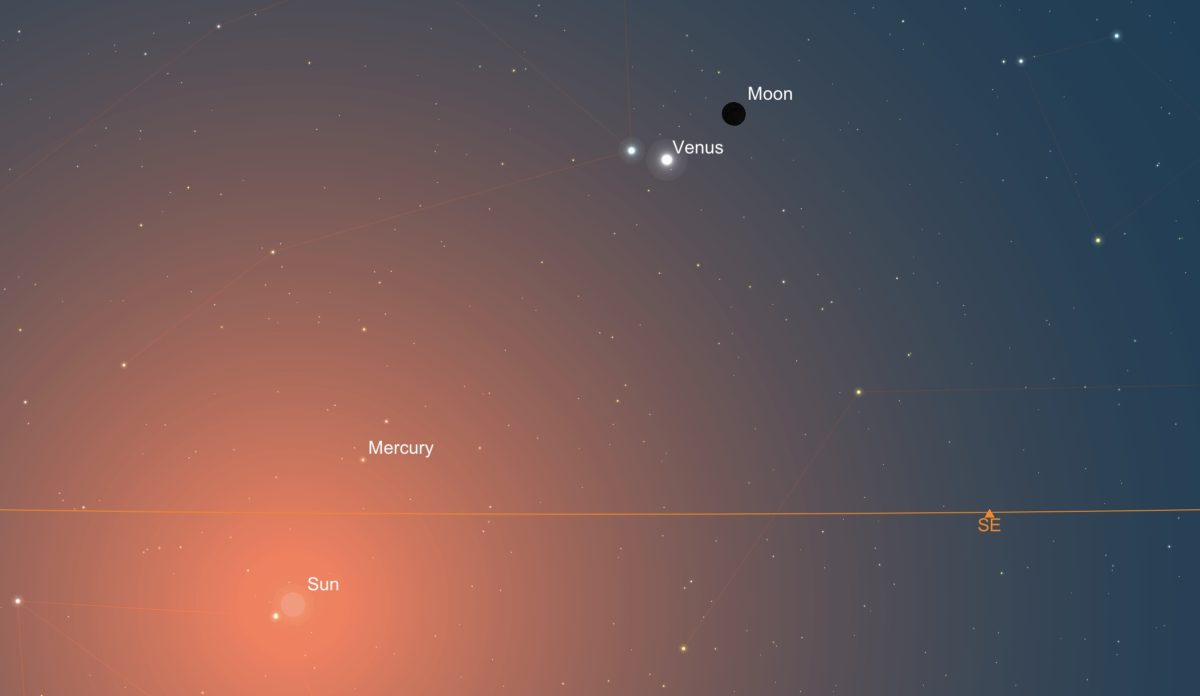
Early risers will be treated to a beautiful sunrise on November 7, when a striking trio will appear low above the southeastern horizon: a thin crescent of the waning Moon, bright Venus, and Spica, the brightest star in Virgo, positioned immediately beside it.
On the night of November 17–18, the Leonid meteor shower, whose radiant is located in the constellation Leo, is expected to reach its peak. This year’s shower is not expected to be particularly active (ZHR = 15), and the Moon will not interfere with observations, as it will set before the radiant rises sufficiently high in the sky. Several other meteor showers occur in November, although they are considerably less active. Of these, only the Southern Taurids (ZHR < 10), which peak on November 5, and the Northern Taurids (ZHR = 5), which peak on November 12, may occasionally offer observers bright fireballs.
There is good news for lunar enthusiasts: the full moon on November 24 marks the beginning of a series of four supermoons during the 2026–27 season. Because the Moon follows a slightly elliptical orbit, it alternately moves farther from and closer to Earth. A supermoon is a full moon that occurs near the Moon’s passage through perigee — the point in its orbit closest to Earth. Such a full moon appears larger and brighter and is particularly striking at sunrise.
General circumstances
November 2 — the Moon (47%) will be near Mars (+0.9m). The conjunction will occur at 3:51 p.m. (1:51 p.m. UTC), when both celestial bodies will be below the horizon; therefore, they are best observed before dawn.
November 3 — the Moon (36%) will appear near Jupiter (-2.0m). The pair will also be visible at dawn, as both celestial bodies will remain below the horizon at the time of their conjunction on November 2 at 11:27 p.m. (9:27 p.m. UTC).
On November 7— a thin crescent of the waning Moon (4%) will appear near Venus (-4.6m); the conjunction will occur during the day — at 12:15 p.m. (10:15 a.m. UTC) — but the pair will look spectacular before dawn, especially since Spica will join them.
November 9 — new moon; exact time: 9:02 a.m. (7:02 a.m. UTC).
November 10 — Venus passes 0.1° south of Spica, the brightest star in the constellation Virgo.
November 16 — conjunction of Mars (+0.6m) and Jupiter (-2.1m); the optimal viewing time is before dawn.
November 18 — the Leonid meteor shower reaches its peak. Its radiant is located in the constellation Leo, and its expected ZHR is 15. The shower is visible during the second half of the night.
November 20 — in the evening, the Moon (81%) passes 5.4° north of Saturn (+0.6m).
November 21 — Mercury (−0.6m) reaches its greatest western elongation and is visible before dawn.
November 24 — a full moon that is also a supermoon; the exact time is 4:53 p.m. (2:53 p.m. UTC).
November 26 — Uranus (+5.6m) in opposition.
November 28 — before dawn, Jupiter’s four largest moons will be aligned on one side of the planet and will be visible from the time Jupiter rises (approximately 10:30 p.m.) until dawn.
November 29 — lunar occultation of the Beehive Cluster (74%) in the constellation Cancer; estimated occultation period: 12:10 a.m. to 2:00 a.m.
November 30 — a striking quartet will appear close together before dawn: the Moon (62%), Jupiter (-2.2m), Regulus (the brightest star in Leo), and Mars (+0.5m). The Moon will align with Jupiter at 10:38 a.m. (08:38 UTC) and with Mars at 6:42 p.m. (16:42 UTC).
Detailed overview of the most interesting circumstances
November 9: New Moon — an optimal time for observing deep-space objects
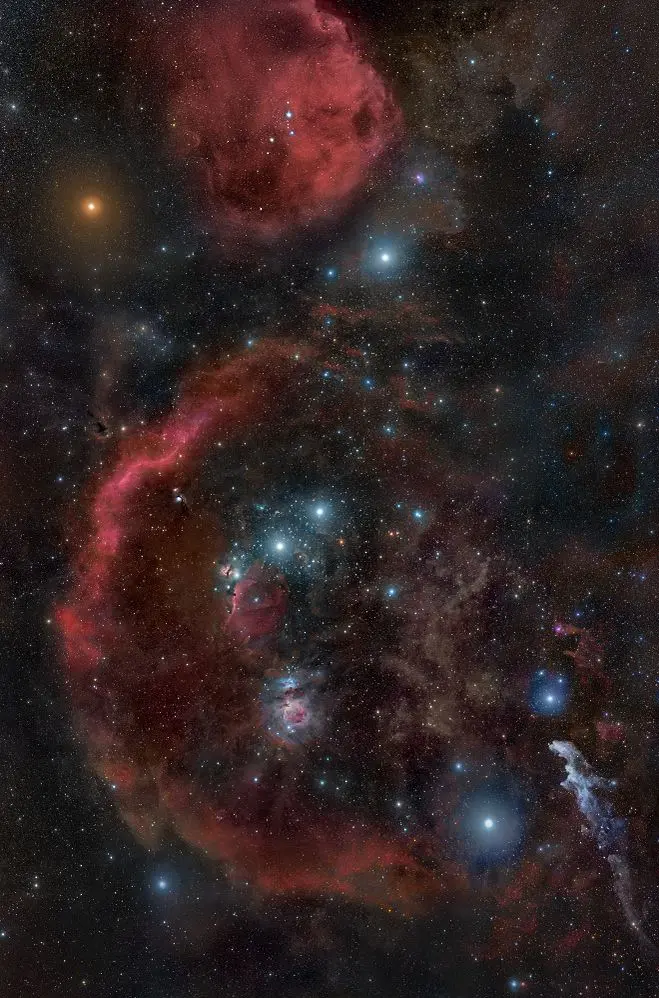
November is an excellent time to observe prominent constellations such as Perseus, Auriga, Orion, Canis Major, and Gemini. It is also an ideal opportunity to photograph Orion’s many nebulae using a wide-angle lens. Barnard’s Loop alone spans nearly the entire constellation.
When the Moon is not visible in the sky, professional astronomers conduct some of their most important observations, while amateur astronomers search for and photograph faint deep-sky objects, particularly galaxies and nebulae. In addition to the famous Orion Nebula, we recommend observing the Triangulum Galaxy (M33) and two other spiral galaxies, M74 and M77. This is also an excellent opportunity to observe the well-known supernova remnant, the Crab Nebula (M1).
Astrophotographers have an extensive selection of targets this season, including the California Nebula and the NGC 1333 complex in Perseus, the Heart and Soul Nebulae in Cassiopeia, and the Horsehead and Flame Nebulae in Orion. Timeless favorites also include the Pleiades in Taurus and the Andromeda Galaxy, together with its satellite galaxies.
November 16: Mars and Jupiter in conjunction
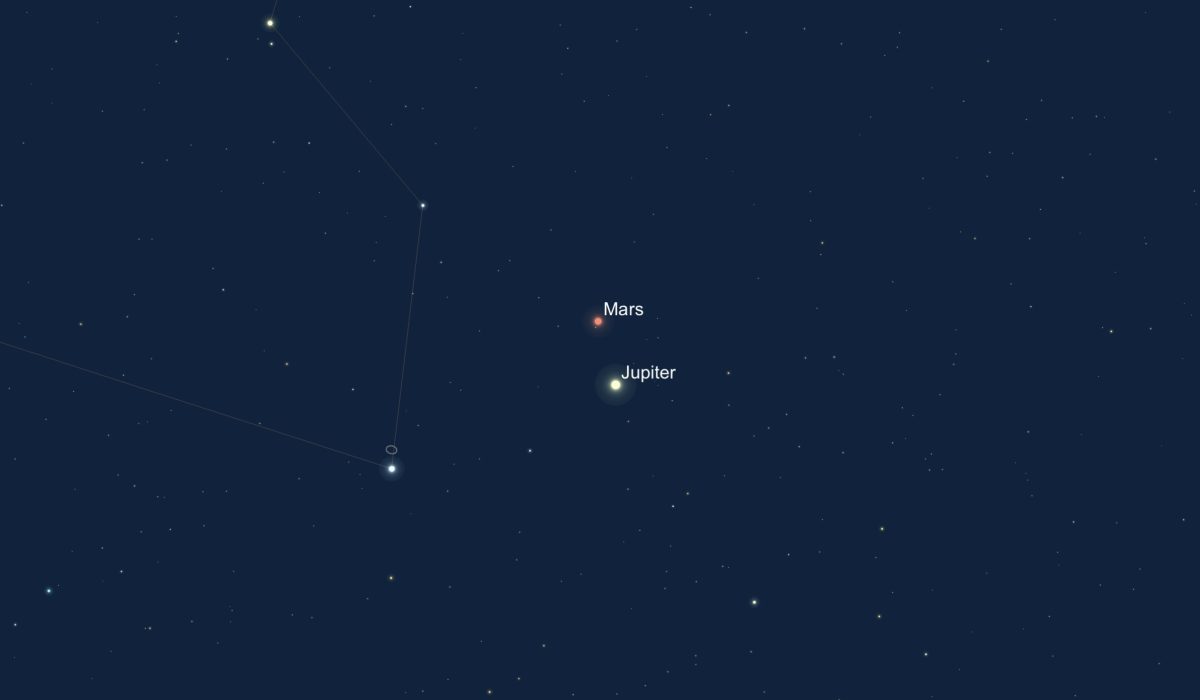
These two bright planets are gradually drawing closer together. They will reach conjunction on November 15 at 4:42 a.m. (2:42 a.m. UTC), when their ecliptic longitudes coincide. Their closest approach, however, will occur slightly later, on November 16 at 4:04 a.m. (2:04 a.m. UTC).
Therefore, the optimal time for observation is shortly before dawn on November 16, at approximately 5:30 a.m. The angular separation between the planets will decrease to 1°11′, allowing both to be viewed within the field of view of a small instrument, such as an amateur telescope or astronomical binoculars. Those willing to rise even earlier and equipped with optical instruments will have an additional opportunity: at 4:50 a.m. (2:50 UTC), Callisto will enter Jupiter’s shadow. This striking pairing — red Mars and golden Jupiter — will also be visible to the naked eye. Unfortunately, clear skies are uncommon in November. However, the relative motion of Mars and Jupiter is quite slow, so if you are able to observe them a few days earlier or later, they will still appear close together.
November 17–18: The Leonid Meteor Shower
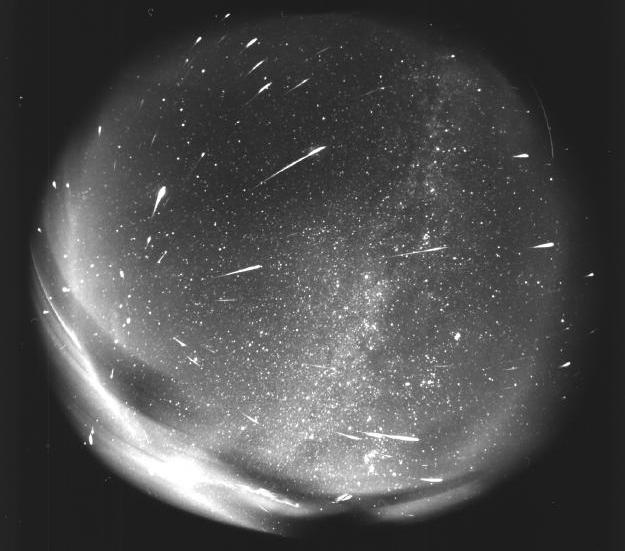
The Leonid meteor shower, whose radiant is located in the constellation Leo, is active from November 6 to 30 and reaches its peak on the night of November 17–18. The shower is renowned not only for its exceptionally fast meteors but also for periods of heightened activity that occur approximately every 33 years. This interval corresponds to the orbital period of Comet 55P/Tempel-Tuttle, from which the meteor stream originates. As the comet approaches the Sun, it replenishes its tail with fresh particles, some of which may eventually burn up in Earth’s atmosphere.
The earliest recorded mention of the Leonids dates to 902. In more recent history, the most spectacular displays occurred in 1833 and 1966, when the sky was filled with meteors. During these events, more than 100,000 meteors were visible per hour. The Leonids were somewhat less active in 1999, 2000, and 2001, producing up to several thousand meteors per hour.
Although the next anticipated peak in 2033–2034 remains several years away, this meteor shower displays moderate and variable annual activity. A ZHR = 15 is forecast for 2026. In practice, under clear, dark skies in the hours before dawn, when the radiant is already high in the sky, observers may see 7–10 meteors per hour.
November 21: Mercury at its greatest western elongation
Of all the planets in the Solar System visible to the naked eye, Mercury is generally regarded as the most elusive. Its orbit brings it close to the Sun, and it is therefore often obscured by the Sun’s glare, making observation difficult for both professionals and amateur astronomers.
It is most readily observed near its greatest elongation, when Mercury reaches its maximum angular distance from the Sun. Because its orbit is markedly elliptical, this distance varies considerably, ranging from 18° to 28°. When planning observations, however, it is also important to consider how much earlier Mercury rises above the horizon than the Sun, or how much later it sets below the horizon.
The greatest western elongation on November 21 will be particularly favorable for observation, as Mercury will rise approximately two hours before sunrise. Although the greatest elongation will be 19.6° — relatively far from the maximum possible — residents of the Northern Hemisphere will have sufficient time to observe the “elusive” planet. Choose an optimal observation time when the Sun is no more than 7°–8° below the horizon and Mercury is at least 6°–7° above it. In Kyiv on November 21, this period is approximately 6:10–6:30 a.m. The planet will be readily visible to the naked eye, with a brightness of -0.5m, and a telescope will also reveal its phase, which will be 61%. The key is to ensure an unobstructed view toward the east-southeast.
November 26: Uranus Opposition
In astronomy, opposition refers to a configuration in which an object appears in the opposite direction from the Sun as viewed from Earth. During opposition, Uranus is visible throughout the night, particularly in the darkest areas of the sky. For the closer outer planets — Mars, Jupiter, and, to some extent, Saturn — opposition also corresponds to their greatest apparent angular size and brightness. However, Uranus is so distant from Earth — approximately 18–20 times farther away than the Sun — that its magnitude (+5.6m) and apparent size (3.8”) remain virtually unchanged throughout the year.
Uranus is the most distant planet visible to the naked eye in a dark sky. The conventional recommendation is to observe it during opposition. However, this year, a nearly full Moon nearby may interfere with observations, so it is preferable to look for Uranus at another time. The week before November 17 and the week after November 30 are suitable alternatives. If you have a telescope, however, you can observe Uranus even when it is relatively close to the Moon.