

At the annual meeting of the Royal Astronomical Society in Birmingham, participants debated whether the far side of the Moon should be turned into a scientific reserve. The proposal was supported by 76% of those present. Its proponents insist that the decision must be made now, because plans for commercial development and new missions threaten an environment that is uniquely quiet within the inner Solar System.
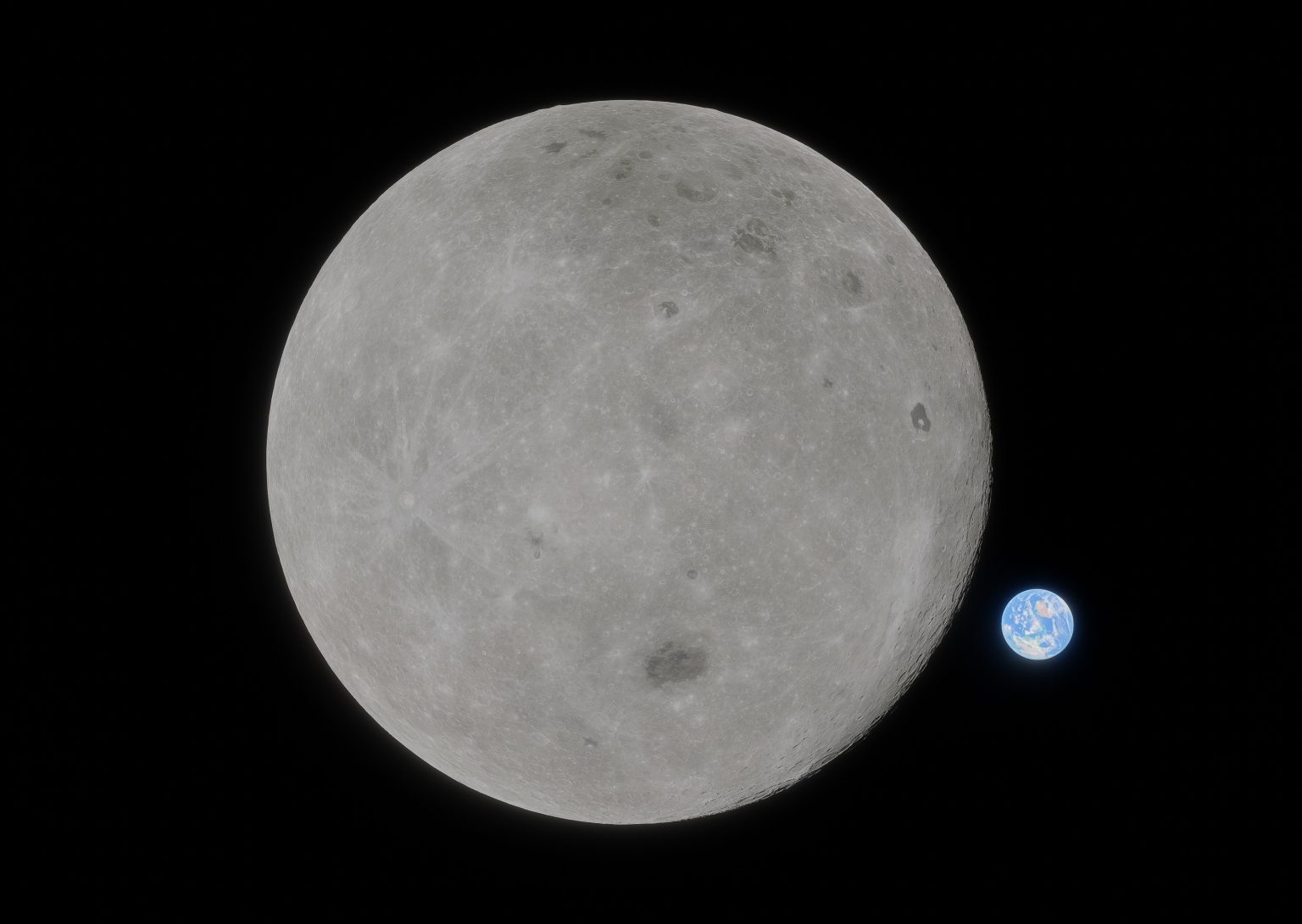
The Case for Radio Silence
Unlike planetary protection, which focuses on preventing the biological contamination of other worlds, the discussion about the Moon concerned preserving the physical conditions required for astronomy. The far side is shielded from radio interference originating on Earth and is free from artificial light.
This creates an opportunity to deploy radio interferometers and gravitational-wave detectors sensitive to extremely small distortions of space-time. No observatory on Earth can operate within such an isolated environment, making the far side of the Moon one of the few places in the inner Solar System where signals from the ancient Universe could be detected.
A Precedent for the Solar System
During the debate, Universe Today reports, astrophysicist Jonathan McDowell said that preserving the far side of the Moon for science would set a precedent for the rest of the Solar System.
“Will all the space around us be put up for sale, or will we establish natural and scientific reserves where we do not mine every asteroid and turn the whole of Mars into a theme park?” he said, describing the dilemma at an event organized as part of a conference on lunar resource governance.
According to the scientist, even a single lander or relay satellite would generate electromagnetic noise capable of disrupting radio observations. A decision on the status of the territory cannot be postponed.
Optical Astronomy and Gravitational Waves
Professor Joe Silk emphasized that the darkness of the lunar night could provide an ideal platform for optical telescopes. Even the most remote locations on Earth are affected by light pollution and the rapid expansion of satellite systems such as Starlink, OneWeb, GPS, and GLONASS.
Silk called for untouched areas to be reserved for science now so that future generations of researchers would have access to them. According to him, the questions at stake include whether humanity is alone in the Universe and how everything began. Any construction, artificial lighting, or satellite communications over the far side could irreversibly degrade the conditions needed to detect faint signals from the early Universe.
The Case for Coexistence
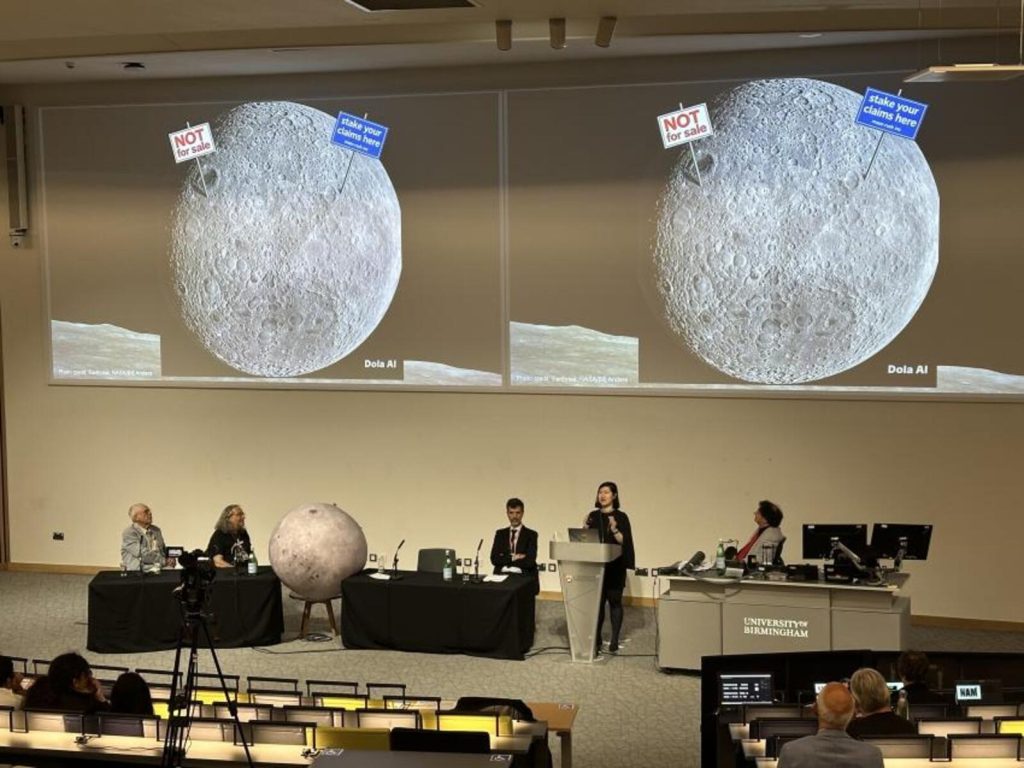
An alternative view was presented by Dr. Nikita Chiu, who argued that scientific and commercial activities could coexist under appropriate management. Her position does not dispute the value of the Moon’s far side for observatories, but shifts the emphasis from complete isolation to regulatory mechanisms.
Supporters of protected status believe that a compromise involving partial use of the area would not work. Jonathan McDowell concluded that the decisions made over the next few years will determine the nature of humanity’s presence throughout the Solar System.
