

Computing modules normally used to process graphics in computer games will soon reach the Moon. They will be installed on a small rover scheduled to travel there by the end of the year. Conditions for electronics on the lunar surface are severe. Temperatures vary widely, and the surface is exposed to cosmic radiation, which is why such equipment has so far been used mainly closer to Earth.
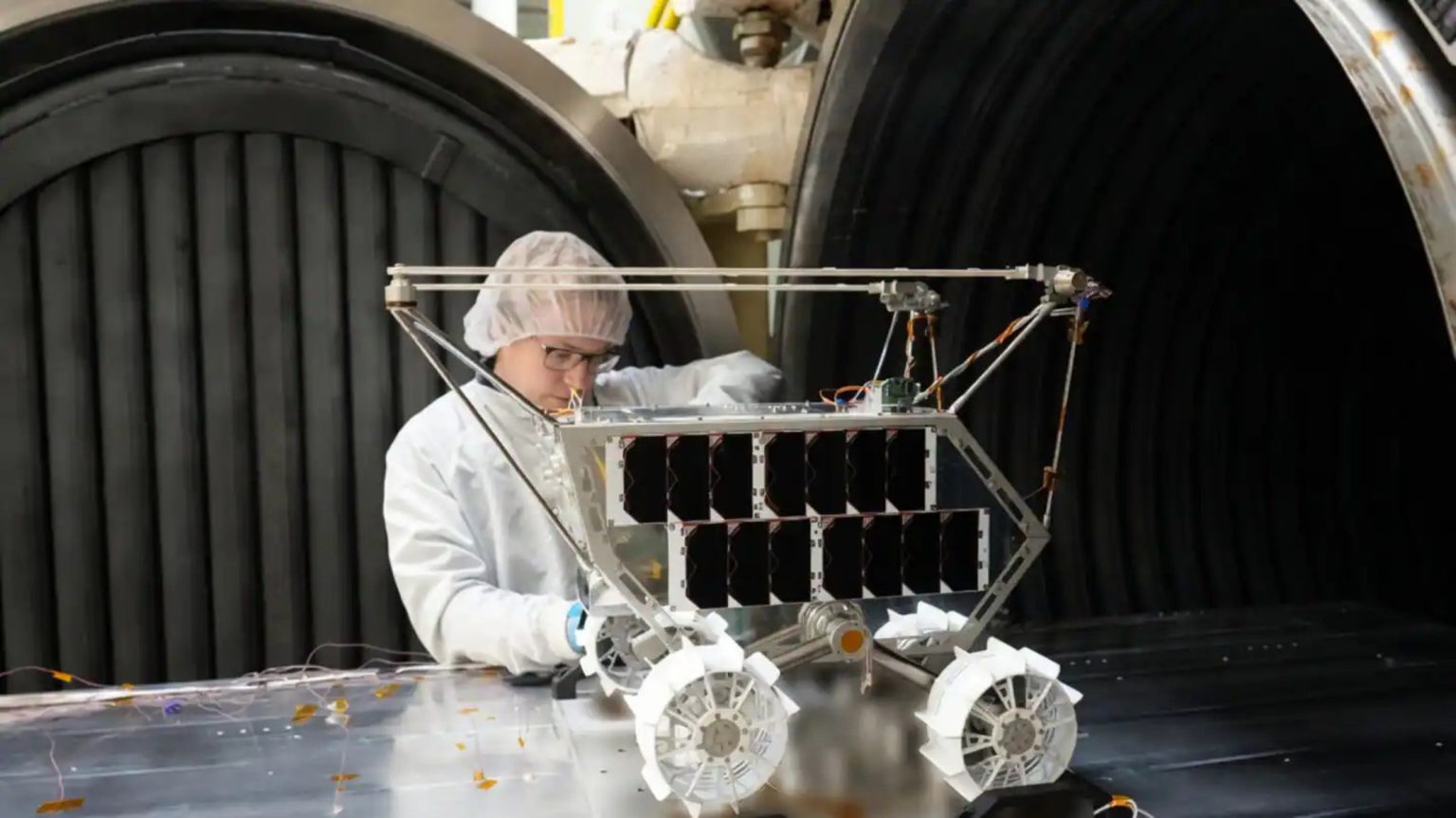
Testing a New Computing System
The startup Lunar Outpost develops robots for space infrastructure. According to TechCrunch, its next lunar rover will carry a Jetson chip that will control a lidar system—an instrument that measures distances using laser pulses and creates a three-dimensional map of the terrain.
A comparison with the company’s own onboard platform, which has more spaceflight experience, will reveal the advantages and weaknesses of this solution. Lunar Outpost CEO Justin Cyrus explained that his team aims to transition to more powerful graphics-processing systems, even under extreme conditions.
Previously, machine autonomy relied mainly on rigid algorithms. These have now been supplemented by physical artificial-intelligence models that process sensor readings in real time. For now, both approaches are being used in parallel.
Computing in Lunar Orbit
Another Nvidia project involves Firefly Aerospace, the first private company to land a robotic spacecraft successfully on the Moon. The same computing module will be installed on a satellite that will enter lunar orbit.
The collected data will be used for mapping and for tracking the growing number of vehicles operating on the surface. Processing images directly onboard reduces the amount of information that must be transmitted to Earth.
Radiation and the Long Night
Operating graphics processors beyond Earth’s immediate surroundings is complicated by the harsh environment. Most such chips currently used in space operate in low Earth orbit, where they are partially protected by the magnetosphere and temperature fluctuations are less extreme. The Moon has no comparable protection, and the temperature of any given area depends on whether it is illuminated by the Sun.
The harshest test comes at night, when darkness lasts for approximately two Earth weeks. The equipment must survive this period while consuming very little power, and Justin Cyrus describes this requirement as one of the key considerations in the design.
An Unexplained Anomaly
The startup’s next rover will be delivered by an Intuitive Machines lander. Its onboard suite of sensors is designed to operate in craters and other areas that are difficult to study from orbit.
Another expedition will travel to a location where a magnetic anomaly has remained a mystery for several decades. The site is Reiner Gamma, a bright feature with distinctive winding bands in Oceanus Procellarum and one of the formations known as lunar swirls.
The brightness of this area is believed to be associated with the Moon’s crustal magnetic field, which deflects the solar wind and slows the darkening of the surface material. Such formations are considered unique to the Moon, so hypotheses about their origin can be tested only through direct measurements on the surface.
Possible explanations include a collision with the nucleus of a comet in the distant past and the ejection of material during the formation of large impact structures. However, scientists have yet to reach a consensus.
Both launches are planned aboard Falcon 9 rockets before the end of the year. Should the schedule be maintained, a graphics processor may operate on the lunar surface for the first time as early as this year.
Plans for the Next Several Years
NASA’s program provides payments to private contractors for exploring the lunar surface ahead of the return of humans, which could occur as early as 2028. The agency is asking developers to create equipment capable of delivering scientific sensors and locating water or other resources suitable for extraction.
The company’s largest vehicle, called Pegasus, is designed to transport astronauts, but its launch depends on a Blue Origin rocket. The launch vehicle experienced an anomaly this summer, and it is currently unclear when it will return to flight. Justin Cyrus says that, according to the information available to the company, the schedule has not yet changed.
