

The competition for radio frequencies between two satellite internet service providers has entered a new stage. SpaceX has formally requested the United States regulatory authority to evaluate its rival’s operational license. The firm asserts that the rival’s equipment will generate significant radio interference to Starlink. Viasat’s latest satellite is scheduled to commence commercial operations as early as the upcoming month.
Disputed frequency bands
In a petition dated August 28, the company requests that the U.S. Federal Communications Commission (FCC)review its July decision to approve Viasat-3 F2 for the U.S. market. SpaceX Vice President of Satellite Policy David Goldman stated in the 25-page document that the competitor’s neglect of the commission’s regulations and the detrimental impact on millions of American consumers have persisted for an unacceptably long period, according to PCMag.
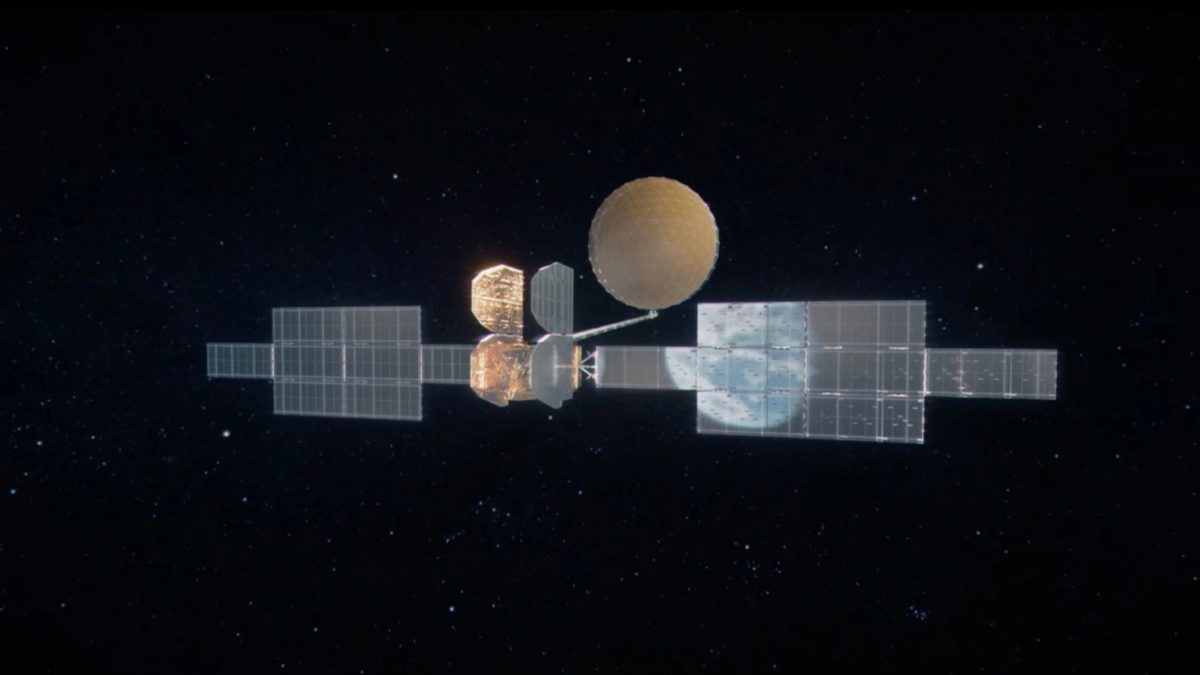
The claim pertains to the frequency bands spanning from 18.8 to 19.3 gigahertz and from 28.6 to 29.1 gigahertz. Starlink has historically possessed the authorization to utilize these bands for data transmission to and from Earth. Conversely, Viasat intends to employ the same frequencies on its newly developed satellite, which is scheduled to operate in geostationary orbit at an altitude exceeding 35,000 kilometers above the Earth’s surface.
Licensing requirement
In late July, the regulatory authority authorized the Viasat-3 F2 satellite to access the United States market. This approval was contingent upon the company’s coordination with operators of low-Earth orbit systems and ensuring it does not interfere with their operations.
Under its license, Viasat is prohibited from operating using obsolete technology within frequency bands that have been designated for next-generation equipment. Such operation is permissible solely with the unanimous consent of all operators utilizing these frequencies or subsequent to the commission’s technical assurance that no interference will occur.
David Goldman asserts that over a period exceeding five years, there has been no authentic effort to achieve an agreement. He references his competitor’s own calculations, which indicate that the new satellite will induce interference approximately one-third of the time.
Claims from Amazon
Amazon, which is preparing to launch its own satellite communications service, Leo, has expressed similar concerns to the regulator. In November, the company stated that Viasat’s technical justification does not in any way substantiate the security of other operators’ systems.
The initial generation of Leo devices was authorized to utilize the same frequency bands as of 2020. Consequently, objections raised by two market stakeholders simultaneously present a potential risk of postponing the launch of F2. The FCC authorization explicitly states that the company must refrain from operating in these bands within U.S. territory until compliance is verified.
Rates for the operator
The new satellite holds significant importance for Viasat, a company that has experienced a decline in subscribers over recent years due to competition from SpaceX’s high-speed service. The organization intends to deliver internet speeds exceeding 100 megabits per second to customers across North and South America via this satellite.
The preceding satellite in the series, Viasat-3 F1, was launched into orbit in the spring of 2023; however, its large antenna failed to deploy correctly. Consequently, it was able to deliver only a limited portion of its intended bandwidth. Therefore, F2 represents the first satellite in this generation to operate at full capacity.
