

The historic Fram2 mission by SpaceX, which launched in late March 2025, not only carried four amateur astronauts into a unique polar orbit but also achieved a genuine breakthrough in aerospace medicine. For the first time in human history, the crew performed a medical X-ray examination directly during an orbital flight.

Without any guidance from Earth, the mission participants used a compact portable device to take images of their own hands, forearms, abdomens, pelvises, and chests. The results of this experiment, which demonstrated that the method works in space, were published this week in the scientific journal Radiology.
The End of Ultrasound’s Monopoly
For many decades, ultrasound remained the only available tool for examining the human body in space. However, this method has significant limitations: it requires extensive operator training and works only in environments that conduct sound waves effectively, such as water-rich soft tissues.
“X-ray imaging is one of the most powerful diagnostic tools because of its speed, accuracy, and ease of use,” says lead researcher Shayna Gifford of the Mayo Clinic. When humanity embarks on long-duration missions to the Moon or Mars, where falls, bruises, and bone fractures are likely to occur, the need for detailed skeletal images will become critical. Conventional ultrasound simply cannot detect complex fractures or the internal structure of bones with sufficient clarity.
An Experiment at an Altitude of 450 Kilometers
Preparations for this historic step began back in 2022, when the X-ray device was tested during a parabolic flight simulating weightlessness. For the orbital test during the Fram2 mission, three astronauts completed a brief four-hour training session on Earth.
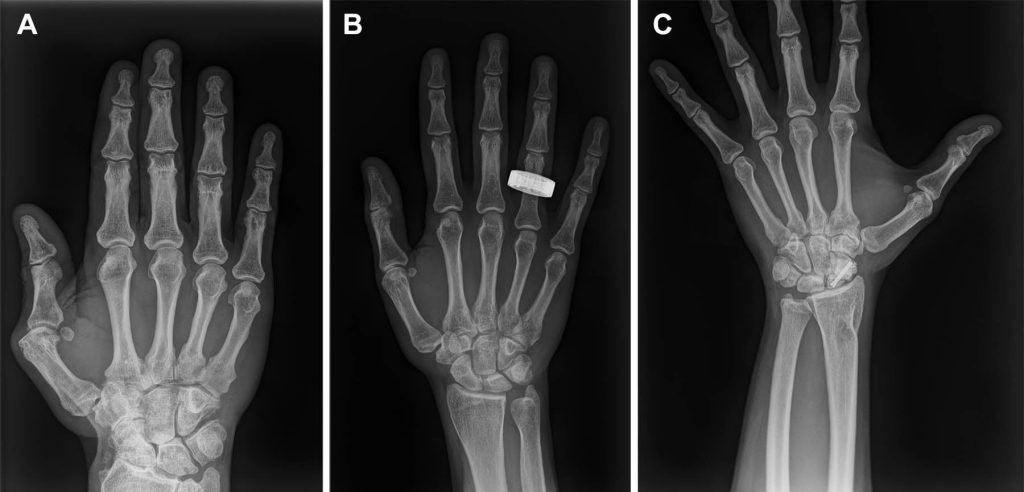
On March 31, 2025, a Falcon 9 rocket placed the Crew Dragon spacecraft into an orbit reaching an altitude of up to 450 kilometers. During the 3.5-day flight, the crew successfully scanned both their own bodies and various devices with microscopic precision. Despite minor external damage to the X-ray generator during the capsule’s splashdown in the Pacific Ocean on April 4, its internal system remained intact. Independent radiologists confirmed that the quality and clarity of the orbital images fully met strict clinical standards.

Not Only for Medicine
The versatility of X-ray scanning makes it indispensable for future colonists. A spectral X-ray system aboard a spacecraft or at a base could help solve several tasks at once:
- Instantly check the airtightness and integrity of a spacesuit after a spacewalk;
- Detect microcracks in geological instruments or base structures;
- Examine the internal structure and mineral composition of collected lunar or Martian soil samples.
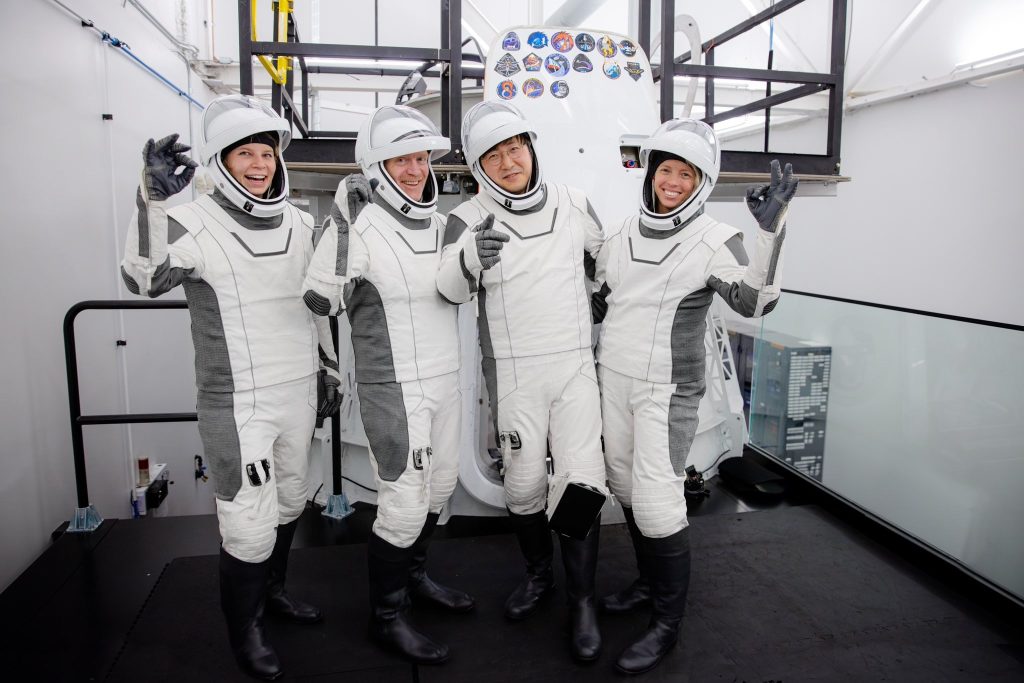
The main task for engineers now is to make these devices even more compact and adapt them for operation in deep space. The success of the Fram2 mission demonstrates that a new era of space medicine, which will make extraterrestrial travel safer, has already begun.
Previously, we described the history of the discovery of X-rays.
According to Scientific American
