

The vastness and mystery of space can be unsettling. If anything in the cosmos lies farthest beyond the scales and patterns with which we are familiar, it is the region beyond the Milky Way. Let us explore it together.
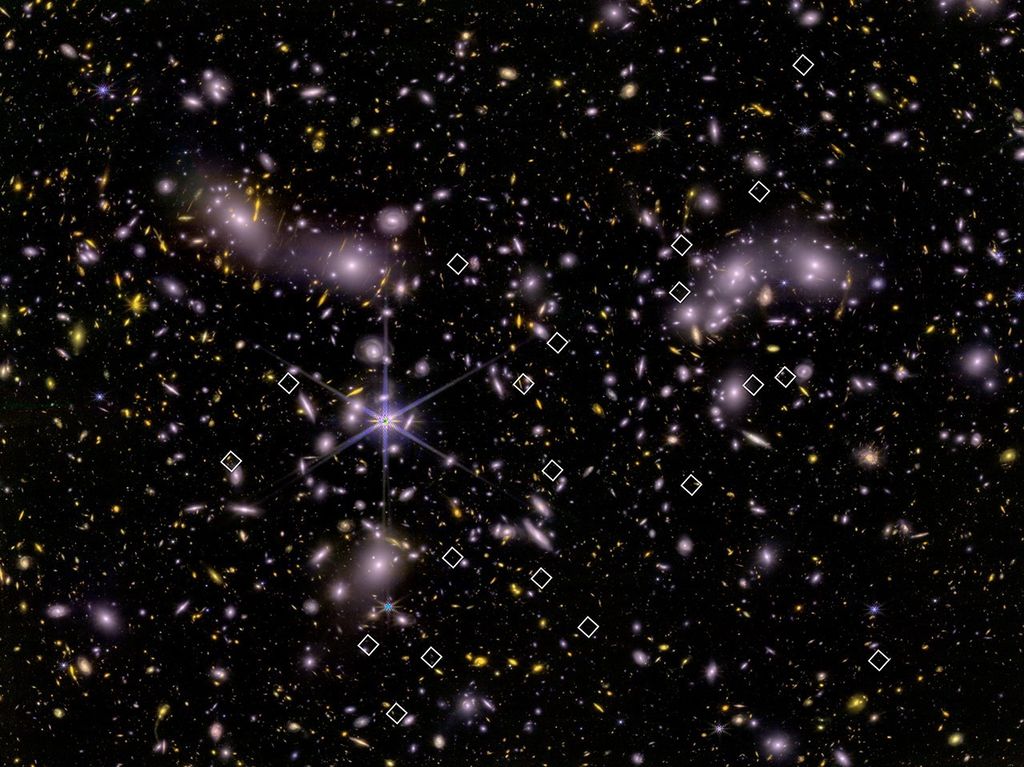
The region of space beyond the Milky Way
People remain apprehensive about phenomena that are vast and beyond their direct experience in daily life. This apprehension persists even when scientists have long established that there is no reason for concern. Space exemplifies this particularly well: it is immense, and in many instances, the laws of physics there operate quite differently from those with which we are familiar on Earth.
Although people are at least somewhat familiar with the Solar System and the Milky Way, as some of their features are visible in the sky, everything beyond their boundaries remains largely mysterious. From the surface of our planet, only a few indistinct points can be seen with the naked eye.
That is precisely why, even before the beginning of the twentieth century, the concept of “beyond the Galaxy” did not exist. Astronomers continued to debate whether the numerous spiral systems observed through telescopes were distinct star systems or components of a single Galaxy, of which we are a tiny fragment.

It was Edwin Hubble’s discovery that provided the definitive answer: the Milky Way is merely one of the hundreds of billions of galaxies that populate the universe. Although finite in size, it is so vast that light takes longer to travel from one end to the other than the age of our planet and the Sun.
However, this also means that processes occurring on these timescales unfold exceptionally slowly by human standards. An increase in the Sun’s luminosity could render our planet uninhabitable in a billion years — a vast period compared with the duration of human civilization. Nevertheless, challenges on Earth may precipitate a major catastrophe much sooner.
However, this also means that all processes on these scales occur incredibly slowly by our standards. An increase in the Sun’s luminosity could make life on our planet impossible in a billion years, and that is an incredibly long period of time when compared to the existence of human civilization. Much sooner, a great calamity will befall us as a result of earthly problems.
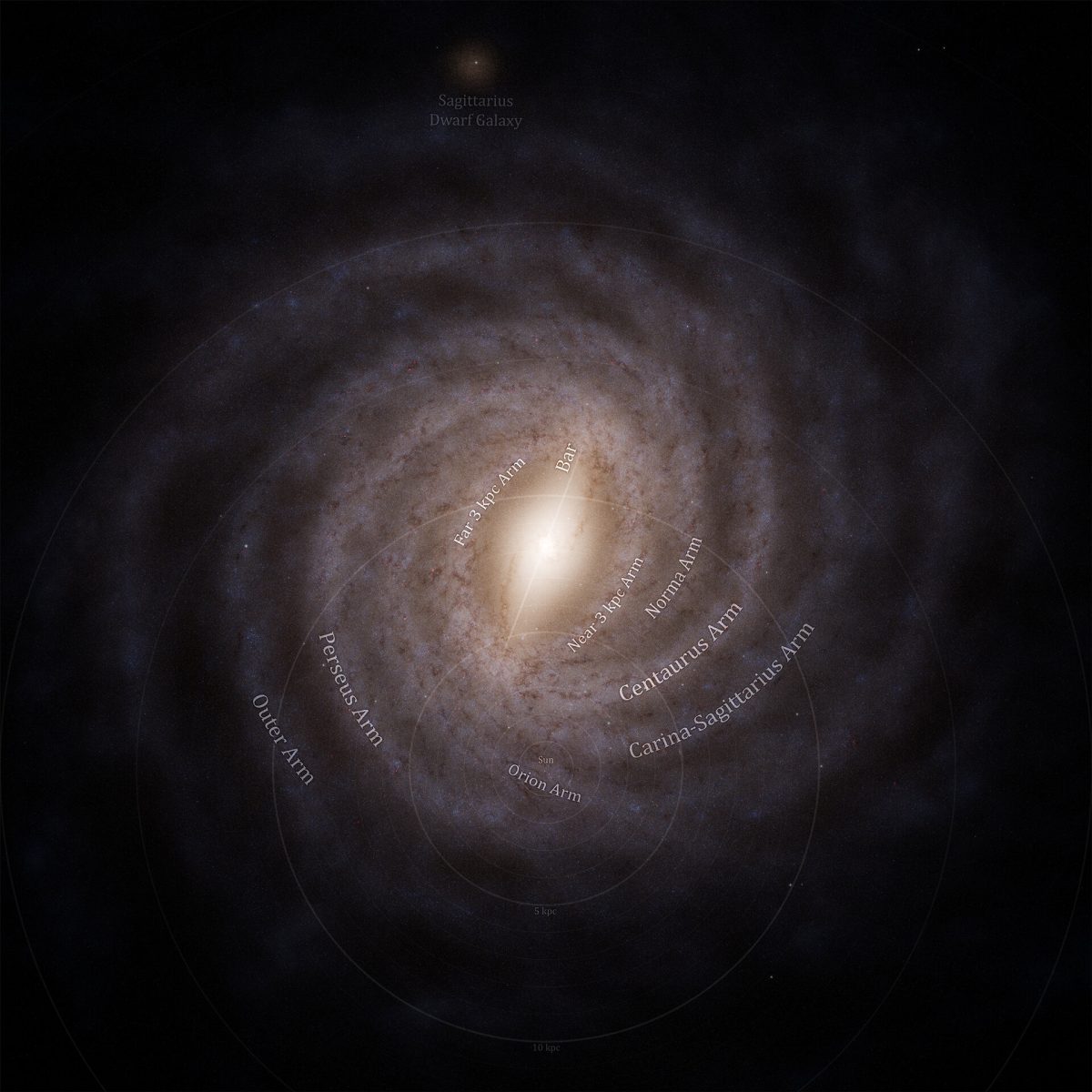
The structure of the vast universe
It is an entirely different matter to comprehend the true vastness of the universe — the fact that our entire galaxy, containing hundreds of billions of stars, is merely a small part of it. Here on Earth, we are accustomed to thinking that when we feel insignificant in comparison to something, that “something” almost always poses a threat to us.
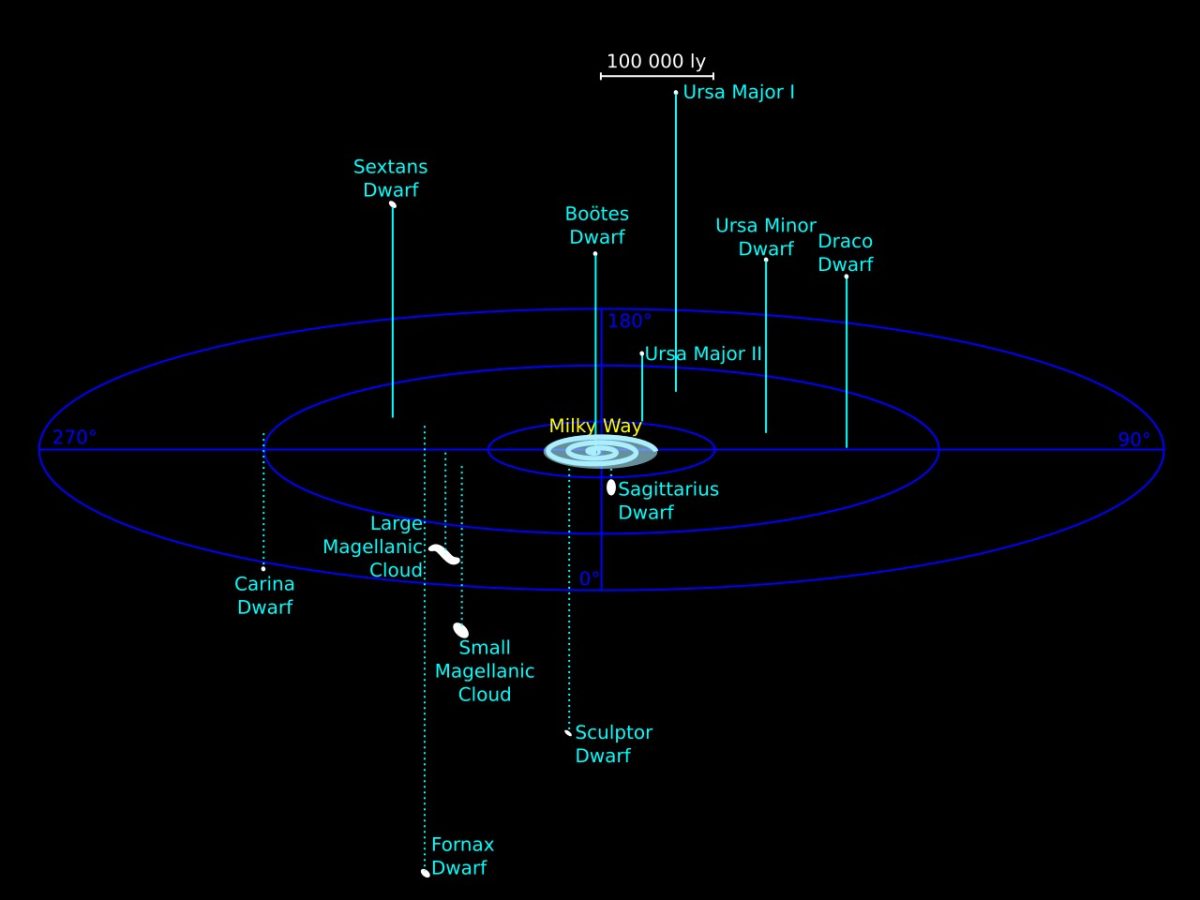
In space, however, the situation is different. Globular clusters and satellite galaxies orbit the Milky Way directly. At present, 49 satellite galaxies are known, while another 14 remain unconfirmed; however, the total number may be higher.
Under the gravitational influence of the Milky Way, some satellite galaxies are stretched into long, ribbon-like structures known as stellar streams. The disk of our Galaxy is also surrounded by a diffuse structure called the halo, which contains individual stars separated by vast distances.
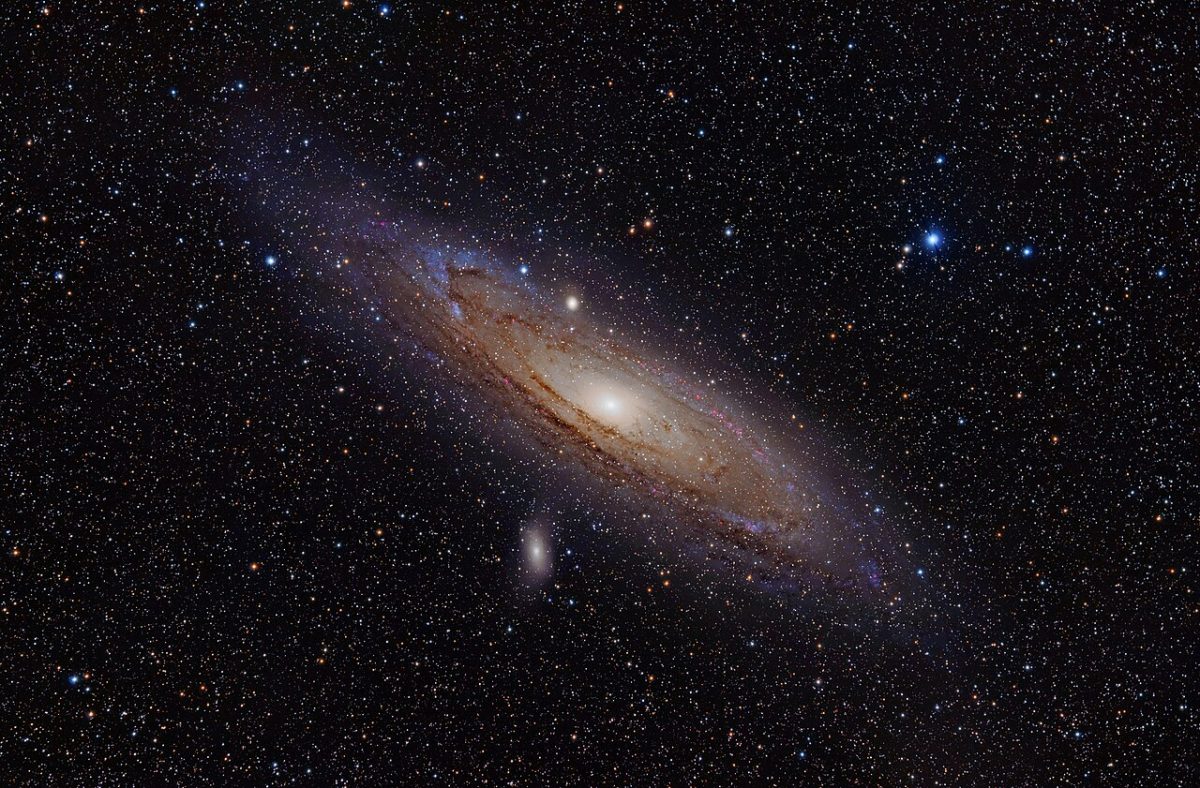
Approximately 2.6 million light-years from Earth lies another large spiral galaxy, M31, also known as the Andromeda Galaxy. It is slightly larger than the Milky Way and is likewise surrounded by satellite galaxies. The Milky Way, the Andromeda Galaxy, the galaxy in the constellation Triangulum, and several other smaller systems together form the Local Group. This is the largest structure that directly includes Earth and the Sun. Beyond it lie many other groups of galaxies, distributed along the outskirts of a relatively empty region of space known as the Local Void.
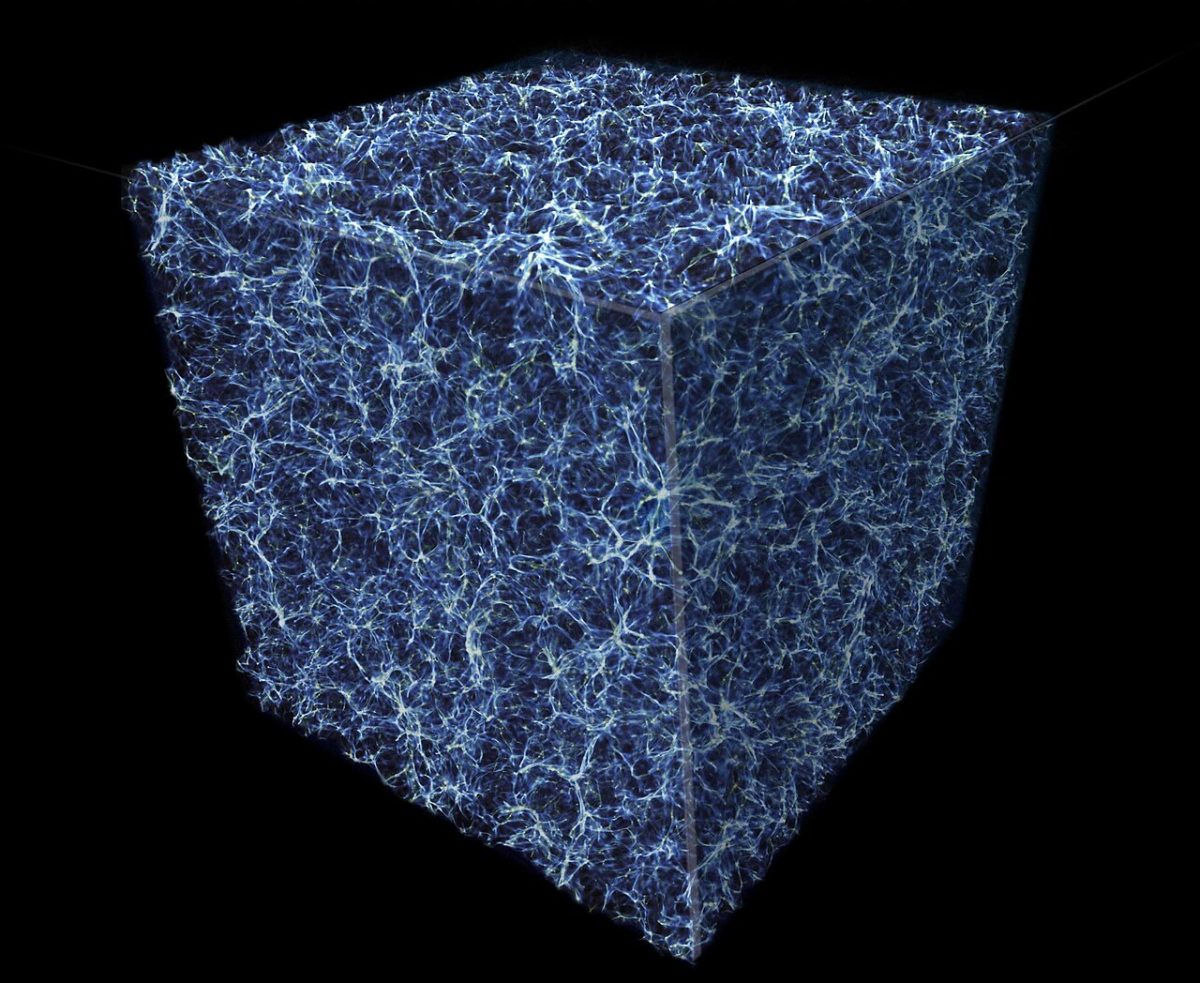
The Virgo Cluster, by contrast, is located approximately 50–55 million light-years from Earth and contains between 1,500 and 2,000 galaxies. The Virgo Cluster, together with other clusters and individual galaxy groups, forms the Virgo Supercluster. This supercluster is, in turn, part of the vast Cetus–Pisces filament, which itself constitutes only one component of the Laniakea Supercluster. Laniakea is the largest structure that includes the Milky Way. It most closely resembles a web, with strands converging in a particular region. Numerous such structures exist throughout the universe. Their filaments and the voids between them, known as cosmic voids, together form the universe’s large-scale structure.
At the same time, the cosmological principle holds that the universe must be homogeneous on large scales. However, whether this is in fact the case — and whether the universe has a cellular structure — remains a matter of scientific debate. This question is closely connected to one of the greatest mysteries beyond the Milky Way.
Extraterrestrial space
Humanity has evolved on the surface of a spherical body. Earth is sufficiently large that its surface appears flat to us when we stand upon it. Consequently, we have become accustomed to perceiving the world in relation to this plane, as gravity acts perpendicular to it.
In space, gravity draws objects toward massive bodies. No universal reference plane exists; however, to maintain orientation in space, people often use the plane of the ecliptic as one. In reality, the orbits of other planets are considerably inclined relative to Earth’s orbital plane.
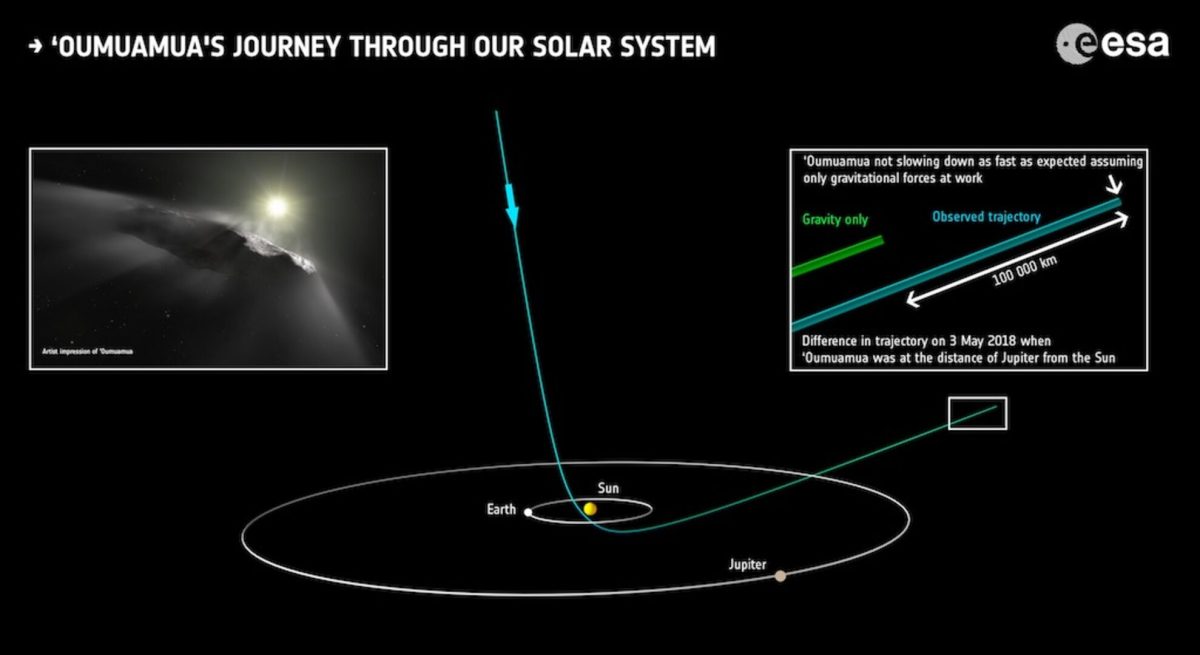
Similarly, the Milky Way is a complex three-dimensional structure, although it is easier to conceptualize it as a flat disk. A more accurate description of both the Solar System and the Galaxy, however, would be as collections of bodies orbiting a central point.
Beyond the Milky Way, however, there is no plane to which this perception can be reduced. In this context, all directions are fundamentally equivalent. Furthermore, on large scales, the dynamics of orbits no longer apply. Although gravity governs the motion of galaxies, they do not orbit one another except on local scales.
The universe is, in fact, continually expanding. It was once compressed into a single point and has been expanding ever since. However, the mechanisms underlying this expansion and its eventual fate depend on what else is present in the cosmos that remains beyond our observation.
Dark matter and dark energy
The concepts of dark matter and dark energy are among the most mysterious and seemingly unnatural in physics. Under ordinary circumstances, they might not be included in our physical understanding of the universe.
However, the expansion of galaxies is inconsistent with a model of the universe in which galaxies are the only constituents. Other components must be present; this cannot be explained by the gas and dust dispersed throughout the universe, as their abundance can be readily calculated from their transparency.
In particular, the motion of galaxies — both linear and rotational — can be explained only by the presence of something in the universe that does not chemically interact with ordinary matter or emit or absorb light, yet possesses mass and generates its own gravitational field.
This phenomenon is known as dark matter. Scientists have not yet determined precisely what it is or how it can be detected. However, most of it is believed to be located around galaxies. Although it is understandable to fear something invisible, scientists are confident that no large concentrations of dark matter are near the Sun and that smaller amounts pose no threat to us.
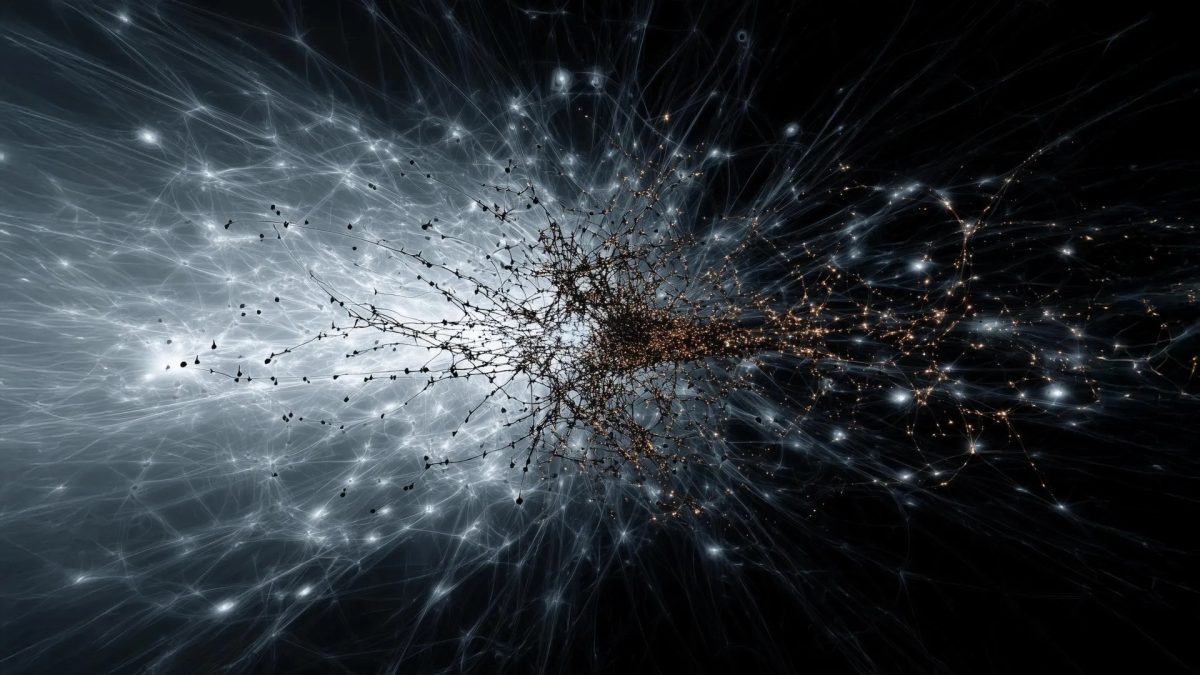
An even more enigmatic phenomenon is dark energy. In a sense, it is also a form of hidden mass; however, it does not manifest itself even through gravitational effects, but only through changes in the rate of the universe’s expansion. Establishing its existence and determining its properties remain areas that scientists have yet to fully understand. The only point we can state with certainty is that it has no direct effect on either the Milky Way or the Solar System, as it has virtually no effect on individual objects.
However, in the distant future, dark energy will determine the fate of the universe itself. It may continue expanding uniformly forever, begin contracting at some point, or accelerate its expansion sharply, tearing all matter apart into individual atoms. Further information is available here.
Scientists cannot determine which scenario will occur, as it remains unclear not only what the value of the dark matter state function is, but also whether it changes. Observations in this field can only establish that, over a timescale comparable to the period before the Sun transforms into a red giant, no catastrophic event will occur.
Collision with the Andromeda Galaxy
Perhaps the only object beyond the Milky Way that may warrant our concern is our closest galactic neighbor, the Andromeda Galaxy. Current data indicate that it is on a collision course with the Milky Way, and many believe such a collision will occur in the future.
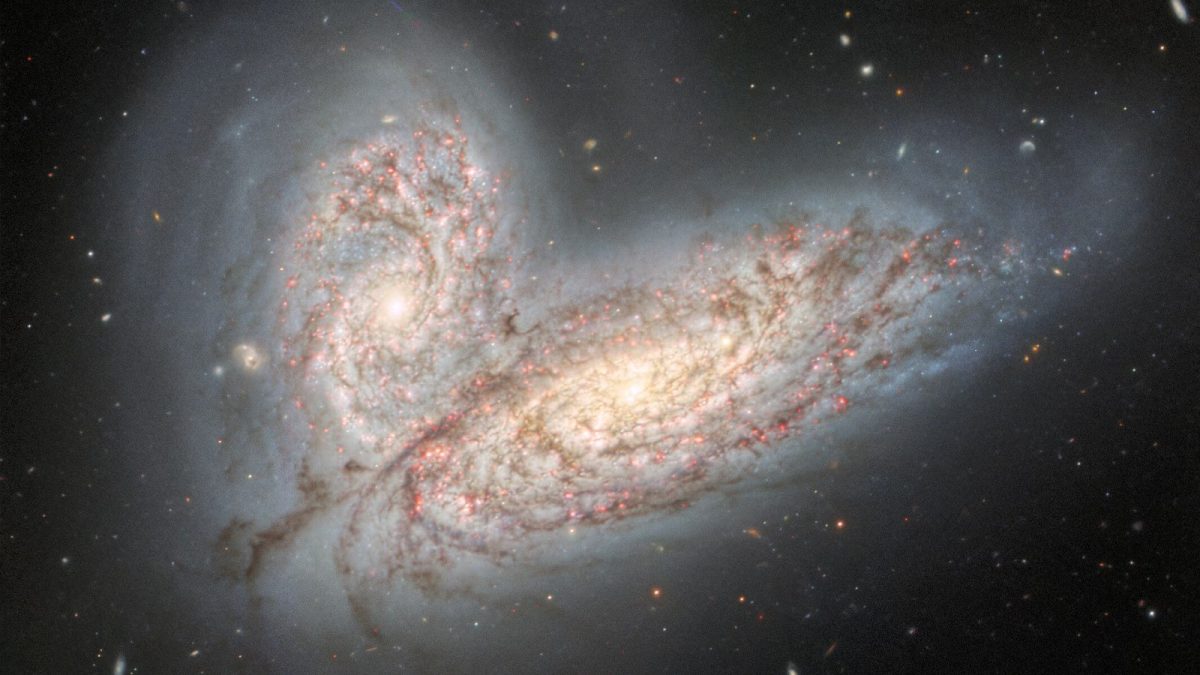
However, there is no need for concern about this matter either. First, the trajectory data remain highly approximate. The probability of a collision is estimated at only 50%, so it is entirely possible that it will simply pass by.
If a collision does occur, it is expected to take place in approximately 4.5 billion years, when the Sun begins its transition into a red giant, and life on our planet becomes impossible.
Furthermore, this event will not result in any catastrophic consequences. One star system will simply pass through the other, and the stars will not collide, given the vast distances between them. Ultimately, the two galaxies will merge to form a single, larger galaxy.
Space is extraordinarily vast, and much about it remains unknown. Nevertheless, current knowledge suggests that few dangers pose an immediate threat to us.
