

Fourteen years prior, on October 14, 2012, Austrian skydiver Felix Baumgartner descended from an altitude of nearly 39 kilometers and, without any propulsion, became the first individual worldwide to surpass the speed of sound. We will elucidate why the atmospheric conditions at this elevation provide minimal resistance to the body and detail the actual perils encountered during this jump.
Supersonic speed
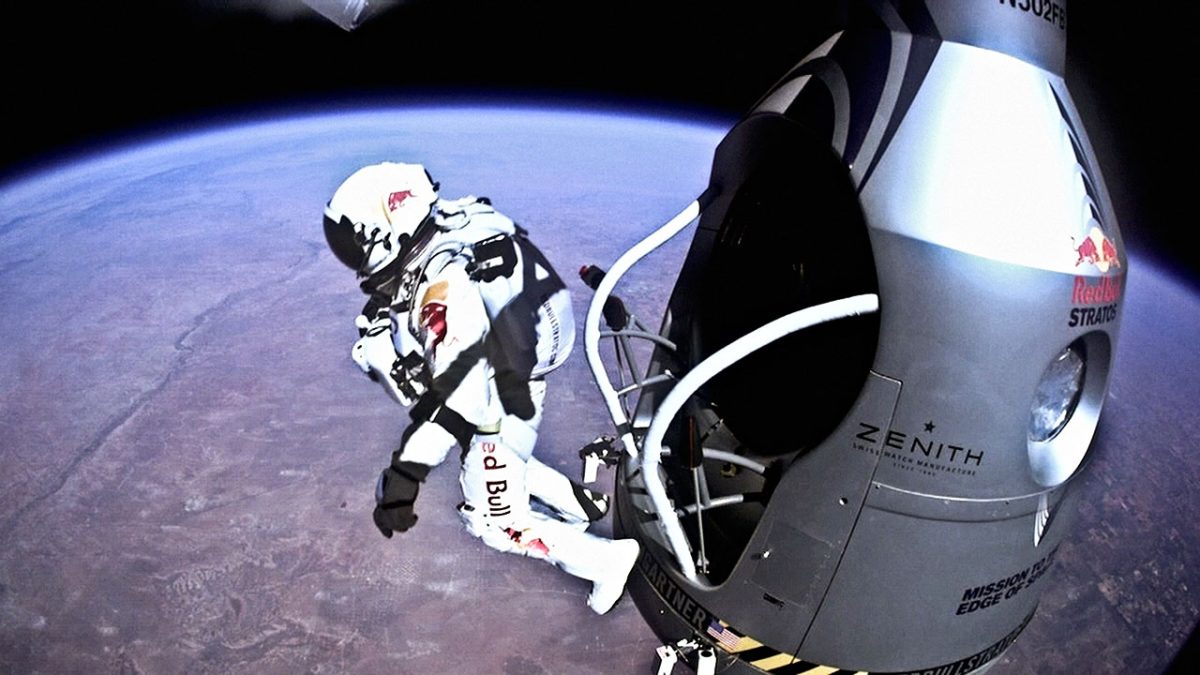
Over eight million individuals concurrently viewed the live stream on YouTube. Observers witnessed the door of the capsule — suspended approximately 39 kilometers above the desert near Roswell, New Mexico — opening. Felix Baumgartner exited onto the external platform. “It is regrettable that you cannot perceive what I see.” These words were transmitted shortly before he saluted and advanced one step. Driven solely by gravitational force, his velocity attained 1,357.6 km/h in less than one minute.
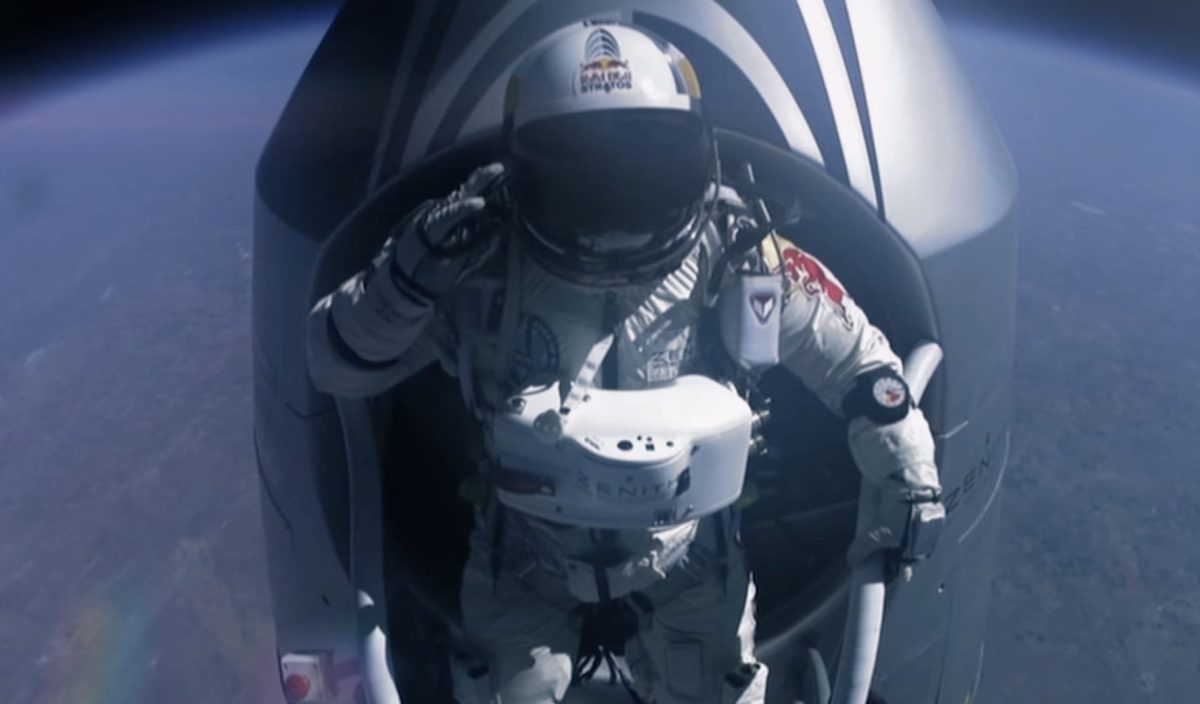
Intuition indicates a significantly different scenario in this context. Typically, a skydiver descending in a face-down position maintains an approximate velocity of 200 km/h, with air resistance preventing any substantial increase in speed. Therefore, the question arises: from which source does the velocity exceeding 1,300 km/h originate?
Why was the air unable to decelerate it?
A body in free fall accelerates until air resistance equals the force of gravity. For a skydiver flying face down, this occurs at approximately 200 km/h. At an altitude of nearly 39 km, the atmosphere is sufficiently thin that drag remains insignificant for an extended period. According to Felix Baumgartner, he experienced approximately 35 seconds with no perceived resistance around him. “The main concern is to avoid tumbling, because there is no air up there to slow you down,” he explained prior to the jump, emphasizing the necessity of a flawless exit from the capsule.
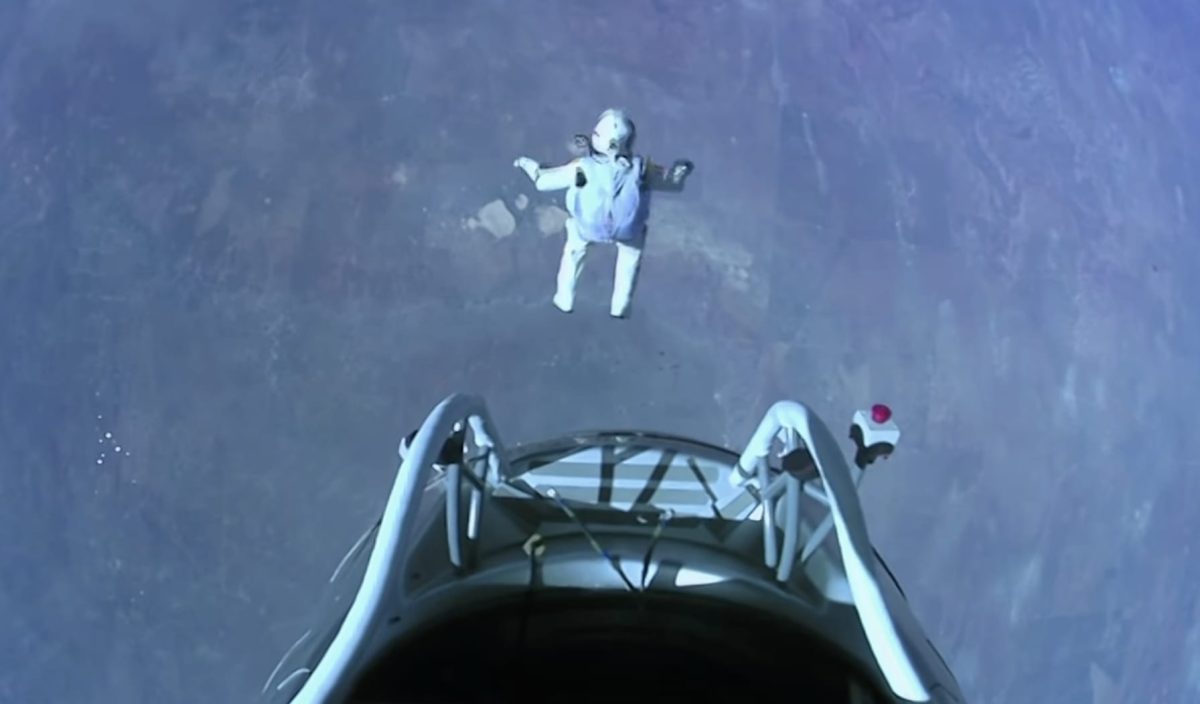
The velocity of sound is also influenced by altitude — or, more precisely, by temperature. At an altitude of approximately 28 kilometers, where Felix Baumgartner attained his maximum velocity, the temperature is roughly -50°C, resulting in a sound speed of approximately 1,080 km/h. This is contrasted with a speed exceeding 1,200 km/h near ground level during warm conditions. He surpassed the sound barrier 34 seconds into his descent.
Felix Baumgartner attained a maximum velocity of 1,357.6 km/h at the 50-second mark. He continued his descent, with his speed diminishing due to increasing air density at lower altitudes, which progressively reduced his velocity. Sixty-four seconds after departing the capsule, at an altitude of approximately 23 kilometers, he was already moving at a speed below that of sound. The main parachute was deployed at an altitude of roughly 2.5 kilometers, 4 minutes and 20 seconds following the jump.
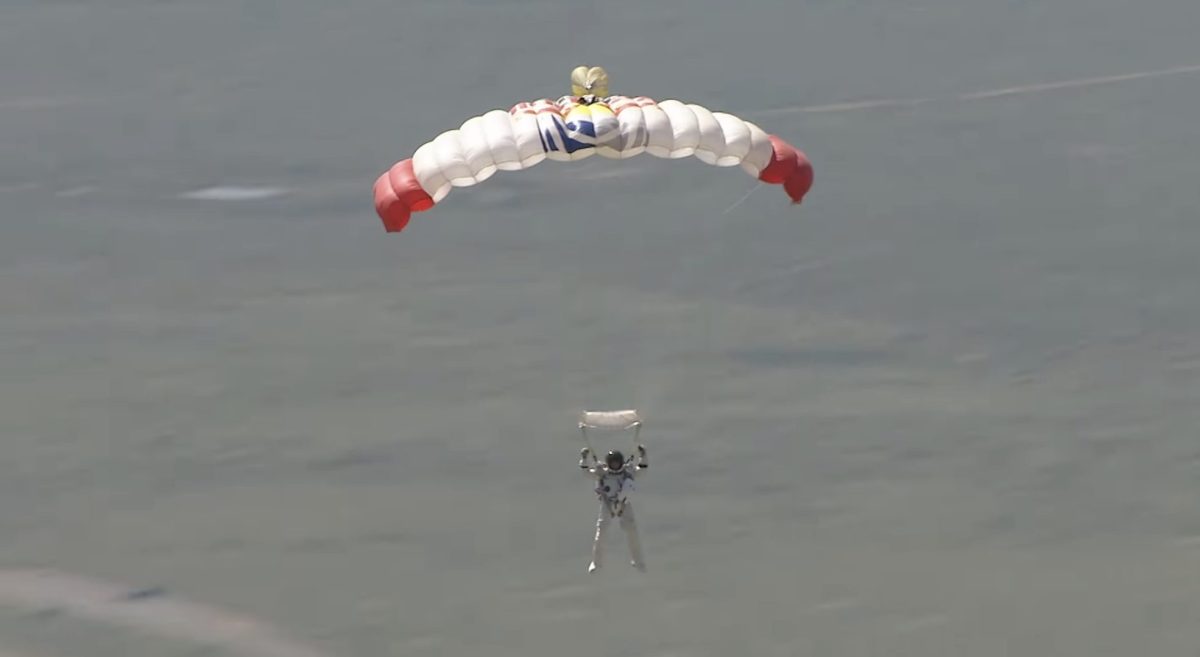
The lower Felix descended, and as a result, the fabric of his spacesuit fluttered more noticeably, reflecting the gradual equalization of internal and external pressures. The black sky above him transitioned back to a shade of blue. “For the first time in many hours within the spacesuit, I am breathing normal air,” — this was how he characterized those moments beneath the parachute canopy.
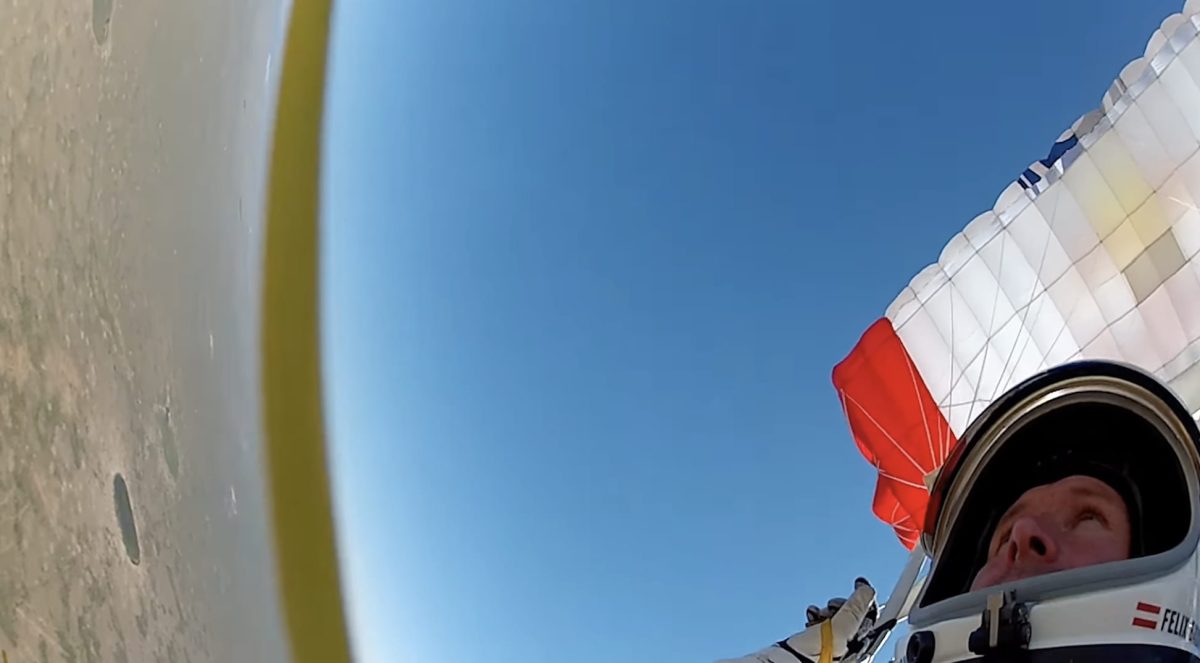
An aerostat rather than an aircraft
Reaching such a high altitude by aircraft would have been unfeasible, as no airplane can sustain an altitude of 39 km for an extended period. The air density at that level is less than 0.5% of that at Earth’s surface, rendering wings virtually ineffective for lift. Consequently, Felix Baumgartner was transported in a pressurized capsule attached to a large helium balloon. The endeavor was designated Red Bull Stratos, in recognition of the stratosphere — the atmospheric layer commencing approximately between 10 and 15 km above sea level and extending up to 50 km. The ascent duration exceeded two hours.
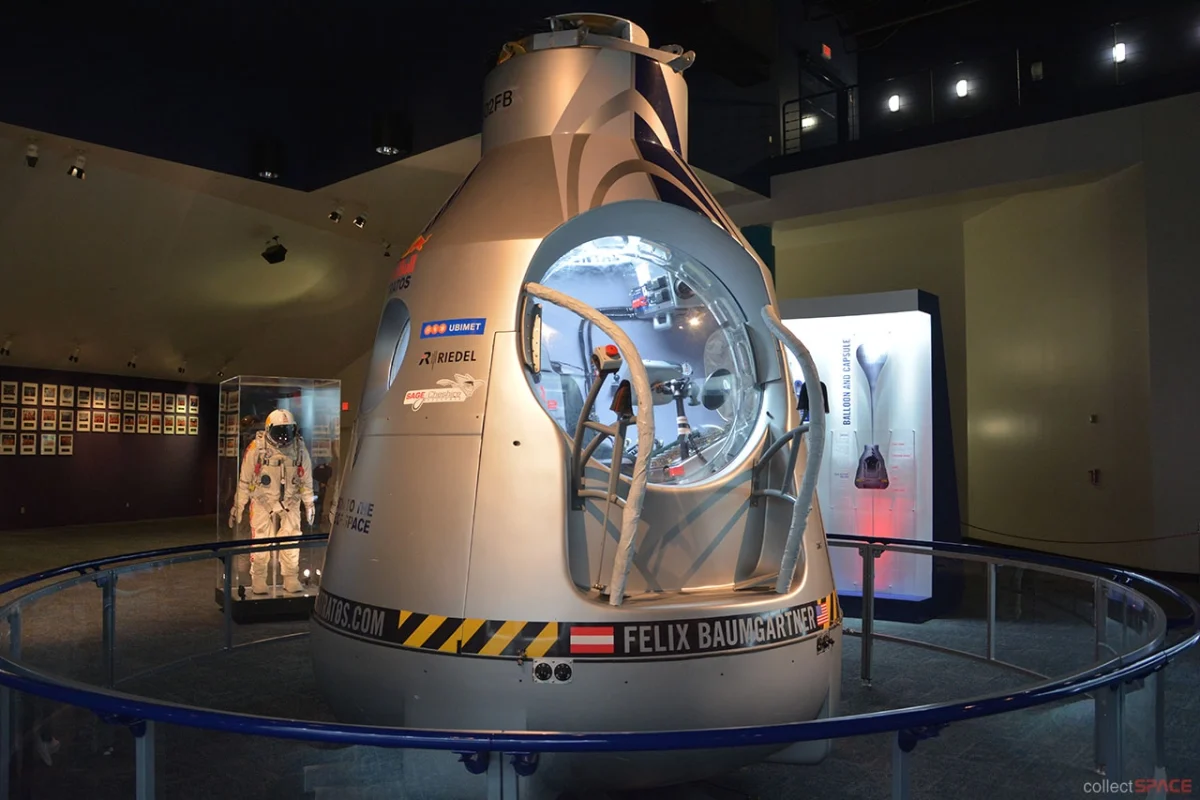
Credit: collectSPACE.com / Robert Z. Pearlman
A comparable jump had been made more than half a century earlier. On August 16, 1960, U.S. Air Force Captain Joseph Kittinger stepped out of the open gondola of a balloon at an altitude of 31,333 meters. During the ascent, his right glove depressurized, causing his hand to swell painfully because of the low pressure; nevertheless, he proceeded with the jump. During his descent, Kittinger reached a speed of 988 km/h, more than 90% of the speed of sound at that altitude. This record remained unbroken for 52 years.
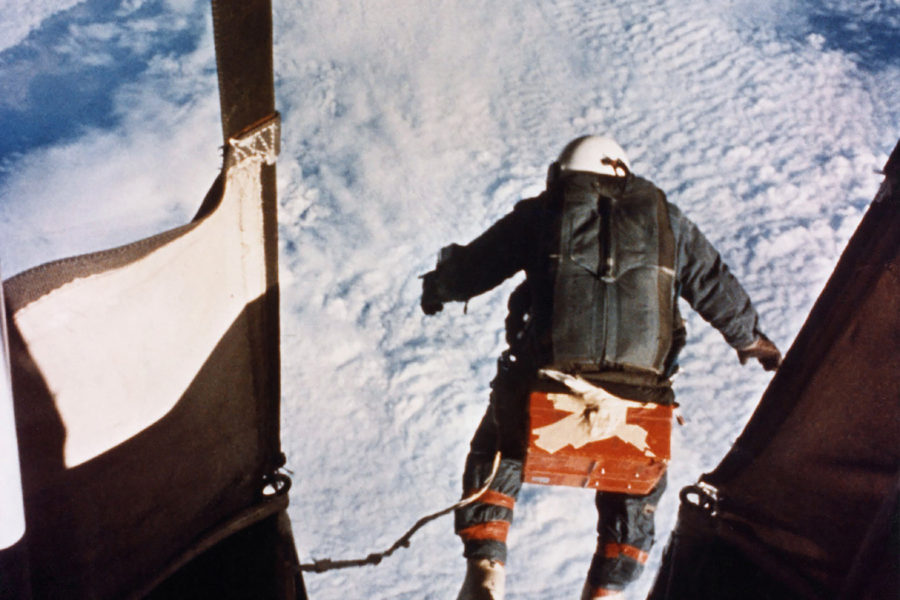
Source: airandspaceforces.com
Both jumps served practical objectives. The military was examining the survivability of pilots ejecting from aircraft at extreme altitudes, while the Red Bull Stratos project was gathering data on rescuing individuals from even higher and more tenuous atmospheric layers. Joseph Kittinger served as a mentor to Felix Baumgartner, and on October 14, 2012, he maintained radio contact with him from the control center. Prior to exiting the capsule, they reviewed the checklist together.
The real risks of a sudden spike
Speed itself does not cause harm to an individual; for instance, a passenger aboard an airliner traveling at approximately 900 km/h experiences no adverse effects. The actual hazard resides in the thin atmosphere. As the surrounding pressure diminishes, the temperature at which water transitions to vapor also decreases. At the summit of Mount Everest, water boils at roughly 70 °C, and at altitudes exceeding 19 km, this boiling point falls to 37 °C — equating to human body temperature. Without adequate protection, saliva, tears, and moisture within the lungs would commence vaporization. Prior to this, within approximately 10 to 15 seconds, an individual would lose consciousness due to suffocation and would succumb shortly thereafter. Felix Baumgartner was safeguarded from this phenomenon through the use of a space suit that maintained internal pressure and supplied oxygen.
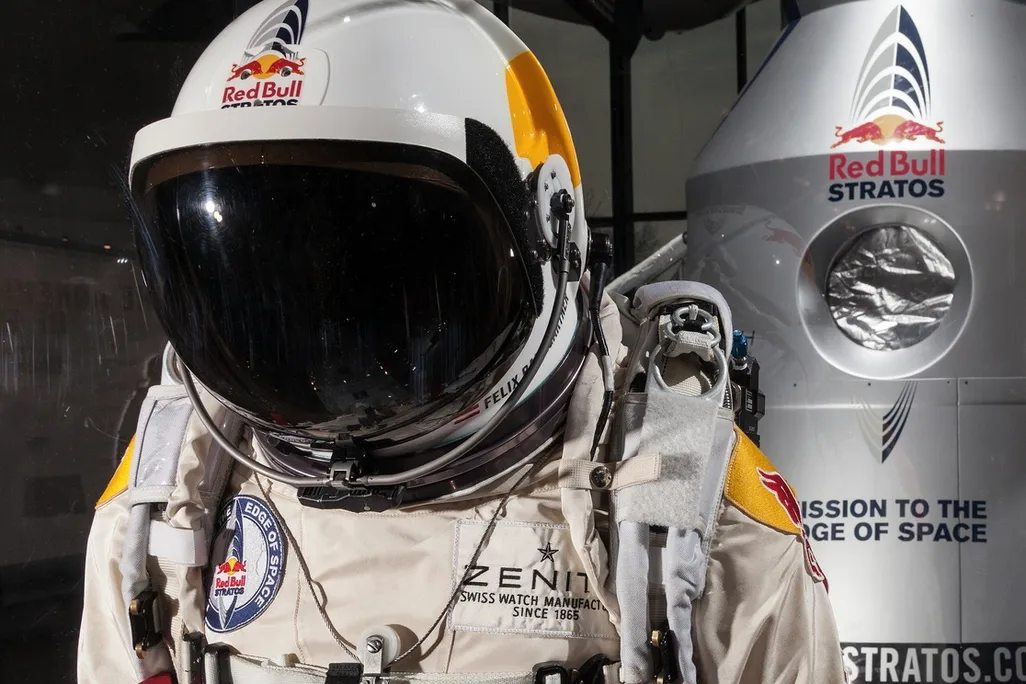
Credit: Eric Long, National Museum of Aviation and Astronautics, USA
The team expressed significant concern regarding a flat spin, characterized by the body rotating horizontally, akin to a spinning top. Such an event can occur easily in environments of thin air, and the G-forces experienced during a spin can lead to loss of consciousness. In order to mitigate this risk, a sensor was affixed to Felix Baumgartner’s wrist. This device is programmed to detect G-forces sustained for six consecutive seconds — corresponding to a body experiencing 3.5 times its normal weight — and, upon such detection, automatically deploy a small stabilizing parachute.
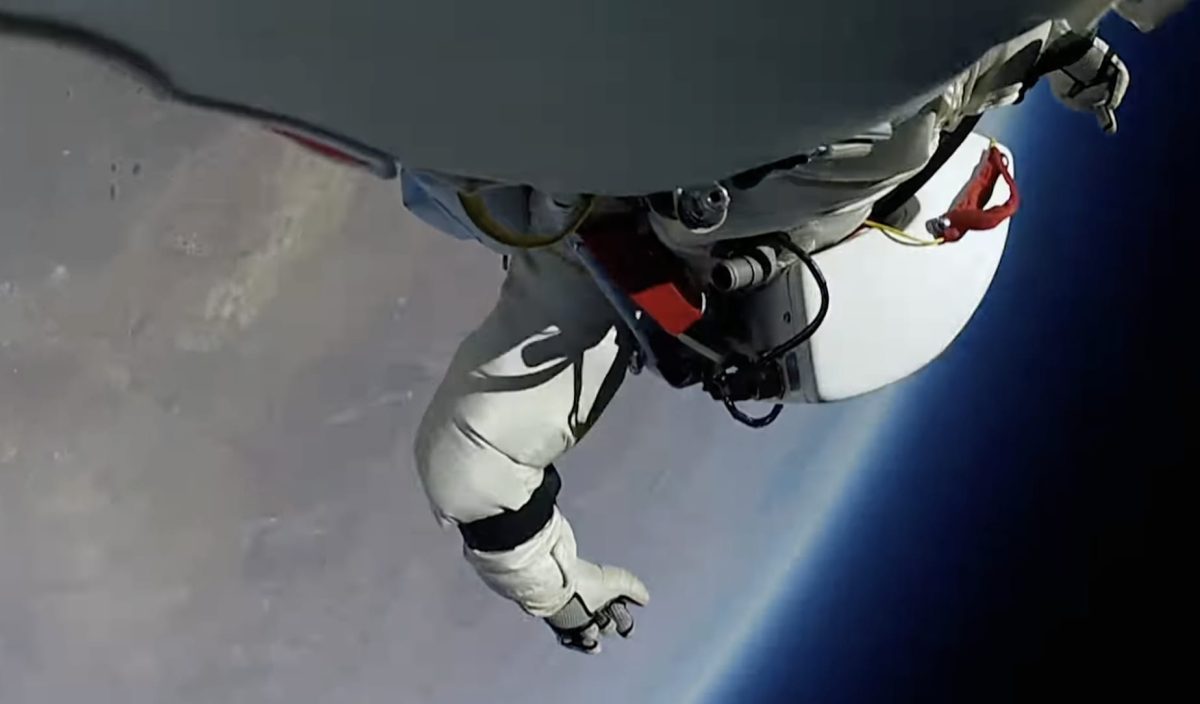
The spin actually commenced while he was still traveling at a velocity exceeding the speed of sound. “There is no protocol, and no one will instruct you on what to do when the entire world is observing,” Felix Baumgartner subsequently remarked. For thirteen seconds, he rotated at approximately one revolution per second. “At that moment, the matter is no longer about records, but solely about survival,” he stated. He did not reach the threshold necessary for the automatic spin control system to activate, thereby stabilizing himself through bodily movement. His helmet visor had fogged prior to his exit from the capsule, rendering his descent nearly blind, which led to an earlier deployment of his parachute than originally planned.
Not from outer space and without fire
This event is often described as a jump from the edge of space. In fact, this boundary is conventionally defined at an altitude of 100 km, approximately 2.5 times higher than the launch point. Felix Baumgartner exited the capsule in the stratosphere, although the sky above him was already nearly black and the horizon was visibly curved.
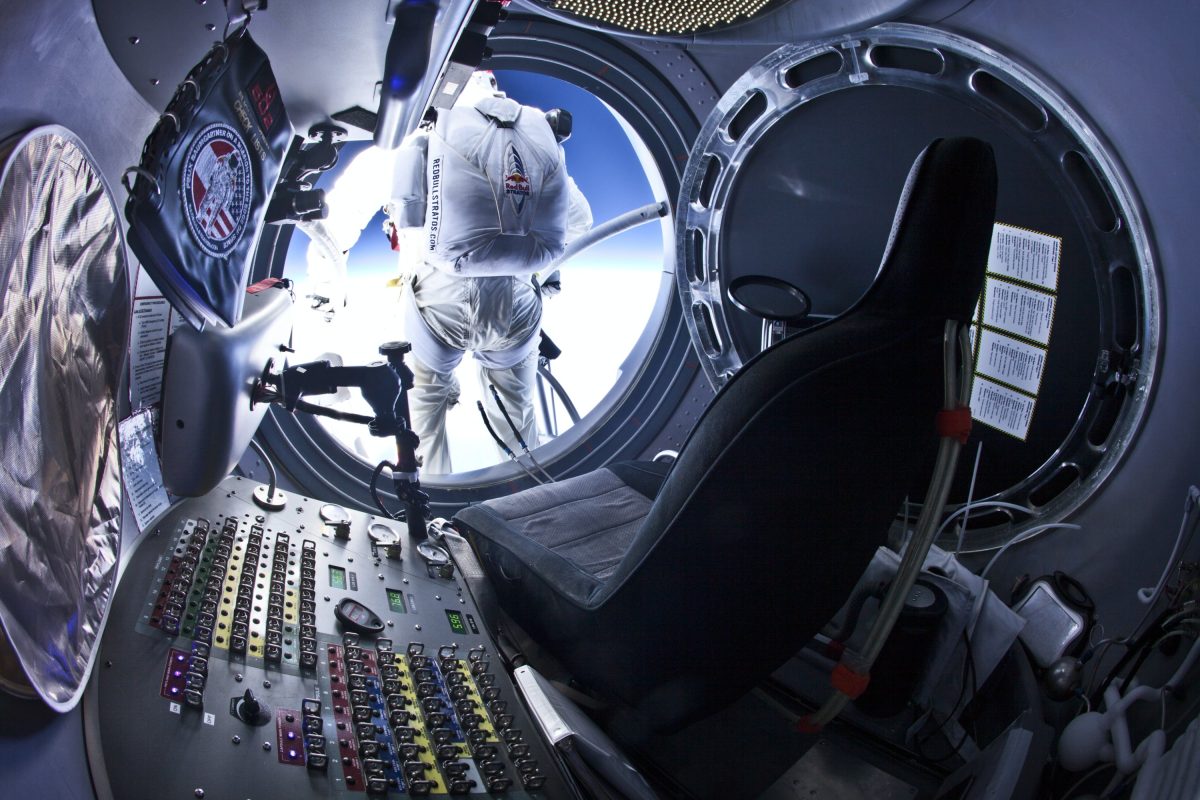
He was also not at risk of experiencing the burning effects associated with meteors. Felix reached a speed of 1,357.6 km/h, whereas meteors enter the atmosphere at speeds of at least 40,000 km/h — approximately 30 times faster. At such speeds, the air in front of meteors is compressed to the point that it becomes incandescent. The skydiver, who was in the thin stratosphere, did not experience this level of heating.
The speed record remains unbroken
Two years later, on October 24, 2014, American engineer Alan Eustace jumped from an altitude of more than 41.4 km and reached a speed of 1,322 km/h. However, because he descended with a stabilizing parachute, the International Aeronautical Federation classified his achievement in a separate category. The record for the highest free-fall speed remains held by Felix Baumgartner.
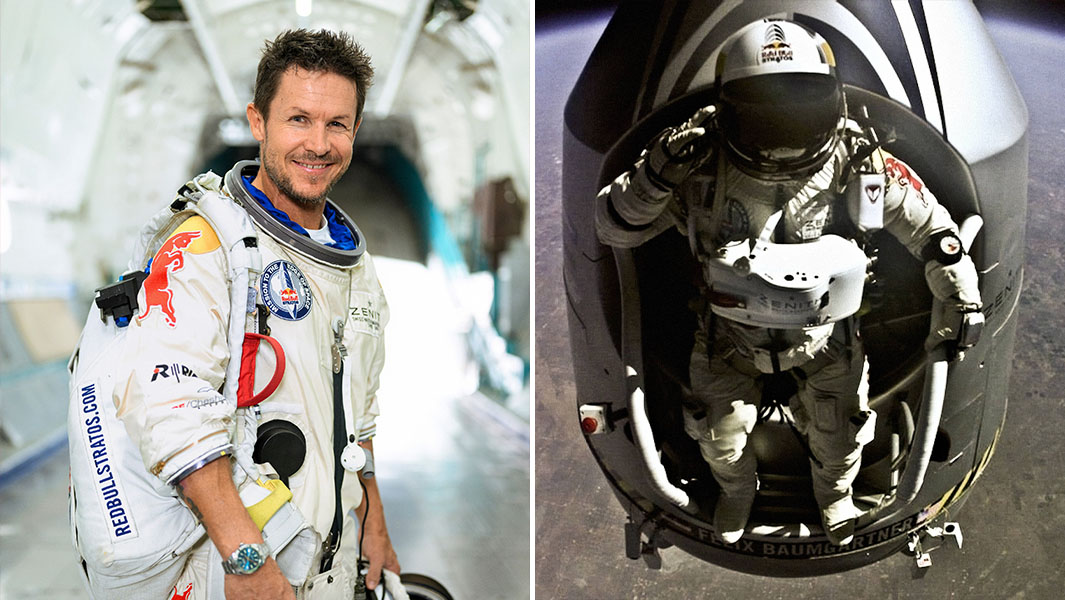
In the Red Bull Stratos report, Joseph Kittinger stated that if even an individual with 2,500 jumps to their credit could not avoid spinning, an astronaut, pilot, or space tourist would certainly be unable to do so. In his view, a reliable stabilizing parachute still requires testing at such altitudes.
Felix Baumgartner recounts his experience during his jump from the stratosphere, including how he broke the sound barrier and recovered from a spin. Source: YouTube, Red Bull
Felix Baumgartner died on July 17, 2025. He was 56 years old when he crashed in Italy while flying a paramotor, a paraglider equipped with a small engine.
