

The Baja California Peninsula is rapidly separating from the North American continent—by geological standards—forming a long gulf. Scientists recently found that this was driven by events that began millions of years ago on the other side of the Pacific Ocean, in Japan.
The Baja California Peninsula and the Gulf of California
Our planet’s crust is divided into separate blocks called tectonic plates. Their boundaries are far from perfectly aligned with continental coastlines and sometimes cross land, creating fascinating geological structures. According to Phys.org, scientists recently discovered something intriguing about one such region: California.
California is not just a U.S. state; the name also refers to a peninsula and a gulf in Mexico. The latter two formed together: a stretch of North America’s coastline moved away with its tectonic plate, and water filled the space it left behind. More precisely, this part of our planet is still actively taking shape. In the future, the process could extend into the United States, turning the largest state on the West Coast into an island or an entire archipelago.
This will not happen anytime soon, as the process began 12 million years ago. Even so, it is unfolding very quickly by geological standards and appears to have accelerated at some point. Scientists now think they know why.
Subduction Zones Beneath Japan
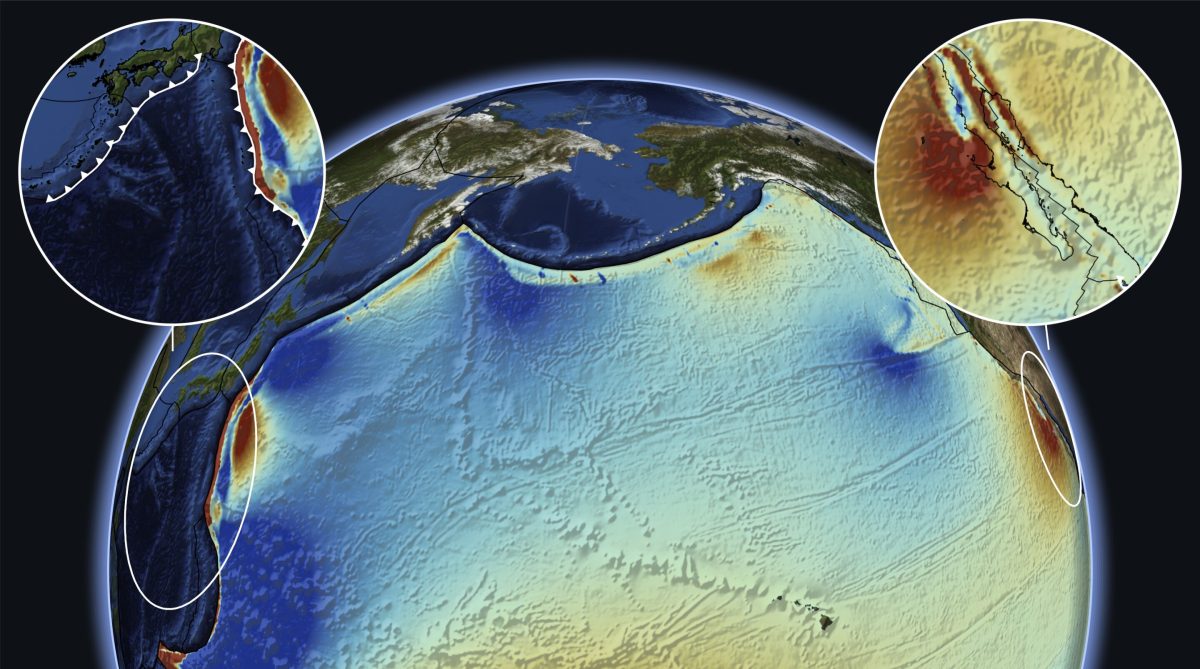
In the new study, researchers proposed that this acceleration is linked to the fact that the enormous Pacific Plate moves as a single unit, meaning the cause should be sought on its opposite side. Japan and its neighboring islands emerged as a likely source of the influence. The new model shows that California’s accelerated separation is driven by subduction zones in that region.
A subduction zone is a place where two tectonic plates meet and one sinks beneath the other—in this case, the Pacific Plate beneath the Japanese and Eurasian plates. But because the blocks of our planet’s crust move as single units, the formation of such a zone forced the crust to tear apart on the opposite side, in California.
More precisely, the peninsula had already begun forming and continued to do so very slowly when a subduction zone developed beneath Japan. A second zone then formed there, accelerating the Pacific Plate’s movement by a factor of approximately 1.7. All of this demonstrates how closely interconnected geological processes are across our planet.
