

Saturn is frequently considered the most identifiable emblem of the Solar System — a majestic gas giant adorned with magnificent rings that appear as timeless as the planet itself. However, one of the most notable discoveries resulting from the Cassini mission is that this “halo” may be considerably younger than scientists had previously estimated.
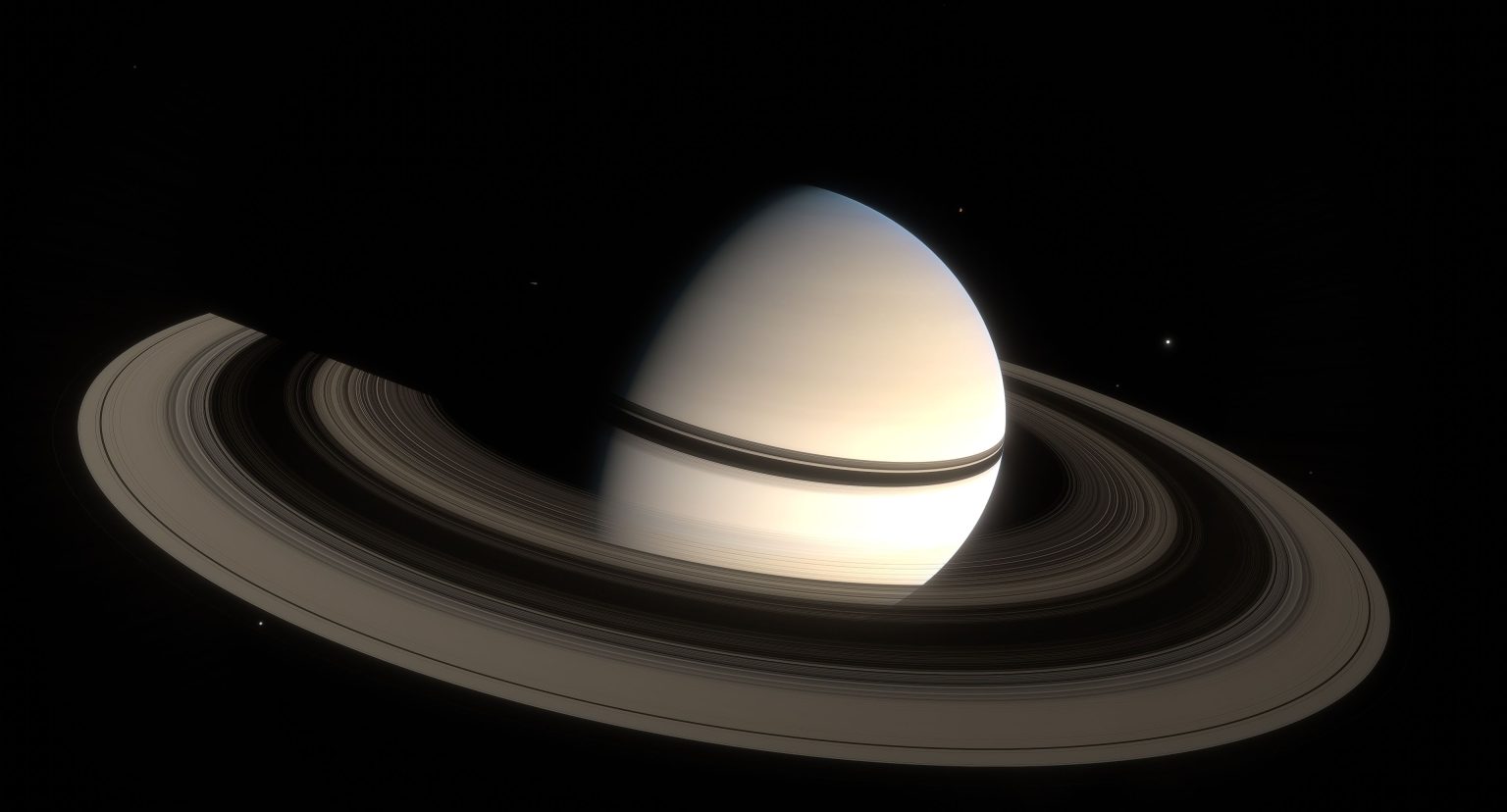
Saturn was formed approximately 4.5 billion years ago, coinciding with the development of our planetary system. However, the results of the Cassini mission suggest that its main rings may be surprisingly young – their age is estimated to be from a few tens to a few hundred million years. If these estimates are correct, then for most of its history the gas giant could have remained without a modern ring system, and its famous decoration was formed when dinosaurs roamed the Earth. Nevertheless, this topic continues to be one of the most vigorously debated issues in planetary science.
Why do the rings look so “fresh”?
According to NASA, Saturn’s rings are made up of billions of particles, mostly water ice, with a small admixture of rocky material and dust. Their size ranges from microscopic ice crystals to blocks the size of houses. The main ring system extends approximately 282 thousand km from the planet, although its thickness is usually only a few tens of meters. Despite its enormous size, this structure is extremely thin and dynamic. The ring particles are constantly colliding with each other, being crushed, and being hit by micrometeoroids.
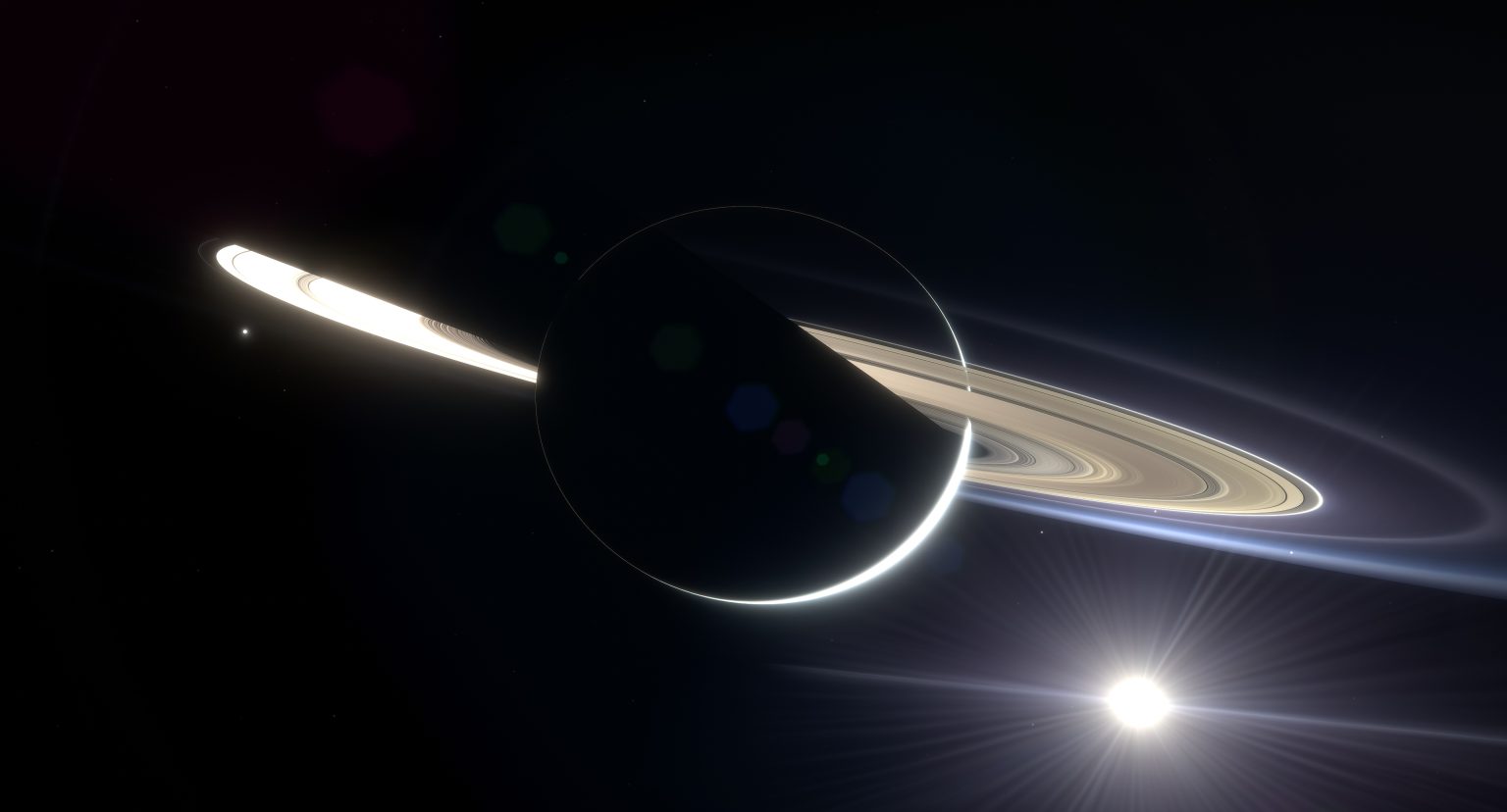
The principal enigma concerning their age pertains to their exceptional purity. The rings exhibit a luminous brightness attributable to their composition, which is predominantly pure water ice. Had they been orbiting Saturn for billions of years, it is inevitable that they would have accumulated a substantial quantity of dark interplanetary dust. Nevertheless, the data indicate that the rings are extraordinarily “clean,” as if they had originated relatively recently due to a significant cosmic cataclysm.
Cassini’s arguments and the Age of Dinosaurs
The Cassini interplanetary spacecraft conducted an exploration of the Saturn system from 2004 to 2017. During the concluding phase of the mission, the spacecraft executed a series of daring descents into the gap between the planet and its rings. This allowed scientists to determine for the first time the mass of the main ring system precisely from its gravitational influence on the spacecraft. Combining these measurements with estimates of the rate of interplanetary dust accumulation, the researchers concluded that the rings are likely relatively young.
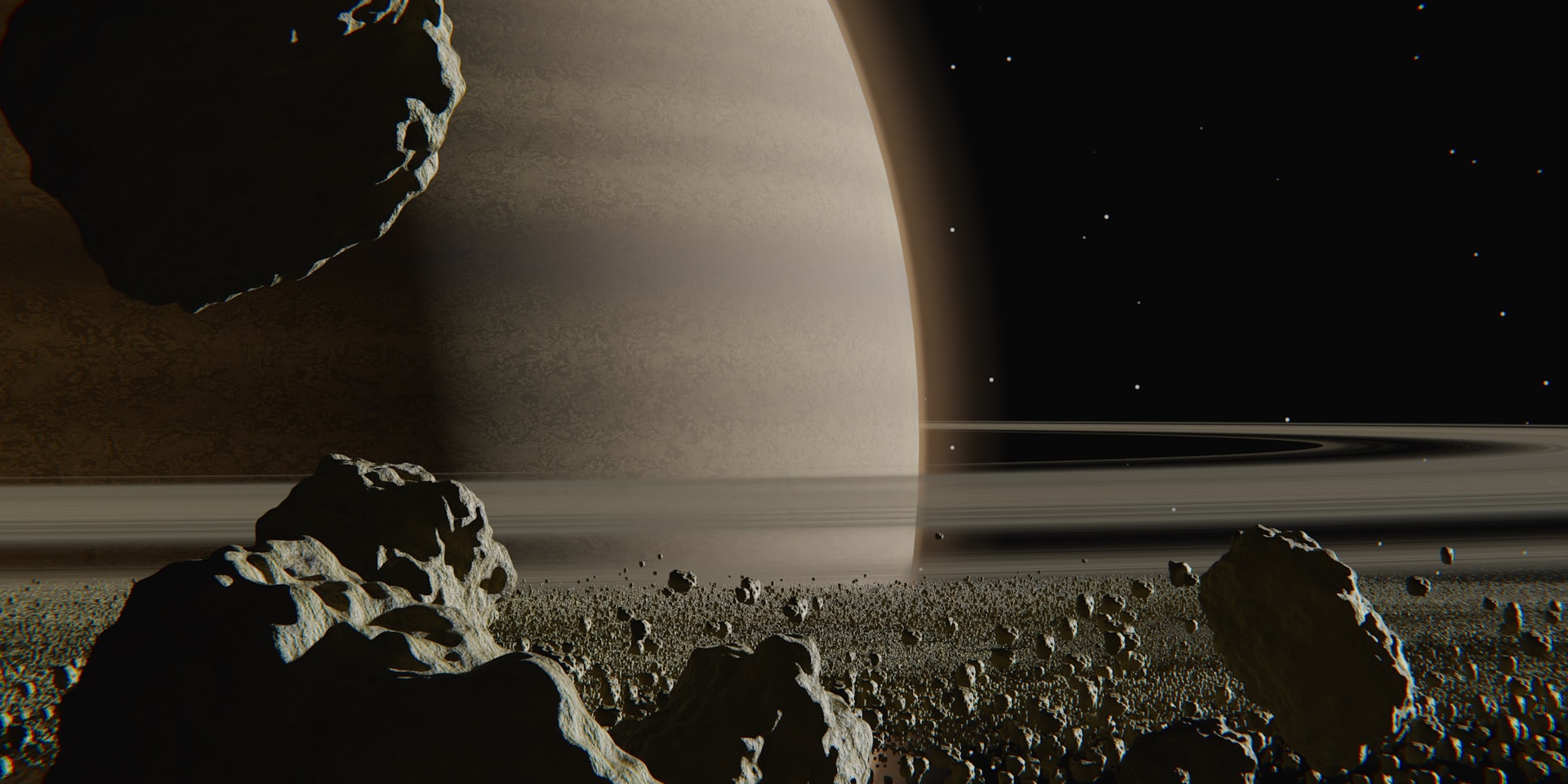
In 2023, researchers concluded that the flow of micrometeoroids and the mass of the rings limit the duration they can persist in outer space to merely a few hundred million years — or, more precisely, approximately 120 million years. By way of comparison, dinosaurs existed on Earth from approximately 230 to 66 million years ago. If their calculations are accurate, then Saturn’s majestic rings formed roughly in the midst of the Mesozoic Era.
Rings that melt before your eyes
The hypothesis of a relatively young age of the rings is also consistent with the fact that they are gradually losing their substance. Cassini documented a phenomenon referred to as “ring rain,” wherein charged ice microparticles, influenced by the planet’s magnetic field, consistently descend into Saturn’s atmosphere. Simulations indicate that the planet absorbs between thousands and tens of thousands of kilograms of icy material per second. Given this rate of erosion, it is conceivable that the rings could entirely dissipate within a timeframe of approximately 15 to 400 million years.

The origin of this icy splendor remains a subject of scientific speculation. It is hypothesized that Saturn once possessed a large icy moon named Chrysalis, which either came too close to the giant planet and was subsequently torn apart by its formidable tidal forces or was destroyed due to a collision with another moon.
Space hoax
Nonetheless, it is premature to reach a definitive conclusion regarding this matter. Researchers underscore that the age of the dust’s influence on the rings may not correspond to their formation age. It is plausible that the ring system possesses efficient self-cleaning mechanisms, which could potentially mislead investigators.
In 2026, a team of Japanese scientists published a paper in the journal Nature Geoscience that questions the validity of the young rings theory. According to their research, during collisions with micrometeoroids, dark dust may rapidly evaporate, leaving minimal traces behind. If this hypothesis is correct, then the rings’ pristine and “young” appearance is merely an illusion, suggesting they could be as ancient as the planet itself.
Regardless of the ultimate truth, research indicates that Saturn’s rings are not a static backdrop; rather, they constitute a dynamic and continuously evolving system, which humanity has been fortunate enough to observe during the present cosmic epoch.
We previously reported on the temporary disappearance of Saturn’s rings.
Provided by spacedaily.com
