
Soon, the familiar view of the night sky with the Milky Way may survive only in memory. Instead of the twinkling of distant stars, humanity may see a bright artificial ring encircling the planet every night. Hugh Lewis, Professor of Astronautics at the University of Birmingham, warns that if plans to deploy millions of satellites are implemented, they will form a continuous band of light. It would be brighter than all the stars and planets, even outshining the full Moon.
A few years ago, this seemed like a dystopia, but today the space boom is making this prospect a reality. A number of companies, including SpaceX, Blue Origin, Starcloud, and Cowboy Space, have filed applications with the US Federal Communications Commission (FCC) to deploy huge satellite constellations for orbital data centers. Collectively, we are talking about more than a million satellites. These proposals include initiatives such as Starmind, Project Sunrise, and Stampede.
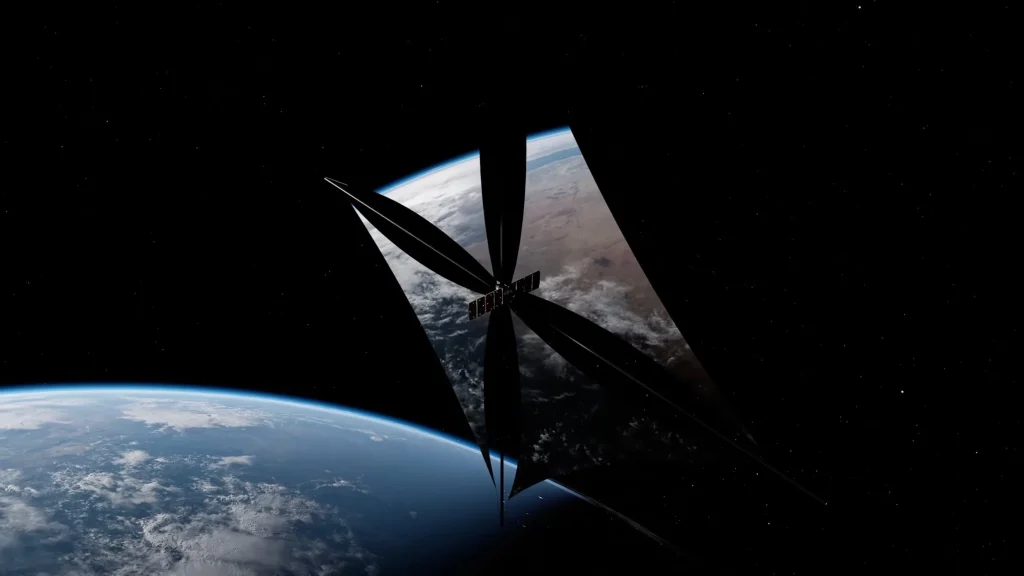
At the same time, the startup Reflect Orbital plans to deploy a constellation of 50,000 mirrors that would reflect sunlight onto ground-based power plants at night. Its first demonstration spacecraft, Eärendil-1, measuring 18 by 18 meters, has already received authorization for launch, which is scheduled for the end of this year.
To maintain continuous access to solar energy, these spacecraft would have to operate in a so-called terminator orbit – an orbit whose plane almost coincides with the direction of the terminator
A Blow to Science and the Disappearance of the Stars
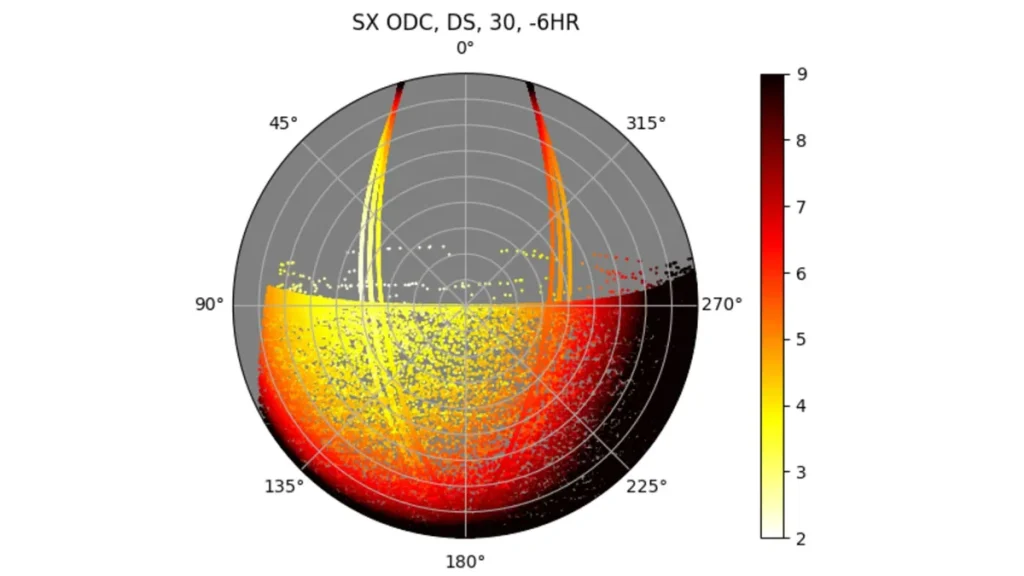
The best artificial ring will be visible twice a day – after sunset and before dawn, when the satellites are still illuminated by the Sun and the sky is already dark enough. According to the authors’ calculations, at the equator the brightest areas will form a figure resembling a giant letter “X”, while closer to the poles two separate light bands will be observed.
In their simulations, the authors assumed that each Reflect Orbital mirror could reach a brightness comparable to Venus. They estimate that a cluster of 50,000 such devices could increase the overall brightness of the night sky by about 300%. This artificial glow can persist for several hours after sunset, distorting the natural appearance of the sky and complicating the work of ground-based telescopes. According to astronomer Samantha Lawler, even the search for potentially dangerous asteroids for Earth will become much more difficult in such conditions.
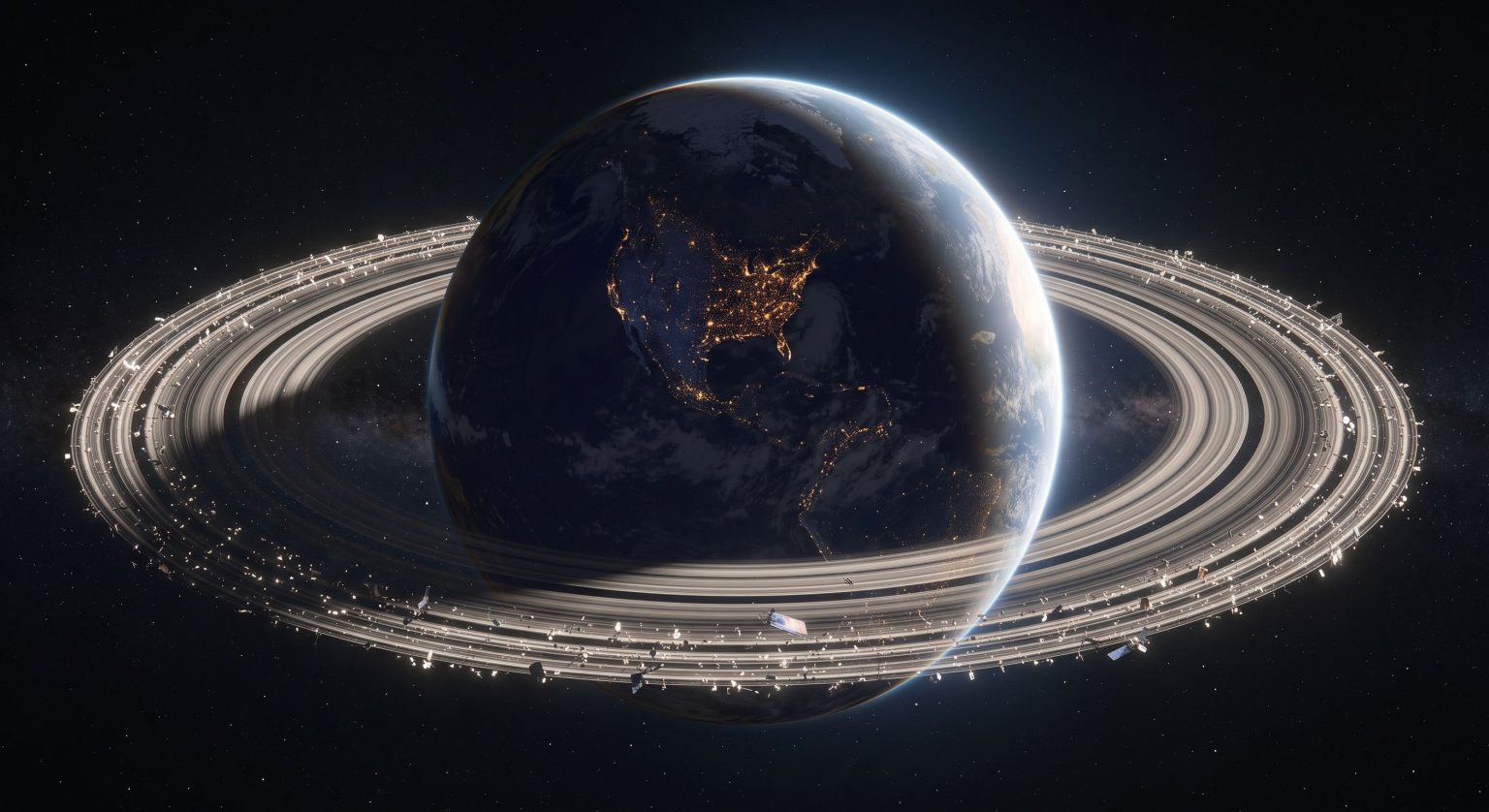
Astronomer John Barentine notes that humanity is already turning Earth into an artificial “ringed planet” resembling Saturn. However, instead of the dust and rocks that form the gas giant’s rings, Earth would acquire rings made of space debris and spacecraft, creating a continuous reflective surface that would obscure the twilight hours most valuable for astronomical observations.
Bureaucratic Inaction
Despite strong objections from the astronomical community, regulators say they have little authority to intervene. When granting a license for the Reflect Orbital mission, the FCC officially stated that protecting optical astronomy does not fall within its responsibilities. The problem is that no other agency has the authority to assess how launches will affect the appearance of the night sky.
The American Astronomical Society (AAS) and the British Royal Astronautical Society strongly criticized the decision. Scientists warn that flashes from the mirrors could physically damage sensitive telescope optics, blind pilots, and even injure the eyesight of people looking at the sky through amateur binoculars or telescopes. They could also make navigation by the stars impossible.
Attempts to minimize light pollution are also failing because spacecraft are becoming larger. For example, SpaceX’s latest Starlink satellite models weigh about two tonnes. They operate in lower orbits and are clearly visible to the naked eye. Unless regulators take the environmental and scientific consequences into account, the starry sky may be lost to future generations.
Earlier, we reported that Starlink satellites may pose a threat to Earth’s ozone layer.
According to Space
