

The Pine Island Glacier is known as one of the first parts of the Antarctic ice sheet whose disappearance has raised concerns. Scientists have been observing its melting for decades. Now they have evidence that human activity was one of the main drivers of this process.
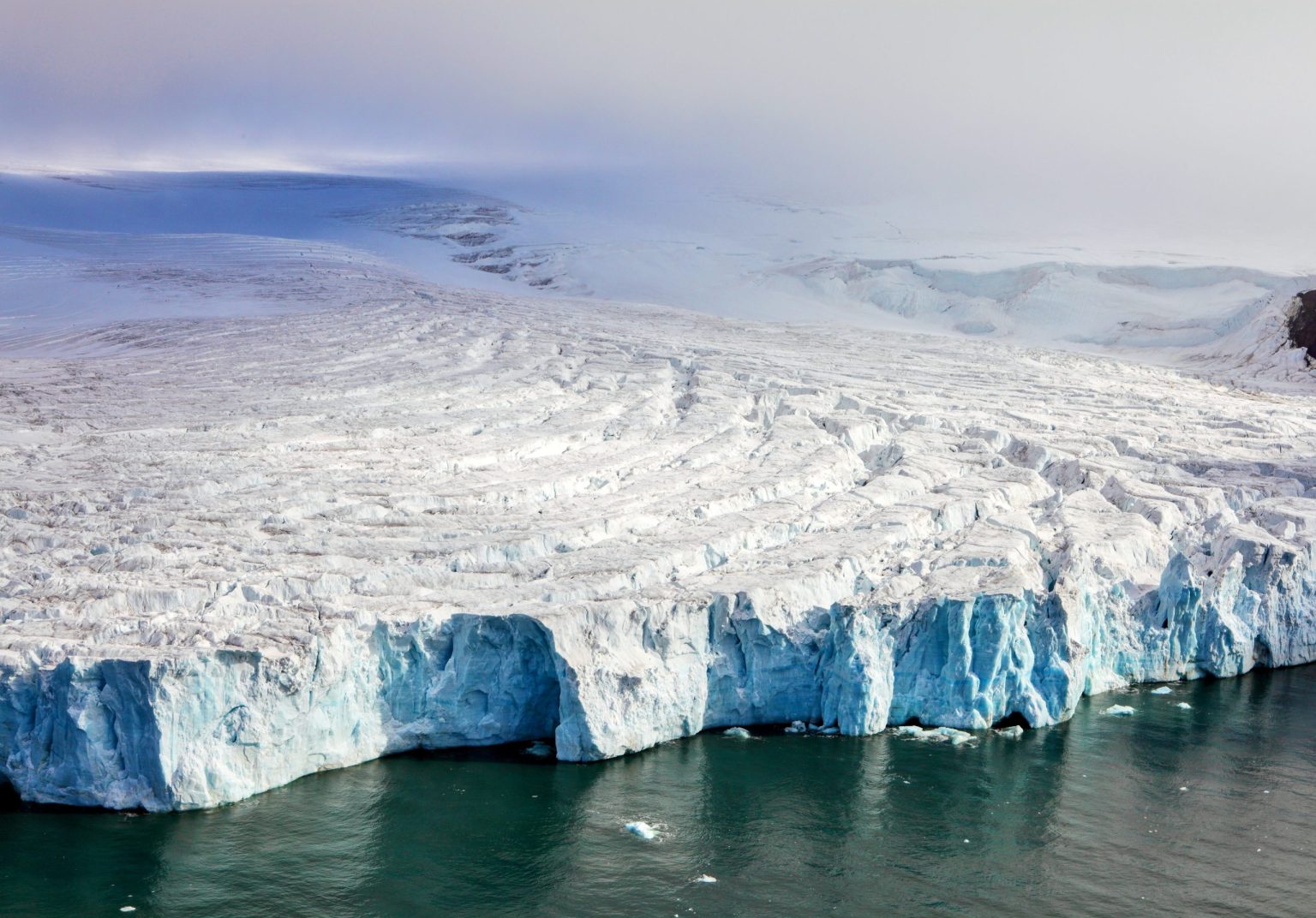
Human-induced impact on the melting of Pine Island Glacier
Human-induced climate change significantly accelerated the retreat of one of Antarctica’s most important glaciers during the 20th century. The Pine Island Glacier, which drains much of the West Antarctic Ice Sheet into the Amundsen Sea, is one of the largest contributors to global sea-level rise.
According to a report on phys.org , this study—conducted by scientists from King’s College London and the British Antarctic Survey and published in the journal The Cryosphere—is the first to directly link changes in a major Antarctic glacial flow to human activity.
The study shows that greenhouse gas emissions have increased the retreat of the Pine Island Glacier by approximately 18%–20% since the 1940s. This has added several kilometers (several miles) to the retreat of its landward section.
Lead author Dr. Alex Bradley of the Department of Geography says that a retreat of this magnitude during the industrial era would be unlikely to have occurred without human influence.
“Our results show that climate change has significantly accelerated the retreat of the Pine Island Glacier,” said Bradley, the study’s lead author. “Without the sustained warming of the surrounding ocean since the mid-20th century, the glacier would not have retreated as far as it has.”
Although previous studies had already linked the retreat of mountain glaciers to anthropogenic warming, applying similar methods to Antarctic glaciers proved to be much more challenging.
“This kind of work has become commonplace for heat waves and floods, and increasingly so for mountain glaciers,” Bradley said. “What’s new here is that it quantitatively demonstrates how human influence has altered the behavior of a large Antarctic glacier.”
Scientists believe their findings add to the growing evidence that human-induced climate change is likely affecting even the most remote regions of the planet. Changes in Antarctica have global implications, particularly for sea-level rise, underscoring the far-reaching consequences of global warming.
Modeling the glacier’s altered path
Geological records indicate that the Pine Island Glacier began retreating rapidly as early as the 1940s, likely due to increased infiltration of warm ocean water beneath its ice shelf. This study showed that global ocean warming caused by human activity—which is believed to have begun in the 1960s—further accelerated the retreat thereafter.
Using a model that simulates the glacier’s behavior, and incorporating observed changes in ice thickness and retreat to calibrate their estimates, the researchers compared scenarios with and without human-induced global warming.
As of 2015, simulations that did not account for human influence showed the glacier’s terminus had retreated approximately 4 kilometers (2.5 miles) less. This difference is slightly less than one-fifth of the glacier’s actual retreat.
Looking ahead, models suggest that the Pine Island Glacier may temporarily stabilize toward the end of this century when it encounters a ledge in the underlying bedrock. However, this pause is likely to be temporary if warming continues, and human influence will once again become the primary driver of retreat in the 22nd century.