

The mysterious force that once dispersed the Universe’s primordial cosmic fog and allowed photons to travel freely may be quite different from what scientists previously believed. A new study suggests that researchers may need to fundamentally reconsider a key stage of cosmic evolution.

Approximately 300,000 years after the Big Bang, the young Universe had cooled enough for the first atoms—mostly hydrogen—to form. However, this neutral, uncharged gas shrouded the cosmos in a dense veil, completely opaque to ultraviolet radiation. Only when the first stars ignited and the first galaxies formed did powerful streams of radiation ionize this hydrogen. Known as the Epoch of Reionization, this process transformed the fog into charged protons and electrons, allowing light to travel unhindered across intergalactic distances.
For a long time, astrophysicists argued that the main drivers of reionization were supernovae—the catastrophic explosions of stars with masses 8–50 times that of the Sun. However, findings published in Nature Astronomy suggest the opposite: rather than releasing ionizing photons, supernova explosions trapped them.
Galactic Winds
To investigate conditions in the early cosmos, researchers led by Cody Carr of the University of Michigan used the Hubble Space Telescope. They closely analyzed six compact galaxies with active star formation, located approximately 3.5 million light-years away.
These galactic analogues measure less than 6,500 light-years across and form stars with a combined mass of about 10 Suns each year, several times the rate of the Milky Way. Spectral data allowed the researchers to track the speed, direction, and chemical composition of stellar winds, as well as how they changed following supernova explosions millions of years later.
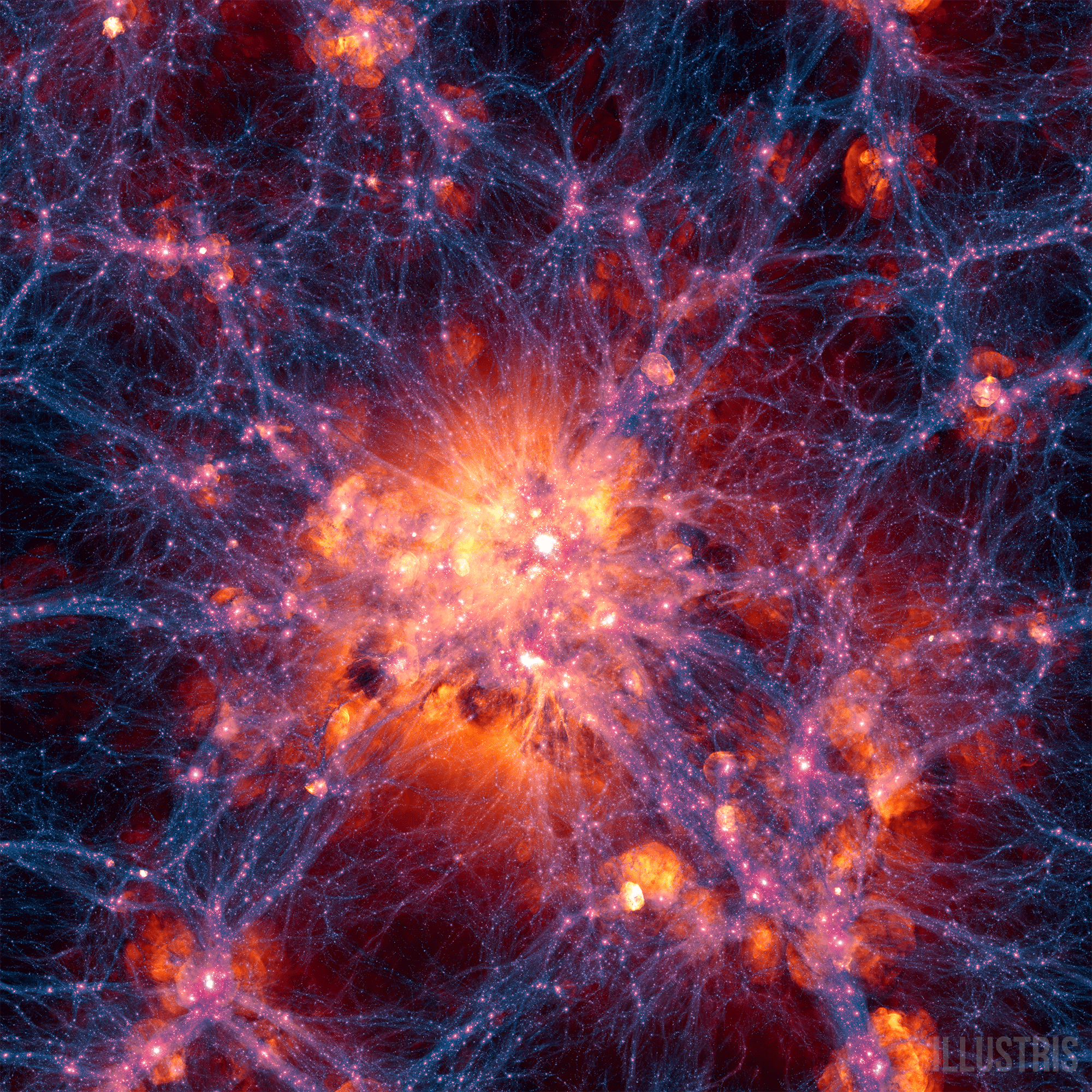
The observations revealed an unexpected two-stage process:
- The first 3 million years of star formation. Powerful winds from hot, young stars carved channels through neutral gas and dust at speeds approaching 3,000 kilometers per second, allowing ionizing photons to escape into intergalactic space.
- The next phase. When the most massive O-type stars reached the end of their short lives and exploded as supernovae, the ejected material enriched the galactic gas. This created a dense trap for light, substantially reducing the fraction of radiation escaping the galaxy.
The oldest galaxies studied, with the fastest supernova-driven winds, released the least ionizing radiation. This directly contradicts most current computer models, in which photon escape peaks after supernova-driven winds begin. Further studies involving larger samples of galaxies should ultimately confirm the leading role of newborn stars’ light in dispersing the cosmic fog.
Previously, we took a journey through the darkest corners of the Solar System and the Universe.
Based on material from umich.edu
