

A collision between two neutron stars may have been accompanied by X-ray emission lasting several minutes. Until now, such events have mainly been associated with short gamma-ray bursts that fade within seconds. A massive star’s explosion could also produce a flare of this duration, but astronomers found no traces of a supernova at the site. This may explain the origin of some of the mysterious flashes detected in deep space. Such signals could also help locate sources of gravitational waves.
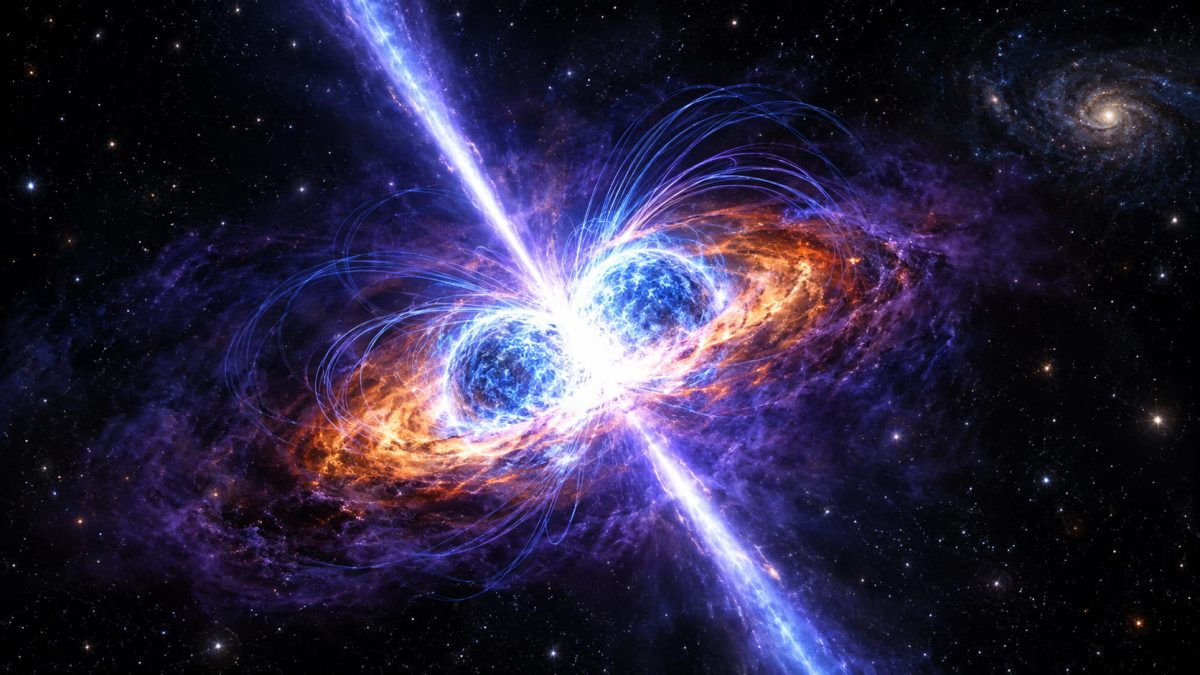
The Longest X-Ray Flare
The first signal reached Earth on July 4, 2025, at 11:16 a.m. Kyiv time. Several space observatories detected the gamma-ray burst GRB 250704B, which lasted approximately 0.4 seconds. Immediately afterward, the Wide-field X-ray Telescope aboard the Chinese-European Einstein Probe mission detected the X-ray flare EP250704a. It lasted approximately 560 seconds—more than nine minutes.
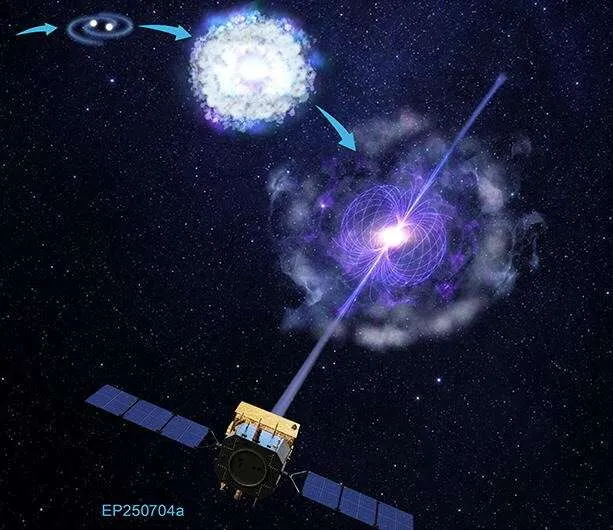
This means the X-ray emission lasted more than a thousand times longer than the gamma-ray burst itself. It was not an afterglow appearing later, but a signal from the explosion itself. According to Niccolò Passaleva, who led the follow-up observations, such a prolonged initial X-ray flare from a neutron star merger had never been observed before. The study was published in the peer-reviewed journal Science Bulletin.
A Merger Rather Than a Supernova
A neutron star forms from the core of a massive star after a supernova explosion. It has a mass equivalent to one or two Suns but is comparable in size to a large city. Short gamma-ray bursts lasting up to two seconds have long been associated with mergers of these objects.
A long X-ray flare can also have another origin. It can occur during the collapse of a massive star’s core, in which case a supernova should subsequently appear at the same location.
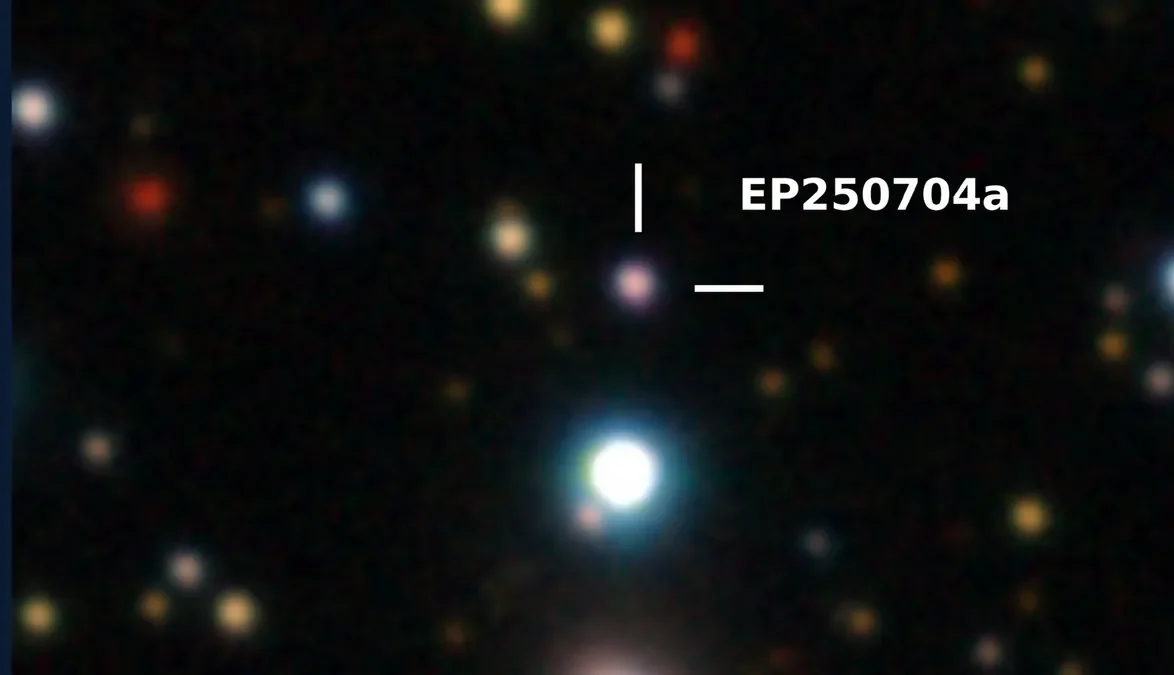
Niccolò Passaleva began observations within minutes of the alert, coordinating them from his laptop while on a train. According to the University of Rome Tor Vergata, observations with the European Southern Observatory’s Very Large Telescope (VLT) in Chile made it possible to determine the distance to the event. Its light traveled for more than 6 billion years before reaching Earth. Deep images from the same telescope revealed no signs of a supernova.
The Signature of a Magnetar
The authors explain the prolonged X-ray emission by suggesting that the central energy source remained active for several minutes after the collision. One possibility is that the merger produced a magnetar—a rapidly rotating neutron star with an extraordinarily strong magnetic field.
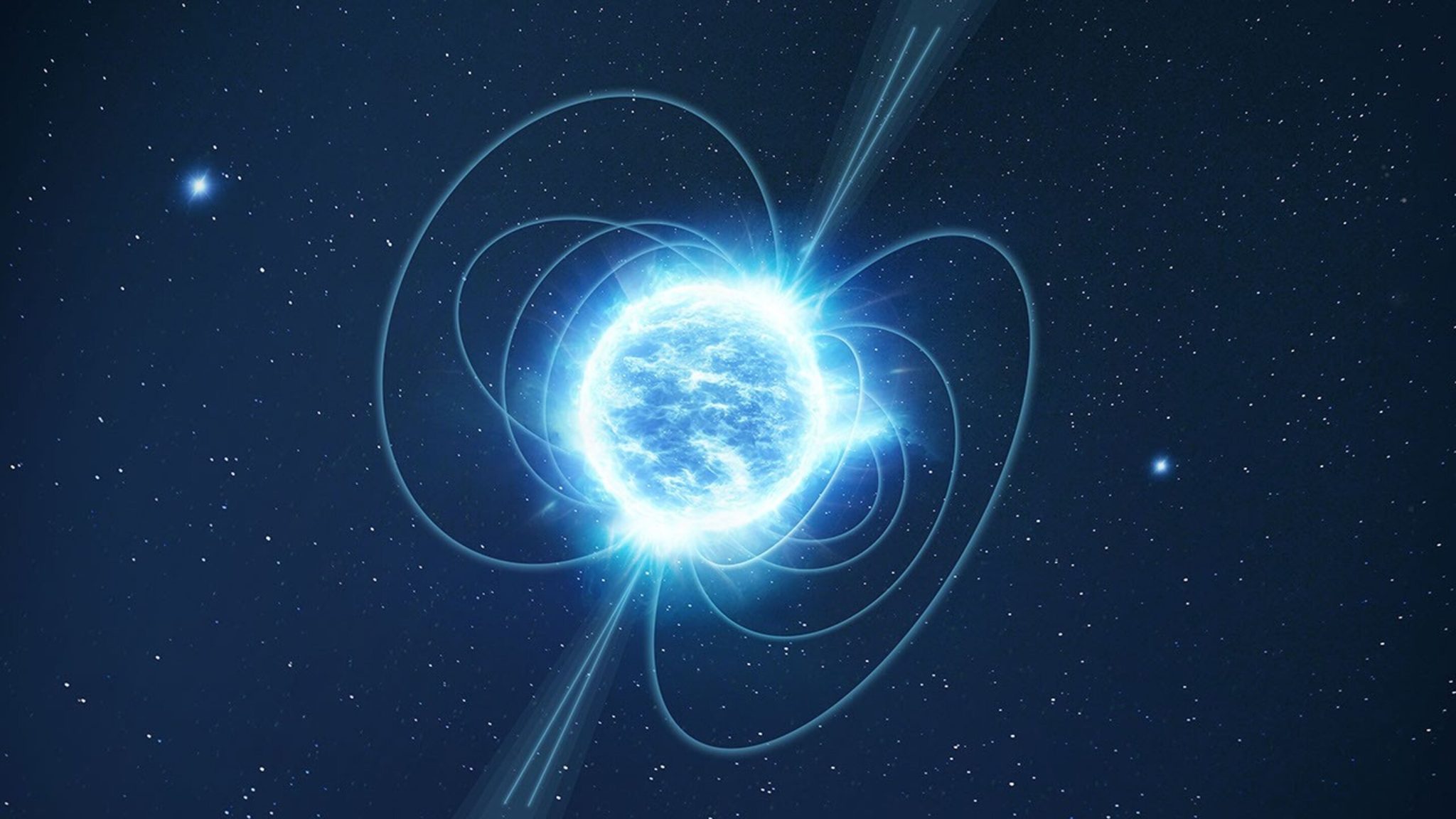
Eleonora Troja, leader of the research group at the University of Rome Tor Vergata, explains that a magnetar releases energy from its magnetic field into the surrounding space. This makes the explosion brighter and longer-lasting. Her explanation is quoted by Space.com. In the study itself, a magnetar remains a possible explanation rather than an established fact.
A Path to Gravitational Waves
Since Einstein Probe launched in January 2024, astronomers have detected hundreds of fast X-ray transients in distant galaxies. Some have been linked to explosions of massive stars, while the nature of the others remains unknown.
The authors believe that prolonged X-ray emission probably accompanies many mergers, even when the gamma-ray burst appears entirely ordinary. Such flares could therefore become another way to locate sources of gravitational waves.

So far, light and gravitational waves from the same neutron star merger have been detected only once, during the GW170817 event in August 2017. Niccolò Passaleva hopes that during the next observing run of gravitational-wave detectors, an X-ray flare can be matched with a signal from the same source.
