

The first launch of SpaceX’s new capsule spacecraft is changing the rules of a market that has so far been dominated by small startups. Starfall can return up to one ton of cargo from orbit, dozens of times more than the capabilities of other players. By launching its own capsule, SpaceX is creating competition for its own customers.
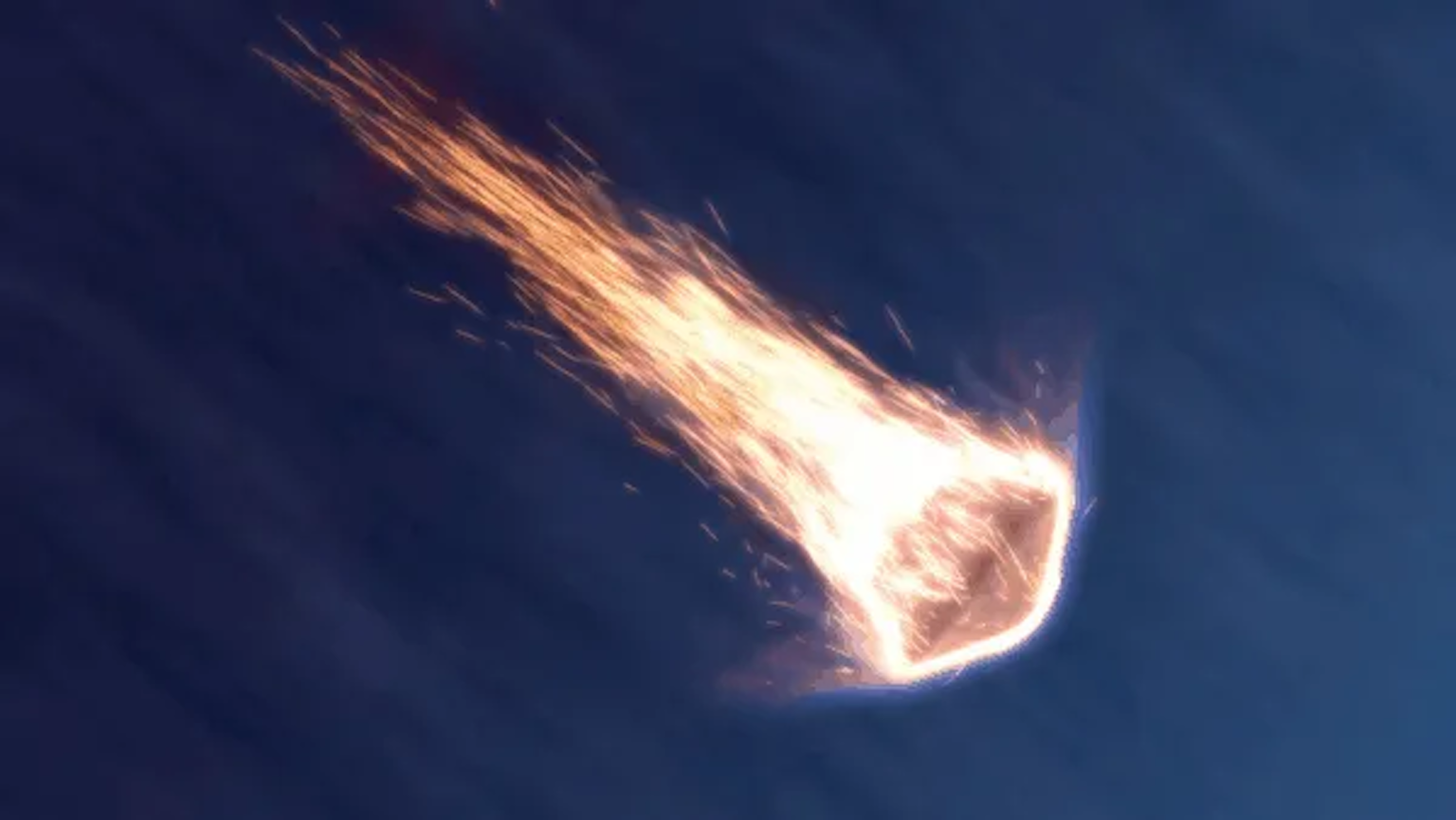
What is Starfall?
Starfall is shaped like a wide, flat disk: 3.1 meters in diameter and only 0.75 meters high. The empty spacecraft weighs about 2,100 kilograms and consists of two parts: an aluminum upper payload platform and a carbon-fiber heat shield.
The heat shield is equipped with a compressed-gas system for maneuvering during atmospheric reentry. After the plasma phase, the shield separates, and parachutes deploy from the upper platform to slow the spacecraft before splashdown.
Why the New Capsule Is Needed
Starfall is designed to carry a payload of up to 1,000 kilograms. By comparison, the capsules developed by Varda Space Industries, currently one of the main players in this market, return only tens of kilograms from orbit per flight. This difference in scale fundamentally changes the economics of each mission.
Until now, all of Varda Space Industries’ capsules have launched on Falcon 9 rockets, meaning the company effectively paid SpaceX for every mission. Now SpaceX is entering the same market with its own spacecraft, turning itself into a direct competitor to a company that had previously been its customer.
The First Demonstration Flight
A Falcon 9 rocket carrying Starfall is scheduled to launch on June 23 from Space Launch Complex 40 (SLC-40) at the Cape Canaveral Space Force Station in Florida. The launch window opens at 6:43 a.m. EDT (1043 GMT) and lasts for one hour. A backup opportunity is scheduled for June 24 at the same time.
Starfall does not have its own propulsion system and cannot deorbit independently. The second stage of Falcon 9 will be used to bring it out of orbit. After stage separation, the first-stage booster is expected to land on the autonomous droneship A Shortfall of Gravitas in the Atlantic Ocean.
After completing its flight, the capsule itself will splash down in the Pacific Ocean, approximately 1,300 kilometers off the coast of the United States. SpaceX has not disclosed how long Starfall will remain in orbit before returning to Earth.
The Universe Space Tech team is following the launch closely. Stay tuned for an update as soon as the launch results are confirmed.
According to space.com
