

Today, the multiverse theory — the proposition that multiple parallel worlds exist — is widely known, largely due to several science fiction franchises. However, few people recall that it originated in a serious scientific work by physicist Hugh Everett. In fact, it remains one of the most controversial theories in modern physics.

The life of Hugh Everett
November 19 marks the 96th anniversary of Hugh Everett’s birth, the author of one of modern physics’ most controversial theories. The notion that an innumerable number of new universes are created every second appears highly controversial from the standpoint of the scientific method itself. However, it has long since ceased to be confined to physics and has entered popular culture.
Today, it is known as the multiverse theory. This concept has been featured in numerous science fiction franchises, making it familiar to many people who are not interested in physics. However, how did the multiverse theory — known to scientists as the Everett interpretation of quantum mechanics — originate? The story begins with Hugh Everett himself.
He was born in the United States in 1930. His father served in the military, primarily in a supply role for the U.S. Army, while his mother was a poet. During Hugh’s childhood, his parents separated. He initially lived with his mother before moving in with his father.
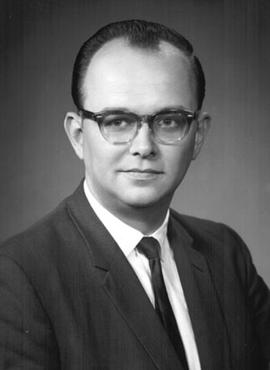
From an early age, Hugh demonstrated a keen interest in complex and controversial subjects. At the age of 12, he wrote directly to Albert Einstein, asking whether the universe was the product of chance or governed by a single, unified force. The eminent physicist replied; however, his response is best presented after first explaining the theory Everett proposed in adulthood.
Everett had also been interested in Ron Hubbard’s Dianetics from a young age. Although he never acknowledged believing in the validity of this pseudoscientific doctrine, its influence is clearly apparent in his works, making them even more controversial.
During World War II, while his father served in Europe, Everett pursued studies in chemical engineering and published papers in the field while still a student. He subsequently paused his studies and lived with his father in West Germany for a period before ultimately earning his degree in 1953.
After graduating from college, Hugh Everett worked at Princeton University for a period before turning primarily to work for the U.S. military. He served on a commission charged with assessing the effectiveness of various types of weapons. He later founded his own firm, which also maintained close ties to the U.S. government.
His doctoral dissertation, defended in 1956, brought him widespread recognition. Its central premise was that the effects of quantum mechanics continually give rise to new universes. He traveled to Copenhagen to present this idea to Niels Bohr in person; however, Bohr did not support it. He soon left physics and turned to pure mathematics.
Everett’s proposal was largely overlooked for a period until American physicist Bryce DeWitt revived interest in it in 1970. Although most scientists remained opposed to the idea, articles discussing it appeared in the science fiction magazine Analog.
Hugh Everett died of a heart attack at home in 1982, in the arms of his son, musician Mark Everett. Reflecting on his father, Mark recalled that he never visited a doctor, was overweight, and smoked three packs of cigarettes a day. Many believe that his fascination with Dianetics contributed to these circumstances. Perhaps he simply believed that, if one focused on all that is good, everything would turn out for the best.
Quantum mechanics
Why, then, has Everett’s “strange” theory sparked — and continues to spark — controversy? The answer lies in the quantum mechanics on which it is based. Quantum mechanics emerged in the early twentieth century to explain the unusual effects that had been observed.
The fundamental principles of quantum mechanics may be formulated in various ways, particularly because any description that omits mathematical formulas is necessarily imprecise. Nevertheless, they can generally be summarized in three main points:
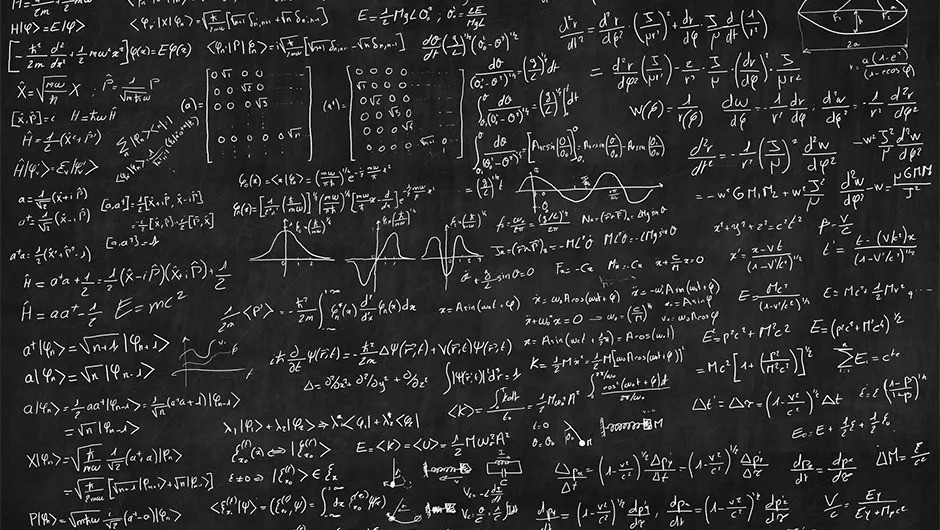
- Many quantities — and energy in particular — cannot vary arbitrarily, but only in certain discrete amounts. These amounts are called quanta, from which the theory derives its name.
- Any elementary particle exhibits not only the properties of a solid (i.e., mass and size) but also those of a wave (i.e., frequency and amplitude).
- Particles predominantly exist in mixed quantum states. Rather than being described by Newton’s equations, which specify the position of a body of a given mass at any particular moment, they are represented by a wave function that integrates energy, frequency, and probability into a single entity.
The wave function is central to quantum mechanics because it implies that it is impossible to determine all of a particle’s characteristics at a given moment with absolute certainty. Instead, a probability distribution applies to a specific region of space, within which familiar properties such as mass, energy, frequency, and charge may take a range of values.
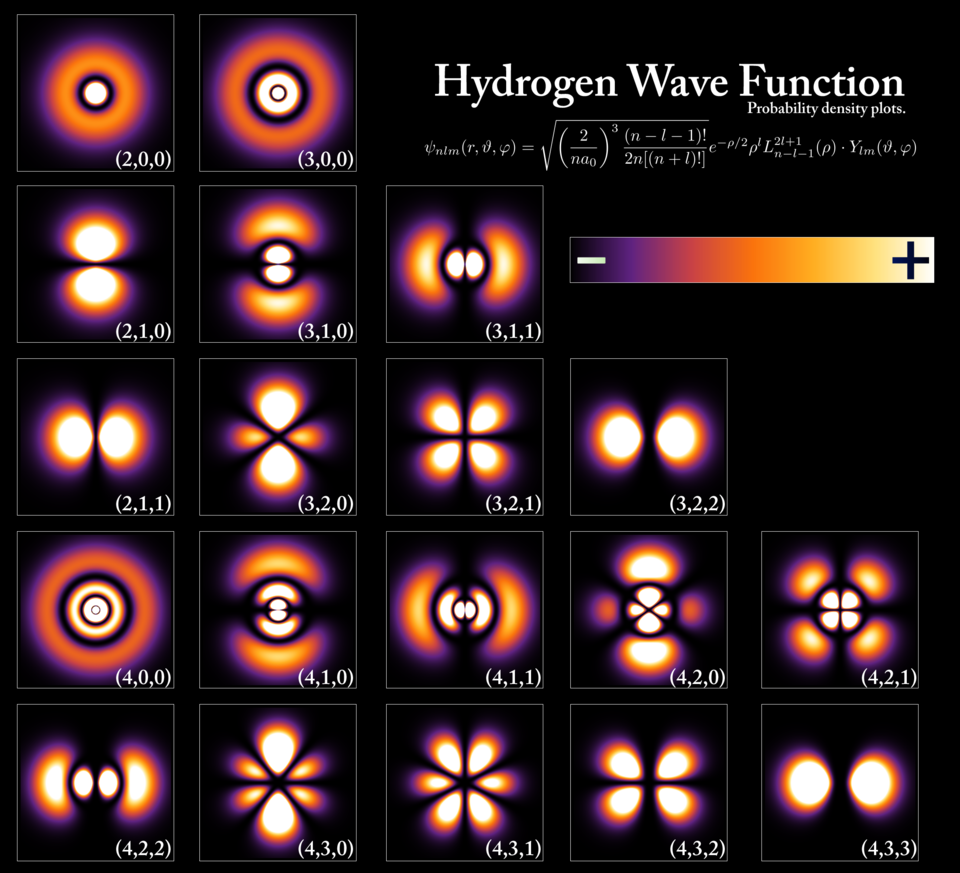
This phenomenon is known as superposition. A significant challenge is that the state of a quantum system can be determined only through some form of interaction with it. Such an interaction causes the system to collapse—or, in the terminology of physics, causes the wave function to collapse. The measured quantities then assume specific, random values that adhere to the principle of quantization; however, the system cannot be restored to a state of superposition.
If, after considering all of this, you are curious about how these phenomena interact with the macroscopic world, you are not alone. Physicists have been investigating this question for several decades. This interest stems from the so-called observer effect: the physical behavior of a system changes depending on whether or not its state is being measured.
This contradicts the very foundations of physics. Its laws, expressed as functions, must operate regardless of whether scientists are present to verify their fulfillment. At one point, Einstein, who was generally skeptical of quantum mechanics, attempted to tease Bohr and other proponents of the theory by asking whether they believed it was possible to influence the Moon’s motion simply by looking at it. In some versions of this story, the motion of our satellite is, in fact, controlled by a mouse peering at it from its burrow.
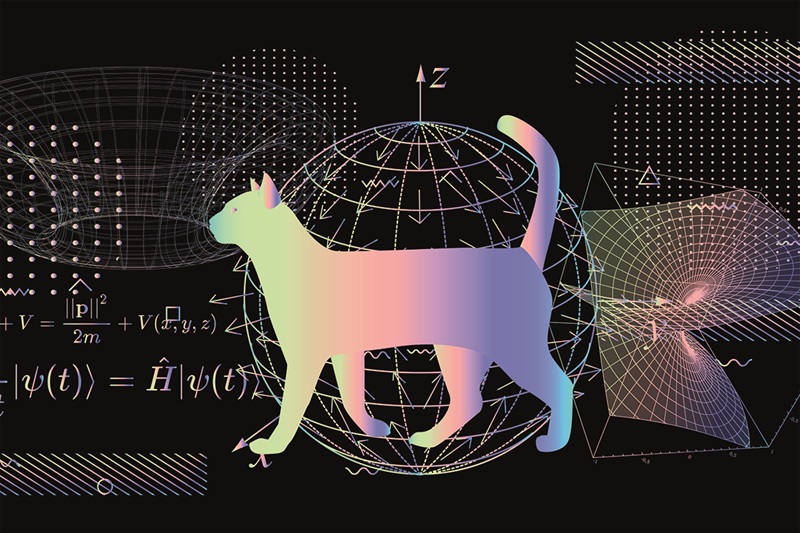
Of course, the most widely recognized illustration of the apparent absurdity of quantum mechanics is the cat that Erwin Schrödinger hypothetically placed in a box containing a particle in a superposition state, a Geiger counter, and a capsule of poisonous gas. In this thought experiment, the unfortunate animal is either alive, dead, or in both states simultaneously, depending on whether the wave function has collapsed and, if so, precisely how.
The Everett interpretation of quantum mechanics
That is precisely why scientists shifted their focus from quantum mechanics itself to the question of how it should be understood. Niels Bohr, one of its principal founders, proposed an approach known as the Copenhagen interpretation — or, colloquially, “shut up and count.” Physicists were advised not to dwell on how it works.
Oddly enough, most of them agreed with this. However, refraining from asking questions when one senses that something is amiss runs counter not only to the entire field of physics but also to the scientific method itself. For many, the Copenhagen interpretation evokes an era in which nothing could challenge the teachings of Aristotle.
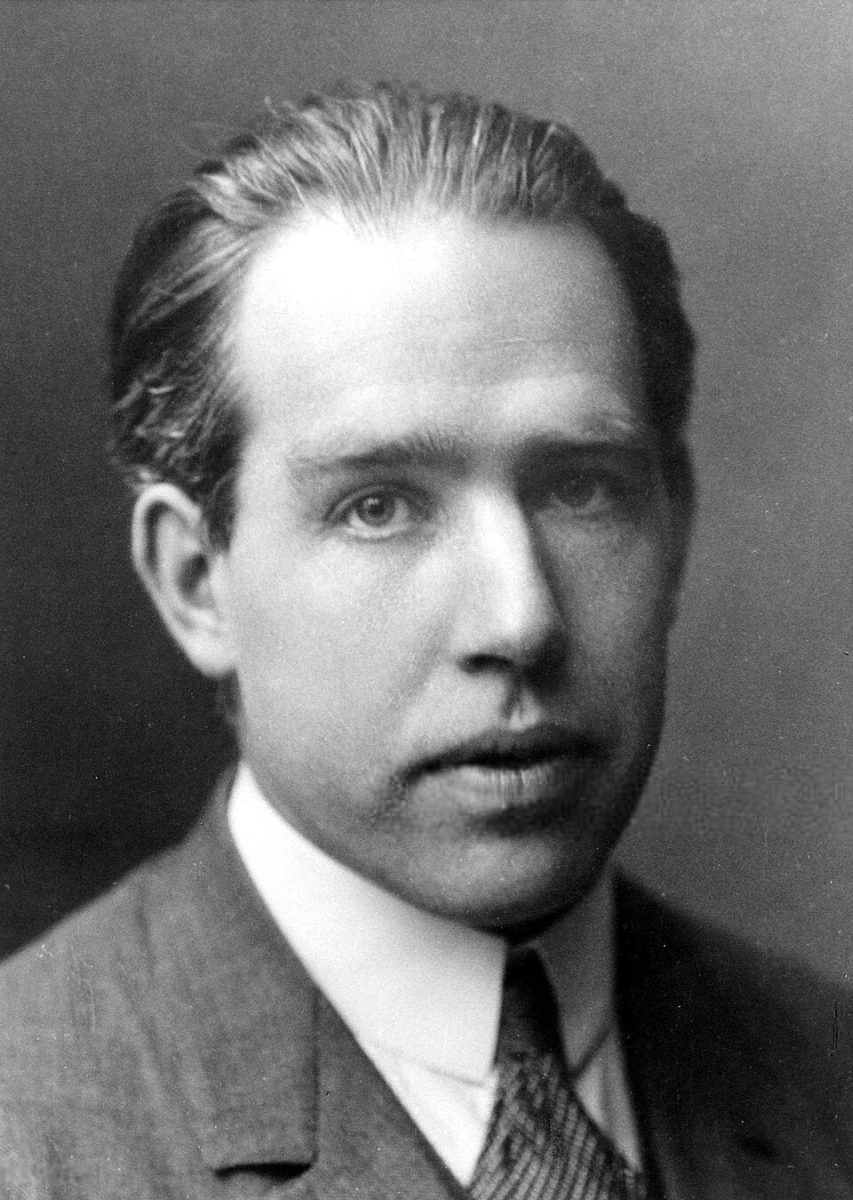
That was when Hugh Everett entered the field with his dissertation. In it, he proposed an alternative interpretation of quantum mechanics in which the collapse of the wave function did not result in the appearance of Schrödinger’s cat.
All that is required is that, at the moment of measurement — or during any other interaction — all possible states of the quantum system are realized simultaneously, each in its own universe. Each possibility then leads to its own consequences. Consequently, the possibilities of reality multiply continuously, at a staggering rate, with every passing second.
In reality, there are likely far more possible versions of history than those depicted, for example, in the Marvel Multiverse. Their number may exceed the human brain’s capacity to comprehend, and the differences between them may initially be minimal but become increasingly noticeable over time.
Although this may alarm the average person, physicists did not reject the Everett interpretation of quantum mechanics for that reason. In fact, although the interpretation describes outcomes occurring across multiple worlds, only outcomes in our own world can be observed. It therefore fails, fundamentally, to provide outcomes that can be verified without transitioning to another branch of the multiverse.

In principle, this represents one of the most serious shortcomings in scientific reasoning. Such a theory is unfalsifiable: it does not permit the design of an experiment that could, in principle, refute any of its assumptions. Regardless of how elegantly it explains a range of phenomena, it cannot be regarded as scientific.
And that is precisely what renders it so controversial. From a scientific standpoint, the Copenhagen interpretation is a deeply unsatisfactory explanation of the apparent contradictions in quantum mechanics. Everett’s idea is not, strictly speaking, an alternative to it; understanding why requires a solid grasp of how science works, which may help explain its popularity among non-specialists.
The most significant concern regarding Everett’s interpretation of quantum mechanics is that it does not entirely eliminate the observer effect; rather, it permits the possibility that the effect operates differently. Our thoughts may determine which of the possible wave-function collapses we observe. Consider Everett’s interest in Dianetics: L. Ron Hubbard’s devoted followers have not forgotten it and have adopted it as their own.
This has made it the most dangerous conspiracy theory on Earth. In effect, it interprets quantum mechanics in a way that casts doubt on the very principle of the theory’s falsifiability. After all, what prevents our minds from leading us precisely to those versions of the multiverse in which the outcome is exactly what we expect?
It is difficult to determine at present the extent to which Everett was a pseudoscientist and the extent to which he simply pursued questions that modern science cannot answer. Perhaps he is best characterized by the response he received from Einstein at the age of 12 (who, at that very moment, was debating with Bohr about the influence of mouse observations on the Moon’s trajectory):
“Dear Hugh! There is no such thing as an ‘insurmountable force’ or an ‘immovable body.’ However, it seems there is one very stubborn young man who has triumphantly forged his own path through strange obstacles — obstacles that he himself created for this very purpose. Sincerely yours, A. Einstein.”
