

On February 17, 1994, astronomer Ann Harch was examining photographs of the asteroid Ida captured in August 1993 by the Galileo spacecraft. In these images, she observed an unusual feature — specifically, that this celestial body possessed a moon. Consequently, a spacecraft that was not initially intended for asteroid exploration made one of the most significant discoveries of the late 20th century.
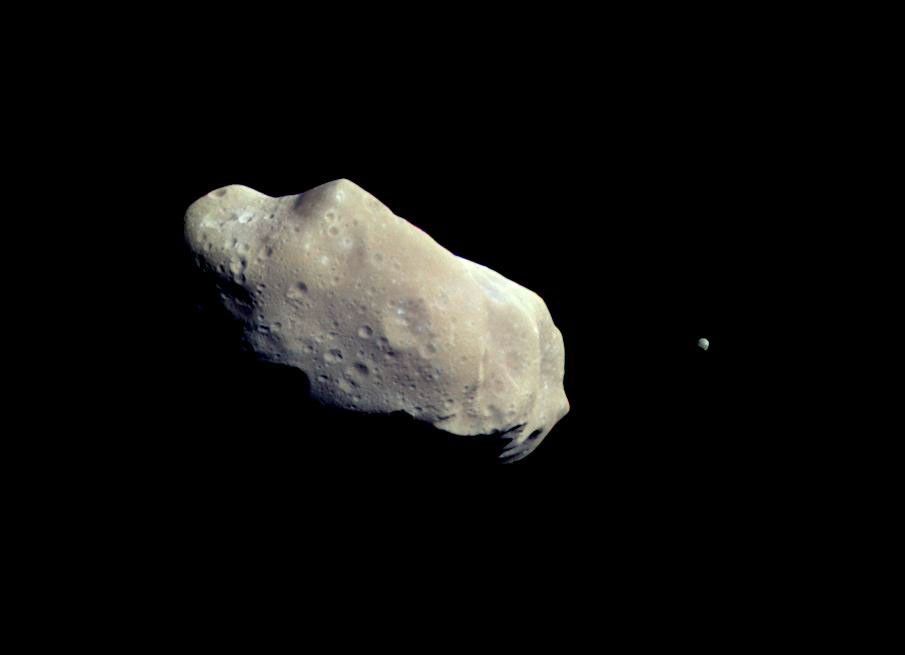
The first moon of an asteroid
On August 28, 1993, the American spacecraft Galileo approached asteroid (243) Ida to a distance of 2,410 kilometers. This event marked only the second occasion on which a spacecraft had approached a small celestial body within the Solar System. The first instance occurred two years earlier, when the same probe visited asteroid Gaspra.
However, this flyby attained significant notoriety on February 17, 1994, when researcher Ann Garch observed a mysterious spot in the photographs captured by the spacecraft. It was subsequently identified as the first known moon of the asteroid.
Until that time, scientists could only debate whether such small objects could possess their own moons or whether their gravitational forces were insufficient to do so. The prevailing consensus was that they could not. However, the discovery of an asteroid measuring 1.6 km in diameter, named Dactyl, profoundly altered this perspective. Subsequently, scientists gradually realized that binary and triple asteroid systems are, in fact, quite common phenomena, and occasionally, they display configurations far more astonishing than those observed in the larger planets.
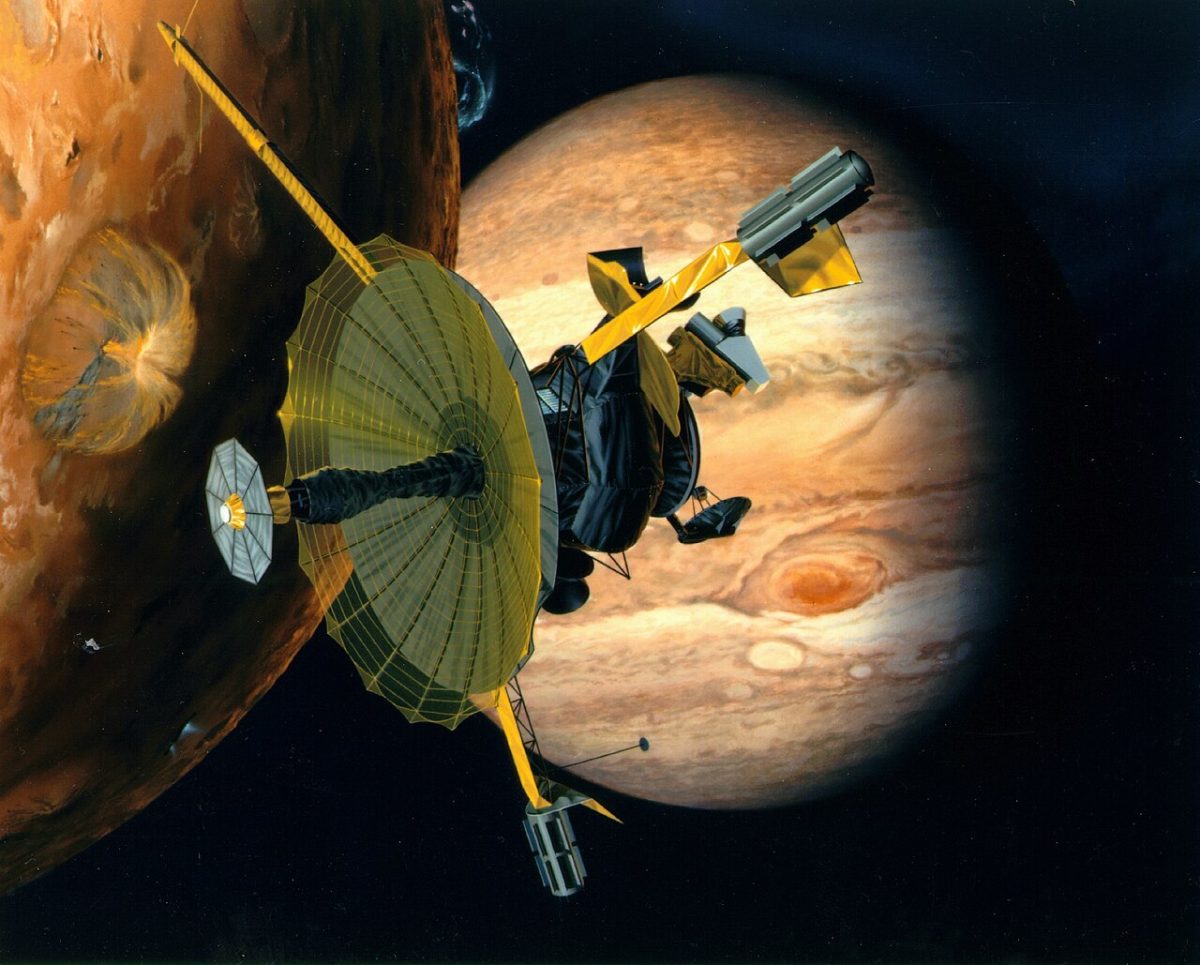
Galileo spacecraft
The most intriguing aspect of the Galileo spacecraft is that, initially, it was not designed for asteroid exploration. Its development commenced in 1959, prior to the inaugural human spaceflight, when American engineers initiated a program to explore Jupiter. This program comprised four phases: a mission to test the feasibility of deep-space travel, a close flyby of the planet, insertion of a spacecraft into Jupiter’s orbit, and a descent attempt into Jupiter’s depths utilizing a parachute.
In the early 1970s, subsequent to the successful flybys of the Solar System’s largest planet by the Pioneer 10 and Pioneer 11 spacecraft, it became evident that interplanetary missions were entirely feasible. Consequently, the necessity for a dedicated flyby mission equipped with advanced instrumentation was recognized. This responsibility was delegated to the Voyager 1 and Voyager 2 spacecraft.
Simultaneously, discussions commenced concerning the necessity of proceeding with the deployment of an orbital observer and an atmospheric probe. Moreover, it was promptly proposed that the two missions should be integrated into a single mission, given that this methodology had demonstrated success during the Mariner program. Specifically, after reaching orbit, the probe would detach from the spacecraft, enter the planet’s atmosphere, and descend via parachute.
Given that Jupiter lacks a solid surface, no plans were devised to land on it; rather, the spacecraft was intended to remain in orbit to accumulate scientific data for the longest feasible duration, despite being continually subjected to extreme temperatures and pressure.
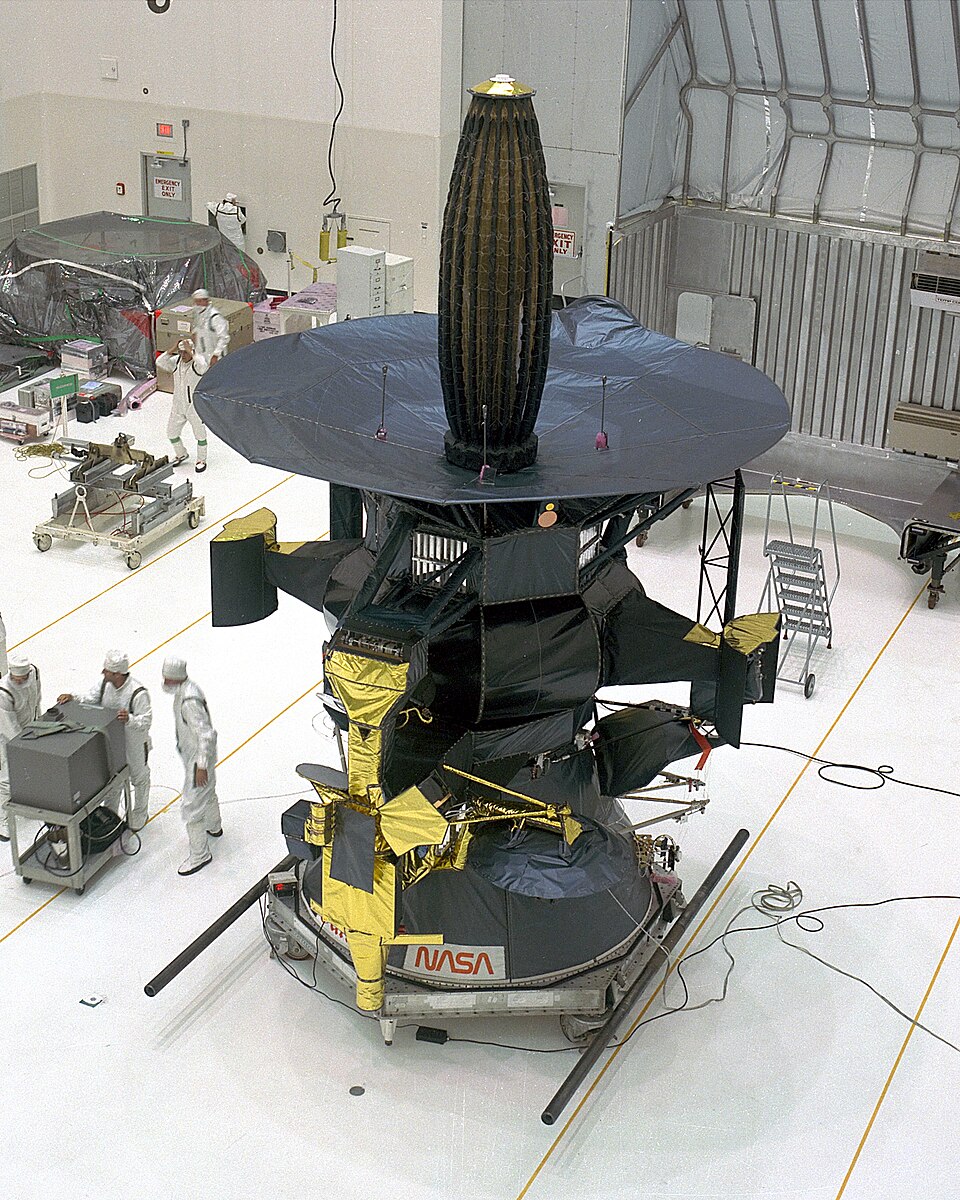
It was immediately decided that the spacecraft would be constructed using the same Mariner platform, which had demonstrated its reliability effectively. However, in practice, the design process did not commence until the late 1970s, following the successful missions of Voyager 1 and Voyager 2 to Jupiter.
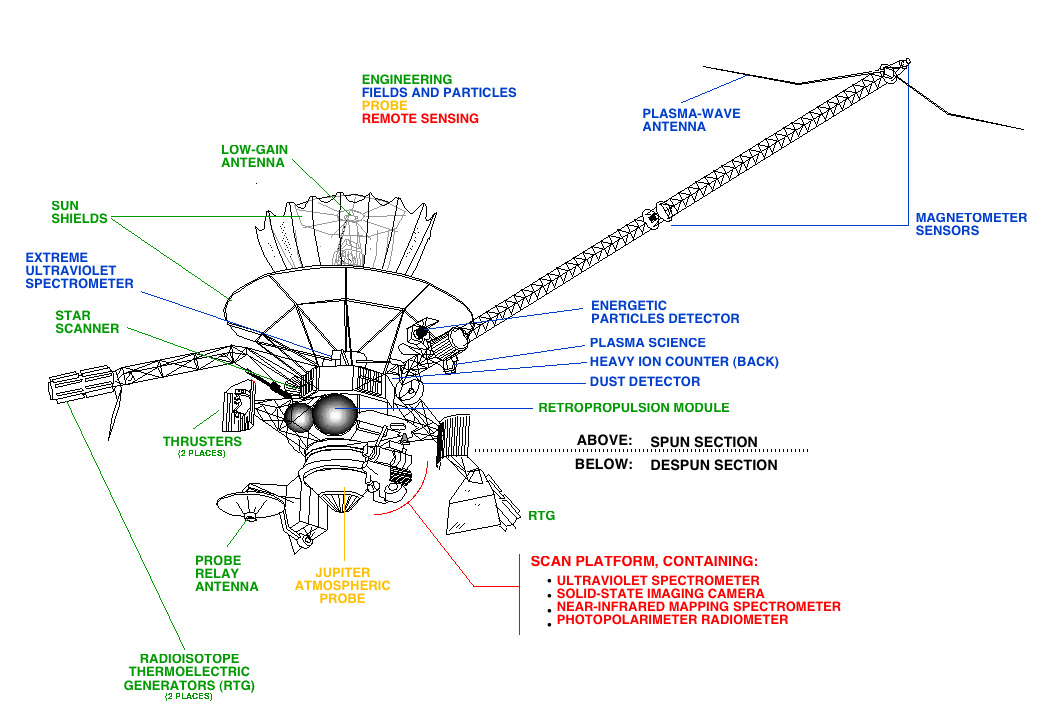
Subsequently, the construction of the probe commenced, and it was shortly thereafter named Galileo in recognition of the esteemed Italian astronomer Galileo Galilei. The spacecraft was notably substantial, standing 5 meters tall and weighing 2,223 kilograms, with 339 kilograms attributed to the atmospheric probe and 925 kilograms allocated for fuel.
Galileo was equipped with eleven scientific instruments, comprising a camera mounted to the telescope, infrared and ultraviolet spectrographs, a photopolarimeter, high-energy particle detectors, among others. All of these devices were designed for the inaugural investigation of a gas giant.
To deploy such a substantial object onto an interplanetary trajectory, a large booster known as the Inertial Upper Stage (IUS) was developed. Originally, it consisted of a three-stage rocket. Its distinctive feature was its capacity to be utilized not only as the upper stage of a heavy-lift rocket but also to be transported into orbit within the cargo bay of the Space Shuttle and subsequently installed manually for launch. This approach was designed to enhance the overall reliability of the operation. This was precisely the method intended for the launch of Galileo.
In accordance with the original plan, the spacecraft’s voyage to Jupiter was intended to be relatively swift. It was scheduled to arrive at Mars within a six-month timeframe, execute a gravity assist maneuver in its vicinity, then accelerate and proceed toward the gas giant.
Launch postponement
Initially, Galileo was scheduled to launch into space as early as 1982. However, shuttle launches did not occur as frequently as anticipated, and the three-stage configuration of the IUS was deemed excessively costly and large. Its practical application in conjunction with a reusable spaceplane could have introduced considerably more challenges than advantages.
Engineers commenced deliberations on potential replacements. The launch was delayed until 1984, and support for the project diminished. At one stage, experts favored maintaining the route via Mars but proposed launching the orbital and atmospheric probes separately, with a one-month interval.
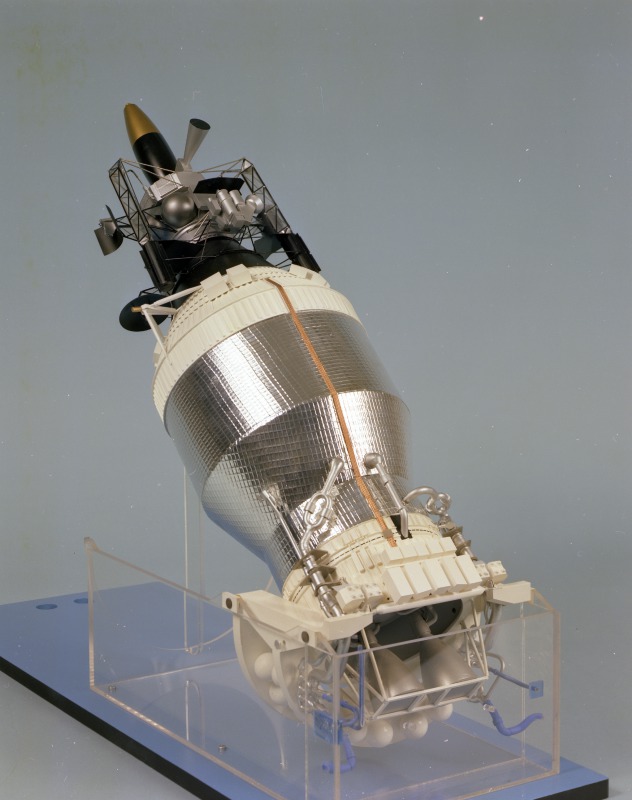
Nevertheless, it was universally recognized that such a decision heightened the likelihood of an accident. Consequently, during the deliberations, they revisited the concept of launching via the Space Shuttle as a singular integrated mission, incorporating a gravity assist maneuver proximal to Mars, this time utilizing the Centaur booster.
Nevertheless, the project persisted in facing scrutiny due to its substantial expenses, intricate design, and the limited scope of scientific findings available at that time. Consequently, the researchers proposed investigating one of the asteroids within the Main Belt during the spacecraft’s ongoing mission. This approach was considered particularly viable, as the onboard instrumentation was appropriately equipped to undertake the study.
Amphitrite was determined to be an asteroid, characterized by its substantial dimensions of 223 × 212 × 193 km. Its alternative options included Yi Qing and Britta. Nevertheless, despite the potential benefit of exploring two targets with Britta, precedence was assigned to a single, larger target.
The rationale behind this was that during the early 1980s, NASA maintained the belief that close flybys of asteroids ought to be avoided. Concerns existed regarding the presence of dust and small rocks in the vicinity, which could potentially damage the spacecraft.
This is precisely the reason why the study plans for these objects during Galileo’s flyby presumed that the spacecraft would not approach closer than a few thousand kilometers. Consequently, for asteroids measuring only a few kilometers in diameter, it would be impossible to discern any details.
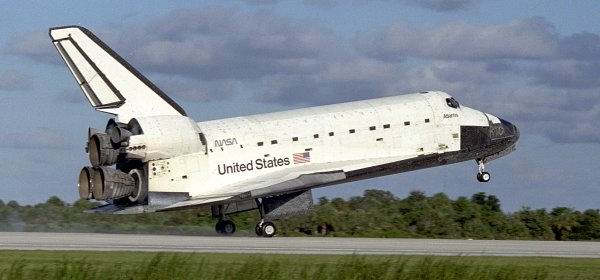
Taking all these factors into consideration, a revised plan was formulated, stipulating that Galileo was to be launched during the STS-61-G mission on May 20, 1986, aboard the Space Shuttle Atlantis. However, circumstances beyond control thwarted the realization of these plans. On January 28, another shuttle, the Challenger, tragically exploded during launch, leading to the suspension of the entire space shuttle program.
The engineers thoroughly examined all potential safety protocols and determined that launching the Centaur-G module from the shuttle was excessively hazardous. It was the Centaur-G that was intended to propel Galileo toward Mars for subsequent arrival at Jupiter.
The developers once again commenced reevaluating methodologies to reach Jupiter. They revisited the concept of utilizing the IUS, which, by that time, was already deployed in space in its two-stage configuration. Its propulsion was insufficient to accelerate Galileo, leading NASA to revise its trajectory entirely. Instead of proceeding to Mars, the spacecraft was designated to fly to Venus, execute a gravity assist maneuver in its vicinity, as well as perform relatively close approaches to the Sun, before returning to Earth twice prior to proceeding towards Jupiter from that point.
All of this extended the flight duration to 6 years; however, it still permitted the spacecraft to safely accelerate to the necessary velocity. Nevertheless, its challenges during the journey to space did not cease there.
In the mid-1970s, during the initial phase of Galileo’s development, it was quite common to consider utilizing a radioisotope thermoelectric generator as its power source. However, in 1978, a Soviet satellite equipped with an identical device experienced a crash in Canada, resulting in widespread radiation contamination over a large area. The subsequent year, the Three Mile Island nuclear incident took place, and by the early 1980s, fears related to radiation began to intensify. This apprehension peaked following the Chernobyl Nuclear Power Plant disaster in April 1986, just three months subsequent to the Challenger catastrophe. Consequently, many individuals started to perceive Galileo not as a significant scientific milestone, but rather as a hazardous source of radiation.
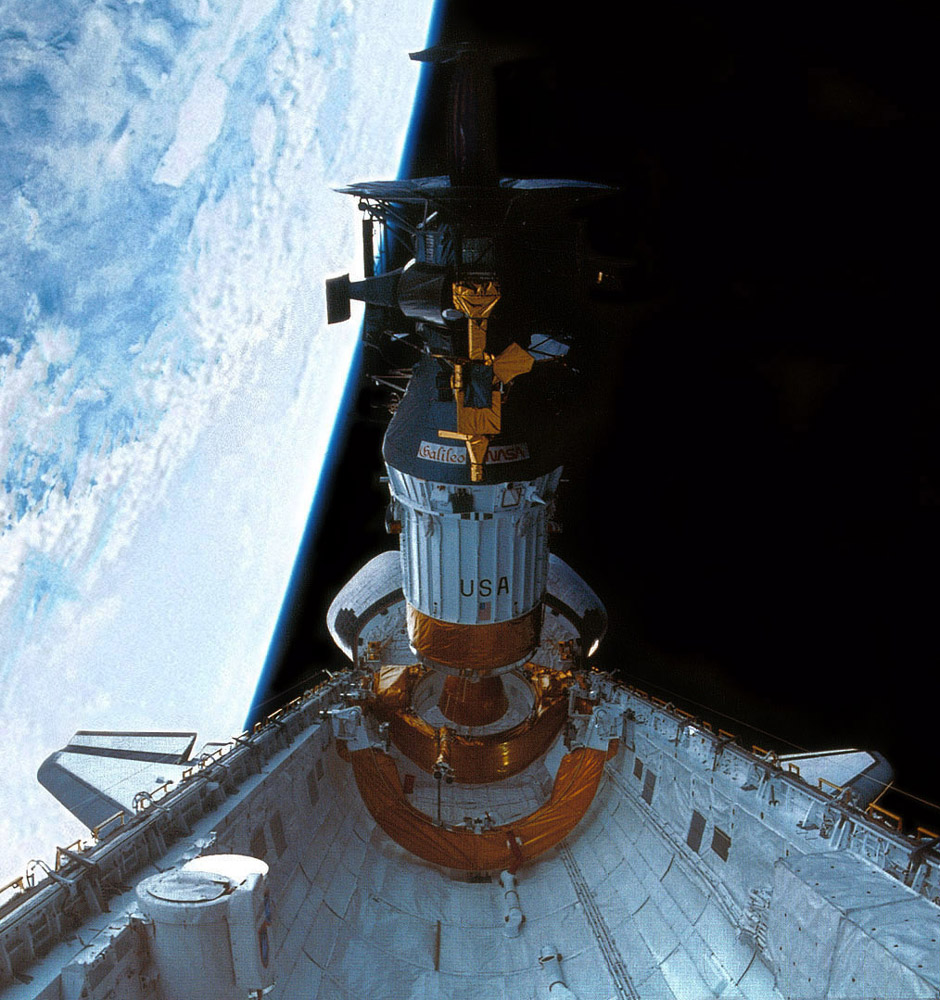
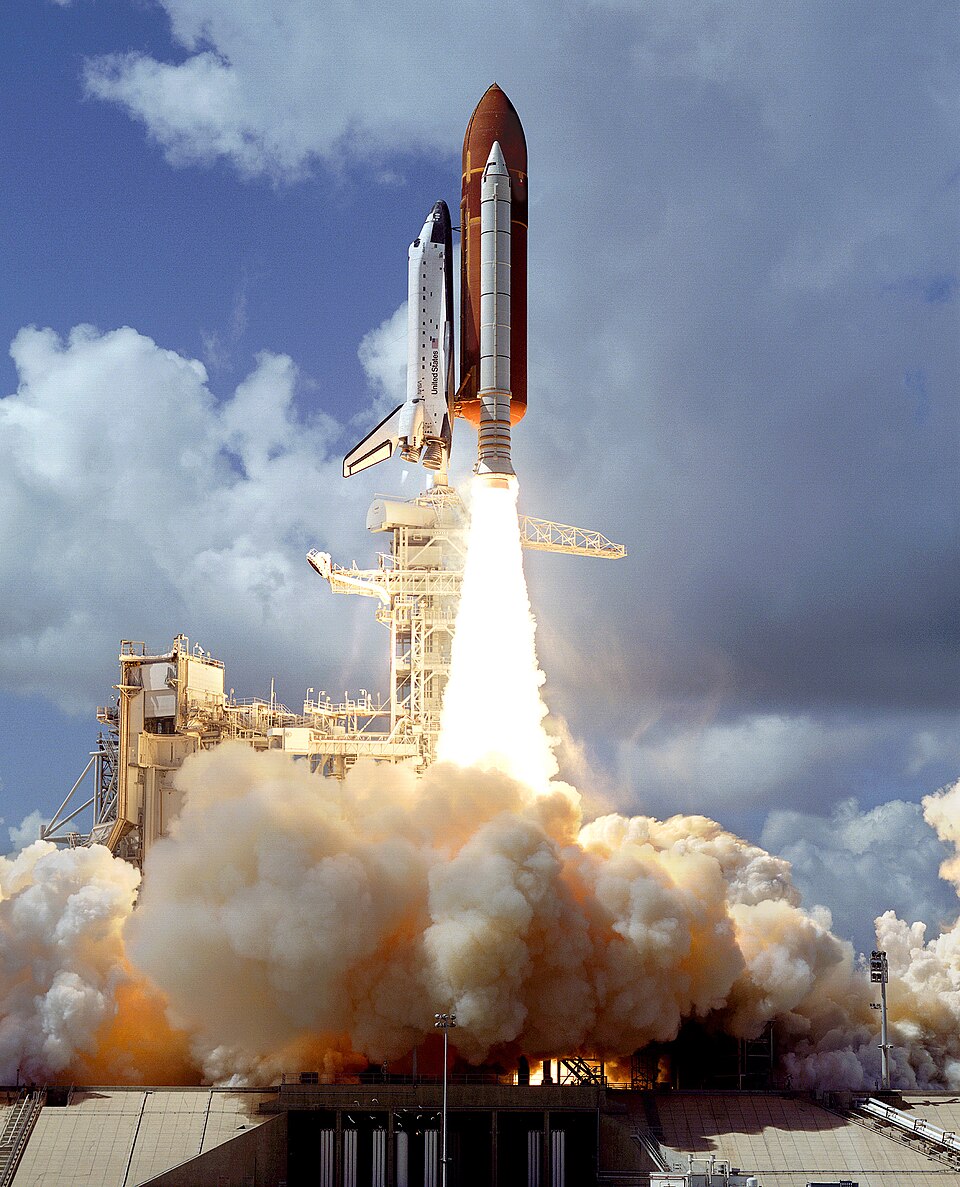
The protests by environmental activists did not accelerate the launch into space. The space shuttle Atlantis, carrying the probe, was not launched until October 18, 1989. Subsequently, on October 19, the probe ignited its IUS main engine and commenced its journey to Venus.
On the way to the asteroids
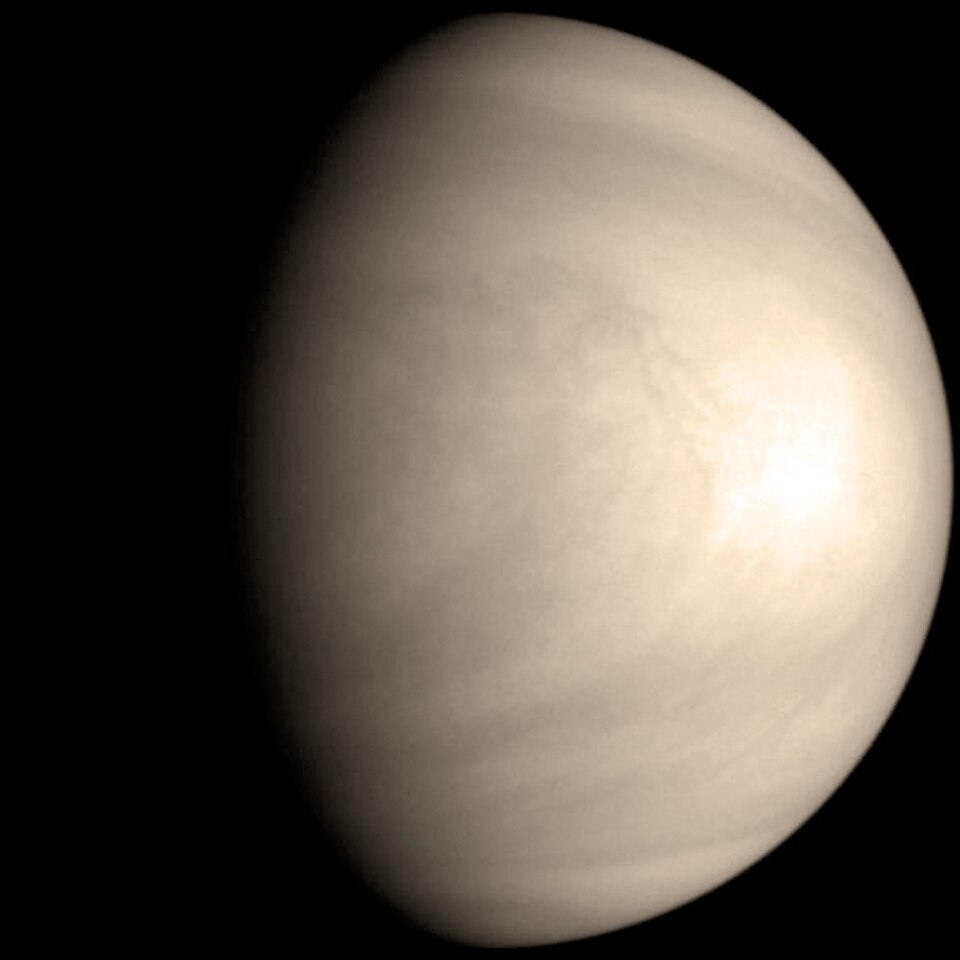
On February 9, 1990, the Galileo spacecraft conducted a flyby of Venus at a distance of 16,106 kilometers. By that time, the planet had been relatively well examined by other spacecraft; however, the infrared cameras continued to be capable of discerning portions of the planet’s night side beneath a dense cloud cover, thereby facilitating the mapping of its terrain.
Furthermore, the spacecraft analyzed the shock wave generated in the direction of the planet’s orbital motion as a result of the interaction between its magnetic field and solar wind particles. The findings indicate that this shock wave is exceedingly weak, thereby permitting radiation to penetrate the planet’s gaseous envelope. Additionally, lightning discharges were observed within the atmosphere itself.
Subsequently, on April 11, one of the mission’s most pivotal events was scheduled to occur — the deployment of the primary antenna. This substantial structure was engineered to guarantee data transmission at a rate of 134,000 bits per second, even over several astronomical units. However, it was originally designed at a time when it was anticipated that the spacecraft would pass by Mars.
However, when the trajectory was altered to enable a pass by Venus, it became essential to shield the spacecraft from intense solar radiation. To accomplish this, a small protective shield was employed, kept closed until the spacecraft had traversed Venus. Communication was managed via a minor lateral antenna, and during the initial days of the mission, a respectable data transmission rate of 1,200 bits per second was maintained. Subsequently, this rate declined to 40 bits per second.
The entire team was eagerly anticipating April 11; however, they were unable to deploy the main Galileo antenna at that time or subsequently. Consequently, communication was maintained through a backup antenna, which had an exceptionally slow data transmission rate, thereby impacting all subsequent research.
On December 8, 1990, Galileo executed a gravitational maneuver during its pass by Earth. Subsequently, it completed an orbit around the Sun and made another close approach to Earth on December 8, 1992, before entering a trajectory directed towards Jupiter.
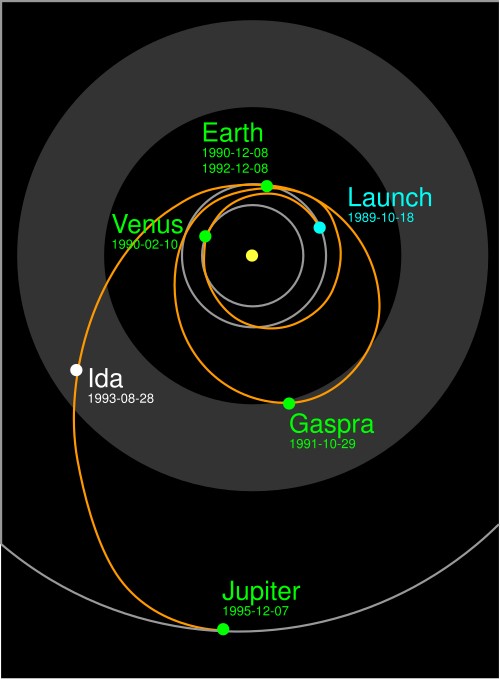
During its close approaches, the spacecraft conducted scientific research, notably studying Earth’s magnetosphere and observing high-altitude mesospheric clouds, which indicated processes contributing to the depletion of the ozone layer. Furthermore, scientists verified and confirmed the capability to detect signs of life on Earth from a spacecraft passing the planet. Galileo documented the absorption of atmospheric gases that matched their absorption by terrestrial flora.
Gaspra
On October 29, 1991, Galileo arrived at the intermediate destination of its mission—the asteroid Gaspra. This celestial body, measuring 18.2 × 10.5 × 8.9 km, was discovered as early as 1916 and was named after a village in Crimea. Following a review of the spacecraft’s flight plan by American experts after 1986, Gaspra’s advantageous position and comparatively substantial size rendered it the first asteroid target selected for close-up exploration by the spacecraft.
Gaspra possesses an orbital period of 3.29 Earth years. The aphelion of its orbit is situated at a distance of 2.6 astronomical units (AU), while the perihelion is positioned at 1.82 AU from the Sun. This asteroid is classified as a silicate type.
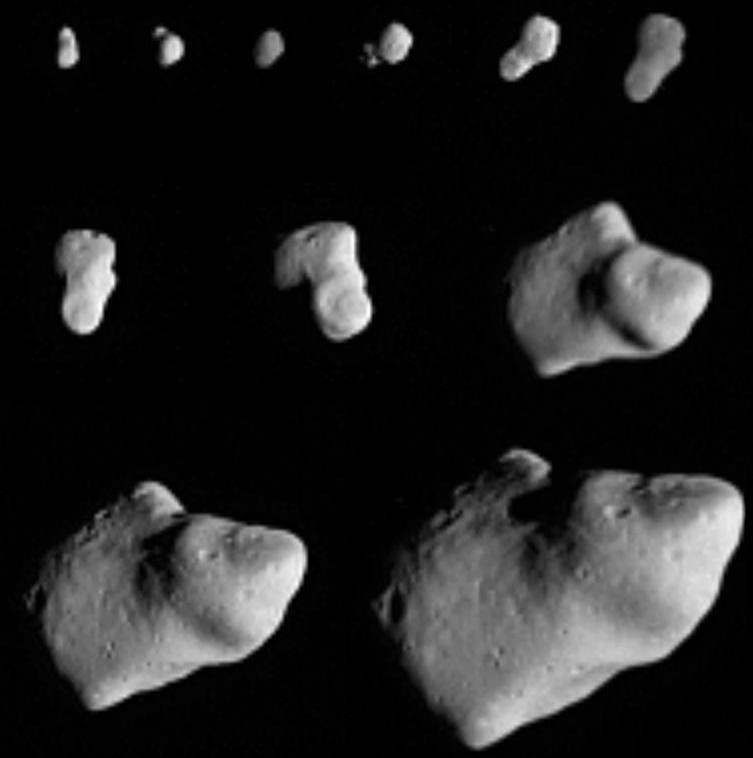
In October 1991, Galileo approached within a minimum distance of 1,600 km. Overall, it was able to capture 57 photographs of Gaspra, which, considering the slow data transmission and a flight velocity of approximately 8 km/s, represented a commendable achievement. The highest resolution among these photographs featured a resolution of 54 meters per pixel.
Ida and Dactyl
Finally, on August 28, 1993 — almost two years after the Gaspra flyby and four years after launch — Galileo approached Ida. Experts were uncertain until the very last moment whether the spacecraft could execute this maneuver. It was not until August 26, after verifying sufficient fuel to proceed to Jupiter’s orbit, that the command was issued to correct the course, resulting in Galileo’s encounter with Ida.
The asteroid Ida 243 was discovered prior to Gaspra, in 1884. It was named after a nymph from Greek mythology. By the time Ida was designated as a target for the spacecraft’s mission, its dimensions were already established as 59.8 × 25.4 × 18.6 kilometers. In terms of the Main Asteroid Belt, it is not considered a particularly small object.
Ida orbits in a nearly circular trajectory with an aphelion of 2.98 AU and a perihelion of 2.74 AU. Its orbital period spans 1,767 days. Spectrographic analyses indicate that it is a silicate asteroid. Galileo approached it at a considerable relative velocity of 12.4 km/s. Nonetheless, scientists were well-prepared for this event, and imaging was conducted from a distance of 240,350 km until the point of closest approach. As a result, they were able to observe 95% of the asteroid’s surface with clarity.
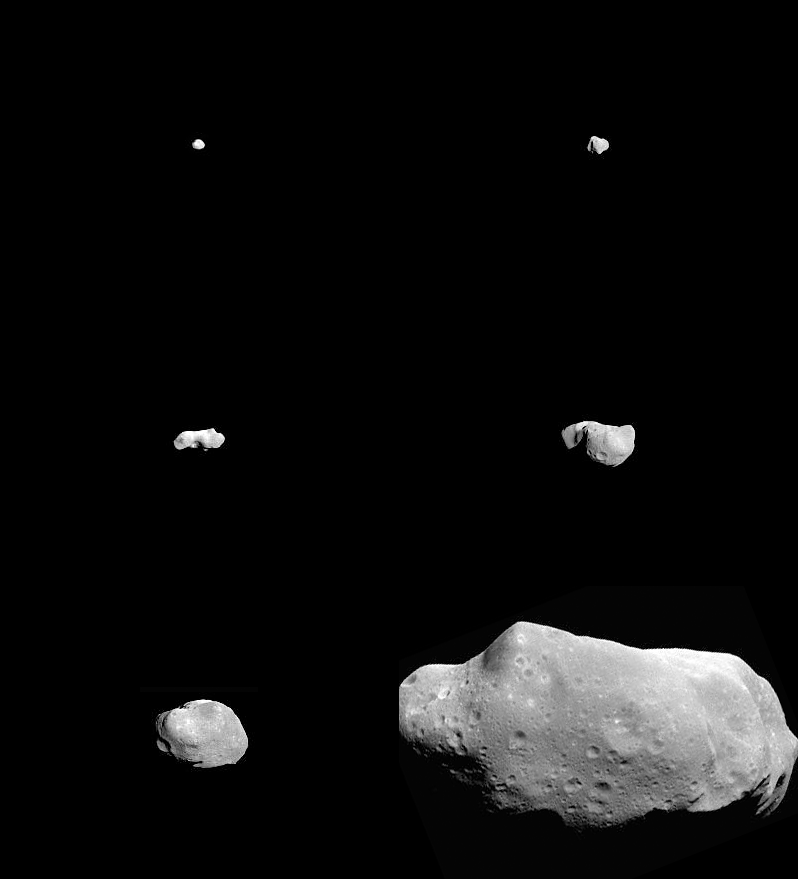
For the first time, scientists had the opportunity to conduct geological studies of such a body and discovered that Ida’s chemical and mineralogical composition is extraordinarily similar to that of ordinary chondrite meteorites, which fall to Earth in substantial quantities. This confirmation supports the hypothesis that large and small rocky bodies in space originate from a shared source.
They also established the asteroid’s mean density and observed that it is enveloped by a layer of regolith — debris and dust akin to that covering the Moon. This regolith has arisen from numerous collisions with other celestial bodies.
Evidence of impacts was also observed on Ida’s surface. It has been identified as one of the most heavily cratered objects within the Solar System. The largest crater measures approximately 12 km in diameter.
Furthermore, it has been established by researchers that solar radiation influences the surface. The older regions of the surface are observed to be more reddish compared to other areas. Overall, the Galileo investigation demonstrated that asteroids possess a considerably more intriguing history than was previously assumed.
Owing to persistent issues with the antenna, the transmission of images from Ida proceeded at an extremely slow pace and was not finalized until February 1994. It was during this period that a significant discovery was made: a moon was identified orbiting Ida, subsequently named Dactyl, in honor of the mythical people from Greek mythology.
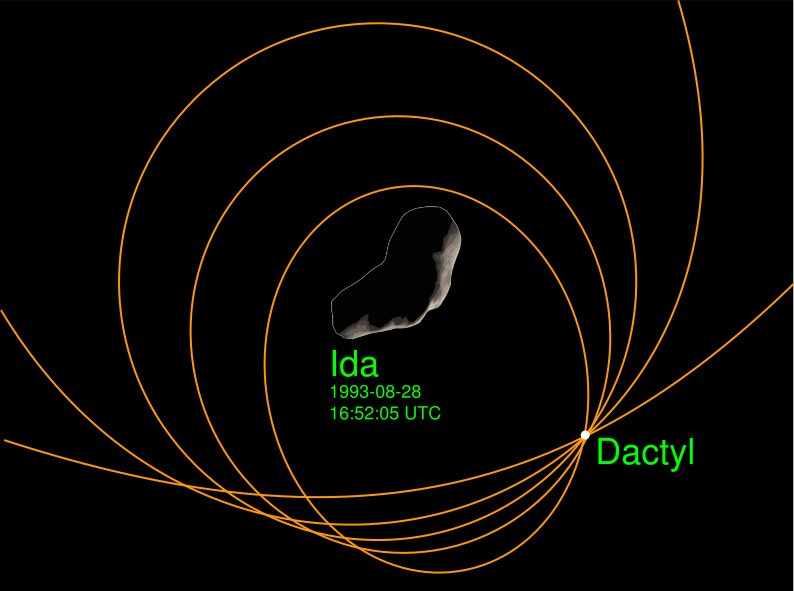
Dactyl measures 1,200 × 1,400 × 1,600 meters. It closely resembles Ida in terms of albedo and coloration, and, similar to Ida, is extensively cratered. It is believed to have formed concurrently with Ida as a consequence of the disintegration of a substantial parent body.
However, the precise nature of Dactyl’s orbit remains unidentified. It is acknowledged that establishing this orbit necessitates numerous observations; however, scientists presently possess only a limited number of images. From these, they have been able to approximate that Dactyl’s radius is approximately 90 km.
The entire history of the Galileo mission encompasses two decades and consequently illustrates the progression of our comprehension of asteroids. Initially envisioned as a spacecraft intended to avoid these ostensibly unremarkable yet hazardous objects, the probe ultimately evolved into the instrument that enabled scientists to explore the realm of space rocks and appreciate their remarkable nature.
However, Galileo’s journey did not conclude there. After departing from the asteroids, it proceeded to its primary objective — Jupiter. The spacecraft successfully entered orbit, deployed a probe into the planet’s atmosphere, and collected a wealth of valuable data. However, that is a separate chapter in its mission history.