

Quantum physics is usually associated with the study of the microworld — atoms and subatomic particles. However, its laws also govern the largest-scale objects in the Universe. A study published in the journal Nature describes what astronomers say may be the first-ever observation of vacuum birefringence — a quantum phenomenon predicted by physicists Werner Heisenberg and Hans Euler back in the 1930s.
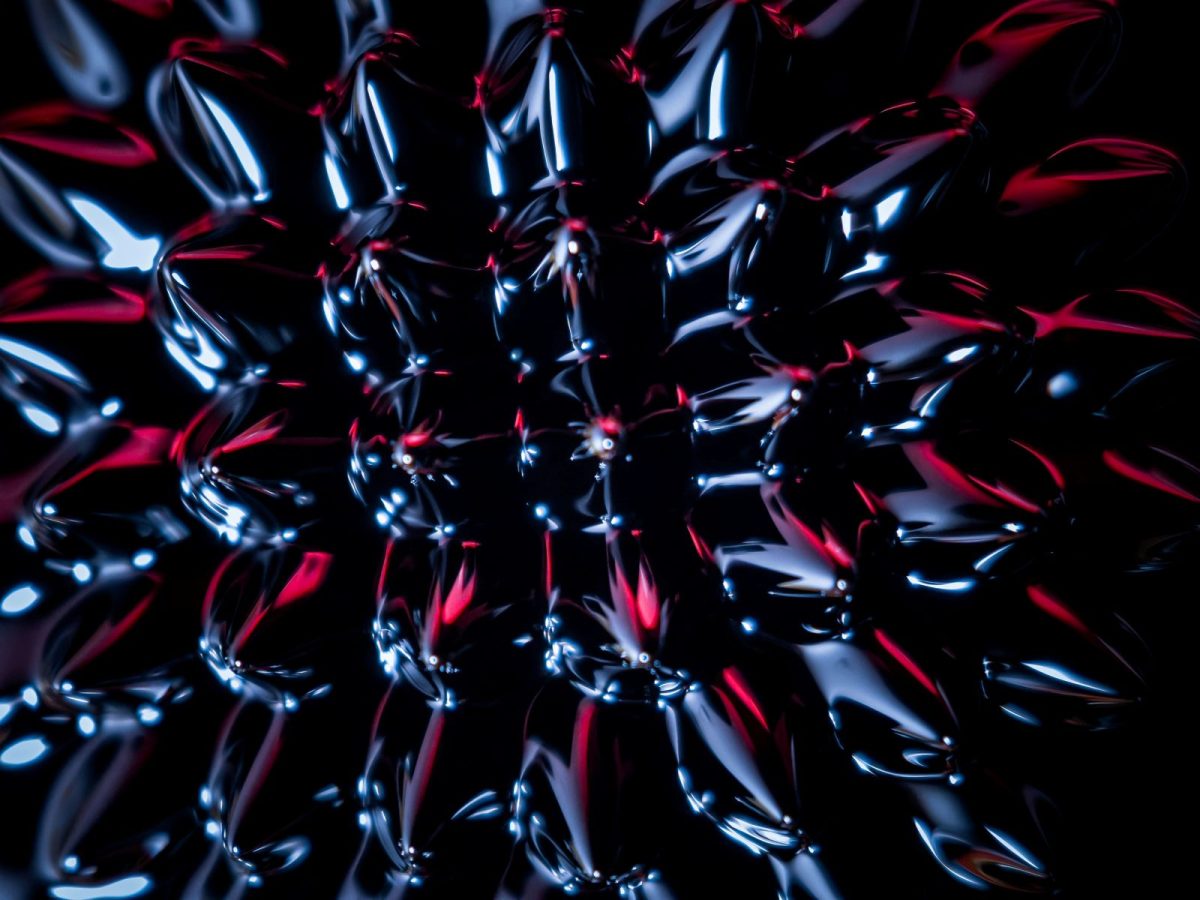
The effect, proposed almost a century ago, is that an extremely powerful magnetic field causes completely empty space — a vacuum — to behave like an optical prism or lens, bending and polarizing light.
It is impossible to reproduce such conditions on Earth: this would require a magnetic field more than 100 million times stronger than the most powerful terrestrial facilities can produce. Instead, scientists turned their attention to the magnetar 1E 1547.0-5408 — a neutron star emitting X-rays and radio waves whose magnetic field is more than a trillion times stronger than Earth’s.
Anomalous Light
According to study co-author Marcus Lower of Swinburne University of Technology in Australia, natural magnetars have become ideal laboratories for the experiment. By analyzing the direction of oscillations of radio waves and X-rays as the star rotates, the team found that the polarization of light from 1E 1547.0-5408 was three times higher than standard expectations.
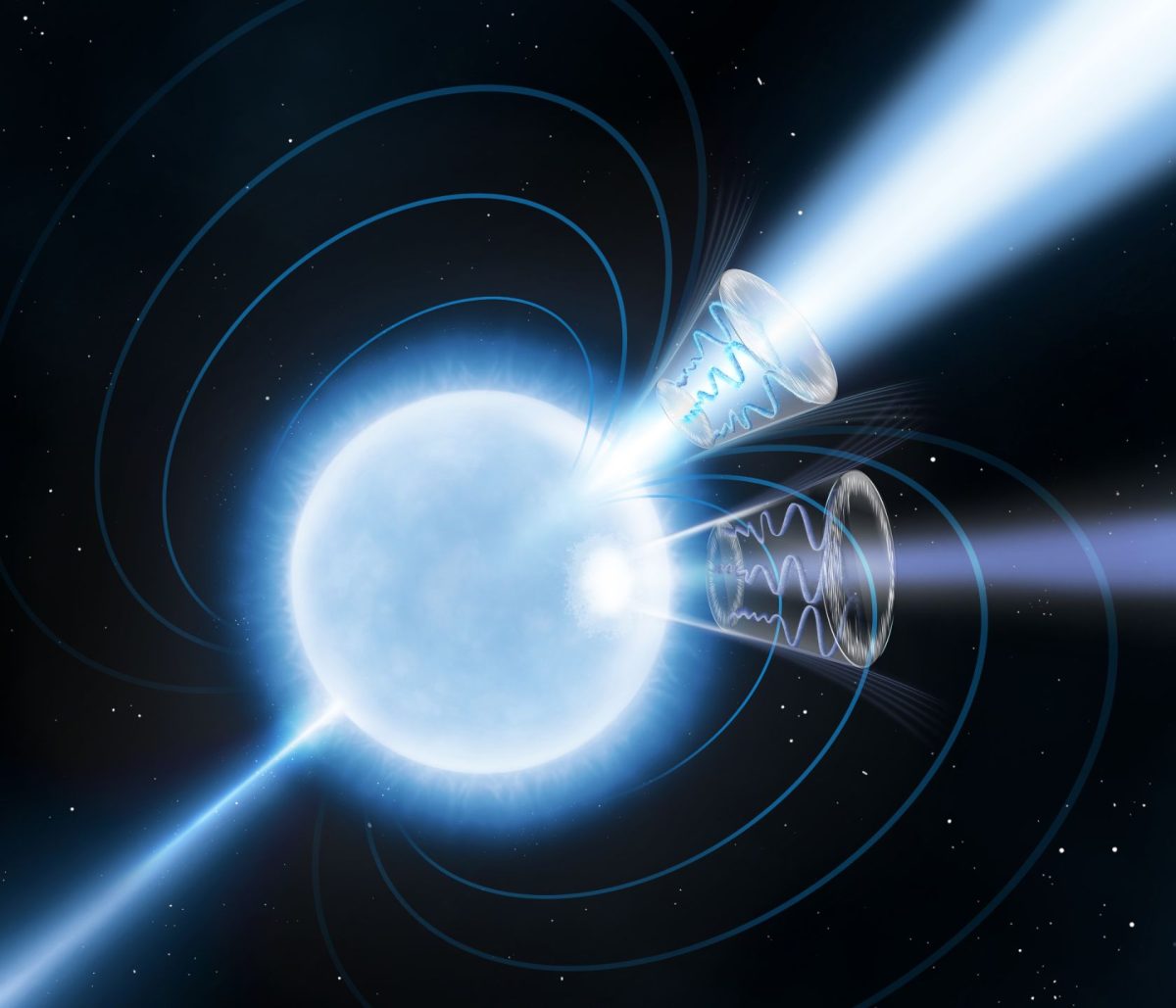
The extreme magnetic field caused “virtual particles” in the vacuum to align along the magnetic field lines, creating for an external observer the effect that empty space itself was changing the refraction of light.
Caution from the Scientific Community
Despite the impressive data, independent experts urge caution against premature conclusions. Astrophysicists Ekaterina Sokolova-Lapa and Jörn Wilms of Friedrich-Alexander University Erlangen-Nuremberg note that the accuracy of the interpretation depends directly on whether the geometry and inclination of the magnetar itself have been determined correctly. An apparent alignment of the signals could have been caused by the spatial orientation of the star’s rotation axis.
However, even if the results require further refinement, the study clearly demonstrates the interdisciplinary potential of modern science: studying distant astronomical objects can help reveal the deepest mysteries of the fundamental structure of our reality.
Earlier, we discussed what scientists think about the multiverse theory.
According to swinburne.edu.au
