

Astronomer and founder of the popular SpaceWeather resource Tony Phillips has found an unexpected use for the thousands of communications spacecraft orbiting in low Earth orbit. In his view, SpaceX’s orbital swarm of satellites can be turned into a highly precise instrument for measuring the state of our atmosphere.
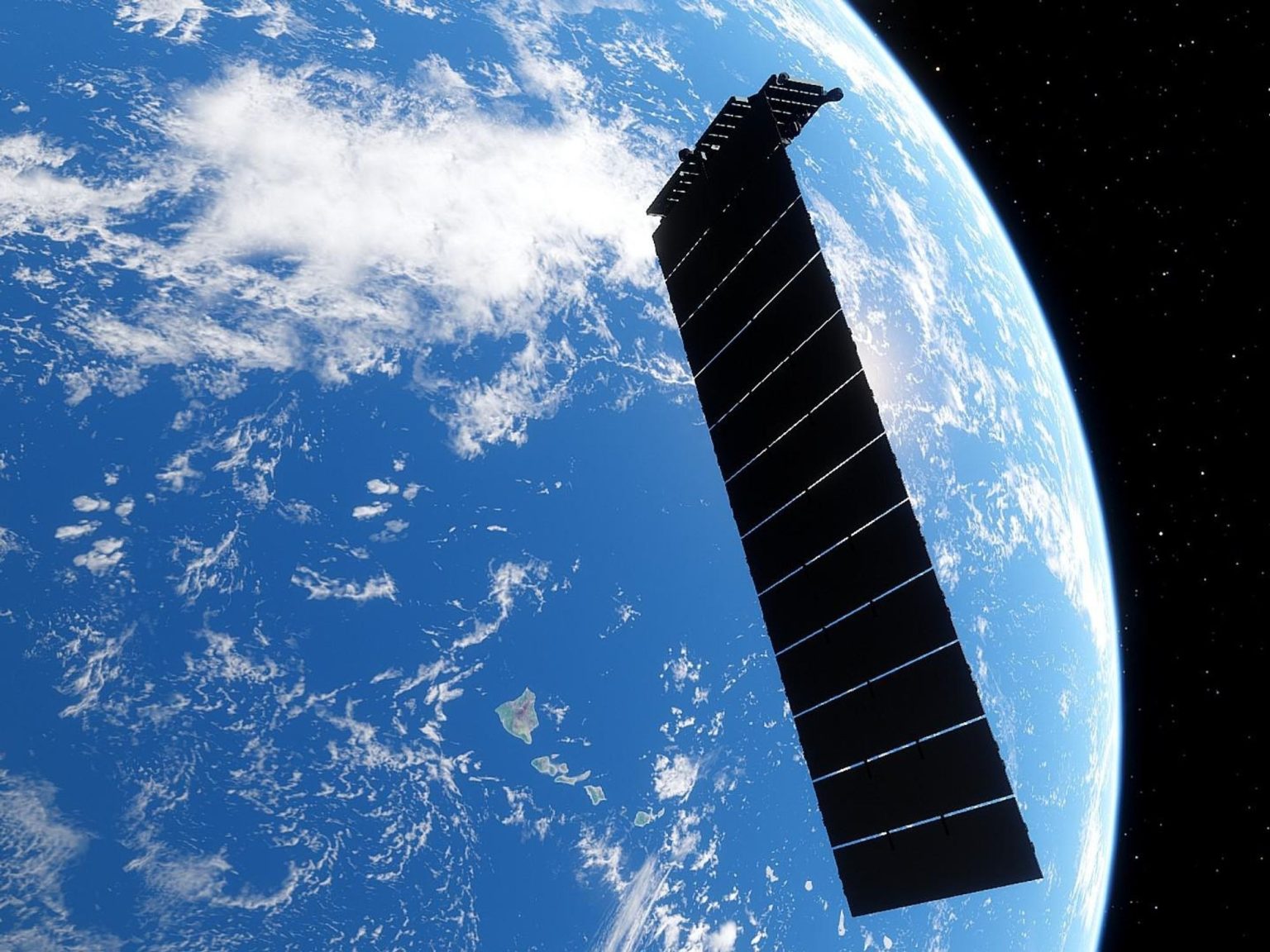
Phillips began his recent publication with a frank acknowledgment: satellite megaconstellations really do create many problems. They interfere with optical astronomical observations, pollute the atmosphere with metallic debris when they burn up, and bring low Earth orbit closer to the critical Kessler syndrome.
However, there turns out to be another side to the story — the satellites work as an excellent barometer. When the Sun becomes more active and emits more radiation, the upper layers of Earth’s atmosphere heat up and expand. All low-orbit spacecraft lose several meters of altitude every day because of friction with the rarefied air, but when the atmosphere expands, this braking accelerates significantly.
The Physics of Orbital “Diving”
The U.S. Space Force regularly tracks all artificial objects and publishes open orbital data in TLE format. Hidden within each such data block is a mathematical drag coefficient known as B* (B-star).
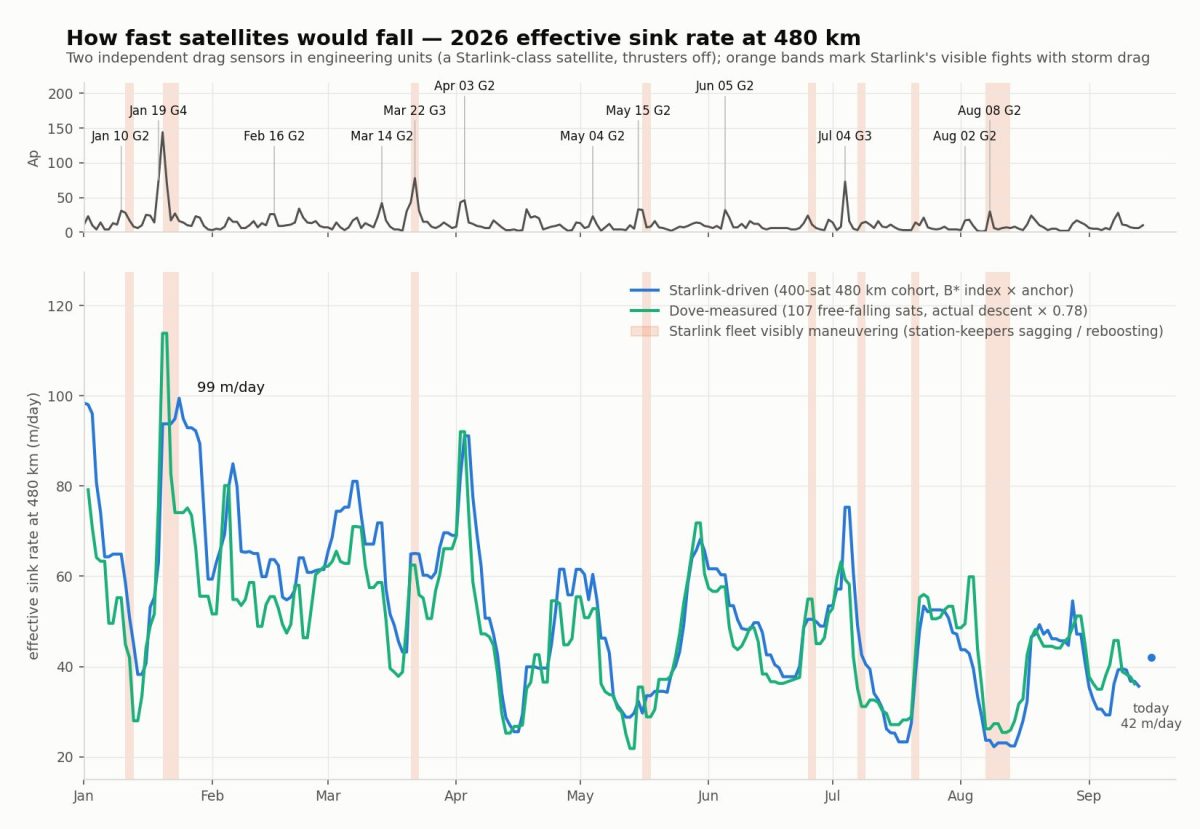
By default, the orbital model assumes that atmospheric density remains unchanged. But when the real thermosphere “swells,” the spacecraft slows down more strongly than the algorithm predicted. To make the calculated orbit match actual observations, the B* parameter has to be artificially adjusted. It is this value that contains information about the real air density at a specific altitude.
How Earth’s Atmosphere “Breathes”
For his monitoring, Phillips analyzes TLE data from 1,000 Starlink satellites, as well as 107 SuperDoves spacecraft from Planet Labs, 391 Amazon Kuiper satellites, and 651 Eutelsat OneWeb spacecraft. All of these constellations operate at different altitudes, yet they all respond simultaneously to the same solar events.
This allows researchers to literally observe how the upper atmosphere “breathes.” Ultraviolet radiation from the Sun heats the thermosphere, and the rate at which satellites lose altitude correlates with solar radio flux with a delay of about two days. This is how long the upper layers of the atmosphere need to react to a solar outburst. At the same time, powerful geomagnetic storms cause a much faster expansion of the atmosphere and produce sharp spikes in drag.
Scientists have used Starlink for similar measurements before — especially after the geomagnetic storm of 2022 that disabled and destroyed 40 of Elon Musk’s satellites. However, the main novelty of Phillips’s approach is the creation of an open daily density index that is simultaneously verified by three independent satellite networks without launching a single specialized scientific instrument.
Earlier, we reported on how Starlink harms radio astronomy with unwanted signals.
Based on materials from spaceweather.com
