

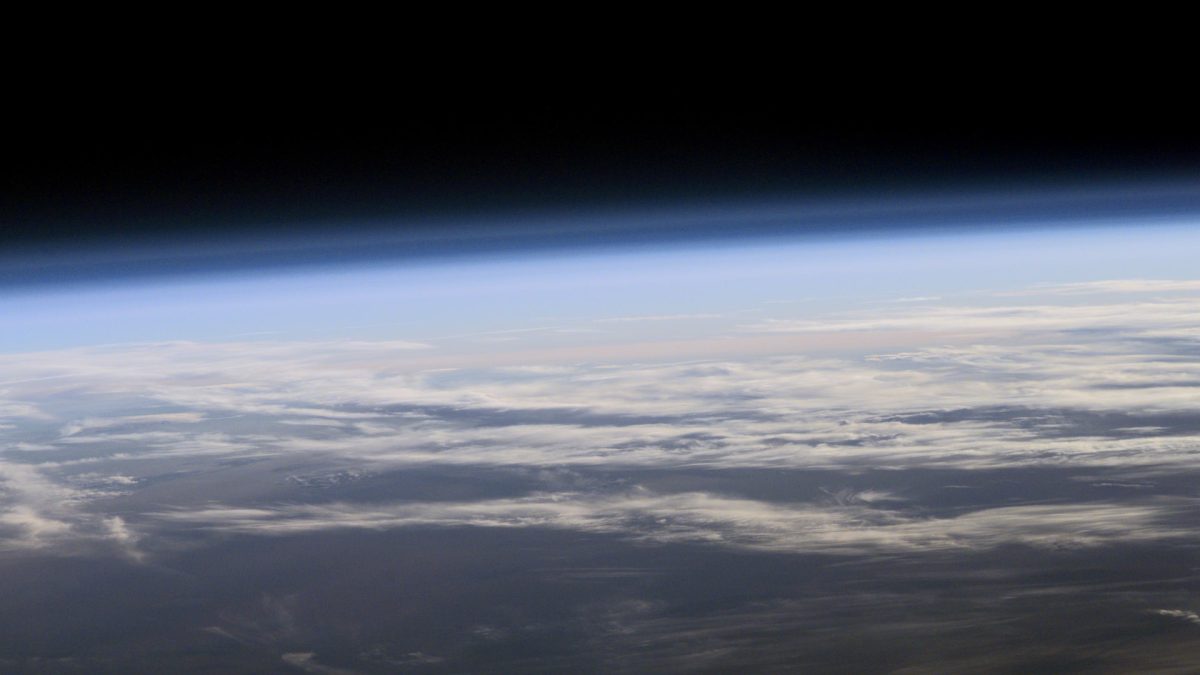
The ozone layer, situated at an altitude of approximately 20 kilometers, absorbs ultraviolet radiation from the Sun, which is detrimental to living organisms. In the absence of this protective layer, terrestrial life would be unsustainable. During the 1980s, it was observed that the ozone layer was progressively thinning; however, humanity succeeded in halting this deterioration through a singular international treaty. The date of the treaty’s ratification, September 16, is annually commemorated as International Ozone Layer Protection Day. Currently, the treaty requires a second amendment to address emerging concerns.
The agreement that preserved the ozone layer
The Montreal Protocol, signed in 1987, is regarded as the most successful environmental agreement in history. Nations consented to phase out substances detrimental to the ozone layer. Its effectiveness is well documented. On the anniversary of that event, September 16, the international community observes International Ozone Layer Protection Day.

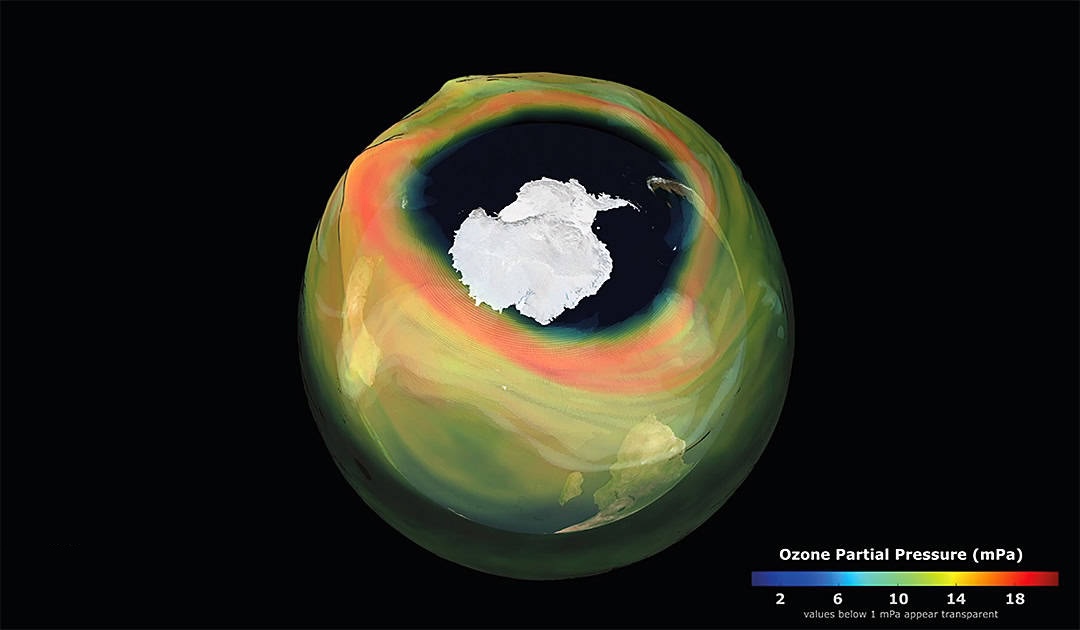
The ozone layer is positioned approximately 20 kilometers above the Earth’s surface and functions to absorb the Sun’s intense ultraviolet radiation. Since the 1980s, the ozone layer over Antarctica has been experiencing a rapid thinning each spring as a result of chlorofluorocarbons (CFCs) utilized in refrigerators, air conditioning units, and aerosol cans. The protocol addressing this issue has been ratified by all nations globally. Subsequently, the concentration of these compounds in the stratosphere has decreased to approximately one-third of its maximum historical level.
This year’s United Nations campaign is titled “Global Action for a Cooler Planet” and is dedicated to the tenth anniversary of the Kigali Amendment to the Protocol. The focus has shifted from ozone depletion to the gases that replaced the banned substances, which have subsequently emerged as significant contributors to global warming.
Why a hole is not truly a hole
The term “hole” is more perplexing than any other in this subject. There is no actual opening in the atmosphere. While ozone over Antarctica diminishes significantly during spring, it does not vanish entirely. If all the ozone within the air column near the surface were concentrated, it would constitute a layer approximately three millimeters in thickness. The “hole” is defined as the area where this hypothetical thickness drops below 2.2 millimeters.
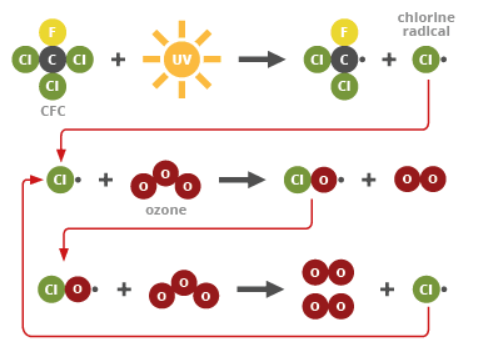
Ozone depletion results from substances that are emitted into the atmosphere at locations distant from Antarctica. Chlorofluorocarbons exhibit chemical stability and pose minimal risk near ground level, which explains their extensive use in refrigeration systems over several decades. However, this stability has become problematic; these substances do not decompose at lower altitudes and consequently ascend gradually to approximately 20 kilometers into the stratosphere. There, the sun’s ultraviolet radiation decomposes them, releasing chlorine atoms. A single chlorine atom has the potential to destroy up to 100,000 ozone molecules before becoming part of an inactive compound.
Bromine, which is released into the atmosphere from fire extinguishing agents and agricultural chemicals, functions in a comparable manner. A bromine atom exhibits greater destructive potential than a chlorine atom, despite its substantially lower concentration in the atmosphere.
Why is the South Pole specifically chosen? During winter, a polar vortex develops over Antarctica — an encircling area of strong winds that isolates the air in that region from the rest of the atmosphere. Temperatures reach below –78 °C, and clouds composed of ice crystals and nitric acid form within the stratosphere. On the surface of these particles, inactive chlorine compounds undergo transformation into reactive forms that decompose immediately upon exposure to sunlight. Throughout the polar night, these reactive chlorine forms continue to accumulate, and in the spring, the advent of sunlight releases the entire reservoir of chlorine within a few weeks.
The anticipated recovery will not be immediate, analogous to the initial perception of CFCs as a successful invention. These substances are excessively persistent; chlorine and bromine persist in the atmosphere for decades, while the most resilient compounds endure for several centuries. Consequently, the atmosphere gradually clears of these chemicals even after production has ceased entirely.
What is the current status of the ozone layer?
Every spring, the recurring pattern manifests over Antarctica. The depletion commences at the conclusion of the polar winter and reaches its peak between mid-September and mid-October. Subsequently, the stratosphere experiences warming, the vortex diminishes, and ozone levels gradually recover. This explains why satellite imagery from September appears most deteriorated annually, despite this being anticipated. The current season is actively progressing, and the results for 2026 are expected to be available by the end of October.
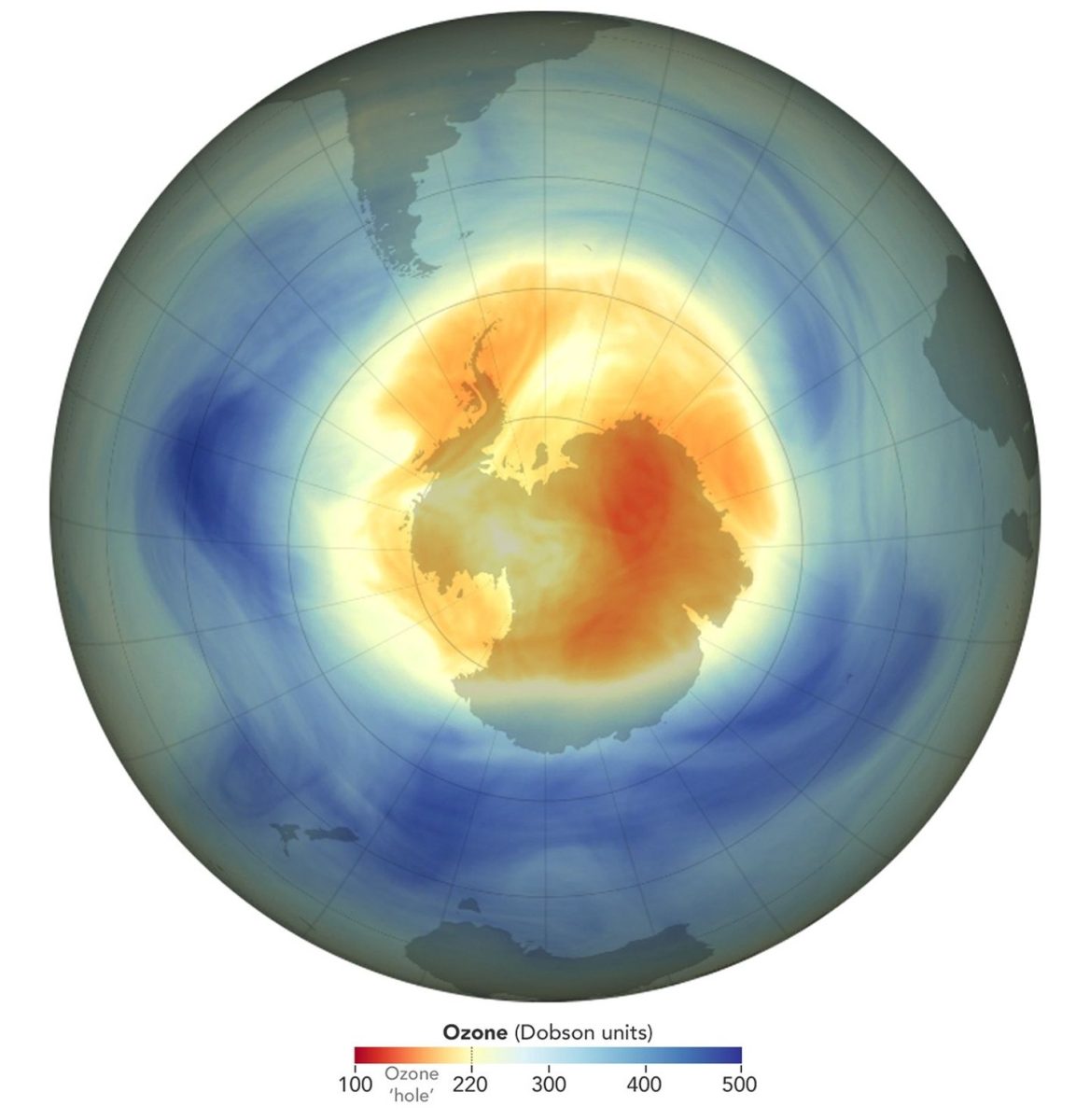
Source: NASA Ozone Watch and the Global Modeling and Assimilation Office, NASA GSFC
Last year yielded one of the most favorable outcomes since the protocol’s implementation. According to estimates by NASA and the United States National Oceanic and Atmospheric Administration, it was the fifth-lowest value since 1992, and when considering the comprehensive satellite record dating back to 1979, the season ranks 14th out of 46 observed. During the peak period from September 7 to October 13, 2025, the extent of thin ice averaged 18.71 million square kilometers – approximately thirty times the size of Ukraine. The most adverse year on record was 2006, with an average of 26.60 million square kilometers; in other words, the depleted area last year was one-third smaller than in 2006.
Last year, the ozone layer over the pole commenced recovery approximately three weeks earlier than the average observed over the past decade. Mr. Paul Newman, the head of NASA’s ozone research team, observed that zones of ozone depletion are now forming later and dissipating more rapidly, consistent with the forecasts provided by the models. Although a single season does not constitute conclusive evidence, the alignment with the predictions suggests an emerging trend.
Data concerning the 2025 ozone hole, derived from measurements conducted by NASA and the United States National Oceanic and Atmospheric Administration. Credit: NASA’s Goddard Space Flight Center
They also demonstrate the projected duration of the wait. According to estimates by the World Meteorological Organization, the majority of the global population will experience a return to ozone levels comparable to those of the 1980s approximately by the year 2040; the Arctic region by 2045; and Antarctica possibly as late as 2066. This variation stems from the same vortex. The conditions conducive to ozone depletion are most acute in the southern regions, which accounts for the prolonged recovery period in these areas.
What replaced freons, and how did that turn out?
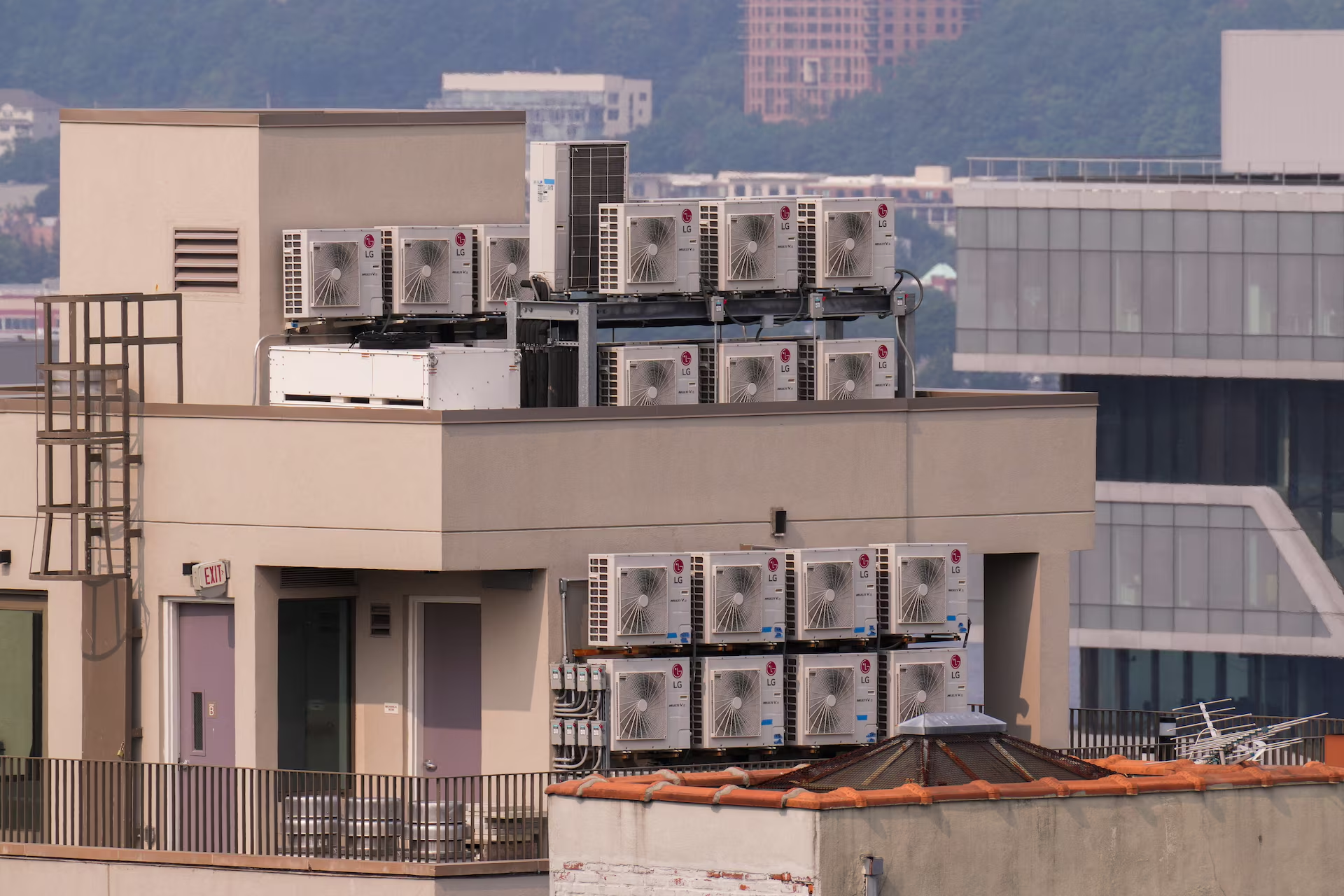
A replacement for CFCs was identified promptly. Hydrofluorocarbons, in contrast to chlorofluorocarbons, do not contain chlorine or bromine; therefore, they are considered safe for the ozone layer. These substances have been utilized to fill billions of refrigerators and air conditioning units globally. Subsequently, it became apparent that the issue had merely been relocated elsewhere.
These gases effectively trap heat in the atmosphere at rates hundreds to thousands of times greater than carbon dioxide. Concurrently, their utilization has risen in tandem with the increasing demand for air conditioning systems. In 2016, the Kigali Amendment was incorporated into the Montreal Protocol, establishing a phased reduction in the production and consumption of these substances. It became effective in early 2019, and the ongoing United Nations campaign commemorates its tenth anniversary.
Source: Reuters
Complete implementation of the amendment has the potential to avert an additional 0.5 °C of global warming by the conclusion of the century, as estimated by the United Nations. Furthermore, the influence of the technology itself must be considered. Older refrigeration systems are characterized by higher electricity consumption, and each additional kilowatt-hour equates to fuel being combusted at a power generation facility. Consequently, in the context of 2026, the shift to alternative refrigerants and enhanced energy efficiency are intrinsically interconnected.
Two issues are frequently conflated in this context. The ozone hole does not induce global warming, nor does global warming directly influence the size of the ozone hole, as they pertain to different atmospheric layers and mechanisms. Nonetheless, they share a commonality: the substances impacting the ozone layer also play a role in contributing to global warming.
A new threat from orbit
An additional aspect may be introduced to a problem that is already close to resolution. Currently, there are over 15,000 spacecraft in orbit, all of which will ultimately re-enter the Earth’s atmosphere and incinerate. At present, there are few such re-entries, and the impact remains within the natural background thresholds.
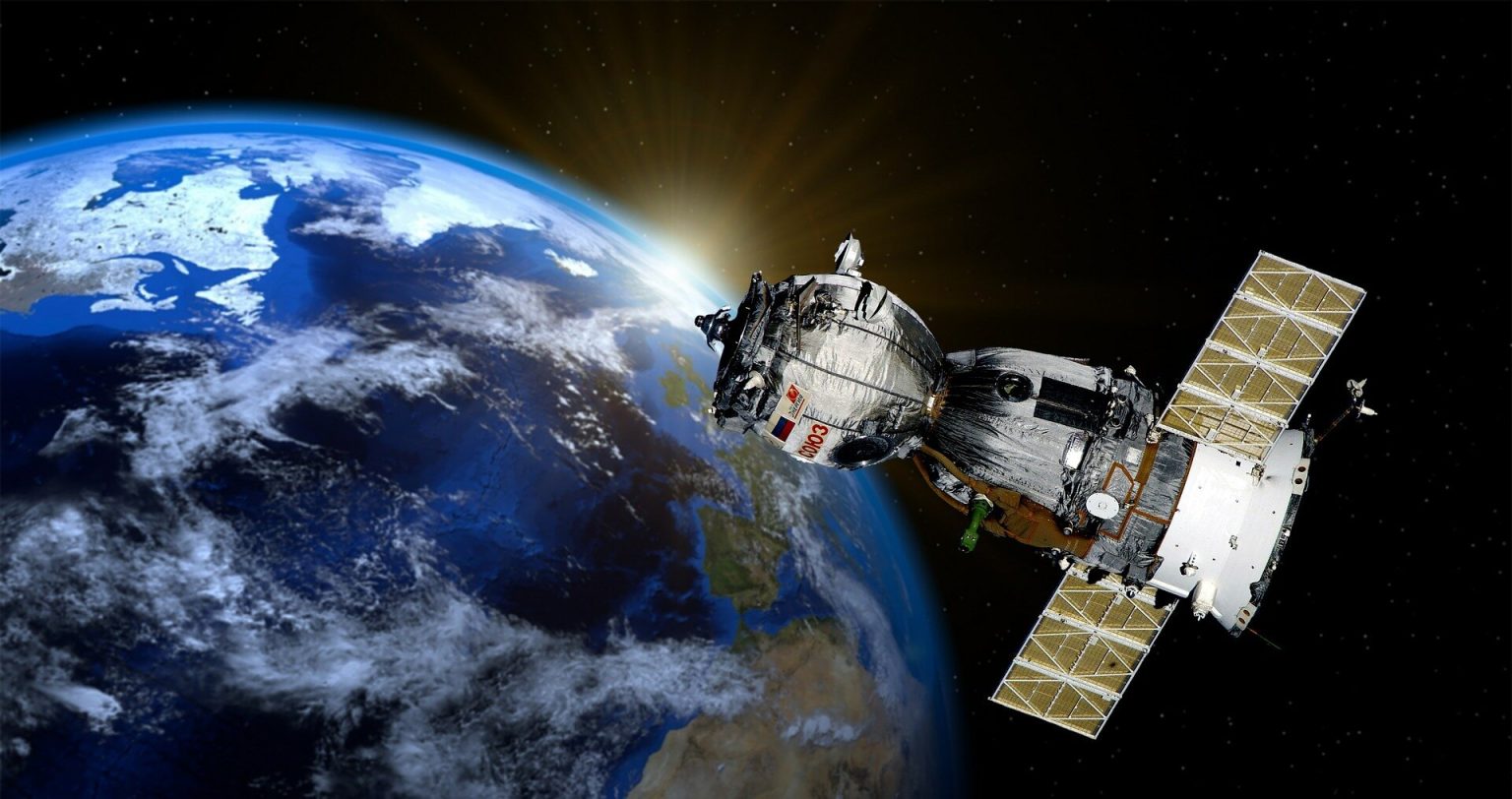
This situation is expected to evolve with the commencement of a new space race involving nations or large corporations. According to scientific estimates, the number of spacecraft launched under such circumstances could reach one million. Consequently, the quantity of decommissioned spacecraft removed from orbit is also anticipated to increase. Satellites do not entirely burn up upon re-entry into the atmosphere; a substantial portion of their hulls disintegrates into minute solid particles — primarily aluminum oxide. In terms of composition, this phenomenon resembles emissions produced by waste-to-energy facilities.
The precise mechanism by which this poses a threat to the ozone layer remains uncertain. Researchers hypothesize that aluminum particles could initiate reactions leading to ozone depletion, although these reactions occur at varying altitudes and through mechanisms distinct from those involving chlorine. Consequently, there is a proposal to restrict the issuance of launch licenses preemptively, prior to the manifestation of adverse effects.
What to expect from the WMO bulletin

The forthcoming data will be disclosed on September 16. The World Meteorological Organization is in the process of compiling its annual report on ozone and ultraviolet radiation, which is anticipated to illustrate the advancements in the recovery of the ozone layer and the present condition of the Antarctic ozone hole for this season. The outcomes for 2026 will be subsequently clarified following the October peak.
