

Dark energy, which accelerates the expansion of the Universe, may change over time. This is indicated by the most comprehensive catalog of white dwarf explosions, compiled by an international team led by the University of Queensland. Astronomers combined three decades of observations into a single system and compared them with the cosmic microwave background and maps of galaxy distribution. Instead of the expected confirmation of the standard cosmological model, the data showed deviations from it.

The Largest Supernova Dataset
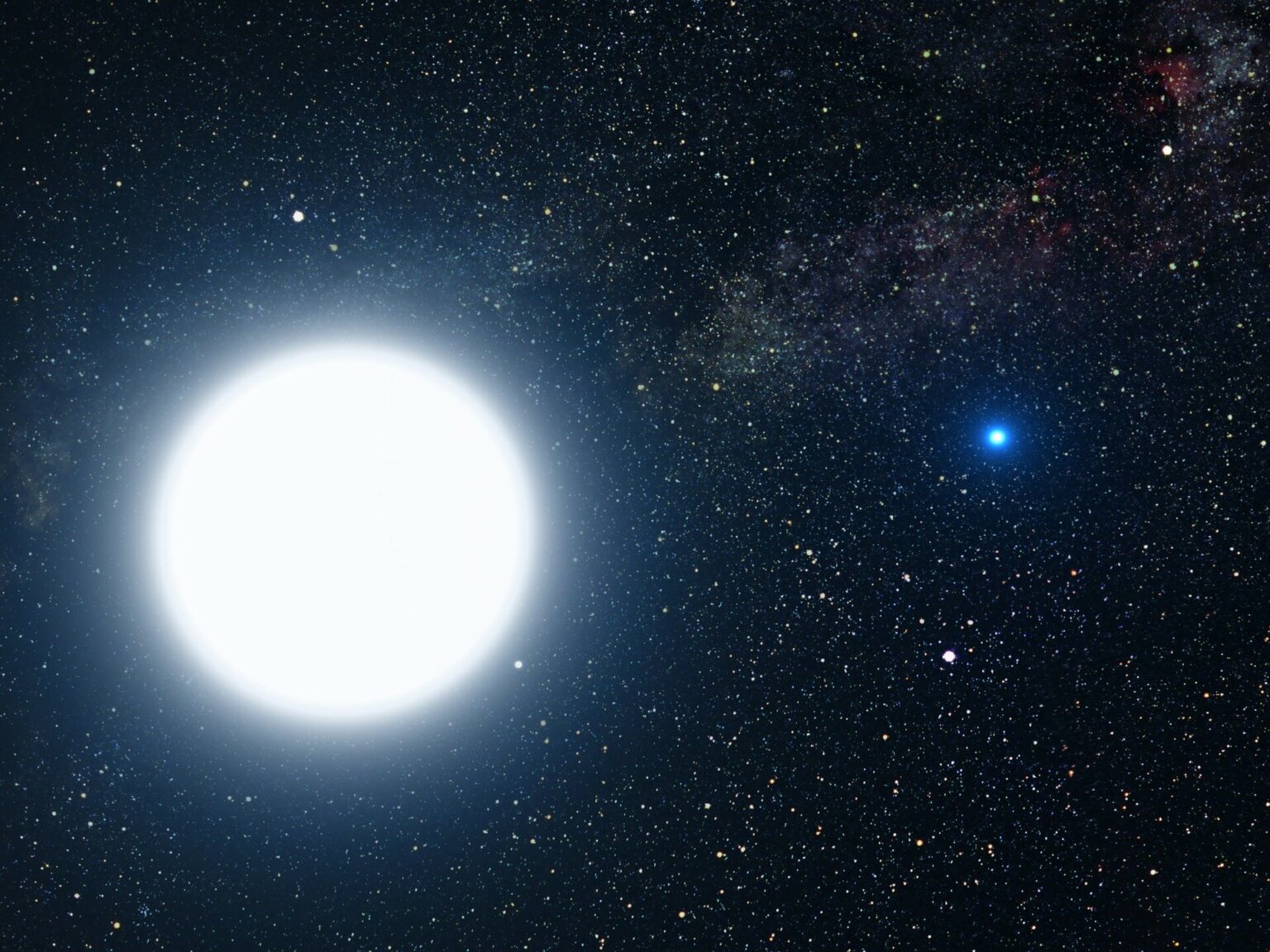
The catalog includes 2,884 Type Ia supernovae, explosions of white dwarfs whose brightness serves as a standard reference for measuring cosmic distances. The study was led by the School of Mathematics and Physics at the University of Queensland, with researchers from several countries taking part.
The foundation was data from the Dark Energy Survey, released in 2024, supplemented with much older observations. To make the entire dataset work as a single system, the archival records were reanalyzed using modern methods. The results were posted on the preprint server arXiv, so the conclusions have not yet undergone formal peer review.
Why the Old Data Were Reprocessed
Our understanding of supernova behavior has changed considerably in recent years, so the older information had to be processed again. Graduate student Ryan Camilleri, the study’s first author, emphasizes that the team brought results from telescopes with very different capabilities onto a common basis.
They separately accounted for factors that distort light on its way to Earth. These include cosmic dust and the mass of the host galaxy.
Gravitational lensing was also included — the bending and amplification of light near massive objects. Such corrections determine whether explosions recorded by different instruments can be compared at all.
Two Independent Hints
Astrophysicist Tamara Davis notes that the first signs of possible variation appeared in the 2024 Dark Energy Survey results. The new compilation also shows deviations from the standard model, although in a somewhat different direction, phys.org reports.
A similar result came from studying relics of sound waves from the early Universe with the Dark Energy Spectroscopic Instrument (DESI). Two completely independent approaches pointed in the same direction. This casts doubt on the assumption that dark energy is constant.
A Connection to Quantum Physics
If dark energy is not constant, the implications extend beyond cosmology. Tamara Davis suggests that this may provide a clue to reconciling gravity with quantum physics, since both theories work extremely well within their own domains but do not fit together.
The accelerated expansion of the Universe was discovered in 1998 using Type Ia supernova explosions, and the Nobel Prize in Physics for this discovery was awarded in 2011. Now doubts about the constancy of dark energy are coming from the same class of objects whose observations originally helped establish its existence.
The catalog is expected to continue growing. The next major addition will come from the Dark Energy Bedrock All-Sky Supernova Survey (DEBASS), which is recording hundreds of explosions much closer to Earth than those observed in the previous survey.
