

Physicists conducted a large-scale search for dark matter, effectively turning the entire Earth into a giant scientific instrument. The experiment detected dozens of potential signals consistent with theoretical models of certain hypothetical particles. Although these data still require rigorous verification and may have other explanations, the method is already being described as an innovative step toward solving one of the major mysteries of cosmology.
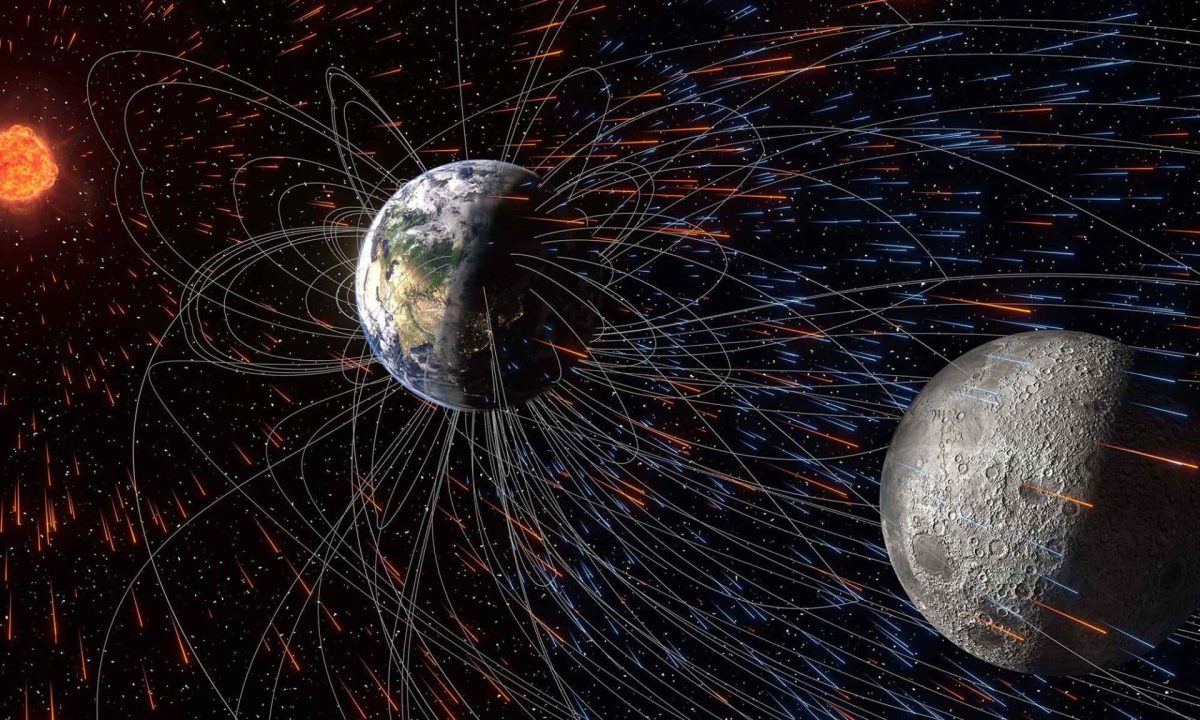
Today, there is considerable evidence that the Universe contains far more matter than we can see. Models of the motion of visible matter do not match reality, forcing scientists to assume the existence of invisible mass — dark matter. It neither emits nor reflects light and therefore reveals itself only through gravity.
Searching for Axions in a Natural Resonator
One of the most likely candidates for the constituents of dark matter is the axion — a particle first hypothetically predicted back in the 1970s. Unlike many other candidates, axions are expected to interact with the electromagnetic force and decay into photons in strong magnetic fields. They are usually searched for near neutron stars or supernovae, but a group of Japanese researchers proposed looking for them directly on Earth.
As study co-author and theoretical physicist Atsushi Taruya explained, the cavity between Earth’s surface and the ionosphere acts as a natural resonator. It amplifies electromagnetic waves precisely in the mass range characteristic of axions.
To test the hypothesis, the scientists analyzed geomagnetic-field data collected by the British Geological Survey between 2012 and 2022. After passing through the planet, axions should cause resonance and generate electromagnetic waves of the corresponding frequency. After filtering out background noise, the researchers identified 65 potential signals, 25 of which remained even after the strictest statistical criteria were applied.
An Alternative: Dark Photons
The same method can also be used to search for another candidate — the dark photon, which is considered a force carrier in sectors beyond the Standard Model. Unlike an ordinary photon, a dark photon may have mass and interact with magnetic fields. Applying their method to the same data, the team detected between 31 and 342 potential signals.
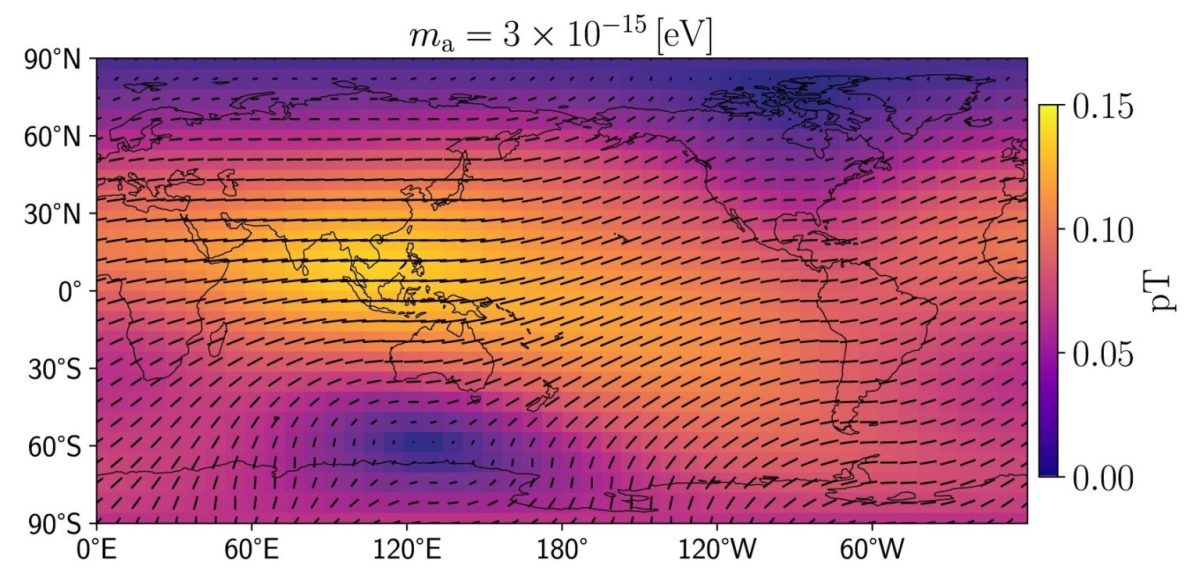
The main difficulty is that the available data do not allow scientists to clearly distinguish axion signals from dark-photon signals. However, physical models suggest a way to separate them. The generation of axion signals depends directly on the strength of Earth’s magnetic field: they should be strongest in Southeast Asia and weaken near the poles. By contrast, a dark-photon signal would be the same anywhere on the planet.
Because the original data were recorded by only one observatory in the United Kingdom, it is currently impossible to confirm this geographical variability. Further observations by a network of observatories around the world will be needed before any final conclusions can be drawn.
A series of papers on axions was published in Progress of Theoretical and Experimental Physics, while the results of the dark-photon study were presented in Physical Review D.
Previously, we reported on how dark matter could be frozen light.
According to sciencealert.com
