

Thanks to the efforts of NASA and ground-based space observatories, humanity has already discovered more than 6,000 exoplanets. However, astronomers have yet to officially confirm the existence of a single exomoon orbiting a celestial body beyond our Solar System. That situation may change dramatically because of a new object that has recently attracted scientists’ attention.
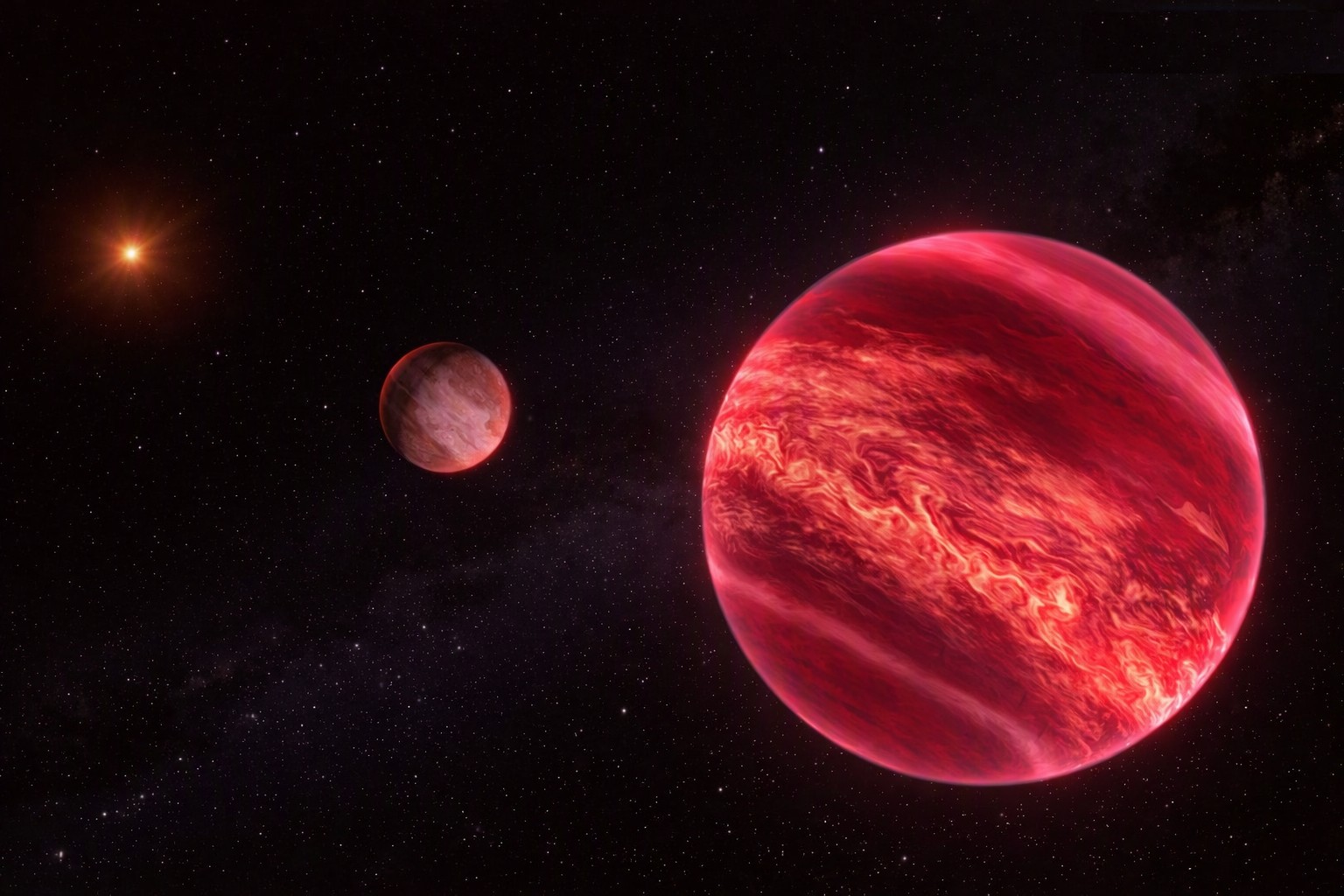
In a new study published in the prestigious journal Nature, a team of astrophysicists describes a unique cosmic hierarchy: a satellite orbits a brown dwarf, which in turn revolves around its parent star. This mysterious object has every chance of becoming the first confirmed exomoon in history.
However, there is a significant obstacle: modern astronomy simply has no clear definition of an exomoon. “It is precisely the absence of universally accepted criteria that prevents us from confidently stating that this is the first exomoon ever discovered,” said Kevin Hoy, the study’s lead author and a doctoral student in astrophysics at Diego Portales University in Chile.
Where Is the Boundary Between a Moon and a Planet?
Within our Solar System, the classification of moons is intuitively clear. Deep space, however, follows its own rules, and discovered candidates rarely fit our familiar standards. The exomoon identified by Hoy’s team does function like our Moon: it is significantly smaller than its “parent” body, with a mass ratio of only 2.5%. It is also the final link in a three-object system.
But the similarities end there. The main classification problem concerns the nature of the central body. A brown dwarf is a so-called “failed star.” Its mass is too low to trigger full-scale thermonuclear reactions, yet too high for it to be considered an ordinary planet. That is why astronomers still disagree on whether objects orbiting brown dwarfs should be called moons, or whether they belong to a separate class of satellites of substellar bodies.
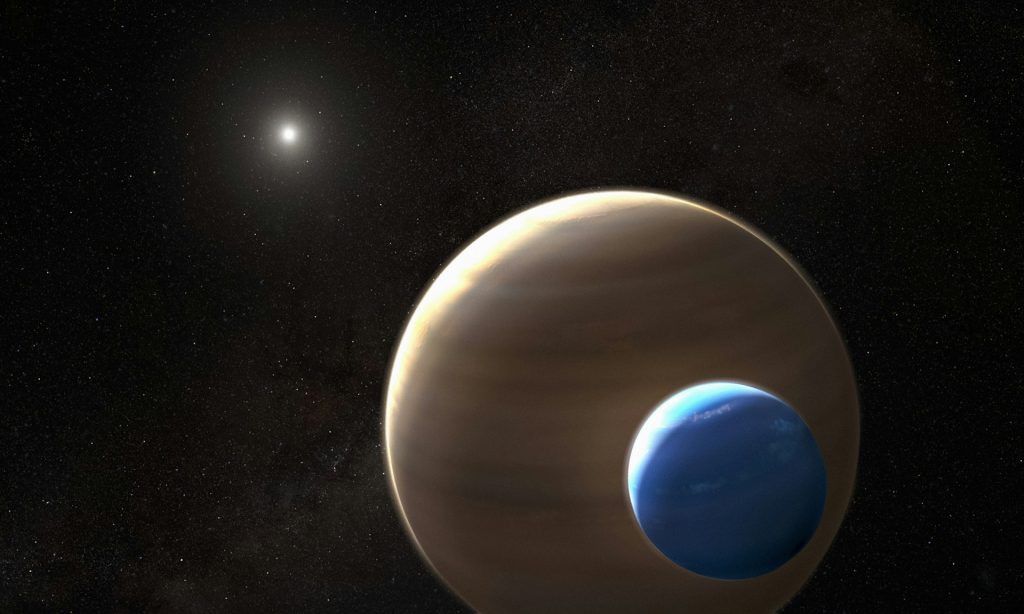
The second controversial factor is the enormous size of the discovery. Although the exomoon candidate is smaller than the brown dwarf, its mass is only slightly less than that of Jupiter. Science currently has no established upper size limit for such bodies, but researchers believe that such limits need to be introduced.
An Innovative Search Method: How to Weigh the Invisible
Despite the terminological debate, Kevin Hoy’s team has made a major methodological advance. The discovery became possible through a sophisticated analysis based on two physical principles.
The first is the Doppler effect. By measuring the frequency of electromagnetic radiation, scientists can determine whether an object is moving toward Earth or away from it.
The second principle involves gravity. When a satellite orbits a primary body, both objects move around a shared center of mass, causing the larger body to “wobble.”
“If this wobble produces changes in velocity toward or away from the observer, then by tracking those changes over time, we can infer the presence of satellites,” Hoy explained.
Observations of the brown dwarf continued from October 2023 to February 2026. Analysis of the data revealed a hidden companion that completes one orbit around the dwarf every 170 Earth days.
While the scientific community works toward establishing a unified system for classifying exomoons, researchers are preparing for the next stage: astrometric analysis. This will allow the team to measure the satellite’s true mass accurately and determine the inclination and orientation of its orbit.
Earlier, we reported on how astronomers discovered a constantly changing multiplanetary system.
According to Gizmodo