

What ultimate fate awaits our universe, and why does the answer today depend on one of the greatest mysteries in modern physics: dark energy?
On a cosmic scale, the Sun’s eventual death would constitute only a localized catastrophe. In time, new stars will cease to form, the last red dwarfs will fade, distant galaxies will recede beyond the cosmic horizon, and, after an extraordinarily long period, even black holes may evaporate. However, this is only one of several possible scenarios.
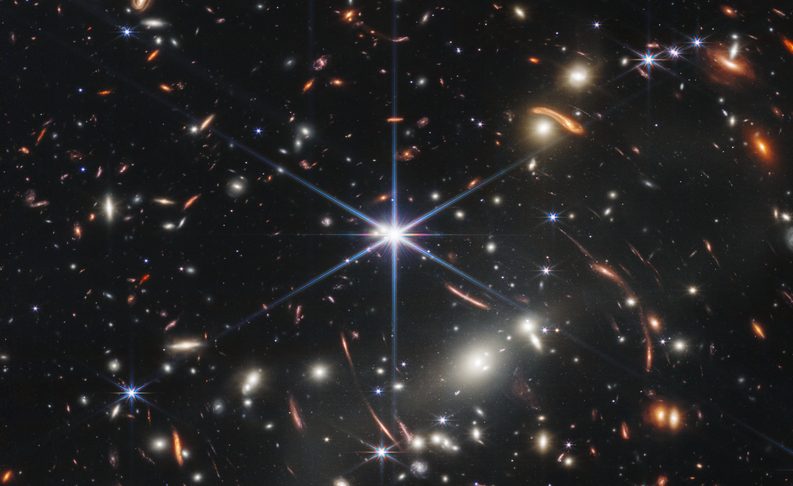
The universe could be torn apart by its own expansion. According to the Big Rip scenario, accelerated expansion could ultimately destroy galaxies, star systems, and even atoms. Alternatively, the universe’s expansion could cease and give way to contraction. Another possibility is the sudden collapse of the vacuum. Which scenario is most likely depends largely on the nature of dark energy and whether its properties change over time.
What Factors Determine the Fate of the Universe?
The universe is approximately 13.8 billion years old. It originated in an extremely hot and dense state and has been expanding ever since. One of the major discoveries in modern cosmology occurred in the late twentieth century, when two independent groups of astronomers studied distant Type Ia supernovae. The researchers sought to determine the extent to which gravity slows the universe’s expansion. The reasoning appeared straightforward: matter attracts other matter, so the universe’s expansion should gradually decelerate over time.
However, observations yielded the opposite result. Distant supernovae were found to be fainter — and therefore farther away — than predicted by models of a universe undergoing decelerated expansion. These findings demonstrated that the expansion of the universe is accelerating. In recognition of this discovery, Saul Perlmutter, Brian Schmidt, and Adam Riess were awarded the 2011 Nobel Prize in Physics. This acceleration is attributed to an unknown form of energy known as dark energy.

* The expansion of the universe is not slowing under the influence of gravity, as astronomers once assumed; rather, it is accelerating. This phenomenon is associated with mysterious dark energy, whose properties may determine the future of the cosmos as a whole.
It was previously believed that the future of the universe was largely determined by the geometry of space — that is, its overall curvature, which is related to the average density of matter and energy. At sufficiently high density, gravity could theoretically halt the expansion and cause the universe to contract. At lower densities, expansion would continue indefinitely. However, the discovery of dark energy has complicated this picture. Current observations indicate that the universe is nearly flat. Nevertheless, its future evolution depends not only on its geometry but, primarily, on the behavior of dark energy.
We can reconstruct the history of the universe’s expansion with considerable accuracy. By observing objects at varying distances — and, consequently, at different stages of cosmic history — astronomers determine how the expansion rate has changed over billions of years. The challenge arises when attempting to look into the future. Predicting the universe’s fate requires understanding how dark energy will behave over billions, trillions, and even longer periods. Will it remain constant? Will it intensify? Alternatively, will it weaken or undergo changes in its properties? In practice, cosmologists must extrapolate a relatively brief segment of the universe’s known history into a future that may extend indefinitely.
The Great Freeze: The Gradual Thermal Death of the Universe
The most conservative scenario derives from the standard ΛCDM cosmological model. In this model, the universe consists primarily of dark energy, cold dark matter, and ordinary matter. Dark energy is represented by the cosmological constant Λ, meaning that its properties remain constant over time. This model is particularly consistent with measurements from the Planck spacecraft, which studied the cosmic microwave background. If ΛCDM accurately describes the universe even in the distant future, the universe is expected to undergo a Big Freeze, or heat death.
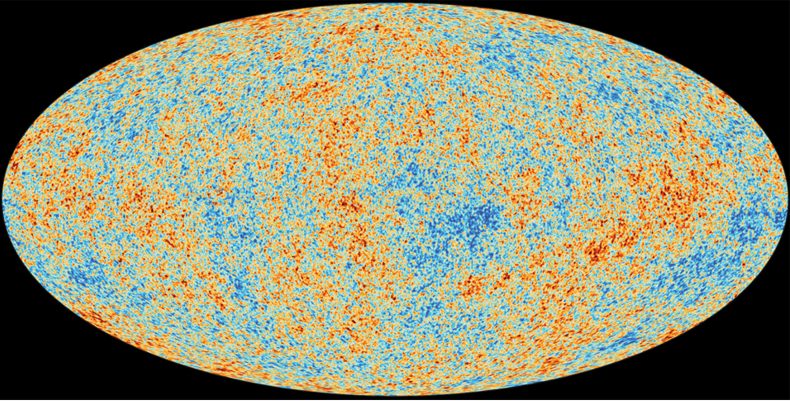
*This image, captured by the Planck space telescope, provides a rare view of the early Universe. The different colors indicate minute temperature variations that existed approximately 380,000 years after the Big Bang. These fluctuations eventually gave rise to the formation of galaxies.
The term “freezing,” however, is somewhat misleading. It primarily refers to the universe’s gradual progression toward a state in which it becomes increasingly difficult to use energy to perform work. This can be illustrated, in simple terms, by considering a hot cup of coffee in a cold room. As long as a temperature difference exists between the coffee and the surrounding air, energy flows from the warmer coffee to the cooler air. Once the temperatures equalize, the energy does not disappear; rather, it is no longer possible to extract useful work from that difference. On a cosmic scale, this process will take an extraordinarily long time.
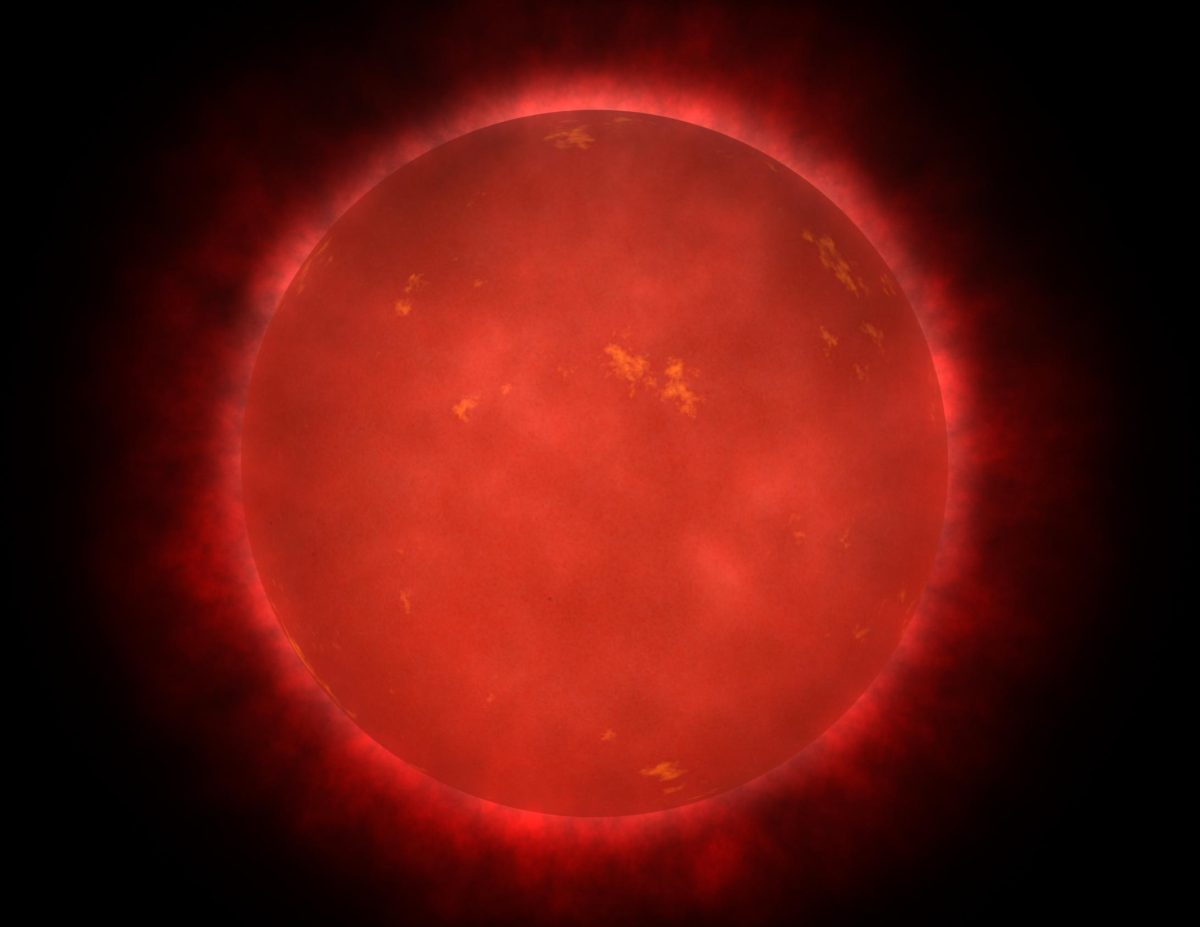
First, the stellar era as we know it will come to an end. The reserves of cold gas from which new stars form will gradually be depleted. In trillions of years, the formation of new stars will practically cease. The smallest red dwarfs will persist the longest. Some may shine for approximately 10 trillion years — hundreds of times longer than the universe has existed to date. At the same time, accelerated expansion will increasingly isolate regions of space that are not gravitationally bound.
It is important to note that the expansion of space does not affect all objects equally. If dark energy behaves like a cosmological constant, it will not tear apart Earth, the Solar System, or a gravitationally bound galaxy. Instead, distant galaxies will recede at such a rate that their light will eventually be unable to reach our region of the Universe. In approximately 100 billion years, most of the galaxies observable today will lie beyond our cosmic horizon.
Paradoxically, astronomers in the distant future may possess less knowledge of the universe than we do today. Distant galaxies will eventually disappear from view. As a result of the universe’s expansion, the cosmic microwave background will shift to progressively longer wavelengths, cool, and become exceedingly faint. Consequently, it may be considerably more difficult for future civilizations to determine that the universe was once hot and dense.
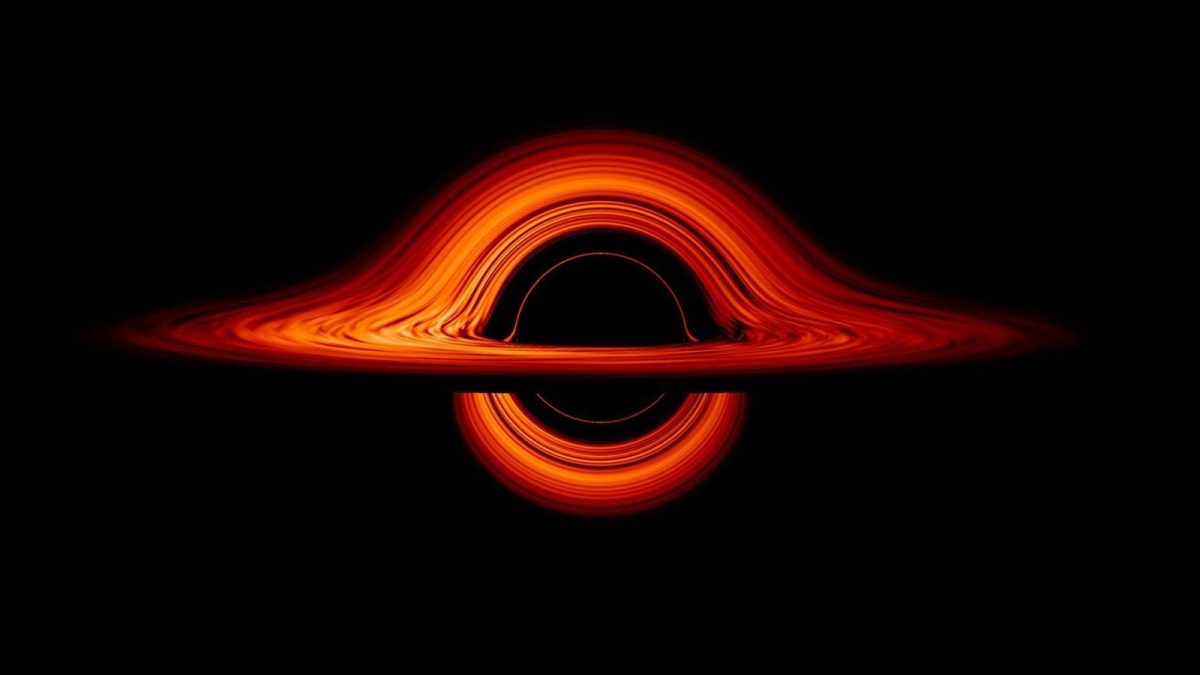
Once star formation ceases, stars will eventually become white dwarfs, neutron stars, or black holes. Galaxies will gradually undergo structural changes: some stellar remnants will escape, while others will fall into the central black holes. However, even black holes are probably not eternal. In 1974, Stephen Hawking demonstrated that quantum effects can cause black holes to emit energy. As they gradually lose this energy, they also lose mass. Depending on a black hole’s mass, its evaporation may take anywhere from approximately 10⁶⁵ to 10¹⁰⁰ years. By comparison, the universe is currently only about 1.4 × 10¹⁰ years old.
Following this, what is often referred to as the Dark Age will begin. Photons with extremely long wavelengths, neutrinos, electrons, positrons, and other particles will remain in space. Some scenarios also predict the decay of protons, although this has not yet been experimentally confirmed. There will be no dramatic final moment, explosion, or precise instant at which the universe “dies.” Instead, the processes capable of generating complex structures and performing work will gradually become increasingly scarce. Heat death is therefore less a death occurring at a specific moment than a virtually endless process of fading away.
The Great Divide: When Expansion Causes Extensive Damage
Heat death presupposes that dark energy will remain approximately as we observe it today. However, what if its properties change? Cosmologists characterize dark energy using the parameter w, the ratio of its pressure to its energy density. For the cosmological constant, w equals −1, and the density of dark energy remains constant. If w < −1, however, a fundamentally different scenario emerges. As the universe expands, the density of this dark energy does not decrease; instead, it increases. This form is known as phantom dark energy.

If this behavior continues indefinitely, the accelerated expansion will become sufficiently strong to overcome the forces that hold structures together. Galaxy clusters will disintegrate first, followed by individual galaxies and, ultimately, star systems. In a sufficiently extreme scenario, the expansion may eventually affect even molecules, atoms, and atomic nuclei. This scenario is known as the Big Rip.
In their well-known 2003 paper, “Phantom Energy and Cosmic Doomsday,” the authors presented an example of such a future for w = −1.5. In this particular model, the Big Rip would occur approximately 22 billion years from now. The destruction would begin earlier: galaxy clusters would disintegrate about a billion years before the end; the Milky Way, 60 million years before; the Solar System, three months before; and Earth, approximately half an hour before. At the final moment, destruction would reach the atomic scale.
However, these figures do not constitute a prediction or a “timeline for the end of the universe.” They illustrate what would occur if the parameter w assumed one specific — and rather extreme — value. At present, there is no evidence that dark energy behaves in this manner.
In addition to the classic Big Rip, several intermediate models have been proposed. In the Small Rip scenario, for example, acceleration continues indefinitely without culminating in a single final moment. Over time, however, it may still destroy structures that are increasingly tightly bound. In the pseudo-rip scenario, acceleration gradually approaches a finite limit, potentially destroying some structures while leaving others intact.
The Big Crunch: The Universe Could Reverse Its Expansion
There is also an opposing scenario. If dark energy is not constant and its density begins to decline significantly over time, accelerated expansion may eventually cease. In some models, the universe reaches a maximum size, after which expansion gives way to contraction. Galaxies that were previously moving away from one another begin to converge. The cosmic microwave background no longer cools; instead, it heats up. The density of matter and radiation increases. Eventually, the universe may contract into an extremely hot and dense state. This scenario is known as the Big Crunch.

In 2025, three physicists investigated a model in which dark energy gradually weakens. According to this model, the universe’s expansion would cease in approximately 11 billion years, followed by the Big Crunch 9 billion years later. These findings prompted sensational headlines referring to an alleged “set date for the death of the universe.”
However, such a conclusion cannot be drawn. This timeframe results from a specific theoretical model; other plausible parameter choices — even within the same study — yield different timescales. Accordingly, the Big Crunch is not currently regarded as the most likely fate of the universe. Nevertheless, it cannot be entirely ruled out if dark energy is ultimately found to vary.
What occurs at the very end of the contraction is a separate question. Within the framework of classical general relativity, the process culminates in a singularity. However, some models of quantum cosmology predict a Big Bounce: following an extremely intense contraction, quantum effects could trigger a new phase of expansion. In this scenario, the death of one universe could theoretically mark the beginning of another cycle. At present, this remains only a hypothesis.
Why Is DESI Once Again Receiving Widespread Attention?
Interest in scenarios involving variable dark energy has increased significantly in recent years, driven by findings from DESI (the Dark Energy Spectroscopic Instrument). DESI is producing a large-scale, three-dimensional map of the universe based on the distribution of galaxies and quasars. Astronomers are examining these distributions for evidence of baryon acoustic oscillations — ancient sound waves that imprinted a characteristic scale on the structure of the universe. This scale can serve as a “cosmic ruler” for determining how the expansion of the universe has changed over time. One analysis used nearly 15 million galaxies and quasars observed during DESI’s first three years of operation.
The DESI data alone are in good agreement with the standard ΛCDM model. A possible indication of an anomaly emerges when these data are combined with other cosmological observations, primarily measurements of the cosmic microwave background and supernovae. In such cases, certain combinations of datasets favor models in which dark energy varies over time. The statistical significance of this finding was approximately 2.8–4.2 sigma, depending on the dataset used.
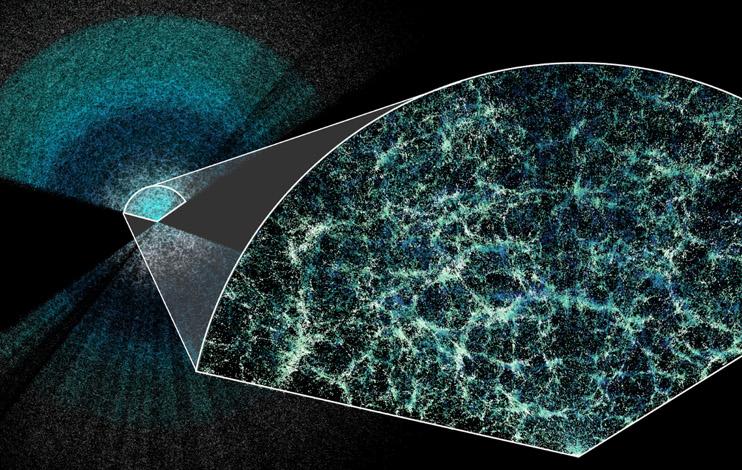
* What we see here is not merely an ordinary photograph of space, but a three-dimensional map depicting the locations of millions of galaxies and quasars. By analyzing their distribution, astronomers can determine how the universe has expanded over billions of years. These measurements have provided new evidence suggesting that dark energy may change over time.
In this case, the sigma value indicates the degree of difficulty in attributing the result to a random statistical fluctuation. In physics, a significance level of approximately 5 sigma is typically required to announce a definitive discovery. Therefore, it is premature to claim the discovery of variable dark energy.
In July 2026, DESI presented a new analysis of light from distant quasars. As this light travels toward Earth, it passes through clouds of intergalactic hydrogen, which leave characteristic traces in the spectrum known as the Lyman-alpha forest. These structures enable researchers to study the expansion of the universe at very high redshifts. In this analysis, the indication of variable dark energy had a statistical significance of approximately 2.7 sigma; after supernova data were added, this figure rose to approximately 3.2 sigma. Although the findings remain intriguing, they do not yet constitute a definitive discovery.
In April 2026, DESI completed its planned five-year survey, during which it observed more than 47 million galaxies and quasars. The initial findings from the comprehensive five-year analysis of dark energy are expected in 2027 and may provide significant insight into the issue.
Even if DESI confirms that dark energy has changed over the course of cosmic history, this would not enable us to predict its behavior automatically 20 billion or even trillions of years from now. Observations reveal the past, whereas scenarios concerning the end of the universe require extrapolating the laws of physics far into the future. Consequently, a substantial theoretical gap remains between the claims “dark energy may evolve” and “the universe will collapse in 20 billion years.”
Vacuum Decay: The Universe May Not Reach Its Natural End
The Big Freeze, the Big Rip, and the Big Crunch share a common feature: in each of these scenarios, the universe continues to evolve over an extraordinarily long period. However, quantum physics leaves open another possibility: the universe may not reach any of these end states.
In quantum field theory, the vacuum is not simply empty space. Even in the absence of actual particles, quantum fields persist in a specific energy state. Consider a ball resting not at the bottom of a valley, but in a small depression along its slope. It may remain there for an extremely long time and appear entirely stable, despite the existence of a lower-energy state elsewhere. A comparable state of a quantum field is known as metastable, or as a false vacuum. In theory, it may transition to a lower-energy state; this phenomenon is known as vacuum decay.

* The blue curve illustrates the various energy states of the vacuum, while the green dots indicate its possible positions. On the left, the vacuum occupies a relatively stable state, although a lower energy state exists on the right. Through quantum tunneling, the vacuum could theoretically transition to this lower state without overcoming the energy barrier by conventional means. Such a transition could fundamentally alter the physical properties of space.
If our vacuum is metastable, a bubble of a lower-energy state could theoretically form at a particular location. It would then begin to expand, altering the surrounding vacuum. Within such a region, the properties of particles and fundamental interactions could differ so substantially from those with which we are familiar that matter, as we know it today, would likely be unable to exist.
However, this possibility should not be sensationalized. It is not known with certainty whether the vacuum of our universe is stable or metastable. The answer depends on the precise values of fundamental parameters, particularly the mass of the top quark and the properties of the strong interaction. Furthermore, physics beyond the Standard Model could fundamentally alter this picture. Accordingly, vacuum decay should not be regarded as a fourth inevitable scenario for the end of the universe, but rather as a distinct quantum possibility.
How Is the Universe Most Likely to End?
Currently, the standard ΛCDM model offers the most conservative answer. If dark energy is indeed a cosmological constant and remains unchanged over time, the universe will neither explode, tear apart, nor collapse. Instead, it will continue to expand. Distant galaxies will gradually recede beyond the cosmic horizon. Star formation will cease, and the last stars will eventually fade away. Black holes will evaporate over exceedingly long timescales. The universe will become progressively colder, darker, and more empty.
This outcome is known as heat death. It is precisely what the basic ΛCDM model currently predicts. DESI has provided intriguing indications that dark energy may vary; however, even the 2026 results have not yet established this conclusively.
Perhaps the most striking aspect of the entire account of the universe’s death is this: humanity has already learned to construct physical models of processes that may occur in an astonishing 10¹⁰⁰ years. At the same time, we still do not know precisely what constitutes the majority of the energy content of the present-day universe — or whether the properties of this mysterious dark energy will remain unchanged.
The answer to this question will determine whether the universe gradually fades into near-eternal darkness, eventually begins to contract again, or meets an end that modern physics is not yet capable of accurately describing.
What might the end of the universe actually look like? Reading about the Big Rip or heat death is one thing; witnessing the final stars fade, galaxies disappear, and the very structure of the cosmos collapse is quite another. In our video, we have visualized possible scenarios for the universe’s end, enabling you not only to understand these extraordinary events but also to imagine their immense scale.
▶️ Explore how the universe may come to an end — video by Universe Space Tech

