

On November 9, the Verkhovna Rada of Ukraine passed a bill establishing the Space Forces at its first reading. However, communication about the need for this measure has been limited, prompting widespread skepticism and sarcasm on social media. Nevertheless, there are sound reasons for creating this new branch of the Armed Forces of Ukraine.
Ballistic threat
Ukraine now has a Space Force — at least, the Verkhovna Rada passed the bill establishing it at its first reading on November 9, 2026. Lawmakers could have voted on it a second time, but have not yet done so. There is simply too much skepticism and misunderstanding surrounding this issue.
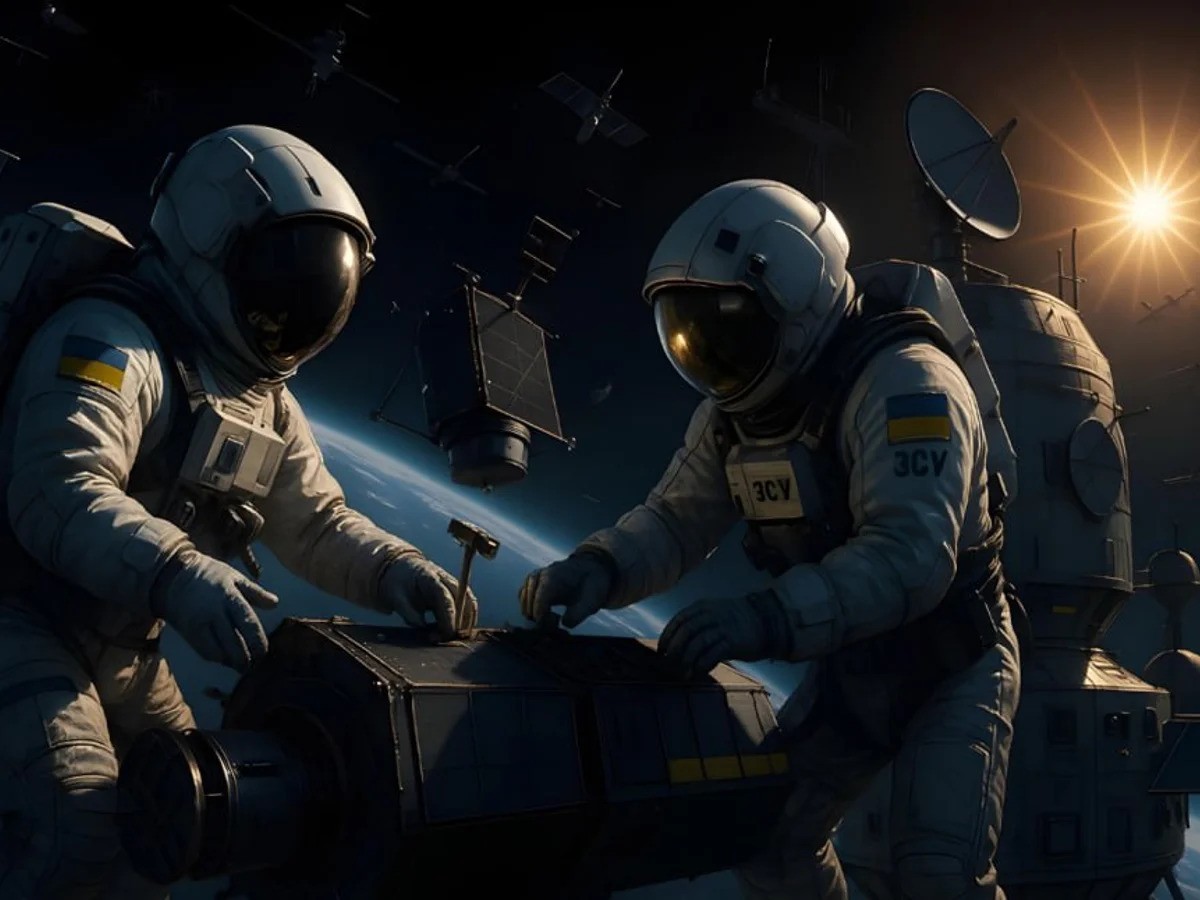
The reaction on social media further confirms this point. AI-generated images are circulating online, depicting Imperial stormtroopers from “Star Wars” flying under Ukrainian flags, various futuristic spacecraft, and similar imagery. These posts are accompanied by sarcastic comments referring to the use of psychoactive substances and the alleged squandering of public funds on dubious fantasies. After all, what other space technology could a country have when its citizens lack electricity and fear the next ballistic missile strike?
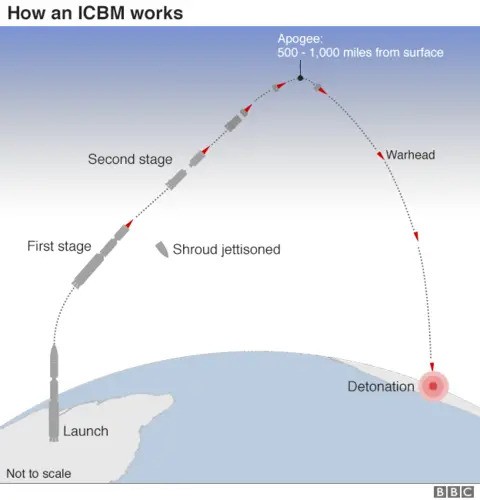
However, ballistics is the primary rationale behind the creation of the Ukrainian Space Forces. It is important to explain how the system works in principle. Rather than keeping the engine running throughout the entire flight — which is predominantly horizontal, as with cruise missiles and jet-powered drones — the system rapidly ascends to an exceptional altitude and speed, after which the engine shuts down.
In essence, it is akin to throwing a rock — except that it travels thousands of kilometers within minutes. The warhead enters space before descending toward its target. This is precisely what makes it so alarming: not its explosive power, which is relatively limited, but the difficulty of intercepting it or finding shelter in time.
The Russians are fully aware of this and have used it since the outset of the full-scale invasion to argue that their victory is inevitable and Ukraine’s defeat certain, and that Ukraine would therefore be better off surrendering immediately. Initially, their capabilities were limited; however, they have since expanded these efforts to the greatest extent possible. This is genuinely alarming.
There is little to counter this argument. First and foremost, there is U.S. data on ballistic missile launches, as well as the United States’ own commitments to provide anti-missile systems capable of reaching space. Such systems do exist, but they are extremely expensive and limited in number. Ukraine therefore faces the same question with respect to the other systems it has never actually received: Can’t we develop them ourselves?
This issue first arose some time ago. Experts have been discussing the possibility of implementing it for several years, as evidenced by the fact that the bill that was ultimately passed had been drafted in the spring of 2025. During this period, the space forces have also been mentioned periodically. A few days ago, media reports emerged stating that Ukraine had attempted to intercept ballistic missiles in space at least three times over the years.
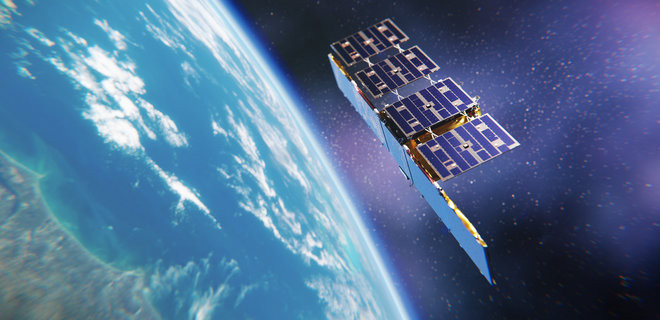
In other words, Ukraine’s space forces do not consist of space marines in exoskeletons aboard futuristic shuttles; rather, they comprise satellites designed to detect launches and missiles capable of neutralizing them. They also include space communications systems and control centers, ground-based space surveillance radars, manufacturing facilities, launch infrastructure, and the personnel who maintain these assets. This is challenging, but achievable.
If we assume that all of this is merely fantasy and embezzlement, then we must also acknowledge that all other developments in cruise missiles, drones, and ground robots are, in reality, nothing more than propaganda and corruption. In that case, the only option left would be to give up. However, I am not prepared to do so, in part because Ukraine’s technical capabilities cannot be entirely dismissed.
Source: punisher.com.ua
Satellite communications
Another consideration in the debate over establishing a Space Force is the role of satellite communications in Ukraine’s military operations. Ukraine’s frontline successes rely substantially on the Starlink system. In addition to enabling soldiers to access websites from the trenches, it allows them to transmit data among a range of independent devices, including aerial, maritime, and ground-based drones.
Last fall, Ukrainians became acutely aware of the threat that Starlink could be shut down, potentially eliminating this strategic advantage. This concern is shared by Europeans. National security cannot be built upon a system that can be disabled by the decision of a single individual on the other side of the world.
This is well understood in Russia, where efforts are underway to develop an independent space communications system based on the “Rassvet” satellites, although progress has been limited to date. Russia is seeking to create an alternative to Starlink, and Europe is even prepared to cooperate with Ukraine in this area. In recent years, after all, we have established ourselves as leading experts in developing groundbreaking technologies in our garages.
However, the development, launch, and operation of communications satellites constitute a distinct field that, from a military perspective, should be managed by the Space Forces themselves. The relevant command structure within the Armed Forces of Ukraine was established several years ago, and much of the work described above has already been completed.
Comprehensive solutions
Why should these responsibilities not remain within the framework of, for example, the Air Force or the Air Defense Forces? The United States maintained this approach for many years, and Russia is pursuing a similar course. However, the United States eventually recognized the need to establish dedicated space forces, and other countries are gradually following suit.
The reason is that, within the Air Force, these functions will continue to be treated as a lower priority. Distinct projects — such as satellite control and interceptor launches — have more in common with one another than with the Air Force’s other activities, and their funding will therefore continue to be allocated from residual resources. Nevertheless, their funding requirements continue to grow.
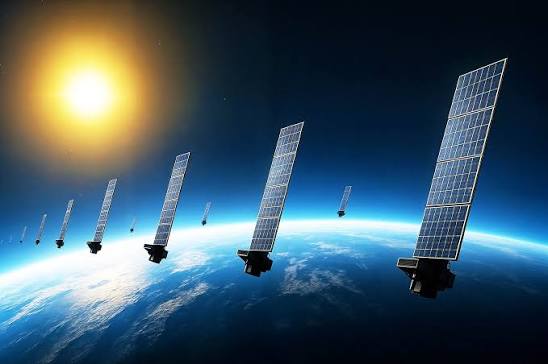
After all, communications satellites represent only one component of military-grade spacecraft. Navigation and reconnaissance satellites must also be built and launched. Maintaining these systems requires even more personnel, as their data must still be processed. Ironically, this work has been carried out in support of the Armed Forces of Ukraine since almost the first hours of the large-scale invasion.
These technologies do not require decades to master; however, they do require an appropriate organizational structure and trained specialists. It is therefore advisable to establish these capabilities within a separate military unit, such as the Unmanned Systems Forces. The associated challenges are considerable: some systems operate in the optical spectrum, while others use radar, and their data must be integrated into a single report that is readily understandable to intelligence personnel.
The missile-attack warning satellites I mentioned are in a category of their own, as they are positioned much higher, in geostationary orbits. All of this can be developed, perhaps without requiring unlimited funding. Although its feasibility remains uncertain, Ukraine is currently the leading country in developing low-cost alternatives to high-tech systems.
By the way, do you still recall ballistics? Would it not be advisable to respond to the Russians with a comparable capability? However, these are also missiles, and ones that are quite similar to interceptors. Why, then, are their developers divided among different agencies? Moreover, with some modifications, ballistic missiles can be used to launch satellites into orbit. That is precisely what Sergei Korolev did in the past. In practice, space-related solutions are complex, and establishing a separate branch of the Armed Forces dedicated to them makes considerable sense.
Development prospects
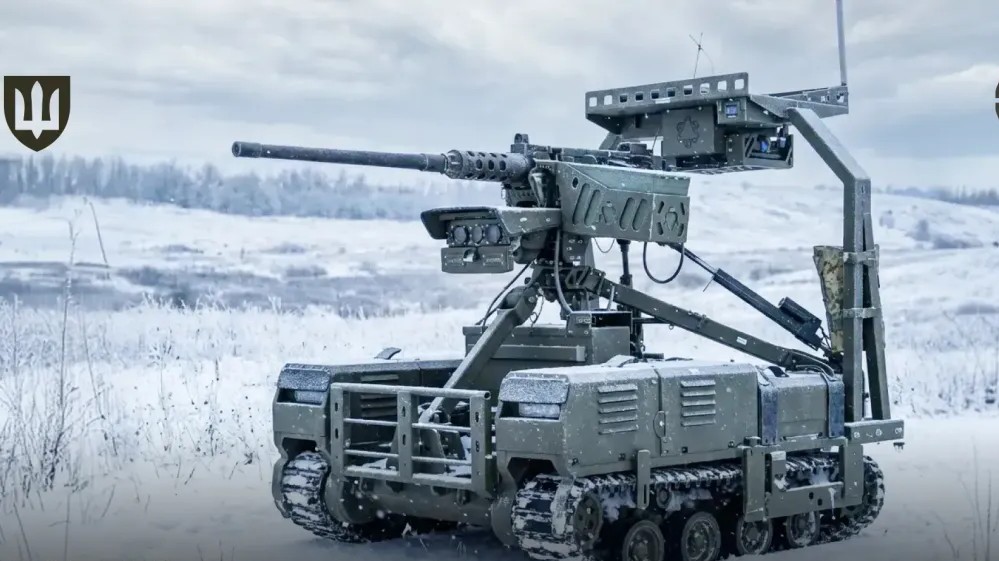
In light of the foregoing, it is clear that the Ukrainian Space Forces are not a futuristic fantasy, but a real military capability composed of personnel tasked with carrying out specific operations. However, the concept may seem futuristic — much like operators of ground-based robotic systems, who may appear to belong in science fiction — hundreds, if not thousands, of such operators are already serving in the Ukrainian Armed Forces.
In general, the system described above presents a challenge that only a few countries worldwide are equipped to address. This is partly because it comprises a veritable “zoo” of satellites. For several years, the United States has sought to ensure that data from its system provides genuinely valuable battlefield intelligence rather than merely a vast collection of numbers and images. In this regard, Ukraine also has valuable experience integrating a wide range of disparate devices — and their operators — on the battlefield into a unified information network.
There are also significant challenges that must be addressed, particularly the prospect of warfare in space. For several years, the United States has been considering how to respond if an adversary begins destroying communications and reconnaissance satellites on a large scale. The proposed solution is a rapid-deployment system that would enable satellites to be replaced within hours or days rather than months. Such a system would be especially valuable to the Ukrainian Armed Forces, as Russia would likely seek to destroy Ukrainian satellites once they are deployed in space.
Following the question comes another: the answer. What prevents those same interceptors from destroying Russian satellites? In reality, the principal constraint is the international response. The Kessler syndrome is a serious concern: it could destroy humanity’s orbital infrastructure, and Ukraine would certainly be accused of creating such a risk. However, the realities of this war are such that we are compelled to consider every possible option — permissible or otherwise — in pursuit of victory.
It is entirely possible that victory will require implementing the slogan “space must be Ukrainian or no one’s” in a literal sense.
