

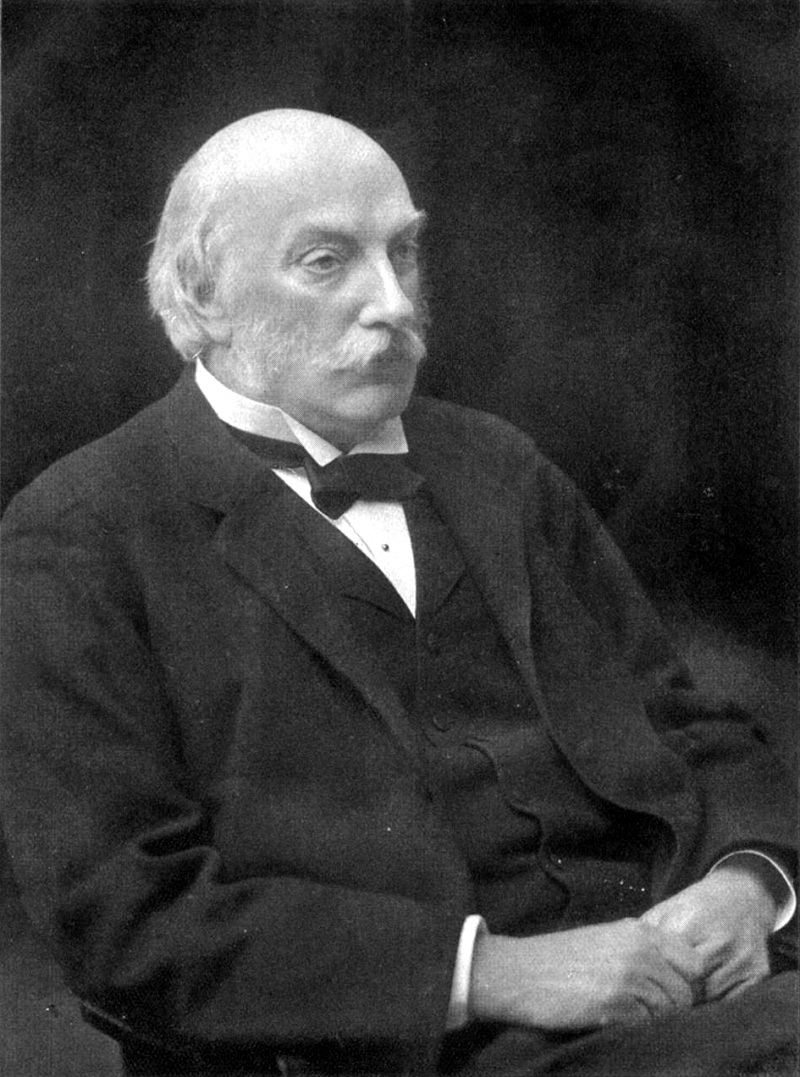
On November 12, 1842, John Strutt, better known as Baron Rayleigh, was born. His name is associated with the phenomenon of light scattering that explains the blue color of the sky. However, the scientist’s research primarily focused on oscillations of all kinds, and he occasionally took an interest in some highly unexpected subjects.

John Strutt — a researcher of oscillations
Many renowned scientists made their most significant discoveries at a young age. For instance, at just 21, Edmond Halley was already conducting independent astronomical research in the Southern Hemisphere. By contrast, John Strutt became known as Baron Rayleigh (also pronounced “Rayli”) only later in life, after inheriting the baronial title from his father.
John Strutt was born on November 12, 1842, in Langford Grove, England. He was in relatively poor health from birth. Fortunately, he came from an aristocratic family and had access to high-quality medical care. At the age of 19, he enrolled at Trinity College, Cambridge, where he studied mathematics. He earned his bachelor’s degree in 1865 and his master’s degree in 1868. By that time, he was already conducting research on oscillations, although he was initially in no particular hurry to publish his findings.
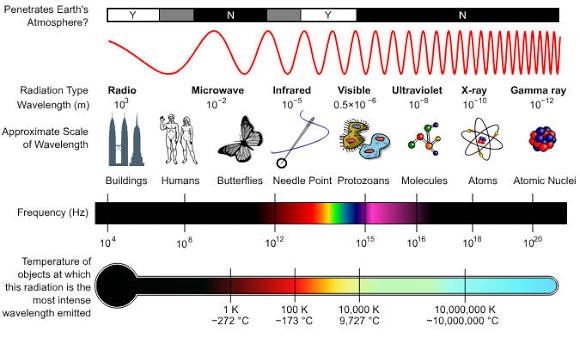
Oscillations are ubiquitous in nature. Sound, ocean waves, earthquakes, and music are examples of mechanical oscillations, while light and other forms of radiation are electromagnetic oscillations. Although these processes differ in nature, they exhibit certain common patterns.
By the time Strutt began studying oscillations, scientists had been investigating them for centuries and had established their fundamental laws. However, a comprehensive explanation of all the phenomena associated with oscillations remained elusive. After earning his master’s degree, Strutt worked at Trinity College, where he continued his research until 1871, when he married at the age of 29.
The colors of the sky
In the same year, 1871, Strutt published his first and most renowned work, which examined the scattering of electromagnetic waves by the electron shells of atoms. A key factor is that these waves are coherent — that is, their oscillations occur in a single plane. In this context, the structure of the electron shell is decisive, as it is determined by the type of atoms and the molecules or ions they form. The number of atoms with which photons interact along their paths is also significant. This phenomenon is known as Rayleigh scattering.
Why is this phenomenon important? It addresses a question many people have asked: why does the sky appear blue during the day but red at dawn and sunset? The explanation is relatively straightforward. White light consists of a fairly uniform mixture of different wavelengths. As it passes through the atmosphere, red light is generally scattered more strongly, while violet light is scattered to a lesser extent. Consequently, the remaining mixture appears blue.
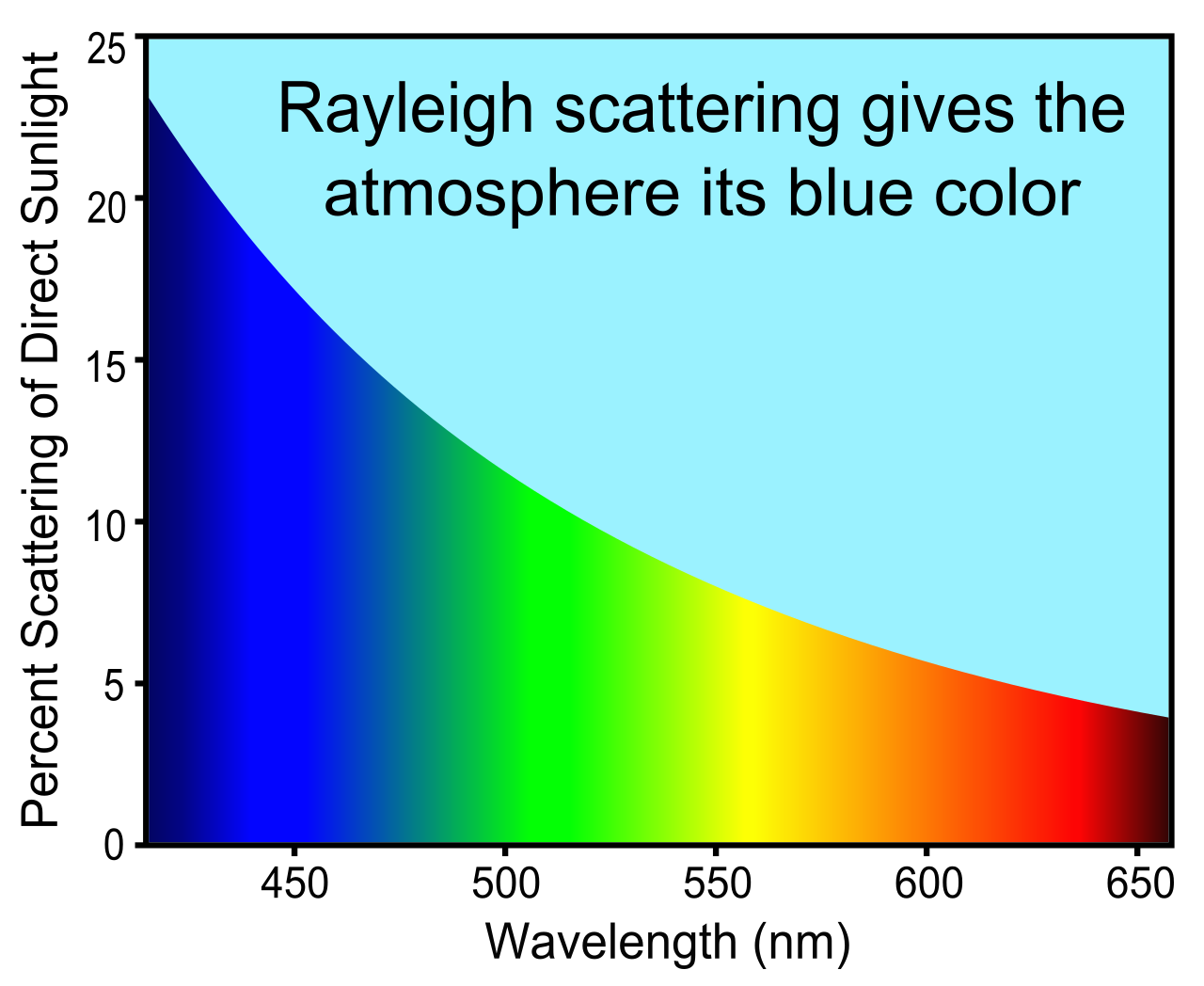
However, as the beam travels farther through the atmosphere, red light is scattered less strongly, while violet and blue light fade more rapidly. This results in a color palette ranging from yellow to red.
System oscillations
The next study published by John Strutt — who had by then inherited the title of Baron Rayleigh from his father — appeared in 1873. In this work, he examined the general patterns of oscillation across various systems, the frequencies they generate, and how these frequencies combine to form a continuous spectrum.
To describe the latter, Rayleigh examined the statistical properties of random processes and identified what is now known as the Rayleigh distribution. He also made a significant observation that extends well beyond the scope of oscillation theory.
Most of the systems he studied were represented by linear equations. However, some could be described only by nonlinear equations — that is, equations in which the variables did not appear to the first power. Rayleigh was among the first to recognize that their behavior could be complex and that their oscillations did not decay but were sustained by internal mechanisms.
This became particularly significant a century later, when a new class of oscillations—chemical oscillations — was discovered. Self-oscillating chemical systems proved essential to explaining the fundamental mechanisms of life. In 2026, the Nobel Prize in Chemistry was awarded for research related to these topics.
Following this work, Rayleigh produced another study focused on sound. His principal contribution to this field was the development of the theory of elastic vibrations, which expanded upon existing ideas concerning the general deformation of elastic bodies — that is, bodies that return to their original shape once the force causing the deformation is removed.
The flight of birds and the discovery of argon
Among the notable studies conducted by Rayleigh, two are particularly noteworthy. The first, published in 1883, examined the dynamic gliding of birds. This form of flight involves birds flapping their wings only minimally while remaining capable of performing dynamic maneuvers.

Rayleigh was intrigued by how they accomplished this without applying additional force. He concluded that they did so by exploiting differences in wind speed at various altitudes. Today, glider pilots employ essentially the same principle, and engineers are incorporating it into the design of new aircraft.
Another notable scientific achievement of Rayleigh’s work was his discovery, in 1894, alongside William Ramsay, of a new chemical element: argon. This discovery resolved an intriguing scientific mystery. As early as 1785, Henry Cavendish had established that, in addition to oxygen, nitrogen, carbon dioxide, and water vapor, another substance was present in the air, although he was unable to identify it precisely.
Argon is an inert noble gas that reacts chemically with very few substances. Furthermore, Cavendish’s observations remained unpublished for many years, and researchers were unable to identify the substance for some time thereafter. Rayleigh and Ramsay ultimately determined its properties and established its place in the periodic table. In recognition of this achievement, they were awarded the Nobel Prize.
Further research
In 1879, following James Maxwell’s death, he was appointed Cavendish Professor at the University of Cambridge and Director of the Cavendish Laboratory. In 1887, he became a professor at the Royal Institution of Great Britain, where he continued his research on oscillations.
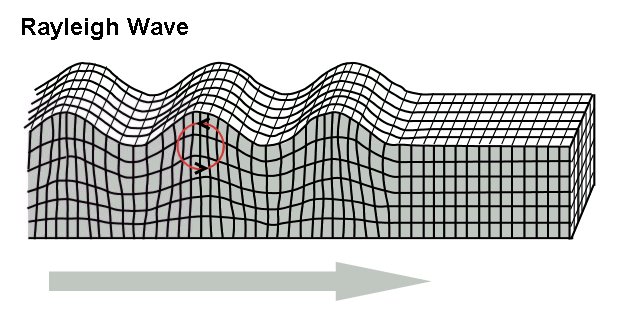
Between 1885 and 1887, he discovered a distinctive type of wave that propagates along the surface of a solid. These waves are now named after him. They are of considerable importance to seismology, as they are associated with earthquakes and enable scientists to study the internal structure of our planet.
In 1890, Rayleigh estimated the potential size of molecules, and in 1900, he formulated the law governing the distribution of radiation across the spectrum of a black body. In the course of his research, he constructed several notable devices, including a manometer, an interferometer, and a specialized disk for determining the velocity of particles in a sound wave.
Over time, John Strutt’s focus shifted from pure science toward administrative responsibilities. He served as secretary of the Royal Society of London from 1908 to 1886 and as president of the University of Cambridge from 1908 until his death in 1919.
This did not diminish his involvement in major scientific discoveries. On the contrary, when debates emerged concerning the structure of the atomic nucleus and the discovery of new forms of radiation, he was at the center of these discussions and supported various positions. Accordingly, he may rightly be regarded as one of the founders of modern physics.
