

Confrontation in space is reaching a new level. The first-ever unauthorized and dangerous close approach between two operational spacecraft has been recorded in low Earth orbit. Russia’s military satellite Cosmos-2612 deliberately pursued ICEYE-X36, a commercial spacecraft owned by the U.S. division of the Finnish company ICEYE. This satellite network has been providing Ukraine with timely radar intelligence since the start of the full-scale war.
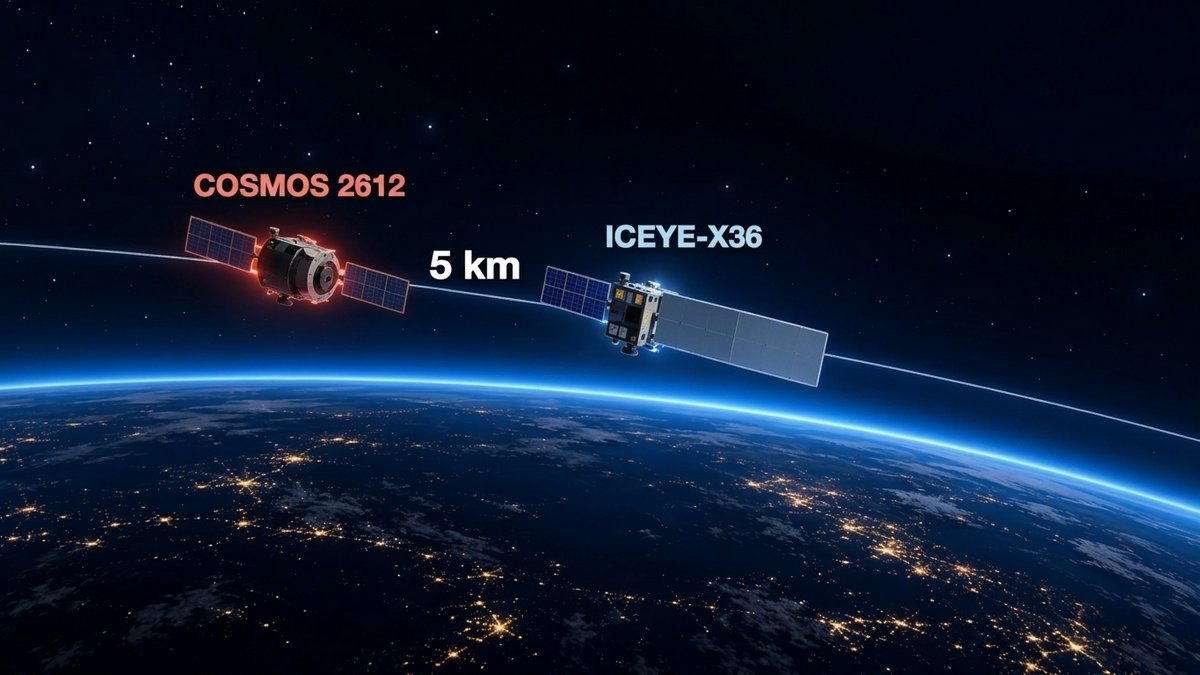
According to LeoLabs, which uses a network of high-precision radars to track objects as small as two centimeters in orbit, the Russian spacecraft’s actions were not a chance flyby. They constituted a planned, complex operation to approach and maneuver around another operator’s spacecraft without its owner’s permission.
An Orbital Hunt
Cosmos-2612 was launched in April aboard a Soyuz rocket from a northern Russian spaceport. Almost immediately, U.S. military and civilian analysts noticed unusual behavior associated with the mission: at least four of the six satellites placed in orbit adjusted their trajectories to approach ICEYE-X36.
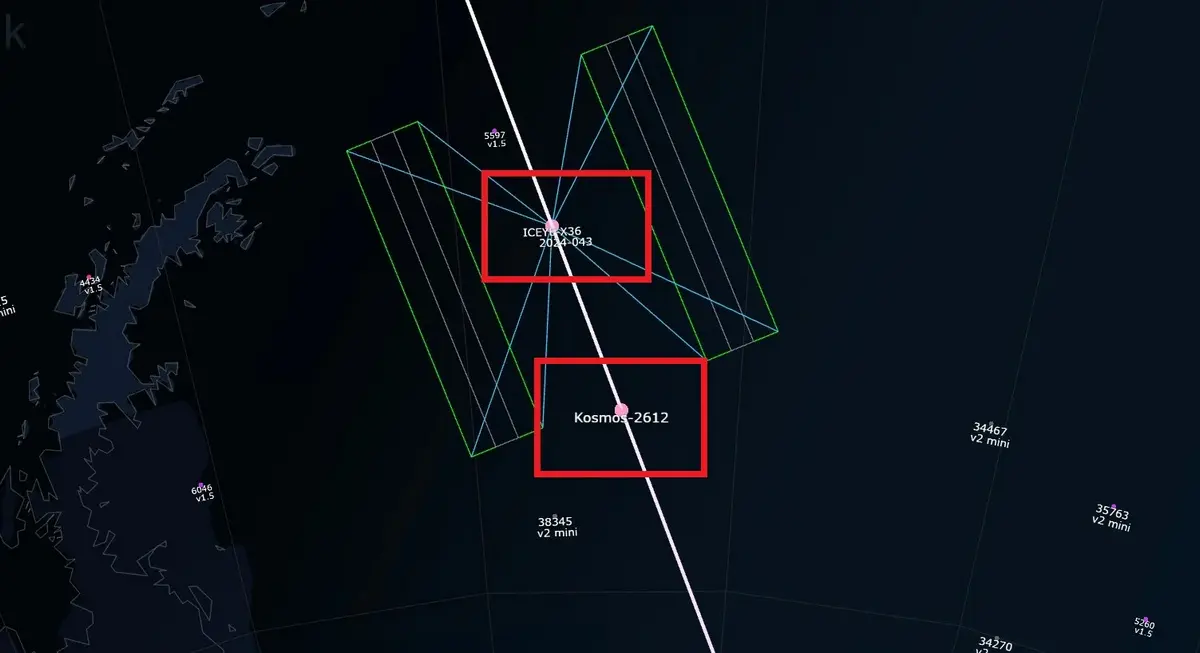
The situation entered a critical phase when Cosmos-2612 traveled hundreds of kilometers and began rapidly closing the distance. The Russian spacecraft took up a position just 2–3 kilometers from ICEYE-X36, maneuvering ahead of and behind its target. Over the weekend, the distance between them fell to a critical level of less than 500 meters. Their proximity sometimes made it difficult for LeoLabs’ radar systems to distinguish one spacecraft from the other. The Russian satellite remained near ICEYE-X36 for several days before beginning to drift away slowly at a relative speed of approximately 17 km/h.
Why This Case Sets a Precedent
Short time-lapse of part of this morning’s first pass of ICEYE-X36 (59103) and COSMOS 2612 (68762) over South America under partly cloudy skies. https://t.co/t8RhwmKcV4
— s2a systems (@s2a_systems) October 18, 2026
Rendezvous and Proximity Operations (RPO) have been conducted before, but this case has several fundamental differences:
- Orbit type. Similar incidents have occurred in high geostationary orbit, but this is unprecedented in low Earth orbit.
- Lack of consent. Russia has previously practiced close approaches involving its own satellites, but this was the first time it conducted such an operation near another operator’s spacecraft without the owner’s permission.
- A commercial target. Russia has previously deployed spacecraft near classified U.S. government satellites, but this time the target was a commercial spacecraft.
Consequences and Threats to the Satellite Constellation
Data from ICEYE-X36 and other spacecraft are critically important to defense agencies in Ukraine, the United States, and European countries. As early as 2022, officials from the aggressor country stated that they considered civilian satellites supporting Ukraine’s military to be “legitimate targets.”
ICEYE US said it was aware of the situation and was keeping it under control. The ICEYE network is designed around redundancy and consists of dozens of spacecraft. Even if one satellite is physically damaged or disabled, the overall system will continue providing intelligence in near real time.
Meanwhile, U.S. Space Command notes that such incidents indicate Russia is moving toward practical testing of anti-satellite capabilities directly in space.
We previously explained what Russian satellites can see.
Based on material from arstechnica.com.
