

Until recently, the prospect of a drone flying above the surface of another planet seemed like science fiction. Today, 72 flights of a Martian helicopter have been completed, a large aerial laboratory is being prepared for one of Saturn’s moons, and robots capable of leaping across lunar craters are under development. Why, then, are such vehicles needed when other worlds are already being explored by orbiters and Mars rovers? And how can a drone fly in an environment with almost no atmosphere, while commands from Earth take tens of minutes to arrive?
The answers to these questions reveal a story far more compelling than the mere development of new aircraft. Space drones could fundamentally transform the approach to exploring other worlds, enabling humanity, for the first time, to reach places that have remained inaccessible even to the most advanced robotic expeditions.
Beyond the capabilities of Mars rovers
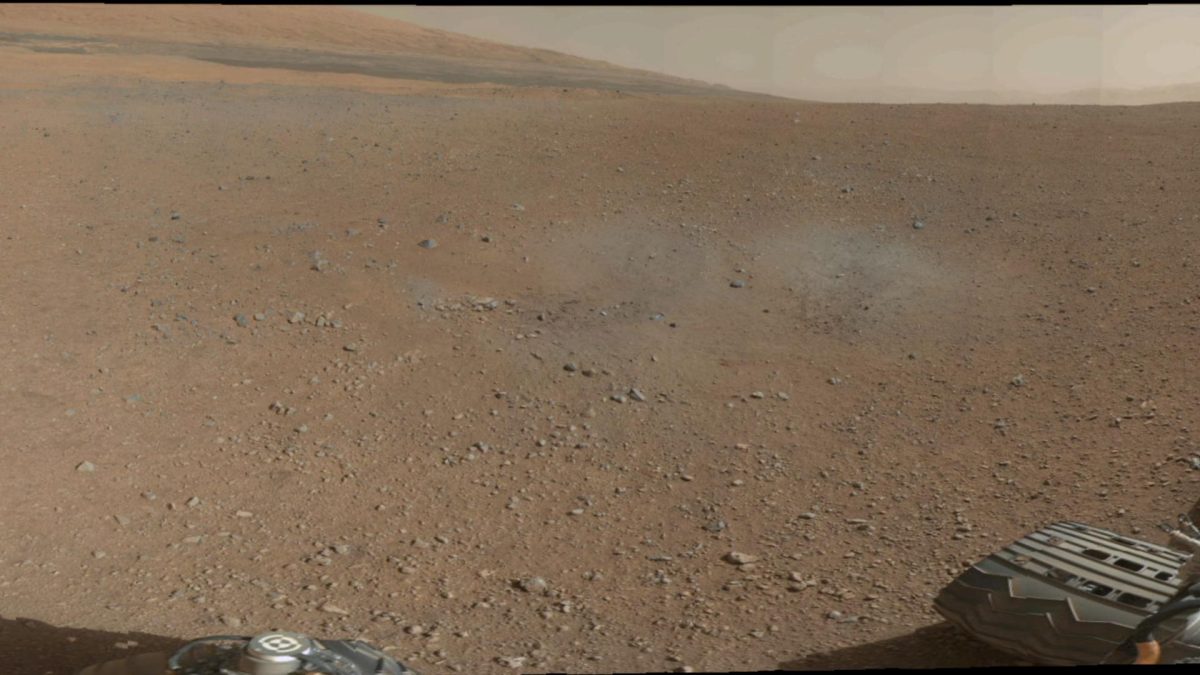
Imagine that a Mars rover is exploring the surface of the Red Planet when it encounters an unusual geological formation. This feature may conceal evidence of ancient bodies of water or provide clues about whether conditions for life once existed on Mars. However, a deep crater or steep, rocky slope stands between the rover and the site. For a human, such an obstacle might be a routine part of the journey, but for a robotic vehicle millions of kilometers from Earth, it could bring the mission to an end.
Source: NASA
Scientists can, of course, examine areas of interest from orbit. Modern cameras aboard spacecraft can provide highly detailed images of planets; however, they cannot replace direct surface exploration. An orbiting spacecraft cannot look beneath rocks, collect soil samples, or determine their chemical composition as effectively as ground-based equipment. Moreover, sending a separate landing mission to every object of interest would be prohibitively complex and expensive.
It was this very challenge that gradually led engineers to consider an idea that, until recently, had seemed like science fiction: what if spacecraft could fly? Rather than spending weeks searching for a safe route through obstacles, a robotic vehicle could simply fly over them. It could survey vast areas from a low altitude, explore difficult-to-access locations, and assist Mars rovers in selecting their routes. Equipped with scientific instruments, it could even independently collect measurements at multiple locations across the planet.
However, a further challenge arises that is purely physical: a conventional quadcopter cannot operate throughout the Solar System. Its propellers generate lift by accelerating the surrounding air downward, making an atmosphere essential for flight. In a very thin atmosphere, such as that of Mars, generating sufficient lift becomes considerably more difficult. In environments with virtually no air, such as the Moon, propellers are entirely ineffective.
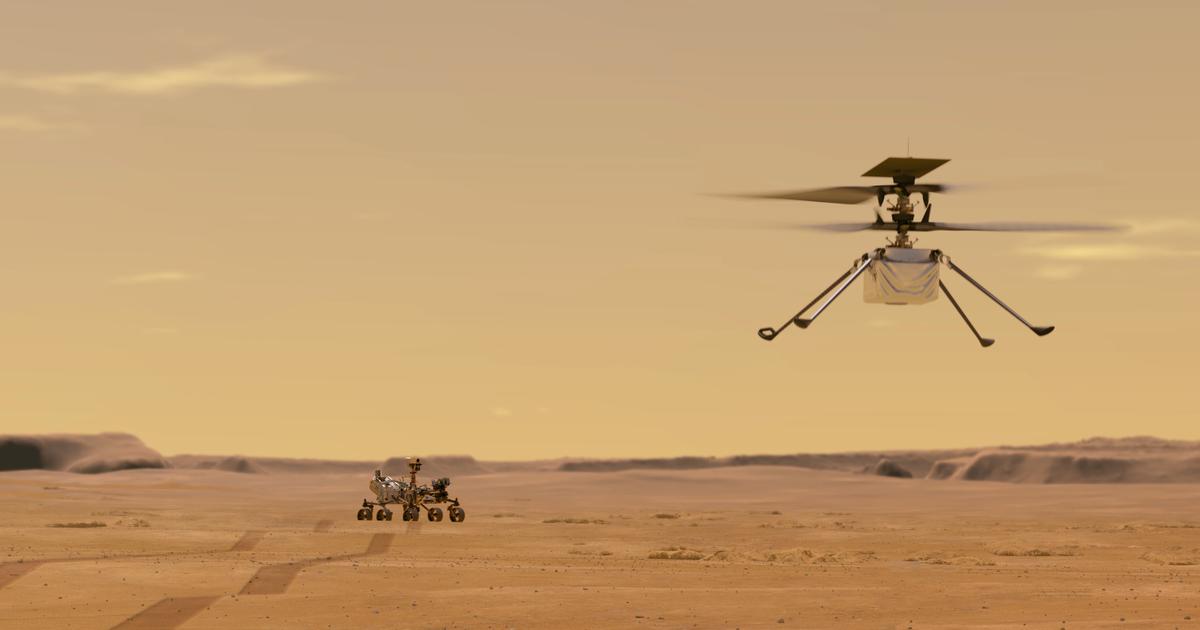
Engineers therefore had to abandon the concept of a universal space drone. Instead, each craft must be designed to suit the conditions of a specific celestial body. On Mars, these craft take the form of ultralight helicopters equipped with high-speed rotors. On Titan, where the atmosphere is considerably denser, large multicopters capable of carrying an entire scientific laboratory can operate. For Venus, aerostats — which remain suspended in the atmosphere through buoyancy — have shown promise. On the Moon, meanwhile, engineers are developing jet-powered robots capable of making short flights between different areas of the surface.
Although these machines differ considerably, they share a common purpose: enabling the exploration of other worlds beyond the routes accessible to wheeled vehicles. But can this concept work in practice? Humanity received an answer in April 2021, when the small Ingenuity helicopter made its first flight over the surface of Mars.
Ingenuity: 39 seconds that transformed Mars exploration
On February 18, 2021, Perseverance — one of the most sophisticated rovers ever constructed — landed on the surface of Mars. The mission was set to conduct years of exploration in Jezero Crater, where a lake may have existed billions of years ago. In addition to a substantial scientific laboratory, NASA sent another, much smaller spacecraft to the Red Planet, designed to achieve something no other machine in the history of space exploration had accomplished.
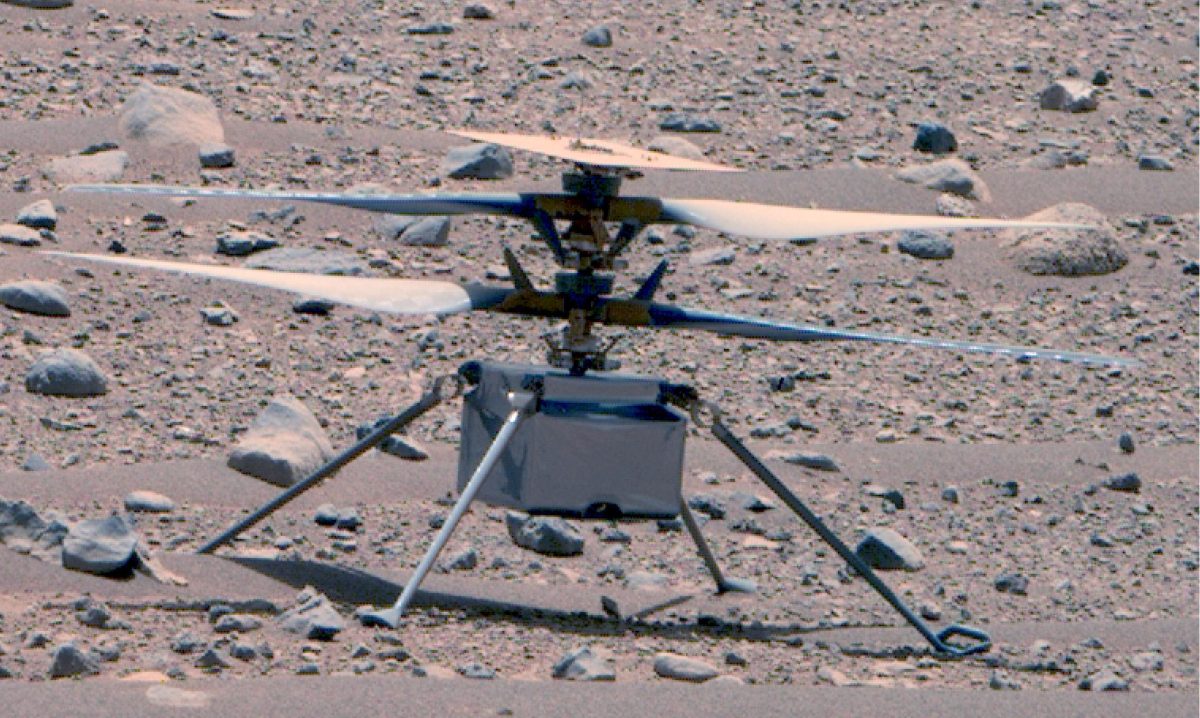
The Ingenuity helicopter, weighing only 1.8 kg (4 pounds), was mounted beneath the rover’s chassis. It was not equipped with sophisticated scientific instruments to search for life or analyze rocks. Its sole objective was to complete five short flights and demonstrate that flight on Mars was possible. However, even this modest experiment required engineers to address an exceptionally complex aerodynamic challenge.
Source: NASA
Certainly, scientists can examine areas of interest from orbit. Modern cameras aboard space probes can capture highly detailed images of planets; however, they cannot replace direct surface exploration. An orbital spacecraft cannot inspect beneath rocks, collect soil samples, or determine their chemical composition as effectively as ground-based equipment. Moreover, sending a separate landing mission to every object of interest would be prohibitively complex and expensive.
It was this very challenge that gradually led engineers to consider an idea that, until recently, had seemed like science fiction: what if spacecraft could be taught to fly? Rather than spending weeks searching for a safe path through obstacles, a robot could simply fly over them. It could survey extensive areas from a low altitude, explore inaccessible locations, and assist Mars rovers in selecting their routes. Equipped with scientific instruments, it could even independently collect measurements at various locations across the planet.
However, a further issue arose — one that is strictly physical. A conventional quadcopter cannot operate throughout the Solar System. Its propellers generate lift by directing the surrounding air downward; therefore, an atmosphere is essential for flight. In a thin atmosphere, such as that of Mars, generating sufficient lift is considerably more difficult. In environments with virtually no air, such as the Moon, propellers are entirely ineffective.
It might have seemed that Ingenuity’s story would end there. The five planned flights had been completed successfully, but the helicopter remained operational, prompting NASA to extend the experiment. Over time, Ingenuity began traveling farther, surveying new landing sites, and assisting Perseverance in its exploration of Mars. Its aerial photographs enabled researchers to assess the terrain, identify geologically significant features, and plan the rover’s subsequent routes.
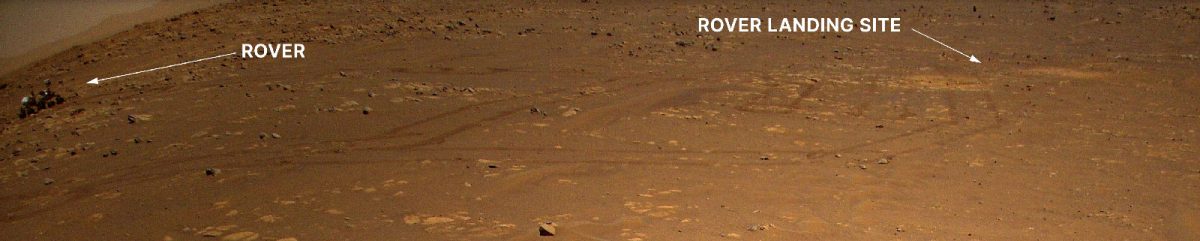
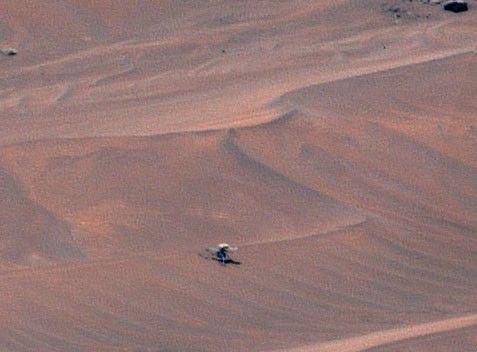
Thus, an experiment initially planned to last approximately one month became a mission spanning nearly three years. Rather than completing five flights, Ingenuity completed 72, spent more than two hours airborne, and traveled approximately 17 km (10.6 miles). However, on January 18, 2024, during its final landing, the helicopter sustained rotor damage and permanently lost its ability to fly.
A NASA investigation identified an unexpected issue. Ingenuity relied on a camera to track distinctive surface features and determine the aircraft’s movement for navigation. During its final flight, however, the terrain below consisted of nearly uniform sand. With few identifiable landmarks, the camera likely caused the system to miscalculate the helicopter’s horizontal speed. This miscalculation resulted in a hard landing and rotor damage.
This marked the first time humanity had not only traveled to another planet but also investigated an aviation accident beyond Earth. Furthermore, the engineers were required to reach their conclusions remotely, relying solely on photographs and telemetry.
Ingenuity’s final flight proved to be as significant a lesson as its first. It demonstrated that teaching a spacecraft to fly is only part of the challenge. Ensuring that it can navigate autonomously, avoid hazards, and land safely without human intervention is considerably more difficult.
Although Ingenuity merely demonstrated that flight on other planets is possible, its successors are already poised to use flight as their primary means of scientific research. The most ambitious of these projects is being developed for a world with conditions far more favorable to aviation than those on Mars: Saturn’s moon, Titan.
Dragonfly: An aerial laboratory in a world of methane seas
Titan, Saturn’s largest moon, presents a striking combination of familiar and unfamiliar features. It has clouds, rainfall, river valleys, dunes, and seas. However, rather than water, these features contain liquid methane and ethane, while water ice behaves like rock at a temperature of approximately −179 °C (−290 °F). A dense orange haze obscures the surface from conventional orbiting cameras.
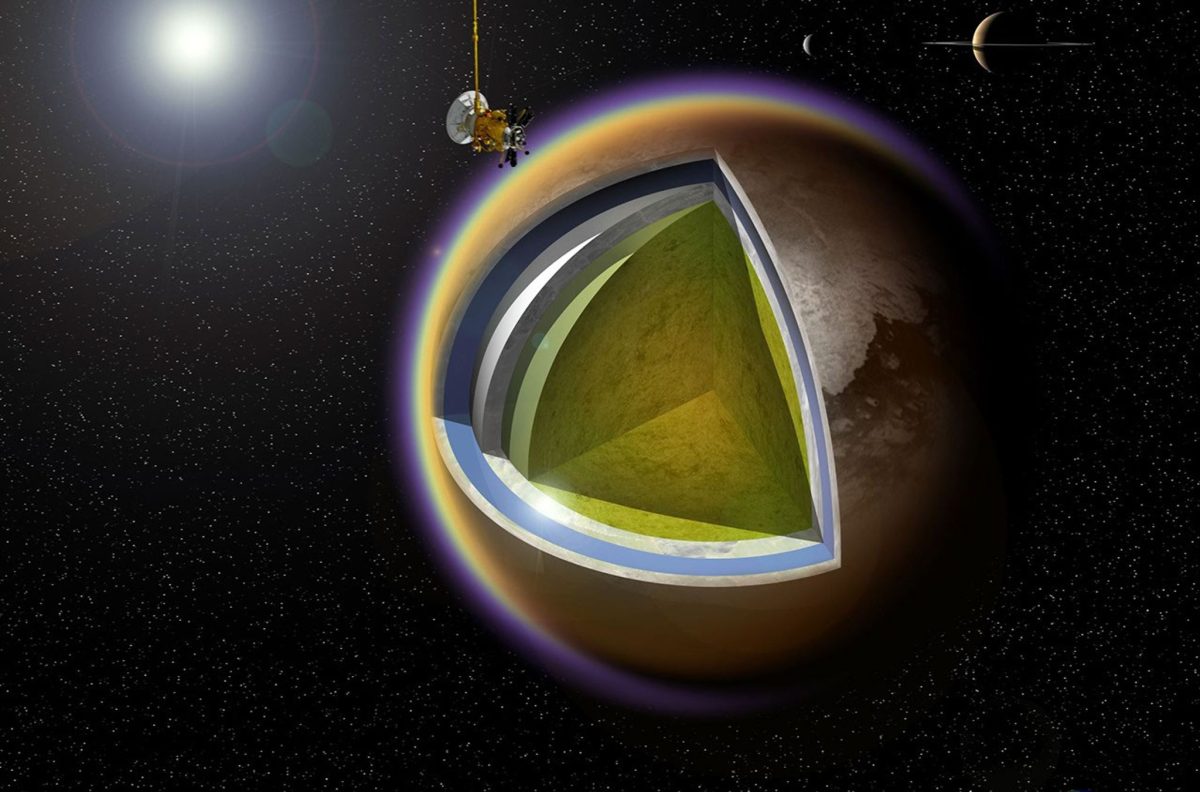
The chemistry of Titan is of significant interest. Organic compounds form in its atmosphere, and their interactions with the surface may provide insights into the processes that preceded the emergence of life on early Earth. A single lander would be insufficient to compare samples collected from different locations. Accordingly, NASA is developing Dragonfly, a drone capable of transporting an entire laboratory between research sites.
At first glance, this idea may appear to contradict the experience gained on Mars. Ingenuity weighed only 1.8 kg (4 pounds), whereas Dragonfly is expected to weigh approximately 875 kg (1,930 pounds). However, mass is not the only decisive factor. Titan’s atmosphere near the surface is approximately four times denser than Earth’s, while its gravity is about seven times weaker. The rotors therefore have more gas against which to push, and the craft’s weight, for the same mass, is significantly lower. Accordingly, from an aerodynamic perspective, flight on Titan is easier than on Mars.
Dragonfly will be equipped with eight propellers and will be capable of flying autonomously between geological sites. Under the mission’s primary plan, it will explore 20–30 sites over more than three years, covering a total distance of approximately 115 km (71 miles). Its targets include dunes composed of organic particles and the Selk impact crater region, where liquid water may have interacted with complex organic compounds in the past. Onboard instruments will analyze the atmosphere and surface, while a sample collection system will deliver material to a mass spectrometer. The mission’s primary focus is the study of prebiotic chemistry rather than the direct search for living organisms.
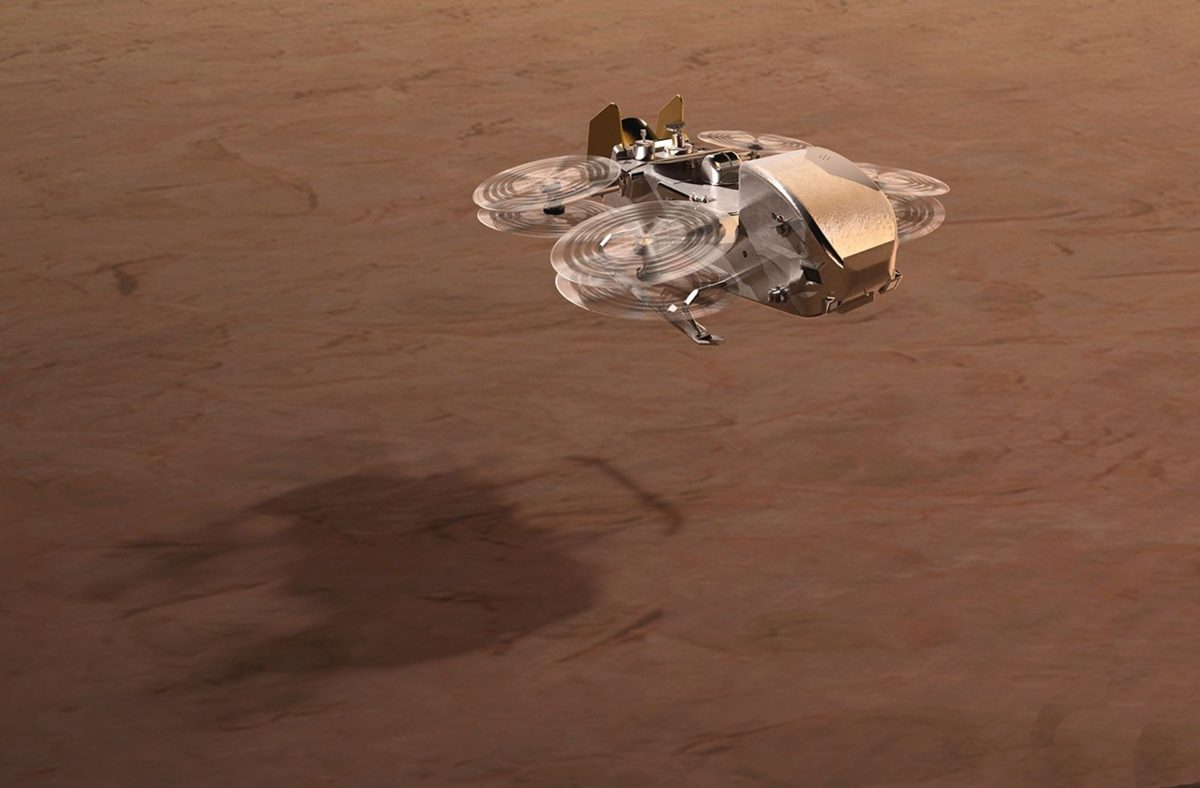
A remaining consideration is power. Given its distance from the Sun and the density of its atmosphere, solar panels would be largely ineffective. Accordingly, Dragonfly will be powered by a radioisotope thermoelectric generator. Heat generated by radioactive decay will provide electricity and help protect the equipment from the cold. On the surface, the batteries will recharge; during flight, they will power the electric motors. Launch is scheduled for no earlier than July 2028, with arrival expected in late 2034. Building on Ingenuity’s achievements, this mission will move beyond testing flight capability and instead conduct a scientific expedition enabled by flight.
From Martian helicopters to Venusian airships and lunar hoppers
Engineers are already considering the possibility of returning to Mars with significantly more advanced vehicles. The primary objective is no longer simply to achieve flight, but to use these missions to make substantive scientific discoveries.
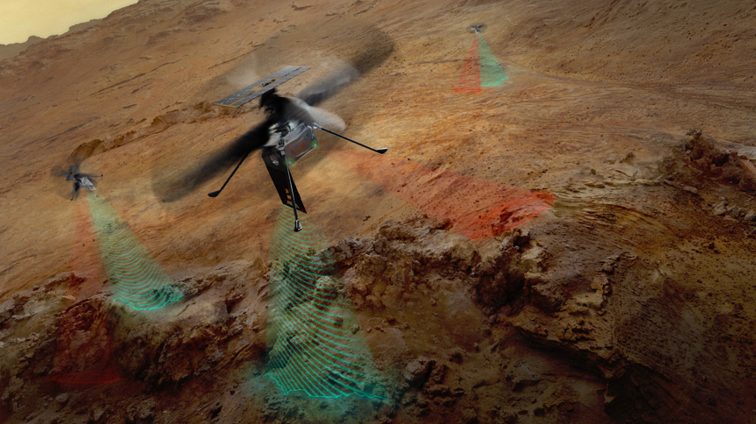
The SkyFall concept, presented in 2026, is founded on this principle. Unlike Ingenuity, which served solely as a technology demonstrator, the new mission entails deploying three helicopters equipped with scientific instruments to Mars simultaneously. In particular, their ground-penetrating radar will support the search for ice deposits beneath the planet’s surface. This objective extends beyond geological research: for future astronauts, Martian ice could provide a source of water, oxygen, and even components for rocket fuel. The mission is tentatively scheduled for launch in late 2028.
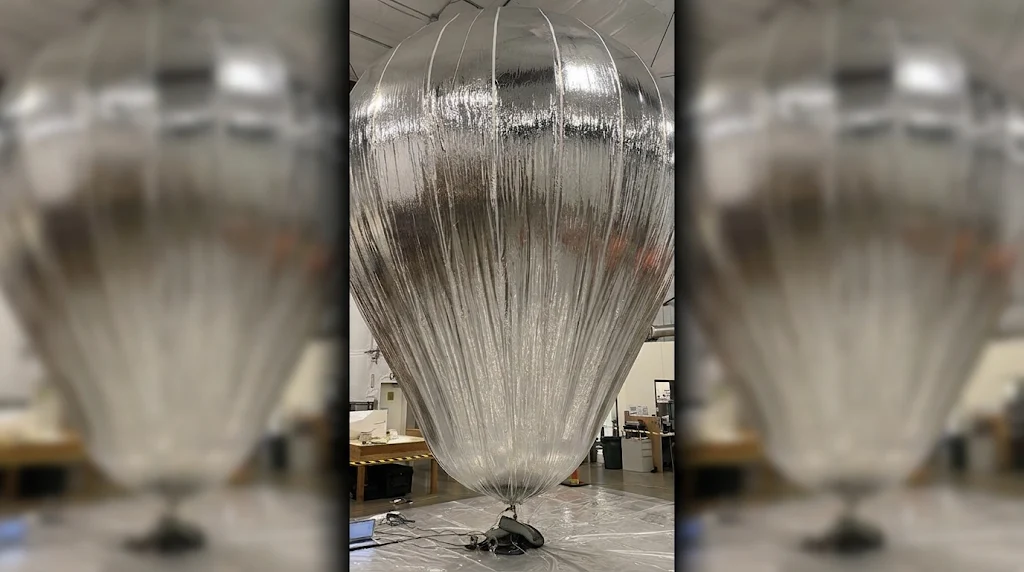
However, Mars and Titan are by no means the only worlds where flying vehicles could be useful. Interestingly, engineers don’t need propellers at all to explore some planets. For example, on Venus, where the surface reaches 465 °C (869 °F) and atmospheric pressure is more than 90 times that of Earth, building a durable ground-based rover is extremely difficult. But if you ascend to an altitude of 50–55 km (31–34 miles), conditions become much more favorable. Therefore, instead of landing modules, scientists can use aerostats, which will remain in the atmosphere thanks to buoyancy and explore the planet by moving with the winds.
In fact, this concept has already been tested in practice. In 1985, two airships from the “Vega” program spent approximately 46 hours in Venus’s atmosphere, during which the winds carried them more than 11,000 km (6,800 miles). However, unlike helicopters, conventional balloons have virtually no ability to select their direction of travel. Accordingly, the next challenge for engineers will be to develop vehicles capable not only of drifting through the atmosphere but also of controlling their movement to some degree.
Although Venus’s exceptionally dense atmosphere permits flight, conditions on the Moon are quite different. The Moon has virtually no atmosphere, meaning that even the most powerful propellers would be unable to generate lift. However, this does not preclude flight altogether. Jet engines could be used instead, enabling robots to make short hops above the surface and clear craters and other obstacles.
This was precisely how the Micro Nova, named Grace and delivered to the Moon in 2025, was intended to operate. It was designed to explore difficult-to-access areas near the south pole. Unfortunately, the rover could not be tested because the Athena lander came to rest on its side and soon ceased functioning.
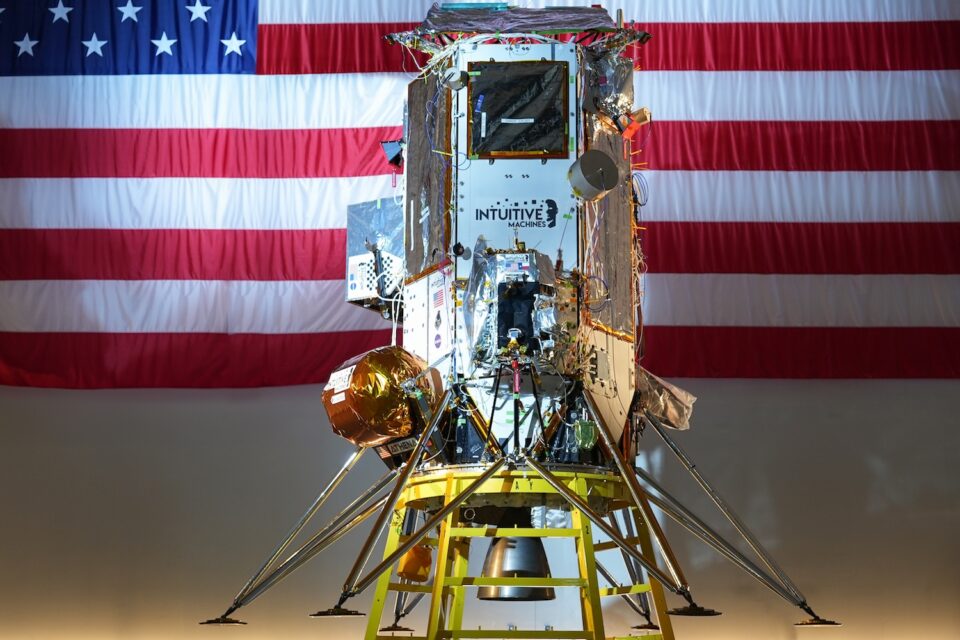
However, the concept of hopping has already demonstrated its effectiveness. In 2018, Japan’s MINERVA-II1 robots traversed the surface of the asteroid Ryugu by hopping, and in 2024, the miniature LEV-1 tested this mode of movement on the Moon. Unlike the jet-powered Grace, however, these vehicles generated thrust using internal mechanisms.
Whether in the thin atmosphere of Mars, the dense clouds of Venus, or the airless environment of the Moon, engineers are steadily developing ways to overcome the limitations of each world. However, these technologies share another challenge that may prove more difficult than building the spacecraft itself. Even if a robot can fly on another planet, the question remains: who will control it from hundreds of millions of kilometers away?
How to operate a space drone from Earth
Consider a scenario in which a space drone is flying over the surface of Mars and suddenly encounters a dangerous obstacle ahead. On Earth, an operator can alter the drone’s flight path in just a few seconds. On Mars, however, the situation is very different. Because of the vast distance between the planets, a radio signal takes approximately 3–22 minutes to travel from Earth to the spacecraft, depending on their relative positions. For Titan, the delay exceeds an hour. By then, the drone may already have collided with the obstacle or completed its flight.
Therefore, it is not possible to control space drones in the same manner as conventional terrestrial drones. An operator can define the mission objective and transmit the route; however, the craft must make all decisions requiring an immediate response independently. This raises another challenge: how will the drone determine its location in the absence of a satellite navigation system, such as GPS, on Mars or Titan?
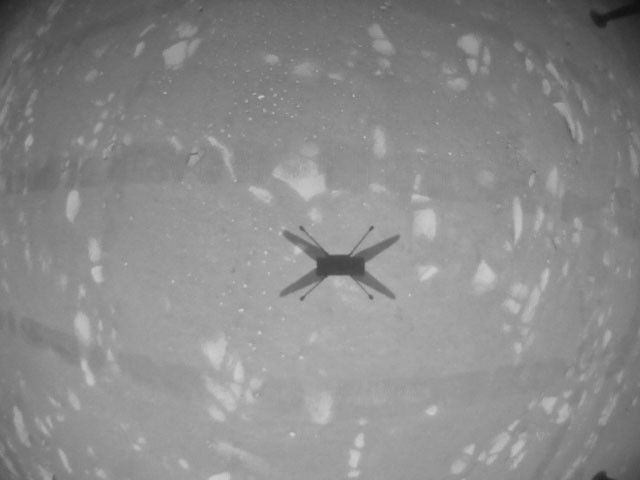
Engineers have developed a solution that closely resembles the way humans orient themselves. Specialized inertial sensors measure the rover’s acceleration and rotation, while cameras continuously monitor the surface. By tracking the movement of rocks, cracks, and other distinctive features across consecutive frames, the onboard computer can estimate the rover’s speed and direction. Combining these data enables the vehicle to navigate even without signals from navigation satellites.
This is precisely the principle employed by the Martian rover Ingenuity. However, its most recent flight exposed a limitation of this technology: when the surface is too uniform, the camera has no features to “latch onto.” In such circumstances, an error in estimating position or speed could result in a crash.
Therefore, future space drones will need to develop substantially more advanced capabilities. Merely determining their own position will not be sufficient. Using cameras, radar, and computer vision algorithms, they must independently identify hazardous areas, adjust their routes, and locate safe landing sites. Essentially, this entails creating robots that humans need only direct to a destination, leaving the robots to determine how to reach it.
This autonomy could fundamentally transform the approach to exploring other planets. If a spacecraft can navigate unfamiliar terrain independently, it can undertake tasks that currently require extensive planning and continuous monitoring from Earth.
Will drones replace rovers?
Although a spacecraft can cover in a single flight a distance that would take a rover days to traverse, this does not necessarily call the future of ground-based technology into question. However, speed of travel is not equivalent to conducting a detailed exploration. Mars rovers can operate on the surface for years, transport heavy instruments, analyze rocks, and collect measurements on site.
In addition, they are becoming increasingly autonomous. On October 11, 2026, Perseverance’s total distance traveled reached 45.22 km (28.10 miles), surpassing Opportunity’s record of 45.16 km (28.06 miles). This achievement was made possible, in part, by improvements in autonomous navigation.
Future expeditions will most likely combine several types of vehicles. Orbital probes will produce general maps, drones will rapidly survey areas of interest and potential danger, and rovers will conduct close-up exploration. For a future crewed mission, this collaborative approach could enable teams to identify safe routes and ice reserves in advance, before humans set foot on the surface.
Humanity first learned to observe other worlds through telescopes, then to explore them with robotic probes. We have now learned to fly over them. It is quite possible that the first vehicle to welcome astronauts to an unfamiliar world will be an autonomous aerial scout and guide.
Discover what words cannot describe: watch our video to see what Ingenuity’s actual flights look like and how future drones may fly over Titan and the Moon.
